Share It On:
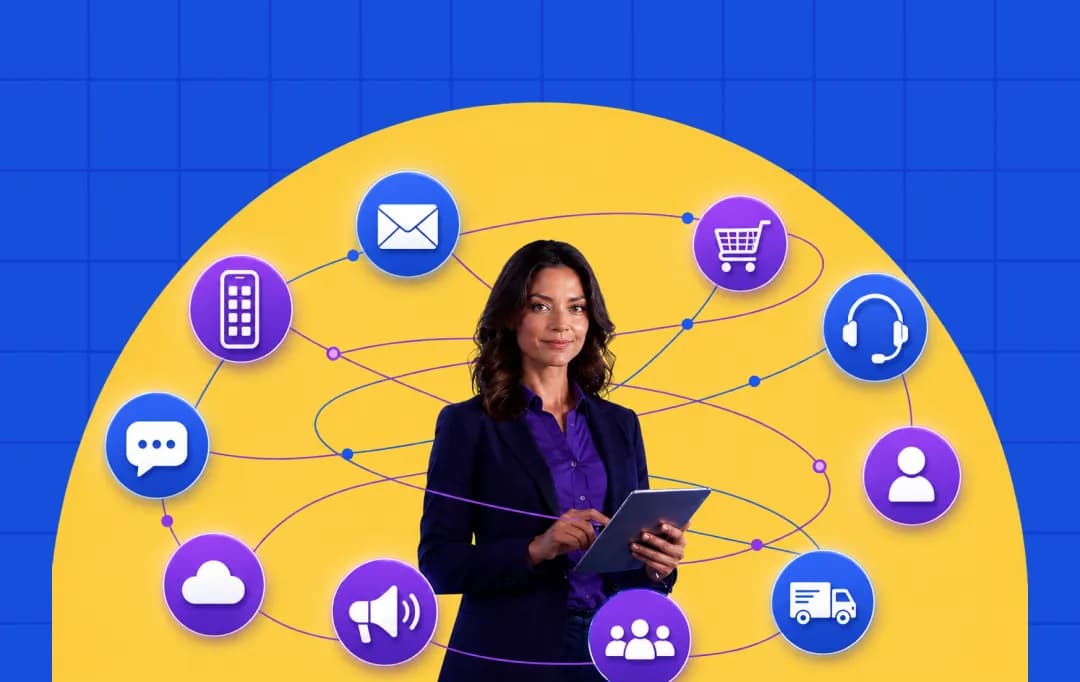 Omnichannel marketing turns your scattered digital efforts into a single, effortless journey that follows the user everywhere. It eliminates the gaps where sales are lost, driving higher retention and measurable growth.
Most buyers explore between four and five different spots before they buy. This is the new normal. If your brand does not show up with a consistent message at every single stop, you are basically handing your leads to a competitor. The problem is that most businesses still work in silos. The people sending your emails do not talk to the people running your ads. This friction is exactly where your sales are disappearing.
Mastering omnichannel marketing is no longer a choice for businesses that want to stay ahead in the market. Understanding the marketing norms is the first step toward fixing these broken journeys. You need a way to ensure that your message remains the same whether a person is scrolling on their phone or walking through your front door. This helps you build trust before a user reaches out.
This editorial will dive deep into how industries are changing, incorporating omnichannel marketing strategies and show you real-world examples for revenue. If you need marketing tips, these lessons will provide the real omnichannel marketing tips and the framework you need to succeed.
What Is Omnichannel Marketing?
Omnichannel marketing is a customer-centric approach where every channel a brand operates, physical or digital, is integrated into a single, unified experience. The customer moves fluidly between a website, a mobile app, a physical store, social media, or a customer service call, and the experience remains consistent, connected, and personalized throughout. There are no dead ends, no repeated questions, and no contradictions between what one channel says and what another delivers.
The definition of omnichannel marketing centers on one principle. The customer is the constant, and every channel bends around them, not the other way around.

Omni-Channel Definition: What the Word Actually Means
The word comes from Latin. Omnis means ‘all’ or ‘universal.’ Combined with ‘channel,’ the omni-channel marketing definition points to an approach that encompasses every avenue through which a customer interacts with a brand. It is not about being present on many platforms. It is about making those platforms work as one.
It means that when a customer adds an item to a cart on a desktop browser, abandons it, and later opens your mobile app, they see that same cart waiting for them. The data did not reset. The experience continued. That continuity is what omni-channel looks like in the real world.
Omnichannel Marketing Meaning in a Business Context
In a professional setting, omnichannel marketing involves the tactical deployment of technology to track and respond to user behavior in real time. For a small business, this means if a user abandons a cart on a mobile site, they receive a personalized SMS reminder that reflects their exact intent. The business logic focuses on continuity. This ensures that the conversation with the buyer never restarts but rather evolves as they move closer to a conversion.
What Does Omnichannel Mean in Marketing vs. Other Contexts?
It is important to distinguish how this term functions across different corporate pillars. In supply chain management, it refers to an integrated inventory where a product can be shipped from a store or a warehouse interchangeably. In customer service, it means a support agent can see a history of tweets, emails, and phone calls in one dashboard. When we understand what does omnichannel mean in marketing, we are specifically referring to the orchestration of brand messaging and promotional triggers to ensure a seamless path to purchase.
Omnichannel vs. Multichannel vs. Single-Channel: Key Differences
Understanding the hierarchy of omnichannel vs. multichannel marketing vs. single channel is essential for solid business strategic planning. Single-channel marketing relies on one solitary path to reach the customer. Multichannel marketing expands this reach by using several platforms independently, but these channels rarely communicate with each other. The omnichannel approach is the most advanced stage, where every channel is part of a single, living ecosystem.
| Dimension | Single-Channel | Multichannel | Omnichannel |
|---|---|---|---|
| Definition | One channel only | Multiple independent channels | All channels are integrated into one ecosystem |
| Customer Data | Siloed to one point | Siloed per channel | Unified across all channels in real time |
| Customer Experience | Limited, linear | Inconsistent across channels | Seamless, personalized, continuous |
| Channel Communication | N/A | Channels do not share data | Channels share data and inform each other |
| Focus | Brand-centric | Channel-centric | Customer-centric |
| Personalization Level | Minimal | Channel-specific, not holistic | Real-time, cross-channel personalization |
| Complexity | Low | Medium | High, but scalable |
| Revenue Impact | Limited reach | Broader reach, lower conversion | Higher LTV, conversion, and retention |
Key Digital Channels for Omnichannel Marketing
Your strategy will only be as good as the channels you connect. Think of it like a team. If your players are not talking to each other, you are just wasting your budget on a bunch of independent efforts. To win, every channel needs a clear role and a direct link to the central hub. Here are the specific platforms that make a modern omnichannel marketing framework actually work.
Website and E-commerce Platforms
The website is usually the first place people go, and it carries the heavy weight of making the sale. In an integrated setup, your site needs to recognize a returning visitor immediately. It should remember their past browsing history across different devices and match the message they saw in your latest ad. For e-commerce, this means keeping the cart full even if they switch from a phone to a laptop. Showing real-time stock levels for local stores is another way to help with the growing importance of conversion rate optimization because it builds trust and removes friction.
Mobile Apps and SMS
Mobile apps give you a direct line to your customer that no other channel can match. You can use push notifications and in-app messages to talk to them based on exactly what they are doing in the moment. SMS is also a powerhouse because people actually open their texts almost immediately. It is great for quick updates or time-sensitive deals. The secret here is making sure these mobile touchpoints share data with your CRM. You do not want to text someone a discount code for a product they just bought at your physical store an hour ago.
Social Media
Social media has changed from a place where you just post pictures to a full-on storefront. With buying features now built directly into TikTok and Instagram, social is a major transaction channel. In a smart omnichannel approach, a purchase made on social media should show up in the same loyalty system as an in-store buy. You want your customer to feel like they are dealing with one brand, not five different ones. It is about making the transition from scrolling to buying as smooth as possible.
Email Marketing
Email still brings in some of the best returns, but only if you stop sending the same blast to everyone. In this context, your emails should trigger based on what a person does on other channels. If someone visits a specific product page three times but does not buy, they should get a tailored email about that item. When you use a data-driven marketing trends mindset, your emails become helpful reminders instead of annoying spam. This keeps your open rates high and your customers engaged.
In-Store and Physical Touchpoints
Physical stores are not dying; they are just getting a tech makeover. Modern shops now use digital screens and apps for staff to help customers better. You might see QR codes that lead to online reviews or the option to buy online and pick up in person. This turns the physical store into a massive data capture point that feeds back into your digital world. Treating your store and your website as separate businesses is a huge mistake that leads to lost sales.
Emerging Channels: Chatbots, Voice, and IoT
Smart brands are already looking at what is coming next. AI chatbots are now handling entire sales from start to finish on apps like WhatsApp. Voice search through smart speakers is also becoming a way people find and buy things. Even smart home devices are starting to capture behavior data that you can use to reach people at the right time. These are not just cool gadgets; they are the new frontier for anyone serious about B2B digital marketing and long-term growth.
How Industries Are Adopting Omnichannel Marketing?
Integrated strategies are moving far beyond the retail world. Every sector is now looking for ways to engage with people and amplify their experience. This helps build the kind of loyalty that keeps a business growing. The leaders in these fields all realized the same thing. Customers expect a smooth experience regardless of what they are buying. They want a brand to recognize them every time.
Retail and E-Commerce
Retailers were the first to feel the pressure from shoppers who wanted more flexibility. They responded by making their online and offline worlds work as one. It is now common for someone to check a store's inventory on their phone before they leave the house. They can buy an item online and pick it up in person an hour later. The best brands use your browsing history to send you deals you actually want. This makes the physical shop and the website feel like parts of the same brand.
Banking and Financial Services
Banks have learned that customers hate repeating themselves. If you start a loan application on an app, you expect the person at the branch to know about it when you walk in. Leading banks keep a single file for every customer that updates in real time. This ensures that the call center, the website and the local branch are all on the same page. This level of target marketing and service turns a basic bank account into a trusted partnership.
Healthcare and MedTech
The health sector is using this omnichannel approach to keep patients engaged with their own care. They link patient portals with video calls and automated follow-up texts. In healthcare, a messy or broken experience is more than just a nuisance. It can actually disrupt a person's treatment plan. By keeping everything in one loop, providers make sure patients get their results and their medications without any unnecessary delays.
Travel and Hospitality
A traveler's journey usually starts months before they ever start their journey. They might look at hotels on a laptop and then book through an app. The best travel brands link these steps perfectly. Imagine arriving at a hotel where they already know your room preferences because of your past stays. They might even send you a personalized offer for your next trip while you are still on vacation. This is how they build emotional loyalty instead of just a one-time sale.
Quick-Service Restaurants and Food Delivery
Fast food brands have to be incredibly fast and consistent. If you earn loyalty points on a delivery order, you expect to see them in your app immediately. You should be able to spend them at the physical counter the very next day. The brands that sync their kitchen systems with their mobile apps see more orders. This is because the process is so easy that customers do not even think about going anywhere else.
Automotive
Buying a car starts at home, not at a dealership. Most people build and price their dream car on a website first. The best manufacturers send that exact data to the local dealer before the customer shows up. This makes the test drive and the final sale much faster. After the purchase, the system sends service reminders based on how much the person actually drives. It keeps the customer coming back to the dealer for years to come.

Proven Examples of Omnichannel Marketing Excellence
Looking at how the biggest brands handle their customers gives us a great blueprint. These companies have spent years figuring out what omnichannel digital marketing is in practice. They focus on removing every single point of friction so the customer never has to think twice.
Case Study 1: Starbucks
The Starbucks rewards program is probably the best example of a unified system. You can check your balance, add money and order your coffee all from your phone. If you buy a drink in the store, your points update on the app instantly. This makes the whole experience feel like one continuous loop. It encourages people to visit more often because the app makes it so easy to pay and earn rewards.
Case Study 2: Disney
Disney uses a system called the MagicBand to link everything in their parks. This wearable device acts as your hotel key, your park ticket and even your credit card. It is all connected to a central app where you can plan your day and check ride times. This is a perfect example of the omnichannel marketing meaning when it is applied to a physical location. It makes a complex vacation feel simple and fun.
Case Study 3: Sephora
Sephora does a great job of merging digital data with in-store shopping. Their Beauty Bag feature tracks every product you have looked at or bought online. When you walk into a store, you can use their tablets to pull up your account and see your past history. This helps the staff give better advice because they already know what you like. It makes the customer feel like the brand really knows them.
Challenges and Solutions in Omnichannel Marketing
Moving to a truly integrated omnichannel marketing strategy is usually a bit of a reality check. You will likely find that your data is scattered across different tools that were never meant to speak to each other. This creates gaps where your brand message gets lost or, worse, your customers get frustrated. The good news is that these challenges are common and very fixable. It just takes a bit of technical glue and a clear plan to bring everything under one roof. Here is how you can solve them.
| Challenge | Root Cause | Solution |
|---|---|---|
| Disconnected technology stack | Legacy systems and point solutions that do not communicate | Audit and consolidate around a CDP or unified CRM; prioritize API-first platforms |
| Siloed internal teams | Marketing, sales, and service teams operate with separate KPIs and data | Align teams around shared customer journey metrics and cross-functional governance |
| Inconsistent brand messaging | Lack of unified brand guidelines across channels | Develop a channel-agnostic content framework with consistent messaging and tone |
| Data privacy and compliance | Regulations like GDPR and CCPA impacting data collection and usage | Adopt zero-party and first-party data strategies with strong consent management |
| Attribution complexity | Difficulty tracking revenue across multiple touchpoints | Implement multi-touch attribution and move beyond last-click models |
| High implementation costs | Integration, platform upgrades, and training require high investment | Prioritize high-impact integrations and phase rollout to validate ROI |
| Maintaining personalization at scale | Manual personalization does not scale with growth | Use AI-driven segmentation and real-time personalization engines |
| Poor mobile experience | Mobile treated as a secondary channel | Adopt mobile-first design and ensure parity with desktop experience |
| Managing channel proliferation | New channels added faster than infrastructure can support | Create a structured channel adoption framework with integration requirements |
| Measuring holistic journey impact | Channel-level metrics fail to capture full customer journey | Track journey-level KPIs like time to conversion, contribution, and CLV |
Conclusion: The Future Is Omnichannel
Your customers are not waiting for you to define omnichannel marketing, but they are waiting for you to sort out your internal systems. They are already moving between your app, your website, your store, and your competitors, all in the same afternoon. Every time the experience breaks between those touchpoints, you lose a little ground. Sometimes you lose the customer entirely.
The businesses that have connected their channels are not doing something revolutionary. They are just doing what customers have been consistently asking for, for years. That is genuinely all it takes to stand out, because so few brands are actually doing it well.
This is not just about adopting new tools; it is about adopting a new philosophy that puts the customer at the center of every decision. The question is no longer about what is omnichannel strategy, but rather how quickly your organization can implement it to stay relevant.
Frequently Asked Questions
What does omnichannel mean?
It talks about a business approach that integrates all your platforms into a single network. You do not have two teams in your app and your store; you interconnect them. This is because the customer will receive the same message and service regardless of where they choose to associate with your brand.
What is omnichannel advertising in the marketing context?
It is a form of running advertisements that trails the user in a rational order. When one visits your site to look at a product; he/she may find a helpful video of the product on social media. It makes your omnichannel advertising not only helpful but also not annoying spam.
What are some of the tools used to support omnichannel solutions?
Your operation will require a good CRM to be the brain of your operation. It ought to be linked to your email applications and your website via APIs. Such omnichannel solutions guarantee that each team is informed of the same information regarding each customer.
What is the starting point for omnichannel marketing?
The first thing that you should do is to examine your existing customer data and observe where they fall off. Determine the areas of information stagnation. As soon as you identify such gaps, you can begin to seek out omnichannel solutions that can enable your various software platforms to communicate more efficiently with one another.
What are some examples of omnichannel marketing?
A typical example of this is Starbucks, whose physical and app stores exchange live information. Disney implements wearable technology to connect their parks with their online services. Sephora also enables them to open their online beauty accounts as they stand in the store to seek more advice.

Uncover executable insights, extensive research, and expert opinions in one place.
Related Content