Share It On:
 If you’re only focusing on acquiring new users, you’re missing the real opportunity. The biggest gains come after the first purchase: through retention, engagement, and loyalty. Lifecycle marketing ensures you don’t lose customers right after winning
According to Harvard Business Review, acquiring a new customer is five to 25 times more expensive than keeping an existing one. However, most of the brands invest their entire budget at the top of the funnel, and end up losing customers through the loopholes.
The most lucrative businesses in the world, be it hyper-growth SaaS startups or iconic DTC brands, have a secret: the secret lies in the journey, not the destination. This is Lifecycle Marketing, the data-driven art of delivering the right message at the exact moment a customer needs it.
In this guide, we are deconstructing the framework you need to minimize churn, maximize lifetime value, and turn every interaction into a long-term win. So let’s get started.
What is Lifecycle Marketing?
Lifecycle marketing, in its simplest form, is the idea of developing specific marketing programs and messages that are used across every stage of the customer experience. Such as when they first learn about your brand, until they become a repeat customer (or turn away completely).
The customer lifecycle marketing approach is 360-degree unlike traditional marketing which tends to lay much emphasis on acquisition. It understands that a first-time visitor needs absolutely different things than a long-time buyer and treats them accordingly.
Lifecycle marketing is a combination of:
- Differentiated messages depending on varying stages of the customer journey.
- Campaigns that are activated automatically by behavioral triggers.
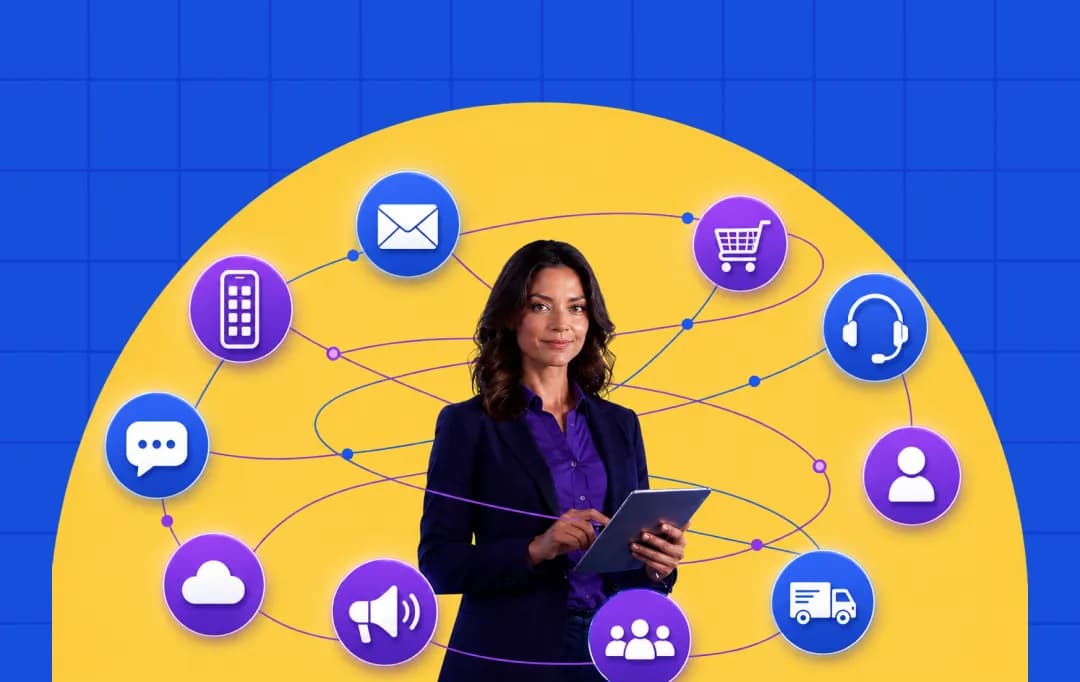
- Cross-channel communication, email, SMS, paid advertisements, push notifications, etc.
- Continuous measurement and optimization over time.
Consider it not as a one time campaign but rather one of the most effective marketing strategies that will help to nurture every customer up to the point of loyalty.
Why is Lifecycle Marketing Important?
You may be asking yourself: why is lifecycle marketing important and relevant at a time when you can simply place more advertisements or enhance your product?
But with new customer acquisition being more expensive than to keep existing customers happy, lifecycle marketing ensures you drive long-term revenue instead of relying solely on constant acquisition.
Bain and Company studies suggest that a 5% rise in retention will increase profits by 25-95 %.
Beyond the financials, lifecycle marketing matters because it helps you:
- Build meaningful connections: Modern customers demand personalization. Generic auto-mails to your entire list can feel insensitive, whereas lifecycle marketing tailors communication based on user behavior and history.
- Reduce churn proactively: Identify at-risk users early and re-engage them before they drop off.
- Maximize LTV (Lifetime Value): Drive more value from existing customers through upsells, cross-sells, and loyalty programs.
- Create brand champions: Satisfied customers don’t just stay—they refer others, leave reviews, and amplify your marketing organically.
Although it provides many benefits, it is also important to consider the marketing lifecycle stages and steps for proper execution. Let’s take a quick look at them.
What Are the Stages of Lifecycle Marketing?
Among the most frequently asked questions by marketers is: What are the lifecycle marketing stages? Although the precise naming differs with each model, most divide the journey into five fundamental stages.
1. Awareness
This is the head of the funnel, where potential customers become aware of your brand. This is aimed at grabbing their attention and leaving a good first impression. The roles in this stage include content marketing, SEO, paid social, PR, and influencer partnerships.
2. Acquisition / Consideration
Your solution is now under evaluation by the prospect. They could be reading reviews, researching competitors or reading your price page. At this stage, lifecycle marketing campaigns might involve retargeting advertisements, lead nurture email campaigns and free trial or demo offers.
3. Conversion / Activation
The customer completes an initial purchase or a core action (such as creating a profile or using a core feature the first time). This is a pivotal point - an excellent onboarding experience in this case would ensure a high likelihood of retention in the long run.
4. Retention / Engagement
Now the work starts in earnest. This stage is all about maintaining the attention of customers, encouraging them to make repeat purchases and strengthening their attachment to your brand. Here, you can find win-back campaigns, loyalty programs, educational content, and personalized product recommendations.
5. Loyalty / Advocacy
At this last phase, your most satisfied customers will become brand ambassadors. Referral programs, VIP membership, community building and exclusive content can contribute to the transformation of loyal buyers into vocal advocates that will bring new customers into your funnel naturally.
The key to everything is understanding these customer lifecycle stages that marketing teams should address.
What is the Lifecycle Marketing Process?
So, how does lifecycle marketing work as an operational system? The answer is in three pillars that are related to each other.
Pillar 1: Segmentation
Lifecycle marketing model requires you to segment your audience in a meaningful way. You ought to be segmenting at least by:
- Lifecycle (new subscriber vs. repeat buyer vs. lapsed customer)
- Behavioral statistics (pages accessed, products browsed, emails read)
- Purchase history (frequency, average order value, categories purchased)
- Engagement score (activity or inactivity of a customer)
Contemporary Customer Data Platform (CDP) systems are making this type of segmentation increasingly affordable, even for mid-sized companies.
Pillar 2: Automation
It would be impractical to perform lifecycle marketing manually on a large scale. Marketing automation systems like Klaviyo, HubSpot, Braze, or Iterable allow you to create trigger-based workflows that deploy the appropriate campaign once a customer meets a certain criteria.
For example:
- User registers an account → Welcome series kicks off.
- User did not log in for 14 days → Re-engagement email triggers.
- The third time a user sees a product but does not purchase it, a retargeting ad goes off.
Pillar 3: Multi-Channel Coordination
Great lifecycle marketing exists not in a single channel. The marketing funnel is threaded together using email, SMS, in-app messages, push notifications and even direct mail to high-value segments. It all depends on consistency - the customer experience must be smooth no matter how they engage with your brand.
The Lifecycle Stages of Marketing vs. the Traditional Funnel.
Lifecycle marketing and the conventional marketing funnel might appear to be similar at the surface level; however, they are very different in practice.
The old-fashioned funnel is linear: Awareness => Interest => Decision => Action. When a customer is converted, it is deemed that the journey is complete. Nevertheless, this model has a significant shortcoming, which is that it does not take into account post-sale events.
The lifecycle model, in contrast, is a cyclic one. Once converted, the attention is on retention, loyalty and advocacy- all of which are reinvested into new awareness. It accepts the fact that the true value of customer relationships can start after the initial purchase.
This change of vision is what distinguishes between transactional and iconic brands.
Let's briefly check out some of the main differences.
| Aspect | Traditional Funnel | Lifecycle Marketing |
|---|---|---|
| Structure | Linear | Cyclical |
| Focus | Acquisition-driven | Relationship-driven |
| End Point | Conversion | Continuous engagement |
| Post-sale focus | Minimal | Core priority |
| Growth driver | New customers | Customer retention + advocacy |
| Customer view | One-time buyer | Long-term relationship |
Marketing Strategies that Work in Lifecycle Marketing.
Now moving from theory to execution, here are the key strategies brands use to guide customers through each stage of the lifecycle:
1. Welcome Series (Awareness → Activation)
The welcome sequence is the tone of the whole relationship. An effective 3-5 email campaign that tells your brand story, features important value propositions and directs new subscribers to their first purchase can transform conversion rates. Do not simply say that they have signed up, but make them have a reason to proceed with the next step.
2. Onboarding Flows (Activation → Retention)
Onboarding flows are especially important in SaaS and app-based businesses, where the goal of the onboarding process is to get the new user to their aha moment as fast as possible. Provide in-app tooltips, educational email messages and progress-based nudges to help users adopt the most correlated behavior with long-term retention.
3. Win-Back Campaigns (Retention → Re-Engagement)
No matter how excellent your product may be, you will have customers who will fall silent. A win-back lifecycle marketing campaign will often have a 2-3 touch sequence with a strong incentive to come back, which could be a discount, a new feature or even a message that is a personalized one-on-one message of, we miss you. Timing is important: 30-90 days downtime is the happy medium, depending on your buy cycle.
4. Loyalty and VIP Programs (Retention → Advocacy)
Giving your top customers privileged access, first release of products, reward points or special treatment makes them brand lifers. Such programs also result in strong word-of-mouth - your most continuous customers are nearly always the most vocal advertisers.
5. Referral Programs (Advocacy → Awareness)
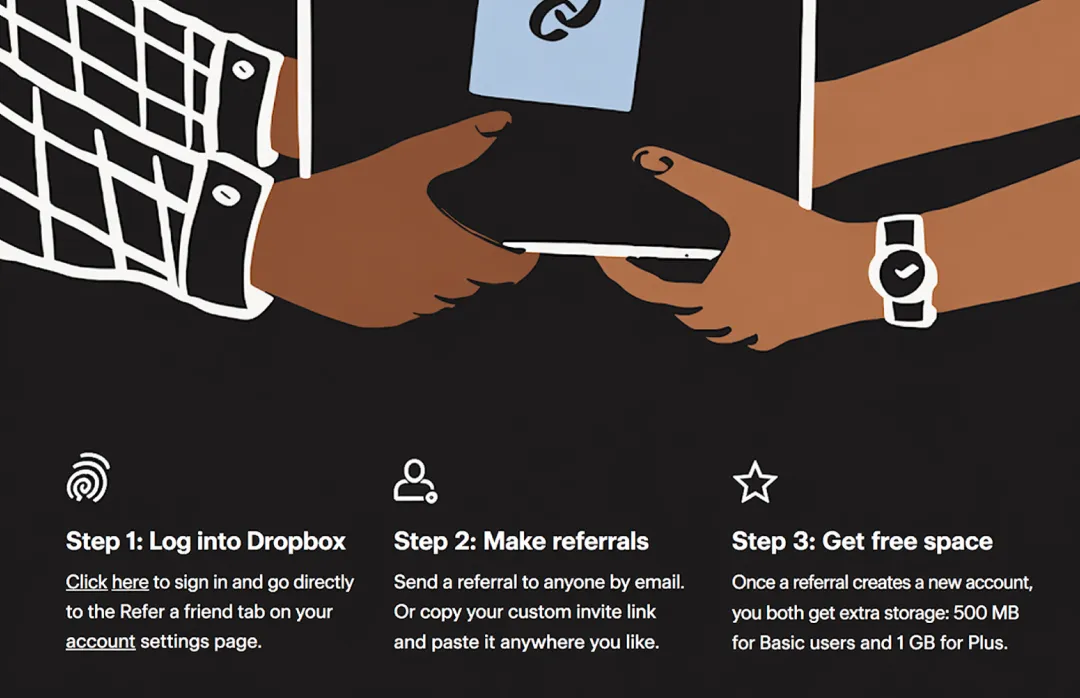
Transform advocates into acquisition channels. An effective referral program establishes a self-feeding growth cycle that is much more cost-effective than pure paid acquisition. Dropbox has a well-known referral program:
While these strategies work effectively across most industries, their execution can look very different depending on the business model. In particular, B2B lifecycle marketing introduces added layers of complexity, from longer sales cycles to multiple decision-makers, making it a distinct approach worth exploring.
How Does B2B Lifecycle Marketing Work?
While the principles of lifecycle marketing apply universally, B2B lifecycle marketing has some important nuances.
In B2B, the buying process is longer, involves more stakeholders, and requires significantly more trust-building before a deal closes. A typical B2B lifecycle marketing plan usually includes:
- Lead nurturing sequences that provide value over weeks or months, rather than days.
- Account-Based Marketing (ABM) for high-value targets, aligning outreach across sales and marketing.
- Customer success integration, where marketing automation is informed by product usage data and CSM notes.
- Expansion campaigns focused on upsell and cross-sell opportunities within existing accounts.
- Renewal and churn-prevention flows triggered by engagement signals and customer health scores.
The B2B lifecycle funnel is broader, slower, and more relationship-oriented—but the rewards for getting it right are significantly higher.
|You Might Also Like: Account-Based Marketing Strategies to Maximize B2B ROI
Lifecycle Marketing and Growth Marketing.
One of the most frequently asked questions: what is the difference between lifecycle marketing and growth marketing? Are they essentially the same, or are they very different?
The concise response: they are not interchangeable, they are complements. Below is a quick rundown of lifecycle marketing vs growth marketing.
Growth marketing is mostly centered on high-speed, data-oriented experimentation to steer top-line growth - frequently with a weighting towards channels of acquisition such as paid media, search engine optimization, referrals, and virality. It is based on the growth hacking legacy and is both very quantitative and channel-agnostic.
Lifecycle marketing is more concerned with the level of the customer relationship over time. Although it clearly involves data and experimentation, its main prism is the customer journey, where all touch points of all stages are deliberate, customized and cumulative.
Practically, the most successful marketing teams utilize both. Growth marketing occupies the top of the funnel; lifecycle marketing makes the most of all who come into the funnel.
How to Get Started with Creating Your Lifecycle Marketing Strategy:
When you are prepared to develop or revise your lifecycle marketing plan, the following is a realistic beginning:
- Chart your existing customer experience. You have to know it before you can optimize it. Use your CRM, analytics tools and customer interviews to determine the actual route customers follow (including the point of drop off).
- Determine your lifecycle steps. In accordance with your business model, identify the meaning of each stage in terms of concrete meaning. How does your product look in terms of its activation? What is the precipitating factor that takes an individual from engaged to at-risk?
- Review your current touchpoints. What are the messages that are being received by the customers at each stage? What's missing? What is the disconnect between customer requirements and customer performance?
- Prioritize your most important flows. You cannot erect everything at a time. Begin with the flows that will affect the business the most - usually the welcome series, the onboarding flow, and the win-back campaign.
- Measure and repeat. Identify the KPIs of each stage (open rates, click-through rates, conversion rates, churn rates, NPS) and analyze them on a regular basis. Lifecycle marketing is never finished - it changes along with your customers and product.
Conclusion
Lifecycle marketing is not a strategy but a permanent way of boosting your marketing efforts. It is the belief that each customer interaction is a time to build trust, create value, and a relationship that will pay off over the years.
In a world where there is less and less attention and the cost of acquisition continues to rise, the brands that succeed over time are those that do not think about the click and the conversion but invest in the entire customer relationship.
The customer lifecycle marketing funnel provides you with the framework to cease campaign thinking and begin relationship thinking whether you are just starting or aim to take an existing program to the next level.
Frequently Asked Questions
What is a lifecycle marketing strategy?
A lifecycle marketing approach is aimed at captivating the customer throughout the process, such as awareness till advocacy. It does not just drive new acquisitions, but establishes long-term relationships, using personalized messaging, automation, and data-driven insights to enhance retention, lifetime value, and repeat customers.
What are the stages of lifecycle marketing?
The phases usually comprise awareness, acquisition, conversion, retention and loyalty. The stages are all the various stages of the customer journey and need unique communication and campaigns. Knowledge about such stages assists marketers in providing a contextual experience and taking customers through the initial engagement to a lifelong promotion.
How does the lifecycle marketing process work?
Lifecycle marketing process works based on segmentation, automation, and multi-channel coordination. Businesses profile users by behavior, activate campaigns by action and interact on different channels such as email, SMS, and advertisements. This guarantees effective communication that is relevant and timely and which is adjusted to the journey of individual customers in real time.
Why is lifecycle marketing important for businesses?
The significance of lifecycle marketing is that it can help to lower churn, enhance customer retention, and increase lifetime value. Given that it is much more costly to attract new users, it is more cost-effective to consider the existing users as the target group by engaging in personal conversations to provide a sustainable increase in the user base and reinforce customer relationships in the long run.
Which are the best lifecycle marketing campaigns?
The successful lifecycle marketing campaigns consist of welcome messages, onboarding campaigns, win-back campaigns, loyalty programs, as well as referral campaigns. These campaigns are activated according to user actions and are structured to direct the customers through every phase and create a steady interaction and increased conversion throughout the process.

Uncover executable insights, extensive research, and expert opinions in one place.
Related Content