To simplify your search for the perfect match, we tested 9 apps for posture correction on monitoring accuracy, exercise effectiveness, and analysis depth. This breakdown details every feature and limitation of each app to help you align the technology with your specific needs.
Posture Apps: A Quick Comparison
This breakdown highlights the unique strength of each posture app, helping you quickly distinguish between apps designed for deep corrective therapy, real-time biofeedback, or simple daily stretching.
| App Name | Best Suited For |
|---|---|
| Perfect Posture | Custom 30-day corrective plans |
| Healthy Spine Straight Posture | Daily flexibility & stretching routines |
| SmartPosture | Remote parental posture control and monitoring |
| Text Neck | Relieving forward head posture |
| UPRIGHT | Immediate vibration biofeedback |
| Postureletics | Therapy-grade corrective exercises |
| Posture Pal | Gamified posture tracking for AirPods users |
| Posture Reminder | Interval-based habit training |
| APECS | Clinical-grade analysis & reports |
Read Less
List of the Best Posture Apps

Pros & Cons
Pros
- Creates custom AI-powered workout plans
- Includes specialized scoliosis and pain relief routines
- Supports full offline use for training anywhere
- Tracks holistic metrics like weight, height, and BMI
Cons
- Lacks real-time camera posture detection
- Can feel overwhelming due to content volume
Why You'll Love It
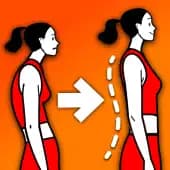
It acts as your personal digital trainer, using AI to instantly build a unique 30-day plan tailored to your specific needs from a massive library of 200+ exercises.More about product
The AI-powered engine is the backbone of this posture app, instantly generating a hyper-personalized, 30-day correction plan, a targeted remedy for correcting alignment issues and modern screen-related slouching. The platform's commitment to holistic health is evident: 200+ exercises (including yoga and Pilates) are bolstered by integrated diet plans and essential wellness articles.
For technical reliability, robust Android Health and Cloud Sync integration secures your activity data and ensures continuity across devices. Critical during any workout, the voice coach provides audible instructions, guaranteeing perfect form without requiring you to strain your neck looking at the screen. This complete health utility manages BMI tracking and supports the creation of custom anti-stress breaks.
While the sheer depth of content might require new users a moment to navigate, and correction effectiveness hinges on user discipline due to the lack of live detection, the high-level planning features available via subscription offer substantial value.
Pros & Cons
Pros
- Offers nearly 300 no-equipment exercises
- Tracks progress via weight and calorie charts
- Provides video instructions from professional trainers
- Features three difficulty levels (Easy, Normal, Hard) for exercises
Cons
- Requires manual selection of workout plans
- Lacks real-time posture detection sensors
Why You'll Love It
This posture-correcting app combats the effects of aging and a sedentary lifestyle with nearly 300 no-equipment exercises to improve flexibility and prevent back pain.More about product
Poor posture often stems from a lack of targeted muscle engagement, an issue this fitness app resolves with detailed exercise modules. Its library is engineered to strengthen and release tension in specific areas critical to spinal alignment, including the hamstrings, lumbar spine, neck, and chest. It adapts instantly to your needs, whether you choose a structured 30-day home workout or prefer building a completely custom routine.
Intensity of the exercises can be managed by you as you can select from easy, normal, or hard levels, with every action supported by professional video instruction. The utility goes beyond stretching, incorporating a calorie tracker to enhance your motivation and ensure daily flexibility goals contribute to your broader physical performance.
While the app is powerful, be aware of two points: the sheer volume of the exercise library means you must manually select your initial routines, as the system offers no guidance. Secondly, consistent daily practice is self-managed, as automated reminders are not integrated into your schedule.

SmartPosture
Pros & Cons
Pros
- Includes parental controls for remote monitoring
- Offers unlimited shake-to-exit screen options for reminders
- Runs seamlessly in the background while you browse
- Provides posture correction reminders via blurred screen or vibration
Cons
- Contains a lot of advertisements
- Needs an account for web-based comparison
Why You'll Love It
It turns good habits into a competition by tracking your 30-day history and letting you compare your scores with users worldwide, motivating you to beat the global average.More about product
If constant worry about screen slouch is draining your energy, this platform provides real relief. This essential posture corrector app functions like an advanced shield for your child's spinal health, integrating monitoring features that mirror robust parental control apps.
Your phone becomes the command center, acting as a remote posture monitor that gives you the power to check progress and fine-tune settings on their device without ever needing to physically intervene.
That remote control means you have immediate, statistical verification that your kids are maintaining safe viewing angles, cutting out the guesswork regarding neck strain. Practicality is boosted by the unlimited shake-to-exit option for swift reminder dismissal, alongside a well-being blog and detailed internal statistics for tracking improvement.
Basic functionality is available for free, but unlocking features like 30-day history and peer comparison statistics requires an upgrade. Be ready for frequent ad interruptions during monitoring sessions. A key point: access to the most powerful parental supervision is restricted to the paid tier, and the system is limited to tracking only when the screen is actively on, shutting down if the phone is off or face down.
Pros & Cons
Pros
- Offers a choice of male or female virtual trainers
- Includes a built-in posture analysis questionnaire
- Delivers instant relief with dynamic and static stretches
- Sends smart custom reminders to check head position
Cons
- May feel repetitive for users seeking full-body fitness
- Focuses exclusively on neck and upper body issues
Why You'll Love It
Posture analysis begins with a detailed questionnaire that maps your alignment, establishing a clear baseline. You can then immediately measure and verify the success of your alignment improvements.More about product
True posture correction starts with finding the reason for poor posture. This highly effective posture analysis app deliberately bypasses generic routines, launching instead with a specialized questionnaire and assessment test to accurately determine the root cause of your specific poor alignment problems.
It provides a structured path to fix forward head posture using scientifically proven methods, combining dynamic and static exercises to release tension.
A unique standout feature is the ability to choose between a Female and Male trainer, which adds a refreshing touch of personalization to the guided workouts. This app also comes with the Posture Reminder smart notifications.
You can set custom alerts to check your head position throughout the day, ensuring your healthy back remains a priority even when you aren't using the app.
Specially designed upper-body stretches serve as the foundation of the flexibility workout, specifically aimed at reversing forward head posture. By combining these corrective exercises with routine back-strengthening, the app addresses complex issues such as lordosis and kyphosis.
But lower back and general spinal issues fall outside this app's scope, limiting its usefulness for comprehensive posture problems. The reminder system triggers at scheduled intervals, whether you need correction or not, potentially interrupting you unnecessarily. The questionnaire-based assessment also cannot provide the precision that camera or sensor technology delivers in competing apps.

Pros & Cons
Pros
- Visualizes posture with a real-time in-app avatar
- Gamifies progress with personalized daily goals
- Includes step-by-step tutorials to perform exercises perfectly
- Tracks long-term stats to boost confidence
Cons
- The device and app may deplete power quickly
- May vibrate during intentional leaning
Why You'll Love It
It pairs with the UPRIGHT GO sensor for instant biofeedback. A gentle vibration and on-screen visual alert you the moment you slouch, training you to stand tall, strengthen your core, and breathe better.More about product
This system uniquely bridges the gap between digital posture tracking and physical correction. Crucially, the integration with the UPRIGHT GO sensor serves the app's main purpose: providing real-time feedback, building posture awareness, and training core muscles to develop better long-term habits.
The pairing of the physical device and the digital app creates highly effective real-time feedback. The device vibrates gently the moment you slouch, while the app simultaneously mirrors your exact body movement via a virtual avatar.
Customization depth provides precise adjustment of vibration intensity and specific training goals to match your comfort level. Beyond live alerts, this posture check app excels at tracking, offering interactive, step-by-step tutorials for calibration and a detailed statistics screen that vividly visualizes your overall improvement.
Regarding usability, it is worth noting that the app is designed to work exclusively with the UPRIGHT GO sensor, which must be purchased separately. Additionally, the system utilizes a continuous Bluetooth connection to sync data, so your phone needs to remain connected to the device to visualize your posture and track daily progress.

Pros & Cons
Pros
- Crafts AI-powered routines based on your needs
- Adapts the program weekly based on your feedback
- Incorporates exercises designed by certified Posture Therapists
- Offers 20-minute routines that need no equipment
Cons
- Camera analysis errors may occur
- Requires a subscription for the full therapy plan
Why You'll Love It
This app acts as a virtual clinic, delivering a fully personalized, science-backed therapy plan that adapts weekly to your pain levels, designed by experts trained at the renowned Egoscue Institute.More about product
This app distinguishes itself from standard posture apps by delivering a complete virtual corrective exercise program, developed with expertise from a certified Posture Therapist trained by the Egoscue Institute.
It provides targeted exercises to help ease discomfort and support your journey to better posture, whether you are addressing occasional stiffness or ongoing challenges. Unlike generic tools that offer static advice, this platform starts with a Free Posture Assessment where the AI engine analyzes your alignment to create a dynamic plan based on your fitness levels.
The program adapts weekly based on your feedback, utilizing 20-minute sessions that require no special equipment. However, users must note that camera-based analysis inherently carries a potential for error, as it cannot capture the three-dimensional depth of human posture.
It is also worth checking data sharing policies, as is common with AI-based healthcare apps. Most importantly, this solution demands strict user commitment; without the immediate feedback of a vibrating sensor, you must rely on your own discipline to stick to the daily plan for results.

Posture Pal
Pros & Cons
Pros
- Uses existing AirPods motion sensors for motion tracking
- Operates seamlessly in the background while you work
- Features interactive characters like Rafi and Paca
- Allows custom sensitivity levels (Low, Medium, High)
Cons
- May take a lot of time for initial set up
- Posture tracking issues may occur on certain iPhone users
Why You'll Love It
It creatively transforms your existing AirPods into a real-time posture tracker. By using the motion sensors you already wear, it tracks your neck tilt and alerts you via sound or vibration the moment you slouch.More about product
Posture Pal offers a refreshingly convenient solution by leveraging the hardware you likely already own, effectively distinguishing itself from other apps to fix slouching. Instead of requiring a separate device, it utilizes the motion sensors in compatible headphones (like AirPods Pro or Max) to detect neck tilt.
Forget boring alerts, its playful interface makes posture correction engaging. Just choose your favorite "Posture Pal," such as Haru, Paca, or Rafi the Giraffe. This dynamic character is your visual safeguard, appearing instantly on screen to cue you precisely when your posture needs adjustment.
The app is highly functional, offering detailed animations that visualize your session data, including average pitch, roll, and yaw, so you can understand your specific posture alignment patterns. Flexible feedback options are available, offering a choice between visual, audio, and phone vibration alerts when poor posture is detected.
While innovative, users should be mindful that head-tracking can trigger false alarms during routine actions like eating. Furthermore, consistent monitoring depends on wearing headphones throughout the day, which is a factor to consider for long-term comfort.
Posture Reminder
Pros & Cons
Pros
- Includes visual guides for proper sitting/standing
- Tracks progress with detailed analytics and reports
- Prevents slouching with simple interval timers
- Supports custom frequency, timing, and intensity settings
Cons
- Lacks real-time posture analysis sensors
- Offers only timer-based alerts, not corrective feedback
Why You'll Love It
This app acts as your persistent digital conscience, letting you to set specific intervals and active hours for reminders. This helps you build a habit of checking your alignment automatically throughout your busy day.More about product
As a dedicated system for alignment, Posture Reminder assists users in improving posture through notifications and optional motion tracking capabilities. Crucially, this posture reminder app streamlines habit formation by guiding you via smart reminders that fluidly adapt to your daily routine.
Alerts are fully customizable, including start times, frequency, and intensity, guaranteeing they fit seamlessly into your work schedule without distraction. Visual guides offer essential spinal alignment tips, guaranteeing correct improvement.
This functionality is key to fixing current back pain and warding off associated complications like neck pain, shoulder discomfort, and breathing difficulties.
By generating detailed analytics and progress reports, this posture corrector app effectively functions as a habit-based posture analysis app to monitor your improvement and celebrate achievements.
Its goal is to maintain optimal lung function and prevent conditions like lordosis, kyphosis, and scoliosis. However, without external sensors, its effectiveness relies entirely on your self-discipline to straighten up when notified.
Pros & Cons
Pros
- Generates professional PDF reports with text explanations
- Analyzes dynamic movement via video evaluation
- Offers "Green Marker" mode for clinical precision
- Ensures privacy with a face-masking function
Cons
- Requires a second person or a tripod for accurate photos
- Lacks real-time background slouch detection
Why You'll Love It
Developed by doctors, this app transforms your phone into a clinical assessment tool. It uses precise algorithms to detect specific defects from forward head posture to knee valgus with professional accuracy.More about product
This app provides a medical-grade toolkit for whole-body assessment, developed by doctors. It performs front, back, and side analysis to detect issues like Forward Head Posture (FHP), flat back, and rounded shoulders. It includes specialized tools like the Golden Ratio test, Adam's forward bend test, and a Goniometer for Range of Motion.
Functioning as a high-precision posture tracking app, it utilizes ATSI and POTSI indexes and an Automatic Ruler to analyze trunk asymmetries. We found this depth essential for tracking results when using corrective tools like a back brace.
For dynamic evaluation, it offers video analysis with Green Marker Recognition to track movement. Users can generate customizable PDF reports and protect privacy with the "face mask" feature.
Regarding usability, the professional design, aimed at coaches and researchers, means the interface has a steeper learning curve. Additionally, achieving accurate results typically requires a tripod or a second person, and advanced measurement tools are generally gated behind a subscription.
Also Read: 11 Best Gym Workout Apps to Dominate Your Fitness Goals
Tips for Getting the Most Out of Posture Apps
Getting real results from posture apps requires more than just downloading them. Here are practical strategies to maximize their effectiveness and build lasting habits.
1. Begin with the Little Things and Grow
Do not overdo it and stress to sit in perfect posture on your first day, for eight hours straight. Start with short and manageable 15-30-minute sessions and then slowly extend the time. The majority of the apps have training options that gradually increase your postural stamina and do not fatigue or dehearten muscles. Consider it as a new exercise programme- consistency is better than intensity.
2. Prepare Your Surroundings
Physical workspace is important in ensuring good posture. Arrange your computer monitor so that it is at eye level to avoid forward head posture. Make sure your chair is able to support the natural curve of your spine, and make sure that your feet are straight to the floor. Applications can be used to remind you to sit in a straight position, and unless your desk configuration does not struggle with maintaining a straight position, you are complicating the task.
3. Reminders + Strengthening Exercises
Reminder applications such as Posture Pal or Posture Reminder are most effective as part of strengthening exercises provided by apps such as Perfect Posture or Healthy Spine. Reminders raise awareness throughout the day, and specific exercises focus on the muscle weaknesses that lead to poor posture. Devote 15-20 minutes per day to corrective exercises, and do this in the morning to mobilize the right muscles before you go to work.
4. Create Trigger Habits
Associate the link posture checks with the current daily habits. To illustrate, when you get a notification, finish a cup of coffee, or finish a task, check your posture. This habit-stacking method is not forced to be conscious of posture. Most reminder applications are customizable, so you can fit them into a natural work rhythm rather than arbitrary time intervals.
5. Monitor Your Improvements
Note down your postural changes in photos every week, on the side and the front. Such apps as APECS offer an in-depth analysis, yet even basic before-and-after photos can be highly inspiring. Gradual improvements can go unnoticed by many users until they compare photos taken a month ago. Such a visual testimony supports you in such difficult times.
6. Don't Ignore Discomfort
On the one hand, some soreness in the muscles is associated with correcting posture; you are stimulating the muscles that are inactive. Nevertheless, acute pain, numbness, or progressive pain is an indicator that something is wrong. Change your strategy as soon as you can and refer to the application's instructions or a specialist. Eventually, good posture must become comfortable, not painful.
7. Be Patient with Results
Improving posture is a long-term process rather than a short-term one. The majority of users experience a perceivable change in pain levels within 2-4 weeks, whereas major visual changes require 2-3 months of effort. It took years to form bad posture habits in your body; it will take time and perseverance to change them.
Conclusion
Posture apps are powerful assistants, but they work best when paired with your own daily commitment. Their true value lies in keeping spinal health top-of-mind in a world where we sit for hours. Real success happens when you shift from constantly reacting to alerts to proactively maintaining strong alignment.
The ultimate goal is to train your body until good posture becomes second nature, turning the app from a daily crutch into a tool for long-term maintenance and health tracking.
We cut through the deafening digital noise to find what truly works. Every product on our list survives a relentless, hands-on analysis—no exceptions. We do the grunt work to deliver verified, trustworthy recommendations, so you can choose the right tools with absolute confidence.
- Products Reviewed - 4,000+
- No. Of Experts - 20+
- Categories - 65+
Frequently Asked Questions
How to improve posture with apps?
Start by identifying what you need pain relief, awareness reminders, or detailed analysis. Download an app matching that goal. Use exercise apps like Perfect Posture to strengthen weak muscles, or monitoring apps like Posture Pal for real-time slouch alerts. Commit to six weeks of consistent use and combine it with proper desk ergonomics for better results.
How do posture apps work?
Yes, when used consistently with the right type for your needs. Real-time feedback apps like UPRIGHT build muscle memory quickly. Exercise apps like Postureletics fix underlying muscle weakness. Expect pain relief within 2-4 weeks and visible posture changes in 2-3 months. Apps work best alongside proper ergonomics, not as standalone solutions or replacements for medical treatment.
Can I use posture apps if I have existing back problems?
Most apps handle common issues like slouching and tech neck effectively. However, consult your doctor first if you have scoliosis over 20-25 degrees, previous spinal surgery, or osteoporosis. Apps cannot replace professional medical oversight for structural problems. Use them as supportive tools alongside your treatment plan, not as substitutes for professional care.
Which posture app should I choose: monitoring or exercises?
Choose based on your awareness. Forgot to check posture during work? Monitoring apps like Posture Reminder or UPRIGHT send necessary alerts. Know you slouch but lack strength to stay upright? Exercise apps like Perfect Posture or Healthy Spine strengthen weak muscles. Many people combine both, monitoring for awareness, and exercises for strength.
How long should I use a posture app daily?
Exercise apps need 15-20 minutes daily for corrective routines, ideally in the morning before work. Monitoring apps work during high-risk periods like desk work, typically 4-8 hours. Start with short 15-30 minute sessions and increase gradually. Brief daily use beats sporadic long sessions. Consistency matters more than duration for lasting improvement.





We've got more answers waiting for you! If your question didn't make the list, don't hesitate to reach out.
More in Healthcare
Explore More In HealthcareWe Found the Top Baby Tracking Apps for Your Sanity