- 1. Figuring out Customer Needs and Demand
- 2. Understanding Customer Behavior Through Research and Insights
- 3. Segmentation, Targeting, and Positioning
- 4. Communicating Value Through Clear Messaging
- 5. Defining Your Value Proposition Clearly
- 6. Choosing the Right Marketing Channels
- 7. Using Content to Build Trust and Demand
- 8. Driving Conversions and Reducing Friction
- 9. Retention, Loyalty, and Measuring What Matters
 Share It On:
 Marketing isn’t just about campaigns anymore; it’s about clarity. Most strategies fail because the basics aren’t fully in place. Keep reading to see how the fundamentals shape what actually works.
Marketing is one of the most discussed and least understood disciplines in business. Some treat it as advertising. Others treat it as branding. A few mistake it for sales. The reality is broader (and more durable) than any single tactic.
The American Marketing Association formally defines marketing as "the activity, set of institutions, and processes for creating, communicating, delivering, and exchanging offerings that have value for customers, clients, partners, and society at large."
In simpler terms, marketing is how a business identifies customer needs, creates something of value to meet them, communicates that value clearly, and delivers it in a way the customer is willing to pay for.
The fundamentals of marketing are the timeless principles that sit underneath every campaign, channel, and trend. They have not changed in decades, even as channels have multiplied from print and television to search, social, influencers, AI search and connected TV. Tactics age. Fundamentals do not.
The 7 Ps of Marketing
The 7 Ps are Product, Price, Place, Promotion, People, Process, and Physical Evidence. Each is a controllable lever, and the combination of all four determines how a market perceives and responds to an offering.
1. Product
Product is what the business is selling. It can be a physical good (a smartphone), a service (a haircut), a digital asset (software), an experience (a concert), or an idea (a non-profit cause).
Strong product strategy answers:
- What problem does this solve?
- What features and benefits does it offer?
- How is it differentiated from alternatives?
- What is its life cycle stage — introduction, growth, maturity, or decline?
Vivek Raina, CEO of Foreignerds, highlighted the importance of this during a conversation:
"Every product we've helped scale started with one uncomfortable question — would the customer actually pay for this, or are we just describing something we think they should want? The teams that answer that honestly, early, build things that sell. The ones that skip it build things they later have to discount."
Example: Apple's iPhone is not marketed primarily on technical specifications. It is positioned as the entry point to a connected ecosystem — phone, watch, laptop, AirPods, services. The product is the ecosystem, not the device. This is why Apple commands pricing power that competitors selling similar specs cannot.
2. Price
Price is the amount a customer pays. It is the only P that directly generates revenue — the other three create cost. Pricing also signals quality, positioning and intent. A premium price tells the market the product is premium; a discount price tells the market it is accessible.
Common pricing strategies:
- Cost-plus pricing: production cost plus a fixed margin.
- Value-based pricing: what the customer is willing to pay for the value received.
- Competitive pricing: anchored against rivals in the same category.
- Penetration pricing: a low introductory price to gain market share.
- Skimming: high initial price to capture early adopters, then lowered over time.
- Dynamic pricing: real-time adjustments based on demand, used by airlines, ride-share apps and hotels.
Example: Netflix uses tiered pricing (Basic, Standard, Premium) to capture customers at different willingness-to-pay points without alienating any segment.
3. Place
Place is where and how customers can buy. It covers physical distribution, digital storefronts, marketplaces, retail partners and logistics. The right place strategy makes purchase frictionless for the target customer.
Distribution choices include:
- Direct-to-consumer (D2C): own website, own stores.
- Retail partnerships: supermarkets, department stores, electronics retailers.
- Marketplaces: Amazon, Flipkart, Etsy.
- Wholesale: bulk sales to resellers.
- Hybrid models: combinations of the above.
Example: Nike sells through nike.com, its own flagship stores, third-party retailers like Foot Locker, and marketplaces, each channel serving a different customer segment. The same product is available in multiple places because the customer journey is fragmented.
4. Promotion
Promotion is how the value is communicated. It includes advertising, public relations, content marketing, social media, email, sales promotions, sponsorships and direct selling. Promotion is the most visible P and the one most people mistake for the entirety of marketing.
Effective promotion is grounded in three questions: who is the audience, what is the message, and which channels reach them best?
Example: Coca-Cola's "Share a Coke" campaign replaced the brand logo on bottles with first names, a single creative idea that ran across packaging, outdoor, social, retail displays and television. One message, every channel, reinforced consistently.
5. People
People are everyone who touches the customer — staff, customer service, sales, even the founder's public presence. In service businesses, people are the product. The waiter is part of the restaurant experience. The customer success rep is part of the SaaS subscription.
A 2026 Bain & Company analysis found that 75% of software companies saw declining net revenue retention despite increased investment in post-sales personnel — largely because customer expectations of human touchpoints had outpaced operational delivery.
6. Process
Process is how the service is delivered: the workflow, wait time and sequence of steps from order to fulfilment. Bad processes erode otherwise excellent products. Good processes turn ordinary products into competitive advantages.
Example: Amazon's one-click checkout, automated returns, and predictive delivery dates are all process decisions. The actual product (a book, a t-shirt) is often identical to what competitors sell. The process is what wins.
7. Physical Evidence
Physical evidence is the tangible proof that a service was delivered or a brand exists. For digital products, it includes the website, the app interface, customer reviews and the unboxing experience for physical add-ons. For service businesses, it includes the office, uniforms, receipts and packaging.
The Ps of marketing also have an extended framework. Read about it here: The 7 Ps of Marketing - A Pocket Guide for Entrepreneurs.
The Evolution of Marketing from the Tested Funnel to the Emerging Flywheel
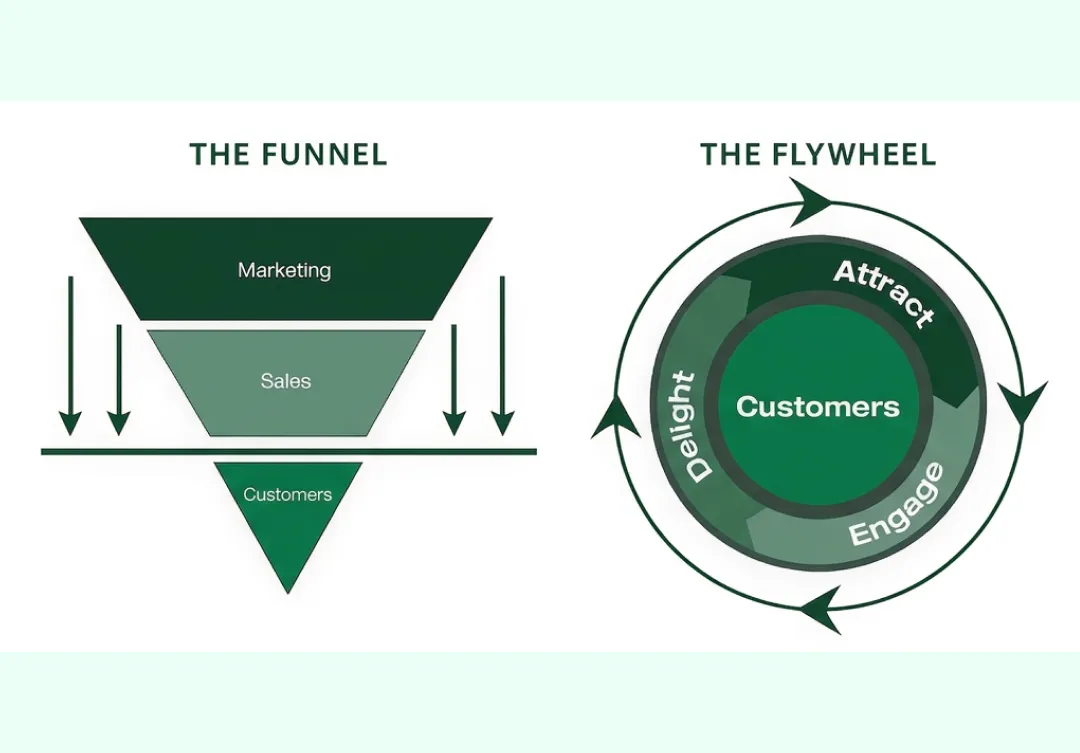
For the longest time, the marketing funnel has been an undisputed blueprint for marketing. It is a linear journey designed to pour as many leads as possible into the top, filter them through the middle, and drop a "sale" out of the bottom.
But in a modern landscape, this model doesn’t hold up that well. Buyers no longer follow a fixed path, they can enter at any stage, often skipping awareness entirely after doing their own research across the internet and social platforms.
Another limitation is what happens after conversion. Once a purchase is made, the customer exits the funnel, forcing brands to keep looking for new ways to get leads instead of building on existing relationships.
This limitation becomes more visible when you look at how customer behavior has evolved. According to HubSpot, the traditional funnel struggles to reflect the non-linear nature of modern buying journeys, where customers loop between discovery, validation, and decision multiple times before converting.
| Aspect | Marketing Funnel | Marketing Flywheel |
|---|---|---|
| Structure | Linear, step-by-step journey | Circular, continuous loop |
| Customer role | Final output of the process | Core driver of growth |
| Focus | Acquisition and conversion | Retention, experience, and advocacy |
| Momentum | Stops after sale | Builds over time with each interaction |
| Growth model | Requires constant input (ads, leads) | Compounds through customer satisfaction |
| Team dynamics | Often siloed across stages | Fully aligned across functions |
That shift changes how we think about growth, but it also raises a more practical question: what kind of marketing approach actually fits your business? The answer depends on the type of marketing you’re operating within.
Different Types of Marketing and How They Influence Strategy
Businesses build their marketing strategy based on the specific audience, the buying process, and the places where people pay attention. These combined factors form the base of a marketing plan. This base determines the message, the choice of channels, and the speed of the results.
1. B2B vs B2C Marketing
At a surface level, the difference seems obvious: businesses selling to other businesses versus selling directly to consumers. But the real distinction lies in how decisions are made.
B2B sales usually require extended timelines and involve several different decision makers who prioritize logical arguments, return on investment, and the total value provided over several years. Before they sign any contracts, these buyers carefully weigh potential risks against their available budgets and the results they expect to see.
B2C marketing usually moves at a much higher speed. Logical reasoning still matters in these transactions, yet buyers frequently choose products based on their feelings, the ease of purchase, how they view the brand, and their current requirements.
| Feature | B2B Marketing | B2C Marketing |
|---|---|---|
| Primary Driver | Logic, ROI, and Efficiency | Emotion, Brand, and Connection |
| Sales Cycle | Months to Years | Minutes to Days |
| Decision Maker | Buying Committees / Stakeholders | Individuals |
| Relationship | Long-term & Value-based | Transactional & Brand-driven |
This difference directly impacts how you position a product, write your messages, and pick your channels.
2. Inbound vs Outbound Marketing
Another key distinction is how you reach your audience.
Inbound methods center on drawing in prospects who are currently searching for specific answers or products. This approach includes tactics such as search engine optimization, content creation, and a natural social media presence to ensure the brand appears when a buyer shows clear interest.
"The biggest mistake I see B2B teams make is treating inbound and outbound as competing strategies. They're not. Outbound puts you on a buyer's radar before they're looking; inbound is what they find when they finally start searching. The brands closing the most deals are running both, and treating the two motions as one funnel."
- Sutirtha Bose (Sales Head, MobileAppDaily)
Outbound marketing adopts a more aggressive and direct stance. It pushes a specific message toward a group of people regardless of whether those individuals are currently looking for a solution at that exact moment. Paid advertisements, direct cold outreach, and corporate sponsorships all represent common examples of this proactive model.
| Strategy | Inbound | Outbound |
|---|---|---|
| Objective | Attract and Educate | Reach and Disrupt |
| Tactics | SEO, Blogs, Community | PPC, Cold Outreach, Media Ads |
| Cost Timing | High Initial Effort, Lower Long-term Cost | Consistent Ongoing Investment |
| Time to Result | Slow, Compounding Growth | Fast, Immediate Visibility |
Most effective marketing strategies do not choose between these two; they leverage both. Such as, outbound to capture immediate demand and build brand awareness, then use Inbound to provide the authority and trust that turns those interested leads into long-term customers.
3. Core Marketing Channels
Once you understand your audience and approach, the next step is choosing the right channels. These are the actual touchpoints where your marketing comes to life:
- Search engine optimization allows you to solve existing demand by ranking well when users try to find answers to their problems.
- High-quality content builds credibility over time because it informs and directs potential clients through the various stages of their journey.
- Email marketing helps the team manage relationships and encourage more sales and retention.
- Paid media offers a way to control how far your message reaches and ensures your brand remains visible even when the market is crowded or noisy.
- Social media marketing can help you share your vision, grow your brand name, and talk with followers in a more enriching environment.
Not every business needs to be active on every channel. The key is selecting the ones that align with your audience behavior and executing them consistently.
The difference between scattered efforts and consistent growth lies in how well these decisions are supported by the core marketing fundamentals mentioned below.
How Marketing Fundamentals Drive Real Results
No matter the industry, audience, or channel mix, the same core principles continue to drive marketing performance. When these basic marketing fundamentals are clear, strategy becomes sharper, execution becomes easier, and growth becomes more sustainable.
1. Figuring out Customer Needs and Demand
Marketing often starts with one crucial question: what problems and pain points are you solving, and does it actually matter to someone?
When brands assume what customers want, instead of validating it, things can easily go wrong. So make sure you don’t build the messaging around what they want to sell rather than what customers are actively trying to solve.
There are two types of demand:
- Existing demand: People are already searching for a solution
- Latent demand: People have a problem but haven’t actively looked for a solution yet
Strong marketing identifies both, but there are things that can often go wrong:
- Confusing internal assumptions with real customer needs
- Overestimating urgency or willingness to pay
- Ignoring context (timing, budget, alternatives)
Understanding demand is not about guessing, it’s about observing behavior, listening to conversations, and identifying patterns that form the basics of marketing.

2. Understanding Customer Behavior Through Research and Insights
Once you’ve identified a problem, the next step is validating whether your solution truly fits that problem, and how customers evaluate it. This is where market research becomes essential.
It helps answer critical questions like:
- Are customers actively trying to solve this problem?
- What solutions are they currently using?
- Where do existing options fall short?
- What factors influence their final decision?
Marketing plans rest on simple guesses when professional teams lack this specific level of clarity about their audience. This means that solid research usually combines several key factors.
- Feedback comes from customer interviews, written surveys, and public reviews.
- Hard data from digital analytics and user surveys provides a statistical view of how people behave when they use your product in the real world.
- Customer voice insights show exactly how people describe their own struggles using different words and phrases.
By doing this, you are not just confirming a problem. The outcome is a much better understanding of how your buyers define a high-quality solution to their specific problems. Analysis reveals that marketing is more effective when you align your message with the way your customers already think instead of trying to change their minds.
Check out our blog Why Customer Research is Crucial for Successful Mobile App Development in 2026 for an in-depth look at how customer insights directly influence product success, especially in competitive digital markets.
3. Segmentation, Targeting, and Positioning
Now you must decide exactly who you want to reach. Marketing fails if you treat every single person in the same way. The following pillars can help your business craft the perfect marketing strategy to boost growth.
Start with Segmentation: Not All Customers Are the Same
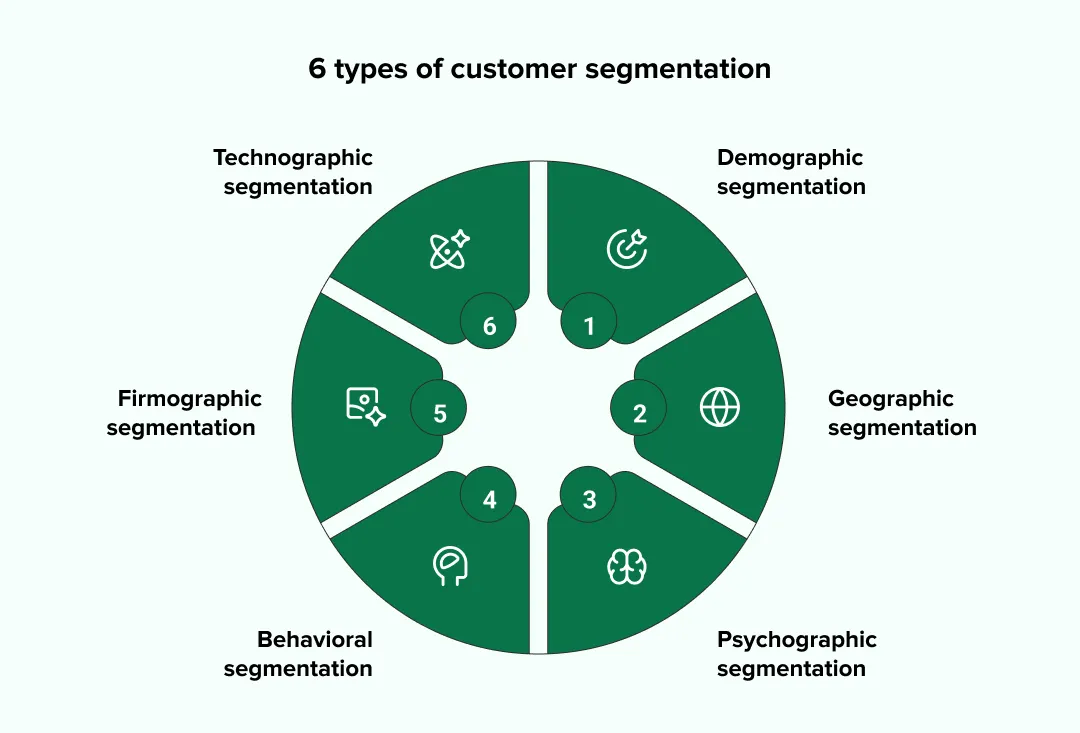
People face similar problems, but they often think and behave in very different ways when it comes to choosing a brand. Segmentation helps divide the market into useful groups.
- Behavior includes how people search for and compare items.
- Context involves the specific use case for the product, the urgency of the need, and the total budget available.
- Motivation shows the real reasons why a person cares about a specific brand or a particular solution to their problem.
Demographics might offer a starting point, but they rarely explain the psychological reasons why a person chooses one specific solution over another in a crowded market. You should find patterns that influence daily decisions.
It’s Time to Define Positioning
Brands try to control positioning, but the final perception lives in the mind of the buyer. It shows how you compare to other available choices. Strong positioning provides answers to three specific questions.
- Why should a person buy this specific product?
- Why is now the best time to purchase it?
- What makes this different from the other options?
Apple is the textbook example of answering these questions through a "Value-over-Features" lens. While competitors often focus on technical specifications, Apple positions itself around innovation, status, and seamless experience.
- The Difference: Instead of competing on raw specs like RAM or processor speed, Apple positions its hardware as an entry point into a "seamless ecosystem." They aren't just selling a device; they are selling the friction-less continuity between your work, your health data, and your creative output.
- The Emotional Hook: Their marketing consistently leans into the emotional benefits of ownership like privacy and creativity. They’ve established a position where they are the gold standard for quality and design.
- The Ecosystem: By controlling every touchpoint, from the minimalist unboxing experience to the curated environment of Apple Stores, they reinforce a premium narrative that justifies a higher price point than the rest of the market.
Most brands fail to achieve this level of clarity because they use vague claims, highlight features instead of their results, and hesitate to take a path different from the market standard.
4. Communicating Value Through Clear Messaging
Your business strategy means very little if your target audience does not immediately “get it.” Buyers react to how clearly you explain the value of a product.
Many brands choose to take on a creative approach, but it is important to consider that this should not hinder your communication. While complex headlines might seem impressive to your internal team, they often leave the audience confused, and this confusion usually results in a complete lack of buyer action.
For instance, Notion’s webpages clearly convey what the tool does, minus the fancy words.
Strong messaging stays focused on the outcome for the user, a core idea within the principles of marketing. Research shows that when messaging clearly communicates value, it reduces purchase hesitation and improves conversions by helping users understand exactly what they gain and what to do next.
5. Defining Your Value Proposition Clearly
By this stage, you’ve done the hard work by understanding the problem, the audience, and how you want to be positioned. The next step is distilling all of that into something a customer can grasp instantly.
This is your value proposition. A value proposition is not a slogan or a clever line. It’s a clear articulation of why your offering deserves attention in a crowded market. When done right, it removes the need for interpretation. The customer doesn’t have to “figure out” what you do or why it matters; they understand it immediately.
The challenge is that most value propositions are written from the inside out. They reflect how a company sees itself, not how a customer evaluates options.
A strong value proposition, on the other hand, is built from the outside in. It aligns directly with how customers think:
- What problem am I trying to solve?
- What outcome do I care about?
- Why does this option feel like a better fit than the rest?
This is why clarity matters more than originality. You’re not trying to impress, you’re trying to be understood, which is something that’s part of marketing 101.
When your value proposition is clear, it creates a ripple effect. Messaging becomes sharper. Content becomes more focused. Even conversion improves, because the customer no longer hesitates over what they’re signing up for.
6. Choosing the Right Marketing Channels
Positioning defines your message, while the channels define its reach. With global search advertising projected to exceed $200 billion, simply being present is no longer enough.
This reinforces how intent-driven channels like search continue to dominate, making visibility at the right moment more crucial than ever.
"Marketing fundamentals don't change because the channels do. What changes is where your audience pays attention. For app businesses today, that's increasingly inside discovery surfaces we couldn't optimise for five years ago. The principle is the same as it was for billboards: be present where the decision happens."
- Akhil Chandra (CEO, Studio Mosaic)
These channels also represent the specific routes your organization uses to distribute messages and connect with customers, which generally fall into three categories:
- Owned (websites, email lists, or internal blogs)
- Earned (organic mentions or viral word-of-mouth)
- Paid (digital advertisements or various sponsored placements)
Success does not require a brand to maintain a profile on every single platform. Instead, experts suggest that teams focus their resources on the specific areas where their audience makes purchasing choices.
The following practical factors will assist your team in making these strategic selections:
- Define the purpose of each platform: This means you must give every channel a specific goal, such as increasing brand awareness or generating direct sales.
- Match content to platform formats: Your team must ensure that every piece of creative work fits the technical and social style of the chosen medium.
- Review internal team skills: Only pick the marketing avenues that your current staff can manage and improve on a regular schedule.
- Analyze competitor density: It is important to decide if entering a saturated market offers enough return to justify the high entry price.
- Look for growth opportunities: Brands should favor channels that allow the business to expand its reach without requiring an equal increase in manual labor.
- Sync with the existing sales timeline: What results is a strategy where your communication methods mirror the speed at which your customers typically make a purchase.
Choosing the wrong channel often leads to wasted effort, even if the strategy and messaging are strong.
7. Using Content to Build Trust and Demand
If channels are the pathways to your audience, content is the substance that moves them. In an era of AI-generated answers and high ad costs, content is where brands start building genuine trust. It is the bridge between a customer "seeing" your brand and "believing" in your value.

This transition from visibility to trust is best seen in how Airbnb uses content to drive its "Belonging" positioning. Instead of just listing room pictries, their content focuses on host stories and local experiences. By prioritizing how a traveler wants to feel rather than just where they want to sleep, they use every product feature to turn a simple transaction into a personal connection.
Here’s how to get started with building an effective content creation strategy that works just as well:
- Prioritize steady schedules over high production volumes since reliable work builds familiarity much better than occasional and irregular posting.
- In practice, the team designs materials for every part of the customer journey to capture attention and guide users toward their final decisions while providing constant value.
- Put relevance and clear writing first.
- Think about long-term results rather than single campaigns because strong assets drive steady demand instead of creating brief spikes in traffic.
8. Driving Conversions and Reducing Friction
Identifying the right audience is only one piece of a modern business strategy. The real impact comes from turning that initial interest into a concrete action. Most conversions do not happen because of high-pressure sales tactics. Instead, the basic rules of marketing suggest that you should focus on removing roadblocks rather than forcing a decision.
In practice, raising your conversion rate is about making the next step perfectly clear and easy for visitors to complete. This strategy relies on direct instructions and clear proof. Companies build trust by showing real testimonials or solid guarantees.
At the same time, they build a user experience that feels smooth and natural. You can see this on platforms like Stripe. There, the main action is easy to find, supported by trust signals, and very simple to act on.
On the other hand, resistance can also appear in quiet ways like long form text, confusing menus, mixed messages, or missing trust signals. These minor issues aggregate and eventually hurt performance. Even tiny changes, such as making a checkout flow simpler or a button more direct, often result in significant improvements to the overall conversion rates of a digital property.
9. Retention, Loyalty, and Measuring What Matters
Marketing does not stop when a customer finally decides to buy a product or service. Lasting growth usually starts after the first transaction finishes. Retaining buyers and tracking data work as a team because one creates value while the other provides the specific facts needed to improve that value as time moves forward.
Serving current clients is much cheaper than spending money to attract and win over entirely new prospects. This focus helps increase the total financial value of every buyer. When people see real value and feel supported, they often return and become brand advocates who drive growth through positive reviews, personal referrals, and word of mouth.
Measuring success requires looking at more than just simple website clicks. Your team should look at results that show the true impact of their work on the business. A tested theory by Bain and Company suggests that working on core marketing concepts like customer retention can significantly increase profits, making it essential to focus on metrics like customer acquisition cost (CAC), lifetime value (LTV), and retention rates to identify what truly drives sustainable growth and where teams should optimize.
Linking these metrics with a loyalty plan creates a system where new insights lead to better experiences for every user. The outcome is a feedback loop where better customer experiences produce stronger and much more predictable growth for the organization over a long period of time.
How to Build a Strategy Using Marketing Fundamentals
Knowing marketing basics is just the beginning. True success comes when you apply these concepts through a disciplined framework rather than treating every individual part as its own separate entity which creates a fragmented plan.
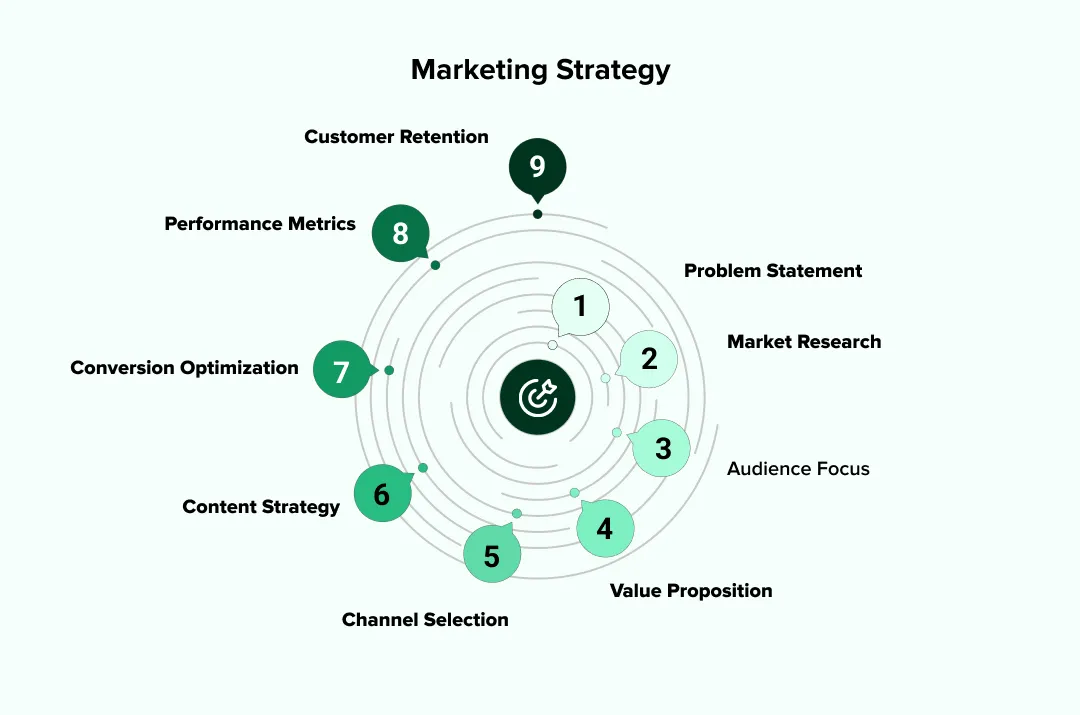
Effective leaders link these different components together to build a reliable and repeatable system for the whole company. Here’s how you can do the same:
- Start with the problem, not the product: Every winning plan starts by defining the specific problem you solve. Rather than making guesses about what people want, you must find the actual pain points that customers face in their daily lives or business operations. When a team finds clear demand, everything that follows fits together with much less effort.
- Validate with research and real insights: Analysis reveals that direct conversations and data on buyer actions show how people judge their options. This confirms if a problem is actually worth solving.
- Define your target audience and positioning: After you gain a full view of the market, you must pick the specific group you plan to help and then explain why your brand is different. Clear positioning keeps your message from getting lost in a noisy world.
- Build a clear value proposition: At this stage, write a short and direct statement that describes exactly what the company offers. Your value proposition must show why your product fits the buyer better than other options without making the reader work to understand its value.
- Choose channels based on behavior: Select marketing paths based on where your audience spends their time and how they make their choices. Avoid wasting your limited resources by trying to use too many platforms. It is better to focus on a few channels that your team can run well and then grow those efforts as the business begins to see more success.
- Optimize for conversion by reducing friction: Make the next step for the customer as obvious and simple as you possibly can. Clear writing and honest signals that build trust lead to more sales than aggressive tricks that might push people away from your brand or make them feel uncomfortable.
- Measure what actually impacts growth: Track the numbers that show real growth for the whole business. Instead of looking at surface data, focus on customer acquisition cost, lifetime value, and retention to understand whether your strategy is sustainable.
- Strengthen retention to build long-term momentum: The work of a marketing team does not end once a person makes their first purchase. Customer satisfaction and a good experience determine if your hard work builds up over time or if you must start over from zero with every new ad campaign.
Conclusion
Marketing often appears complex, with multiple channels, campaigns, and experiments running simultaneously. However, when you actually break it down to the marketing fundamentals, the outcomes are largely determined by how well the core principles are applied.
Brands that achieve steady growth don’t always outspend or outproduce others they simply execute the basics with greater precision. They align closely with customer needs, communicate their value clearly, maintain visibility in the right spaces, and streamline the path to action. This combination builds trust, improves conversions, and strengthens retention over time.
Another key insight is that these elements are deeply connected. Strategy without clarity fails to engage. Traffic without experience fails to convert. Conversions without retention fail to scale. Strong fundamentals ensure that all parts of the system work together effectively.
Rather than focusing on every new tactic, businesses should invest in strengthening their foundation. When the fundamentals are right, marketing becomes more efficient, campaigns deliver better results, and growth becomes more consistent.
Frequently Asked Questions
How do the fundamentals of marketing impact conversion rates?
Basic rules help make the buying path clear for every person. This means a firm must study every single part of the buyer journey to ensure they do not lose sales through simple confusion or technical bugs. Research indicates that fixing these minor issues leads to a significant increase in total sales over time.
What does marketing 101 teach us about keeping customers?
It costs a company far less to keep an old client than it does to find a new one. Evidence suggests that repeat buyers add much more to the total profit. This creates a stable model where natural growth helps the firm build a strong presence without relying only on the high cost of paid advertisements.
Which fundamental marketing concepts lead to long-term business value?
Numbers like lifetime value and retention rates reveal the true health of a modern business. These specific metrics show how well a firm keeps its word after the first sale is finished and the money has been collected. Tracking these results allows teams to build a loyal community of buyers.
Why should a business still follow traditional marketing principles today?
These old rules act as a steady guide for the messy world of online sales. Even as tools change, the need for direct talk and a design that helps the customer remains a constant requirement for success. A strong base allows a firm to adapt to new trends.
How does the modern marketing concept change the way teams work?
Current plans put the needs of the buyer first at every step. This means that teams now value building bonds and using data to make every single interaction much better than before. What results is a full plan that balances the need for new sales with the key goal of keeping old clients happy and growing.
What are the marketing basics new companies should follow while building strategies?
Starting a plan requires a deep view of the specific people you want to reach. Evidence suggests that matching top content with a smooth path for the user builds a high level of loyalty for the brand right from the start. Solving problems for users brings more success than just listing product features. A clear strategy leads to better results for the whole business over a long period.
Why is a focus on basic marketing fundamentals necessary for digital scaling?
Strong bases provide the stability required to manage very fast growth. Research indicates that firms without a solid core plan often struggle to keep quality high as the number of their users grows very large. Staying true to the basics allows a firm to grow while keeping high trust.
How does a consistent marketing framework support long-term brand identity?
A clear structure ensures that every piece of writing and every talk feels the same to the buyer. Analysis reveals that this steady approach is the main driver of brand name recognition and the view that a firm is an expert. A solid reputation makes it much easier to start new products.
What are the common marketing mistakes brands make?
Many firms fail because they chase new tools instead of helping people. One factor is when brands use a generic message that does not speak to the specific needs of their unique audience. Analysis reveals that ignoring data on how customers act often leads to wasted money on ads that do not bring any real value to the firm.


Akhil Chandra is the Founder & CEO of Studio Mosaic, a leading app growth and marketing agency helping mobile businesses scale through data-driven strategies and user acquisition expertise. With over a decade of experience in app marketing, growth consulting, and product strategy, he has worked closely with startups and enterprises to drive sustainable digital growth. His expertise spans app growth, performance marketing, ASO, and customer acquisition.
Uncover executable insights, extensive research, and expert opinions in one place.
Related Content