Share It On:
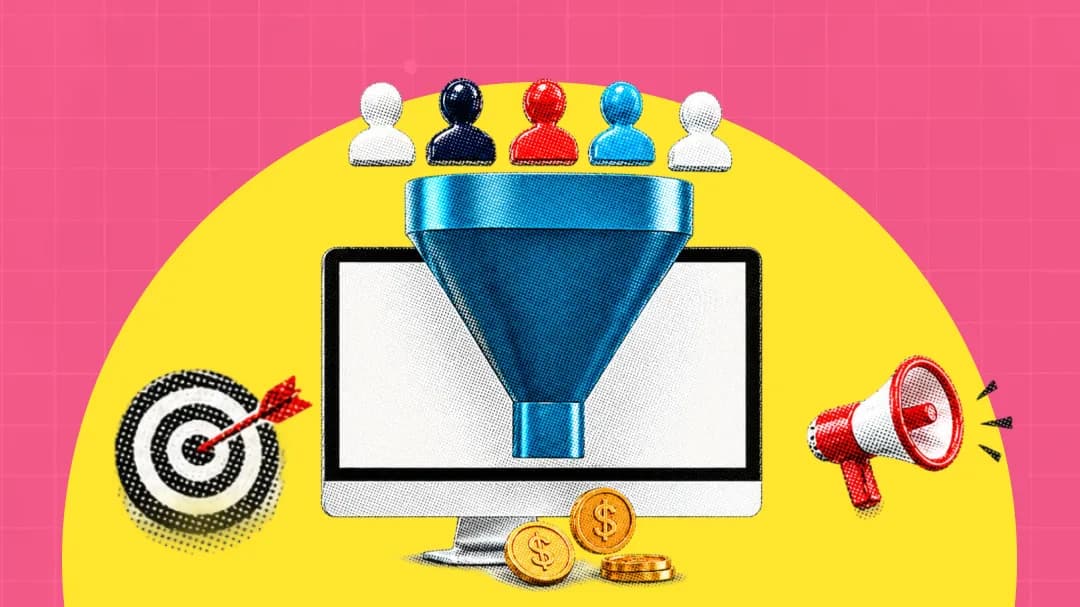 If your traffic isn’t converting, your funnel is likely the problem, not your product. Break down the marketing funnel stages that actually drive results and stop losing high-intent users.
Imagine your brand reaches a thousand people in one day. A few hundred of these people might click on your website, while only a small group looks at the specific products. Perhaps only a few people eventually complete a purchase.
This reduction in numbers does not indicate a problem because it shows the framework is filtering the audience as the system was designed to do from the very beginning. The marketing funnel explains why total discovery does not equal sales and reveals how you can push more prospects toward a deal.
Successful strategies rely on a deep grasp of the path a buyer takes from the initial moment of brand awareness through the final purchase and the long-term support that follows. This guide breaks down the marketing funnel stages you need to know. You will find what users want at each tier and see the methods that change strangers into loyal fans of your brand.
Understanding the Marketing Funnel and its Components
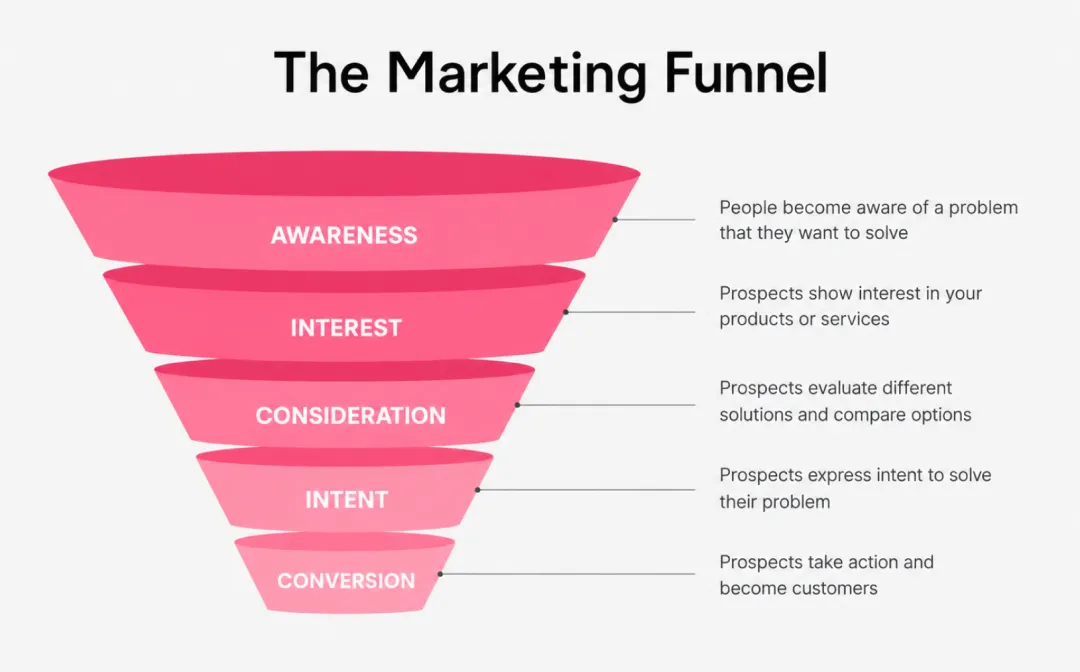
The marketing funnel is a fundamental of marketing that serves as a model for consumer paths. It tracks the steps a potential buyer follows, starting from the very first time they learn about your business until the specific point when they choose to buy your product. It is referred to as a funnel because the total audience size shrinks as people move from initial awareness down to the final sale.
These funnel stages in marketing help organizations decide which content to produce or which channels to prioritize while also showing where potential customers are leaving so the marketing staff can fix those specific gaps. A good funnel also focuses on the post-sale experience. This creates long-term buyers and brand fans who then suggest your services to new people who enter the top of the system.
This concept began when the AIDA model evolved into a more dynamic online marketing funnel that includes post-purchase engagement. Today, experts add post-purchase steps like loyalty and advocacy. We will review each stage using the most common modern framework, which breaks the process down into the top, middle, and bottom of the funnel, often called TOFU, MOFU, and BOFU, reflecting key marketing sales funnel stages.
Stage 1: Awareness: Being Discovered
Everything begins here. This is where upper funnel marketing plays a crucial role.
When you are at the awareness level, your audience does not seek your brand, they seek answers. They have entered a query into Google, swiped beyond a social post, viewed a video or listened to a recommendation. It is your task to arrive in those moments with something of true value, as part of the awareness funnel marketing.
Optimal TOFU content is educational and not sales-based. The visibility is created through educational blog posts, informative videos, and social media campaigns which create credibility. Prospects who are serious about solving a problem are drawn in with the use of webinars and free tools. Lead magnets help convert anonymous users into identifiable prospects, forming the top layer of your awareness conversion funnel.
What is considered most here is the metric of reach: how many relevant individuals are discovering you, and what is your bounce rate when they get there? Traffic that doesn't engage is a signal to refine your targeting or your content.
Stage 2: Interest: Making them listen to you.
A prospect that has encountered your brand today may not remember you tomorrow. The interest level ensures continuity across funnel stages.
This is the early part of the awareness consideration funnel, where your target audience is still exploring. They are reading more of your material, subscribing to your social channels, and observing your line of thinking. They are not yet determined to find a solution, but they are getting warmed up. This is where your brand narrative, your voice and the consistency of your message come into play.
One of the most potent tools at this stage is email marketing, specifically using newsletters. By signing up to your list, a visitor is sending out a message of sincere interest, and frequent, useful emails keep that interest alive. The relationship can be strengthened by running social media campaigns that focus on engagement rather than reach. Retargeting advertisements focus on the prospects who have already visited your site but have not yet made the next step.
Tracking metrics like open rates and return visits ensures your funnel marketing strategy is effectively nurturing leads.
Stage 3: Consideration: Becoming the Right Answer
This is the heart of the funnel, and also where the majority of marketing strategies either flourish or fail.
At the consideration stage, your prospect realizes that there is a problem and is currently doing research on the solutions. They are aware of your brand. Now they are questioning: is this the right solution to me? They're comparing you against alternatives, reading reviews, and looking for evidence that you deliver on your promises.
This is one of the marketing funnel stages where evidence is worth more than advertisement. The following content assets are your best bet at this time:
- Case studies present actual outcomes.
- Customer testimonials reduce risk and build trust.
- Comparison guides meet prospects exactly where they are in their research.
- Webinars give you a live stage to answer objections and show your expertise in depth.
Lead nurturing through targeted email sequences is also critical at this stage. Nurture campaigns address concerns over time, tell relevant success stories, and refer the interested party to a decision-making choice, without any coercion.
The MOFU objective is to transform the prospects into the stage of thinking that this brand can be the best choice.
Stage 4: Intent: Analyzing the Buying Signals
You are now at the pivot point. Something has changed; the prospect is now actively indicating that they are interested in making it to a purchase.
This could appear as a demo request, placing an item in their cart, initiating a free trial or scrolling through pages of your pricing. These are green lights, not promises, and what you do (or do not) within the next 24 to 48 hours can or cannot convert.
At this stage, personalization becomes a competitive advantage. An automatic follow-up email will go to waste on a person who has just asked to view a demo of your enterprise software. Individualized outreach, which mentions what they viewed, overcomes their probable resistance and provides easy follow-ups, which is what turns intention into action.
Retargeting ads are also important here, ensuring that your brand sticks in the mind of those who have already expressed their intent to buy, but have not done so yet. This phase is especially crucial in B2B marketing funnel stages, where decision cycles are longer and require more personalized engagement.
Stage 5: Conversion: Closing Without Friction
It is the point that all the steps have been leading to: the purchase.
However, conversion does not consist only of having a good product. It consists of eliminating all the potential barriers between your potential buyer and the purchase button. A confusing checkout flow, unexpected fees, a slow-loading page, or a single unanswered objection can undo weeks of nurturing.
BOFU content must be a direct support to decision-making and eliminate any doubts. Prospects feel confident committing, thanks to tools such as ROI calculators, free trials, money-back guarantees, and extensive comparison pages. Even limited-time offers can add value when properly applied, instead of causing pressure.
Metrics like conversion rate and CAC help measure the effectiveness of your stages of the marketing funnel and overall performance. These combined tell not only whether your funnel is converting, but whether it is converting profitably and efficiently.
| Bonus Read: Understanding the Marketing Funnel and Its Types
Beyond Conversion: Loyalty and Advocacy
A funnel that ends at purchase leaves most of its value on the table. Customer retention is significantly more cost-effective than acquisition, and customers who stay become customers who spend more.
Onboarding email messages that help new customers succeed immediately lower churn and lay the groundwork for long-term loyalty. Customized after-sales campaigns and loyalty programs enhance the lifetime value of customers and enhance the relationship in the long run.
The real multiplier, though, is advocacy. When a satisfied customer recommends your brand to someone they trust, that new prospect enters your funnel at the interest or consideration stage, already warm, already credentialed. Referral programs and loyalty campaigns that reward advocacy turn your customer base into a growth engine. This is the hourglass model: the funnel expands again after conversion, and your best customers become your best marketers.
To quantify and scale this step, you should monitor the appropriate post-conversion measures, which are more critical, and can be linked to definite actions:
| Metric | What It Tells You | What to Do Next |
|---|---|---|
| Churn Rate | How many customers are leaving after purchase | Identify onboarding or usage drop-offs, reduce friction, and add proactive support |
| Net Promoter Score (NPS) | Customer satisfaction and likelihood to recommend | Leverage promoters for referrals and resolve common complaints from detractors |
| Repeat Purchase Rate | How often customers return to buy again | Use personalized offers, loyalty programs, and lifecycle campaigns to boost retention |
| Customer Lifetime Value (CLV) | Long-term revenue generated per customer | Increase value through upselling, cross-selling, and deeper engagement strategies |
Looking at these metrics in isolation limits their impact. Together they will show you the areas in which your after-sale experience is failing, and in which it can be improved.
Examples of this include high NPS and low repeat purchase rate, which would indicate satisfaction without a convincing retention point. On the other hand, an increase in churn and low onboarding activity are signs of friction during its initial phases, and it should be resolved as promptly as possible.
It is here that the funnel becomes more of a loop of continuous growth, rather than a more conversion-focused system. This extended loop ensures your continue delivering value even after conversion.
Conclusion
An ideal marketing funnel is effective when every step in the funnel is designed to progress users. Test your funnel, end-to-end: make sure that your TOFU content is appealing to the right audience, your MOFU assets earn trust through evidence (case studies, testimonials), and your BOFU experience is not met with resistance by having clear CTAs, quick pages, and transparent costs.
Attend to individual strategies to combine journeys. Ensure that you are consistent in your messages across channels; they must be clear on their KPIs (reach, engagement, intent signals, conversion rate), and leverage these signals to make the message constantly optimized. In case of the engagement drop, optimize on the content relevance, lack of intent is failing to convert hence, optimize on personalization and follow-ups within 2448 hours.
Lastly, extend your funnel post purchase. Improve onboarding, initiate retention efforts, and actively encourage referrals. Keep track of such indicators as churn, repeat purchase rate, and CLV and identify weak points. A properly implemented funnel is a growth loop - happy customers fuel acquisition and reduce marketing effort forever.
Frequently Asked Questions
What is a marketing funnel?
A funnel will assist you to steer individuals through discovery to the ultimate sale. This implies that you are able to convey the appropriate message at each of the decision point as the potential customer gets to know the reason why your products are the best.
What is TOFU, MOFU, and BOFU?
These words are the Top, Middle, and Bottom of the Funnel. The Top is concerned with awareness, the Middle is intent-oriented and the Bottom actually makes the conversion. It has different plans and types of content at each level of the system since the needs of users differ at each stage of their path.
How is a marketing funnel explained differenerlt from a sales funnel?
Marketing funnels identify and cultivate leads till individuals are prepared. Once this is reached, the sales marketing funnel will start to utilize direct contact and personal communication to finalize the sale. The two systems aim at maximizing revenue but through differing teams and points of interaction to achieve that objective as they take the prospects nearer to a final agreement.
What makes most prospects lose momentum prior to conversion?
The most frequent reasons are bad lead nurturing, difficult checkout, or incompatibility of your ads with the page you are on. Individuals quit in cases where you fail to deliver the appropriate content promptly. In addition to this, unspoken issues tend to prevent purchases and therefore you have to portray that your product is the solution to that very problem that the user is presently experiencing.
How to check if the marketing funnel is performing?
Reviewing performance regularly ensures your marketing funnel system stays aligned with user behavior and conversion goals. As the analysis shows, A/B testing assists you in making corrections and enhancing the functionality of your funnel as you get to know your audience better. Test your data in each and every step. The top indicators that you should monitor are the traffic, the email open rates, and the overall sales.
What occurs following conversion in the funnel?
Onboarding and special reward programs will have to be utilized to maintain customer interest once they have made a purchase. These incentives make happy users brand advocates who can get new leads by word of mouth and enable you to grow your business without additional ad spending. The funnel results in long term loyalty and popular backing.
What should be the frequency of reviewing and optimization of my funnel?
Study your funnel data at least every three months. Identify points at which people are abandoning the trail towards a purchase using Google Analytics and conversion facts. It is also advisable to A/B test the most essential pages at all times to ensure your system remains effective with the market dynamics.

Uncover executable insights, extensive research, and expert opinions in one place.
Related Content