- Step 1: Set Your SEO Objectives and Evaluate Your Current State
- Step 2: Keyword Research and Content Optimization
- Step 3: On-Page SEO Factors
- Step 4: Technical SEO and Site Structure
- Step 5: Content Creation and Frequent Updates
- Step 6: Building Links and Authority
- Step 7: Business Visibility and Local SEO
- Step 8: User Interaction and Experience
- Step 9: Adapting to AI and Search Engine changes
- Step 10: Performance and Continuous Improvement Tracking
 Share It On:
 Search is evolving fast, and outdated strategies are falling behind—businesses that fail to adapt risk losing visibility, traffic, and revenue. Start refining your SEO approach now to stay competitive and capture demand early.
Did you know that the top 10 results on the first page claim 96.98 and 97.56 of the desktop and mobile clicks, respectively?
This means that you will miss out on the majority of the traffic and opportunities whenever your business is not on the first page. The question now arises, how to enter such a flooded space.
In order to fill this gap, you do not have to be on a massive budget, but you must have a customized SEO plan for your business. An optimized search engine strategy that fits your business capabilities can make you competitive, whether you are appealing to the local market or developing an inclusive B2B base.
This guide breaks down how to create an SEO strategy for your business step by step, from building a strong foundation to refining your approach as you grow.
Why You Need a Custom SEO Strategy for Your Business
SEO strategy for businesses is not merely about appearing at the top of Google; it is about appearing in every phase of the purchasing process, seizing the existing demand, and establishing a digital presence that builds itself over time.
If we look at other ways to capture the market, pay-per-click services are highly effective for driving immediate visibility and quick wins. This makes them a strong complement to SEO, especially in competitive spaces.
However, paid advertisement only delivers as many results as your budget allows. Organic search traffic, however, keeps on providing clicks, leads, and revenue for many months or years after the job is completed. A properly implemented personalized SEO plan can help save on customer acquisition, build brand loyalty and develop a competitive moat that is hard to duplicate by your competitors.
In the case of B2B companies, a B2B SEO strategy guide is usually the major pipeline driver. For brick-and-mortar stores, a local SEO strategy for business is what makes them visible or invisible to their local customers.
Regardless of your size or industry, learning how to create an SEO roadmap should be at the forefront of your marketing strategy.
Step 1: Set Your SEO Objectives and Evaluate Your Current State
All winning SEO plans begin with clarity. You should know your current performance before generating content or optimizing pages.
The best SEO companies often start with an in-depth SEO audit. Take a page from the playbook; assess your organic traffic, current position of your keywords, backlink profile, and technical health. Tools like Google Search Console allow you to see the pages that are bringing traffic, which keywords you are already ranking, and where you are not doing so.
This baseline is critical as it will act as your point of reference. In its absence, you are not able to gauge improvement or know what is working. Then, establish specific objectives related to business results. To illustrate, rather than merely growing traffic, target better quality leads, high-intent keywords, or organic visitor conversions.
To turn your strategy into action, develop a monthly SEO plan for your business that relates particular tasks to the measurable results, such as content creation, technical fixes, and link building.
Step 2: Keyword Research and Content Optimization
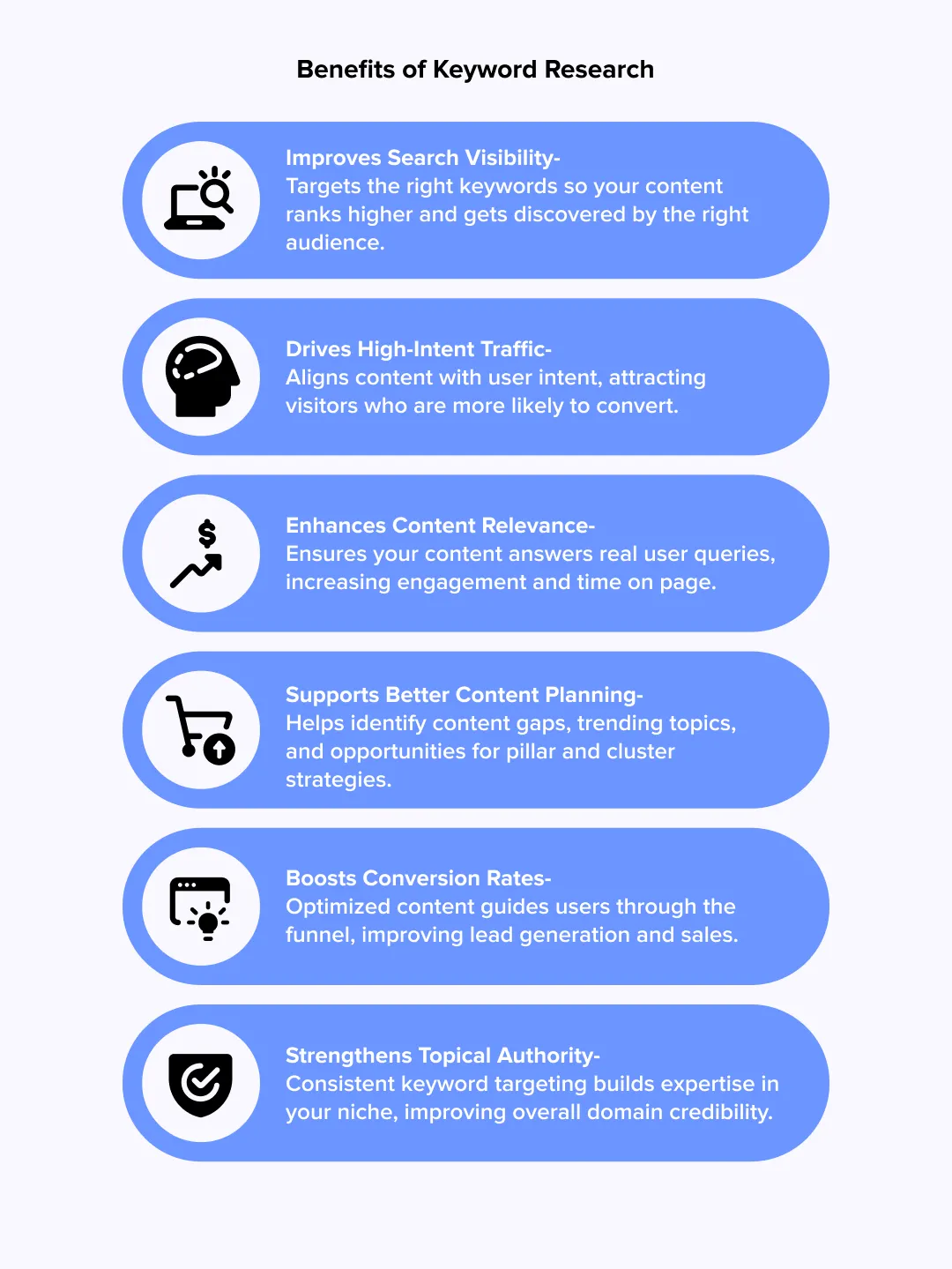
The basis of an SEO planning process is often keyword research, but modern SEO demands a more intensive consideration of search intent.
1. Understanding Search Intent
Search engines favor user-intended search results. A single keyword will not make your page rank; your content should be what users are looking for.
Indicatively, a query such as “Why is an SEO strategy important?” needs to be educational whereas a query related to SEO agency pricing shows a commercial purpose. Unless your format of content fits the intent, then it will not work, no matter how well it gets optimized.
2. Creating a Keyword Strategy
An effective keyword strategy is one that is visible and converting. The broad keywords enable you to reach more people, and long-tail keywords assist you in taking more narrow and high-purpose searches.
Target the keywords in groups rather than focusing on each separately. Design a single pillar page and back it up with articles. This practice enhances internal connection and indicates topical authority amongst search engines.
3. Optimizing Content
Avoid keyword stuffing. Search engines are now intelligent towards context and therefore, you should be able to naturally incorporate related terms and give comprehensive answers with your content. Depth, clarity and usefulness should be the emphasis while repetition should be avoided.
Step 3: On-Page SEO Factors
On-page SEO is the practice of optimizing individual web pages to improve search rankings and deliver a better user experience. It makes your content readable to both the users and search engines.
Consider the following when building your marketing strategy.
- Have clear title: The title of your page must clarify the contents of the page, along with containing your keyword. It is usually the first thing that users look at in the search results and therefore its clarity and relevancy are more important than creativity.
- Focus on meta description: Meta descriptions do not have a direct effect on rankings, but they have an effect on the click-through rates. A good description should outline the value of your content and prompt users to click.
- Format properly: Organization of the content is also significant. Arrange the information logically by use of headings (H1, H2, H3). An organized page enables your users to quickly scan it and helps search engines to understand what you have to say.
- Use alt text for images: Alt text should be used to provide descriptions in images to enhance accessibility and search. It should use internal linking to direct users to related content to aid navigation and SEO.
- Link to anchor texts: Use descriptive anchor text and keep URLs clean and readable. Clear, keyword-relevant links help search engines understand page context and improve indexability.
Step 4: Technical SEO and Site Structure
The top digital marketing firms often turn to technical SEO for ensuring that a website is crawled, indexed and ranked correctly. Here are the core pillars you should focus on:
1. Mobile-First Optimization
Since search engines now prioritize mobile indexing, your site's performance on phones and tablets directly impacts your ranking. It must be fully responsive and easy to navigate on smaller screens.
2. Page Speed
Slow loading times frustrate users, leading to higher bounce rates and lower engagement. You can significantly boost performance by optimizing images to reduce file size, minimizing scripts to streamline code, and using caching to load pages faster.
3. Search Engine Communication
Help search engines understand your content using these tools:
- Sitemaps: Act as a roadmap to help bots find all your pages.
- Structured Data: Helps your content appear as "rich snippets" (like star ratings or recipe previews) in search results.
- Canonical Tags: Identify the "master" version of a page to prevent ranking issues caused by duplicate content.
4. Site Architecture
A logical site structure is essential. By organizing content into clear categories and subdirectories, you make it easier for both users and search engines to find what they need.
Step 5: Content Creation and Frequent Updates
The main element of any business SEO strategy is content marketing. However, the number of content assets is not as significant as the quality and consistency. Good content must go beyond just being present; it must have value. The search engines place greater emphasis on content that reveals experience, expertise, authority and trust.
This implies your content must:
- Provide answers in detail and not in a superficial manner.
- Incorporate authoritative sources or knowledge.
- Be written coherently and organized to be readable.
Original information is especially effective. Surveys, research or case studies can build your brand authority and help it naturally attract backlinks.
The buyer journey aligns with a strong content strategy. Educational content builds awareness, comparison content supports decision-making, and landing pages drive conversions.
Equally important is maintaining your existing content. Conduct regular audits to identify pages that can be improved. Updating outdated information, adding depth, or improving structure can significantly boost rankings without creating new content.
Step 6: Building Links and Authority
Backlinks are also some of the strongest ranking factors and it is a form of confidence that indicates trust and credibility to search engines. But quality beats quantity; one link on a high authority, relevant site is much better than a lot of low-quality links.
The search engines consider your backlink profile in terms of relevance, authority and natural growth patterns. These sharp increases in links on low-value sources might seem unnatural and damage your rankings. To establish authority in the best way, take into account the following strategies:
- Strategic Outreach: Post on well-known industry publications or collaborate with complementary businesses and influencers.
- Original Research: Publish original data or cases that will be of interest to others.
- High-Value Assets: Produce link magnets, like detailed manuals, infographics, or in-depth analyses, which automatically attract organic backlinks as time goes on.
Step 7: Business Visibility and Local SEO
When you deal in a particular region, it is best to create a custom local SEO strategy for your business.
Begin with optimizing your Google Business Profile. Make sure your business information (name, address, and phone number, and operating hours) is also correct and consistent throughout.
Location-based keywords enable you to feature in local search results. To illustrate, it is much more efficient to target a query such as “Best Pizza in Chicago” than a generic one.
Building a local authority involves engaging with your community, similar to when building an SEO strategy for small businesses. Sponsoring events, partnering with local companies or adding to local magazines can enhance your presence and reputation. The role of online reviews is significant too, with positive reviews enhancing trust and ranking, particularly in the local search results.
Step 8: User Interaction and Experience
Search engines have started increasingly relying on user behavior to assess content quality. Indicators such as bounce rate, session length, and pages per visit will show how valued your content is to your users. When users move on swiftly, it is an indicator that your content is not as good as they expect it to be.
The user experience should be enhanced by speed and usability. Your site must load fast, be user friendly and provide the information in a clear manner. Avoid intrusive materials like too many pop-ups or distracting advertisements. Rather, think of designing clean and content rich pages that lead users towards their natural paths.
You can further extend the engagement through features like newsletters, contact forms, and related content suggestions. These components motivate users to remain connected and find out more.
Step 9: Adapting to AI and Search Engine changes
With AI and shifting search patterns, SEO is changing at an alarming pace.
The use of AI in SEO can be seen on the search results, including AI overviews. This is increasing the volume of zero-click searches since users are able to get their answers without even accessing any web pages.
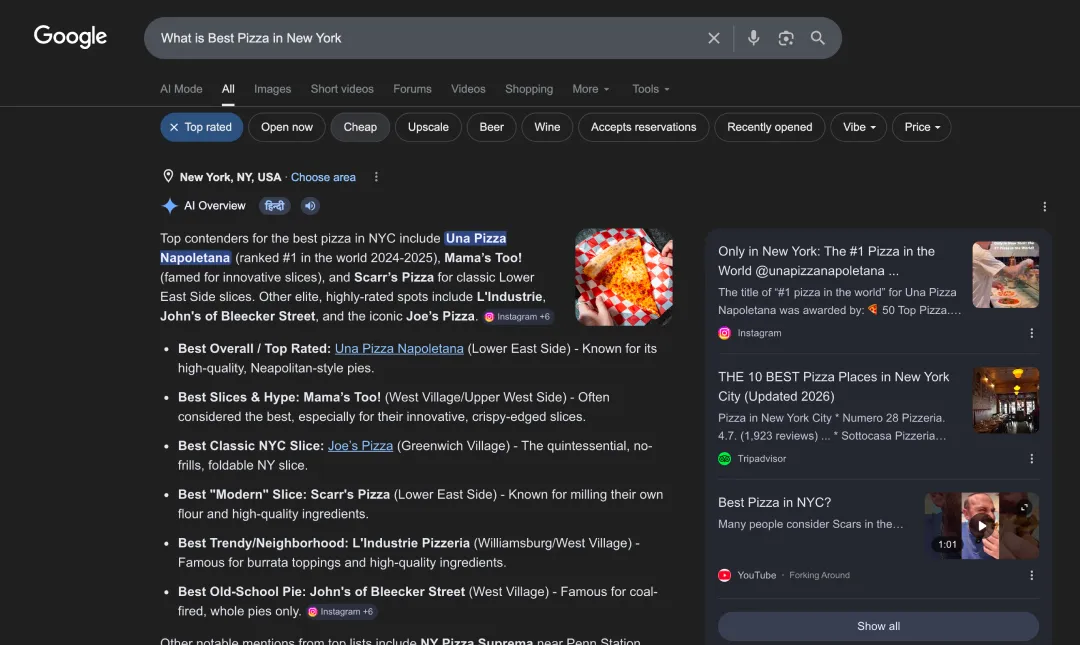
This shift means that companies are no longer required to focus on ranking visibility. Arranging information in such a manner that may answer the questions will increase the chances of entering snippets and other AI-generated summaries.
SEO is therefore no longer about rankings but it is now about being where the user finds the answers.
Step 10: Performance and Continuous Improvement Tracking
A business SEO plan cannot be considered effective without an evaluation and optimization over time.
In order to know whether you are actually moving the needle with your business, you must closely monitor the metrics that matter. This involves monitoring your organic traffic, where your keywords are appearing in the rankings, the number of visitors really converting and the development of your backlink profile.
Google Search Console is your friend at this stage. It provides you with the backstage information about the performance of your site, as it will tell you how many people look at your links (impressions), and click on them to any technical indexing hiccups that may be dragging you down.
Reports that you can run on a regular basis will allow you to take what is working and make a pivot that is no longer working. It is also the most effective method of identifying content gaps, or new keyword opportunities that you may have overlooked. The most successful brands, at the end of the day, consider SEO as a cycle: they examine the data, update their content, and optimize the way they do things according to what the numbers are telling them.
Final Thoughts
The most effective method of developing a good SEO strategy in business is not finding some clever tricks and tricks to outsmart the algorithm but producing a site which has plenty of content and is actually required by your audience. Search engines will realize that you answer the real questions in a more befitting manner compared to your competitors, in cases where you are trusted by those in authority, and where you develop a user experience that makes them stay on board.
SEO is a long-term investment, and not a short term campaign, which builds up in organic search with compounding advantages that accrue to the businesses. Start with the marketing fundamentals, quantify all that and work towards continuing to achieve your goals. If done right, SEO becomes one of the most cost-effective and scalable channels for long-term business growth.
Frequently Asked Questions
What is an SEO strategy for a business?
SEO plan is a business planning tool that is designed to enhance search performance, generate organic traffic, and turn visitors into customers by using content, technical optimization, and key word targeting.
What is the importance of SEO to business growth?
SEO enables companies to create long-term and consistent traffic because they do not have to spend on advertising, enhances brand authority and engages users who are actively searching.
What is the best way to develop good SEO?
Begin by evaluating your performance, setting specific objectives, doing research on keywords, optimizing the on-page factors, enhancing technical remuneration and developing content that is consistently of high quality.
What is the distinction between SEO and PPC?
SEO concentrates on natural search and long-term development whereas PPC (pay-per-click) provides instant exposure with paid advertisements but ceases to provide results with a terminating budget.
How much time will the results of the SEO take?
SEO is a long term approach. Within 3-6 months, most businesses start to experience tangible progress, depending on competition, business, and continuity of activity.
Which factors are the most critical SEO rankers?
The most important are the quality of content, relevance, backlinks, mobile, performance, User experience and the technical health of the site.
What is the benefit of local SEO to small businesses?
Local SEO enhances local visibility in the location search, thus enabling small businesses to attract local customers with optimized listing, local keywords, and favorable reviews.

Uncover executable insights, extensive research, and expert opinions in one place.
Related Content