Share It On:
 Want predictable growth? Discover digital marketing channels backed by real insights, proven strategies, and years of industry experience.
 More channels, more content, more budget.
And still, not enough growth?
You’re told to be on social media, invest in SEO, run ads, build an email list, try influencer marketing… the list never ends. But no one tells you which of these actually move the needle for your business.
So you spread your efforts thin, burn through time and money, and end up with scattered results that don’t scale. Not every digital marketing channel is built for growth, and not every channel is right for your business.
The difference between brands that grow consistently and those that stay stuck isn’t effort. It’s clarity. Clarity on where to show up, why it matters, and how each channel contributes to real, measurable business outcomes.
This blog is your blueprint to mastering the right digital marketing channels, grounded in over 8 years of industry experience, real campaign data, and MobileAppDaily’s in-depth analysis of what digital marketing strategies actually drive measurable business growth. Every insight you’ll read here is shaped by proven strategies, not assumptions, so you can make decisions with confidence.
Digital Marketing Channels and the Importance of Choosing the Right One
From a strategic standpoint are ecosystems where your buyers evaluate solutions, build trust, and make the final purchase decisions, all shaped by evolving digital marketing trends. Each channel represents a unique touch point in your customer’s journey, be it a community-driven space of social media or a personalized inbox experience of an email.
So, as a business, your goal today is not just to be present on digital marketing channels, but rather to match the context of the channel to the actual intent of your buyers.
Why Should You Carefully Choose a Marketing Channel?
Treating digital advertising channels equally is a fast track to draining all your budget. Carefully choosing a medium for marketing is about finding the most profitable path to reach your targeted audience.
Here is why getting your channel strategy right is critical to your bottom line:
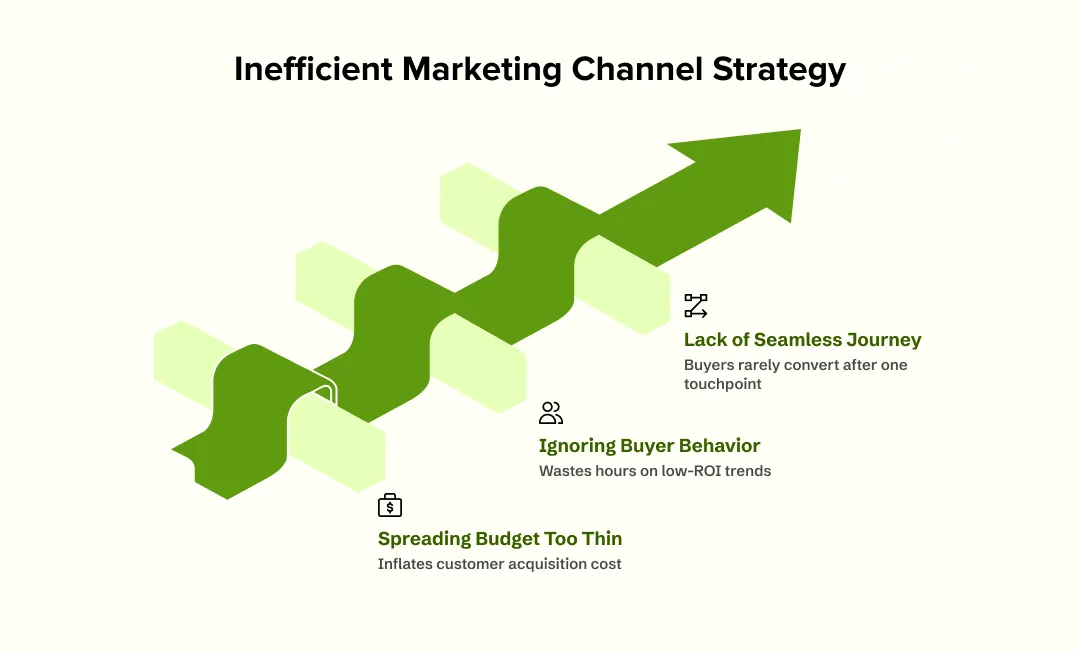
- Spreading your budget too thin across every available platform inflates your CAC. When you get this wrong, the cost is steep; poor channel selection and misaligned targeting can result in thousands of lost revenue through wasted ad spend and missed opportunities.
- Just because a new platform is trending does not mean your B2B buyers are using it to evaluate software, or your ecommerce customers are using it to shop. Strategic channel selection protects your team from wasting hours on low-ROI trends.
- Buyers rarely convert after a single touchpoint. The right mix allows you to build a seamless journey from discovery to decision. The financial impact of getting this right cannot be overstated.
Top Digital Marketing Channels List to Drive Real Business Growth
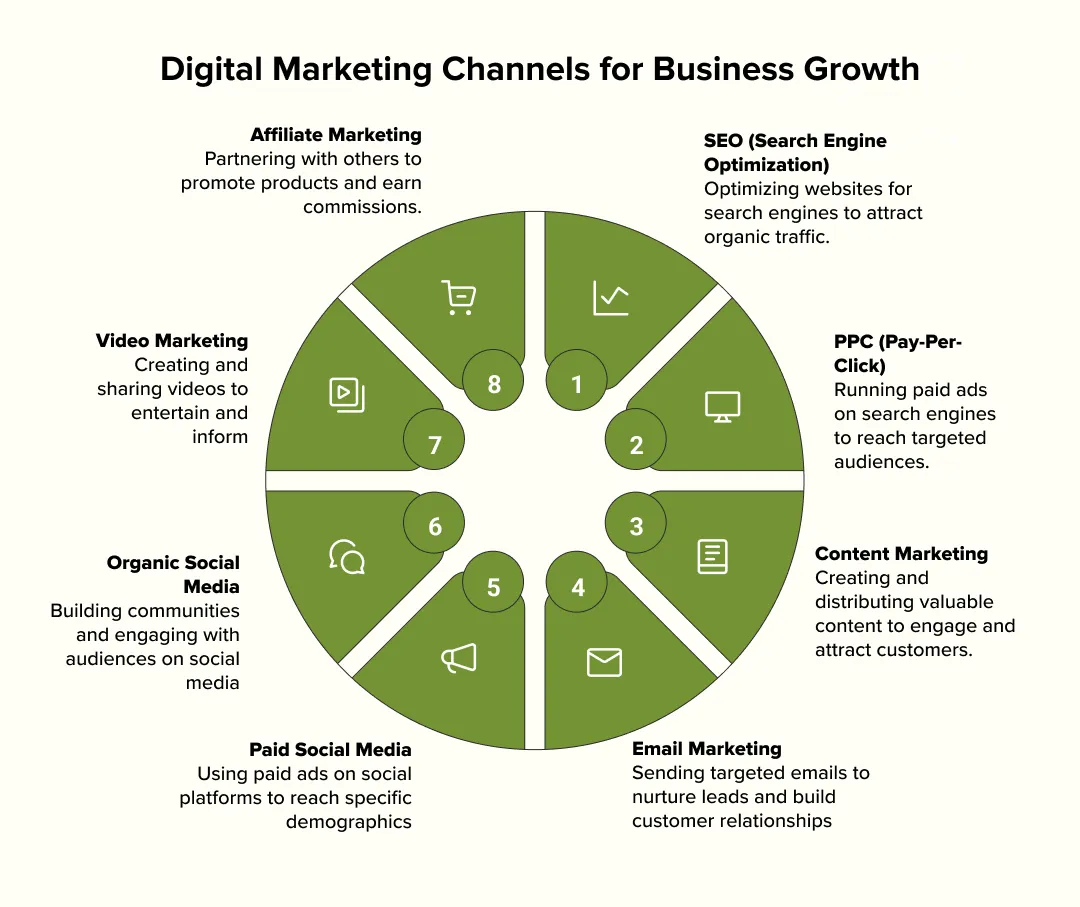
Want real growth? You can't just lean on one platform. The trick is blending a few different digital channels together. You need to scoop up the people who are already searching for what you sell, but you also have to get on the radar of people who have never even heard of you.
Here are the best types of digital marketing channels you can consider for your business-
1. Search Engine Optimization (SEO)
SEO is the process of aligning your website’s infrastructure and content with search engine algorithms. With effective SEO strategies, you can prepare your website to capture high-intent organic traffic. With this channel, you are basically investing in a digital real estate that compounds over time.
How to Get Started: Begin with a technical SEO audit using a tool like Semrush or Ahrefs to identify crawl errors, page speed issues, and indexing gaps. Then conduct keyword research to map your core pages to the specific search terms your buyers are actually using.
Best for: Long-term, compounding growth, lowering overall Customer Acquisition Cost (CAC), and capturing middle-to-bottom-of-funnel search intent.
2. Paid Search (PPC / Google Ads)
Unlike SEO, paid search allows you to bid on targeted keywords. Pay-per-click experts ensure that your webpage/product/service shows at the top of the search results on the browser. This is a great lead generation channel to capture active demand from buyers who know exactly what problem they need to solve.
How to Get Started: Set up a Google Ads account, define your daily budget, and launch a tightly focused campaign around your highest-intent keywords. The keywords should typically include words like "software," "solution," "pricing," or "[competitor] alternative."
Best for: Immediate lead generation, rapidly testing messaging or landing pages, and capturing high-intent, ready-to-buy prospects.
3. Email Marketing
Email allows you to cultivate an owned audience. By following proven email marketing practices, including personalized, segmented outreach and automated nurture sequences, you can stay top-of-mind without being at the mercy of a third-party algorithm.
How to Get Started: Choose an email platform suited to your volume and complexity. Options like HubSpot or Mailchimp work well depending on your use case. Then build your first automated welcome sequence: a short series of three to five emails that delivers immediate value to new subscribers and introduces your product naturally.
Best for: Lead nurturing, maximizing Customer Lifetime Value (LTV), and driving repeat purchases, upsells, or subscription renewals.
4. Affiliate & Partner Marketing
This performance-based channel involves incentivizing third parties, like industry publishers, influencers, or complementary businesses, to promote your product in exchange for a commission on the sales they generate.
How to Get Started: Identify 10 to 20 potential partners, industry newsletters, review sites, complementary software tools, or niche influencers whose audiences closely match your ICP. Reach out with a clear, simple commission structure and provide partners with ready-made creative assets so the barrier to promoting you is as low as possible.
Best for: Performance-based scaling, entering new niche markets, and acquiring customers with zero upfront advertising spend.
5. Paid Social Media (LinkedIn, Meta, etc.)
While search engines capture intent, paid social media targets identity. Using rich behavioral, firmographic, and demographic data, you can push highly targeted campaigns to specific buyer personas before they even start searching for a solution.
How to Get Started: Define your ideal customer profile (ICP) in detail, job title, company size, industry, and geography, and use those attributes to build your first audience in LinkedIn Campaign Manager or Meta Ads Manager. Launch with a small test budget focused on a single offer to a single audience segment before scaling.
Best for: Generating new demand, executing Account-Based Marketing (ABM) campaigns (especially on LinkedIn), and building rapid brand awareness.
6. Organic Social Media & Community Building
This B2B digital marketing channel is about participating in the conversation rather than interrupting it. Whether it is a branded LinkedIn presence, a dedicated Discord server, or an industry Facebook group, organic social focuses on peer-to-peer engagement and trust-building.
How to Get Started: Pick one platform where your buyers already spend time and commit to showing up consistently there before expanding elsewhere. For most B2B companies, LinkedIn is the natural starting point; for developer or consumer communities, Discord or Reddit may be more effective.
Best for: Humanizing your brand, building community loyalty, gathering real-time customer feedback, and establishing executive thought leadership.
7. Content Marketing
A strategic content marketing campaign includes much more than just writing blog posts. To drive real success, your focus should also be on creating authoritative assets, including whitepapers, case studies, webinars, and pillar pages. These content pieces educate buyers and guide them through their evaluation phase.
How to Get Started: Map your content to the buyer's journey, awareness, consideration, and decision- and identify the two or three questions your ideal customer asks at each stage. Start by producing one high-quality, deeply researched piece per stage rather than a high volume of thin content.
Best for: Establishing industry authority, enabling sales teams with collateral, and serving as the foundational fuel for your SEO and email marketing efforts.
8. Video Marketing (YouTube, Short-form Video)
With YouTube operating as the world’s second-largest search engine, video marketing leverages visual storytelling to demonstrate product value, explain complex software, or showcase customer success.
How to Get Started: Start with the questions your sales team answers on every demo call. Record a clear, well-lit walkthrough that addresses those questions — no expensive production required. Publish it on YouTube with a keyword-optimized title and description, and embed it on your relevant website pages.
Best for: Complex product demonstrations, building deep brand trust, and creating "hero" assets that can be chopped up and repurposed across all other channels.
A Strategic Comparison of Digital Marketing Channels
Here’s a side-by-side comparison of the most effective digital marketing channels to help you cut through the assumptions and see which channel aligns with your business goals, budget, and growth expectations.
| Digital Marketing Channel | Basis of Comparison | Primary Strategic Objective | Average Time to ROI | Cost Structure | Buyer Intent Level | Scalability & Growth Potential |
|---|---|---|---|---|---|---|
| SEO | Capture organic demand | Drive long-term search visibility | Slow (3–6+ months) | Upfront & ongoing resource/agency investment | High (Actively searching for solutions) | Efforts compound over time without linear cost increases |
| Paid Search (PPC) | Immediate lead generation | Capture high-intent traffic instantly | Immediate | Pay-per-click (Linear cost) | Very High (Ready-to-buy search terms) | Traffic is instant, but costs scale 1:1 with clicks |
| Content Marketing | Education & authority building | Establish expertise and trust | Medium to Slow | High resource (Time, talent, production) | Medium (Researching problems/solutions) | One asset can fuel multiple campaigns and channels |
| Email Marketing | Nurture, retention, & LTV | Drive repeat engagement and conversions | Fast (With a warm list) | Platform subscription + list management | High (Already opted-in and familiar with the brand) | Costs remain relatively stable as the list grows |
| Paid Social | Demand generation & ABM | Create awareness and targeted reach | Fast | Pay-per-impression or click | Low to Medium (Targeting identity, not active searches) | Vast reach, but requires constant creative refreshes |
| Organic Social | Community & brand loyalty | Build engagement and brand presence | Slow | Internal resource time | Low to Medium (Passive scrolling/engagement) | Highly restricted by platform algorithms and reach limits |
| Video Marketing | Trust building & complex demos | Showcase product value visually | Medium | High upfront production & editing costs | Medium to High (Seeking visual proof or tutorials) | Assets live indefinitely and can be repurposed widely |
| Affiliate/Partner | Performance-based reach | Leverage external audiences for growth | Medium | Commission-based (Cost Per Action/Sale) | Relies on partner audience intent | Dependent on the size and quality of your partner network |
Understanding Key Advantages and Limitations for Each Digital Marketing Channel
The table below shows a primary advantage and a limitation to consider for each of the internet marketing channels. This will give you a quick scan to weigh the trade-offs before you invest in any of these-
| Digital Marketing Channel | The Advantage | The Limitation |
|---|---|---|
| Search Engine Optimization (SEO) | Generates high-intent, continuous traffic without having to pay for every single click | Requires a long runway (typically 3–6+ months) before yielding significant, measurable revenue |
| Paid Search (PPC / Google Ads) | Places your solution directly in front of buyers at the exact moment they are ready to purchase | Costs scale linearly, and traffic drops to zero once ad spend stops |
| Content Marketing | Establishes deep industry trust and fuels SEO, social, and email campaigns | Requires heavy upfront investment in time, expertise, and production |
| Email Marketing | Provides direct, algorithm-free access to buyers, making it a high-ROI retention channel | List quality decays over time, requiring continuous lead generation |
| Paid Social Media | Enables demand generation by targeting specific audiences before they begin searching | Requires constant creative refresh due to audience fatigue |
| Organic Social Media & Community | Builds strong trust, loyalty, and thought leadership | Organic reach is limited, making scaling difficult without paid support |
| Video Marketing | Highly effective for explaining complex products and building visual trust | Requires higher investment in production quality and resources |
| Affiliate & Partner Marketing | Performance-based model where you pay only for actual conversions | Relies on third parties, risking inconsistent messaging and customer experience |
How to Choose the Right Digital Marketing Channel for Your Business?
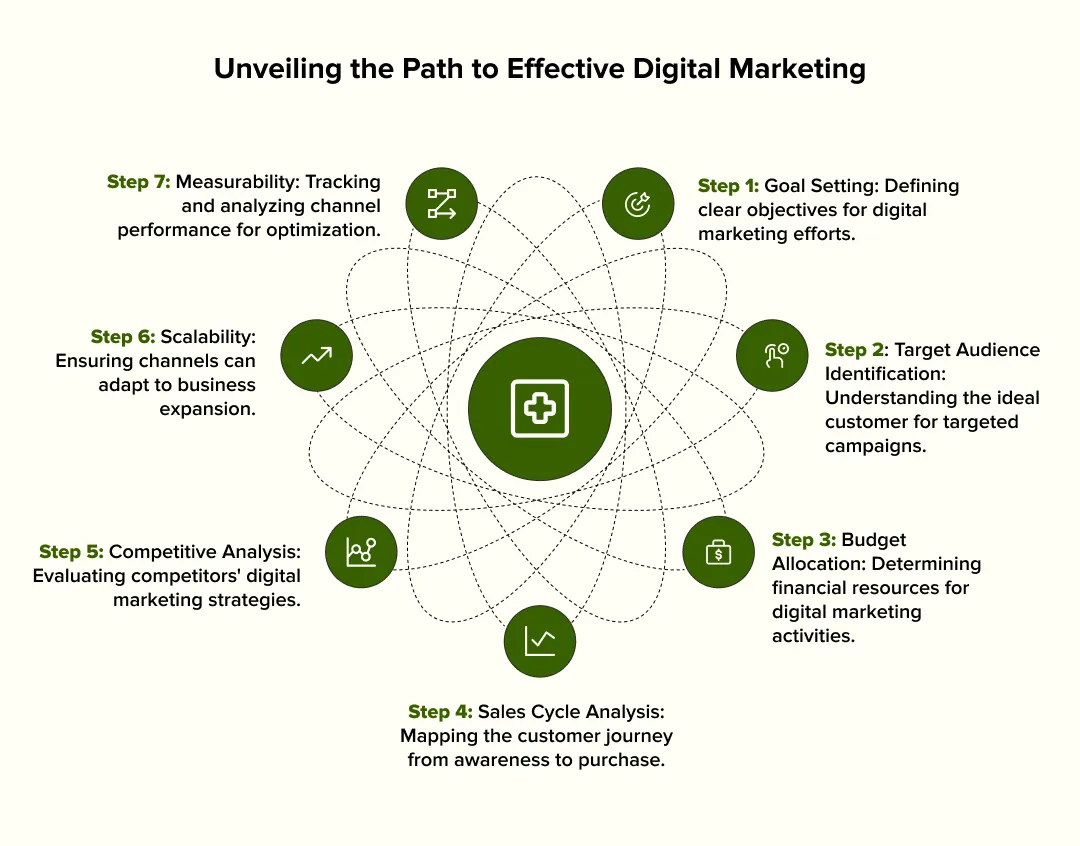
If you are choosing an online marketing channel purely because it's trending or your competitor has used it, you are in for some serious trouble. As a smart brand, you should not just be chasing the trends, but rather make calculated decisions based on factors that will impact your business growth.
We have a list of considerations you need to evaluate before making the final choice-
1. What is Your Goal?
The very first thing, of course, is to understand what exactly you are looking for. Do you want to improve brand awareness? Are you multiplying lead generation or looking for direct sales?
Different marketing channels are designed differently and serve different purposes. For instance, if you are seeking immediate leads, PPC is the perfect medium for you. However, if your goal is slow but sustainable growth, SEO-driven marketing is a suitable option.
2. What is Your Target Audience?
Now that you know what your business needs, understand where your marketing efforts will be directed. You need to understand your target audience, where they spend their time online, and what kind of content they consume.
You must focus on designing campaigns for high-intent audiences. Also, make sure that the campaigns run on relevant platforms. If your target consumer is not active on that particular platform, even the best strategies won't work.
3. What is Your Budget?
Choosing a digital marketing channel is a huge investment, so you must consider your budget and resources before making the choice. Some channels, like paid ads, demand consistent investments, while others, like SEO and content marketing, demand time and expertise.
Always choose channels you can sustain in the long run, not just the ones you have the bandwidth to start today.
Bonus Read: In-House vs. Agency Marketing Cost
4. What Does Your Sales Cycle Look Like?
If you own an e-commerce business with short sale cycles, you will benefit from quick conversion channels like PPC or social media ads.
However, if you are in the B2B industry, nurturing channels like content marketing or email marketing will be more fruitful.
5. Who is Your Competition?
Understanding what's going on in the industry and what your competitors are using will help you set a benchmark for your business.
Performing a deep-dive competitor analysis for your marketing strategy will also help you discover untapped opportunities.
6. Can the Channel Grow with Your Business?
As a growing business, factoring in the sustainability and scalability of the selected marketing channel is really important. Some channels plateau quickly, driving results almost immediately. While many others compound over time, they are equally effective.
7. Can the Channel be Tracked and Measured?
If you cannot measure the performance of your digital channel in marketing, you’ll simply not be able to improve it. So, prioritize channels where you can track performance, conversions, and ROI easily.
Effective Channel Allocation by Business Category
Not sure which channels deserve your time and budget? We’ve broken it down for you. Based on different business categories, here’s how you should be allocating your digital marketing channels to get the most meaningful results.
| Business Category | Suitable Channels | Real-World Brand Example |
|---|---|---|
| B2B SaaS (Software as a Service) | SEO, Content Marketing, Paid Search, Email | HubSpot: Built a billion-dollar business through inbound marketing using SEO and content. Offers free tools and captures leads into segmented email nurture campaigns to drive CRM sales. |
| DTC E-commerce (Direct-to-Consumer) | Paid Social (Meta/TikTok), Influencer/Affiliate, Email & SMS | Gymshark: Scaled via influencer marketing on Instagram and YouTube, combined with aggressive paid social and VIP email/SMS campaigns for product launches. |
| Local & Regional Services (Healthcare, Home Services) | Local SEO (Google Business Profile), Paid Search (Local Services Ads) | Roto-Rooter: Dominates local markets through strong local SEO and Google Local Services Ads to appear as the top search result. |
| High-Ticket B2B Consulting / Professional Services | Content Marketing (Reports/Whitepapers), Organic LinkedIn, Email | McKinsey & Company: Uses authoritative reports and thought leadership content, distributed via LinkedIn, to drive executive subscriptions and lead nurturing through email. |
| EdTech & E-Learning | Video Marketing (YouTube), Paid Social, Email Marketing | MasterClass: Leverages cinematic video ads and storytelling on social platforms, followed by conversion-focused email sequences. |
| Real Estate & Property | SEO (Programmatic), Paid Social (Meta), Email Marketing | Zillow: Uses programmatic SEO to create hyper-local pages at scale and drives engagement through personalized email alerts for listings and price changes. |
The Costliest Marketing Channel Selection Traps to Avoid
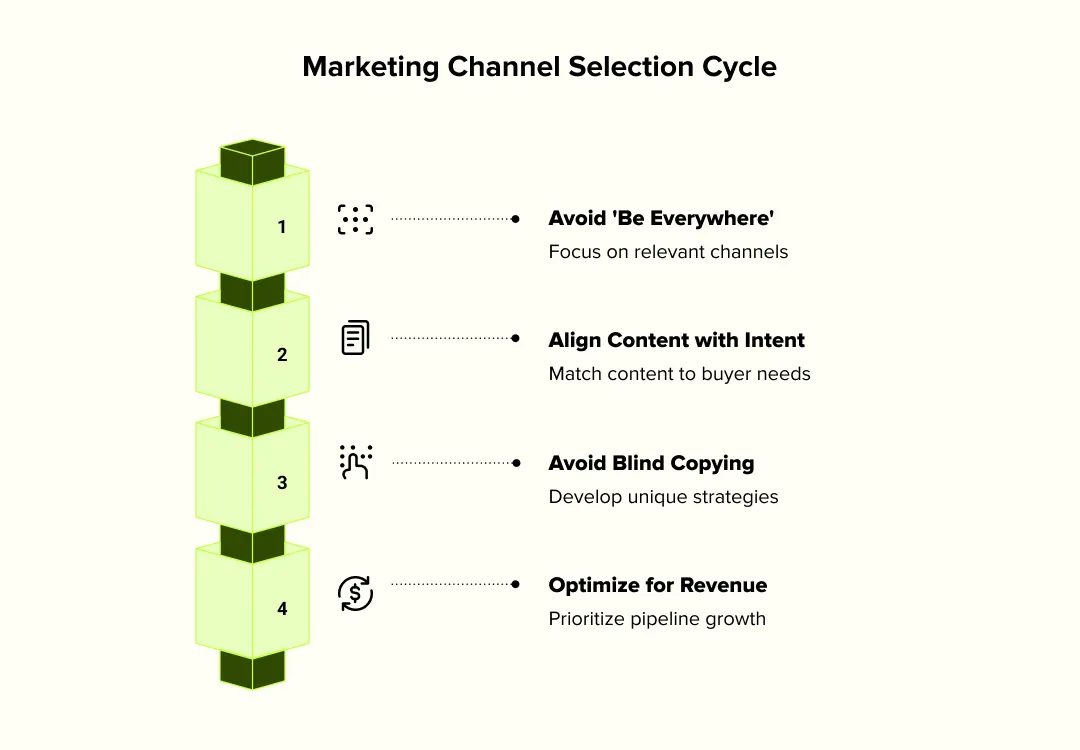
A great campaign on the wrong platform is a wasted campaign! When you are scaling, betting on the wrong campaign will cost you time, drain your budget, and push your future customers to the competitors. So, as you finalize your digital marketing strategies, make sure to avoid the following mistakes
1. Following the ‘Be Everywhere’ Approach
The biggest trap most businesses fall for is omnipresence! Believing that top, legitimate brands are active on all digital platforms can turn out to be a huge mistake. If you choose to spread your money and bandwidth across 10 different platforms, it will only lead to mediocre execution for each.
Instead, try to dominate 2-3 high-converting channels. Make sure that you are selecting the channels where your customers are most active.
2. Misaligning Your Content with Buyer’s Intent
If you are running BoFu ‘buy now’ conversion ads on top of the funnel platforms, you are only wasting your time. For instance, if you are selling a complex $50,000 software suite, pushing an aggressive ‘Book a Demo’ ad to someone passively scrolling through Instagram will yield terrible results.
Make sure that your offer matches the natural intent of the platform. Use search for capture, social for awareness, and email for nurturing.
3. Copying Your Competitors Blindly
Another mistake to avoid is seeing a competitor heavily investing in a channel and assuming you need to be there too. You can see their ads, but you are not aware of the Customer Acquisition Cost or their pipeline data. So, they might be burning cash on an unprofitable vanity channel.
So, build your channel mix based on your business goals and targeted audience, not as per your competitor’s visible footprint.
4. Optimizing For Clicks and Not Pipeline Revenue
Do not just judge the success of the selected digital marketing channel based on early metrics like cost-per-click (CPC) or cost-per-lead (CPL). A channel might give you leads for $5 each, but if none of them ever convert to paying customers, that channel is a failure.
Always connect your channel data to your CRM and evaluate platforms based on the actual revenue they generate, not just the traffic they drive.
Conclusion
It should now be clear that growth does not come from doing more; it comes from doing what truly works. The right digital marketing channels can turn scattered efforts into meaningful results, but only if you choose with the right intent.
When you stop chasing every option and start focusing on what truly aligns with your business, your strategy sharpens, your marketing spend gets smarter, and your growth becomes scalable!
Frequently Asked Questions
What are digital marketing channels?
Digital marketing channels are the specific online ecosystems where you connect with your target audience to build trust and drive sales. These are strategic touchpoints, like search engines, email inboxes, or social feeds, where your buyers actively evaluate solutions and make purchasing decisions
What are the most effective digital advertising channels?
The effectiveness of a marketing channel strategy depends entirely on your buyer's intent. Google Ads (Paid Search) is unmatched for capturing immediate demand from people already searching for a solution. However, if you need to generate new demand or target specific demographics and job titles, paid social platforms like Meta or LinkedIn are great options.
What are reliable analytical tools to track the performance of digital channels in marketing?
Google Analytics 4 (GA4) is the absolute baseline for tracking website traffic, user behavior, and overall conversion paths. But to truly measure revenue instead of just clicks, you need to connect your channel data to a robust CRM like HubSpot or Salesforce to see which platforms actually close deals.
How can I compare digital marketing channels based on ROI for e-commerce?
Start by tracking your Customer Acquisition Cost (CAC) and Return on Ad Spend (ROAS) for each channel using UTM links and your analytics dashboard. The true test of ROI, however, is looking beyond the first sale, comparing channels based on which ones consistently bring in repeat buyers with the highest Customer Lifetime Value (LTV).

Uncover executable insights, extensive research, and expert opinions in one place.
Related Content