Share It On:
 Search isn’t just typed anymore, it’s spoken. Here’s how that shift is changing visibility, rankings, and the way your content needs to perform.
“Ok Google, find the best Chinese restaurant near me.”
If you’ve said something like that recently, congrats; you’re officially part of the voice search crowd. And no, it’s not just a “tech trend” anymore. It’s how people search when they’re driving, cooking, walking their dog, or just too lazy to type.
Voice search feels natural because it is natural. Talking takes less effort than typing, and smart devices are everywhere now: phones, smartwatches, speakers, even cars. This shift has also pushed mobile app voice search optimization into the spotlight, as apps increasingly rely on conversational queries to drive discovery and engagement.
So instead of opening Google and typing a neat little keyword, people just ask the question out loud and expect an instant answer. That shift matters. A lot.
Voice search optimization is already changing how users behave online, especially when it comes to local businesses and service-based searches. And if you’re not paying attention, you’re basically leaving high-intent traffic on the table.
So let’s break down what Voice Search Optimization (VSO) really means, how it works, and what you should do if you want your website to show up when people ask their devices for answers.
What is Voice Search Optimization?
If you’re wondering what is voice search optimization, it’s essentially a more conversational and intent-driven version of search engine optimization (SEO), often overlapping with voice search SEO for apps and digital platforms.
Here’s the main difference: people don’t speak the way they type.
Nobody types:
“best chinese restaurant near me open now”
But they do say:
“Where can I get good Chinese food nearby that’s open right now?”
Same intent. Completely different phrasing.
That’s why voice search optimization focuses more on:
- long-tail keywords
- question-based searches
- conversational language
- quick, direct answers
Because voice search isn’t about “ranking on page one.” Most of the time, it’s about becoming the single answer the assistant reads aloud.
And that’s a much tougher game.

How Voice Search is Different from Traditional Search
Typed search is usually blunt and messy. People throw in keywords, skip grammar, and don’t care how the sentence looks.
Voice search is different. It sounds like a real conversation because it basically is one.
Instead of typing something like:
“best laptops 2026”
Users ask:
“What’s the best laptop under $1,000 for video editing?”
This shift has forced marketers to rethink their mobile voice search strategy, especially when optimizing content across devices and apps.
Here’s a quick comparison:
| Basis | Traditional Search | Voice Search |
|---|---|---|
| Query Style | Short keywords | Full sentences |
| User Intent | Broad/research-heavy | Immediate/action-driven |
| Common Searches | Lists, comparisons | Directions, quick answers |
| Context Use | Limited | Uses location, device, time |
| Search Behavior | Typing while browsing | Asking while multitasking |
The biggest difference is that voice searches are usually urgent. People asking questions out loud aren’t casually browsing; they want something now.
Most Common Voice Assistants Used for Search
Voice search isn’t limited to one platform. It’s happening across multiple ecosystems, and each one behaves slightly differently.
According to Statista, the global voice recognition market is projected to reach 50 billion USD by 2029. And smart devices like Amazon Alexa, Apple HomePod, and Google Assistant are a big reason behind that growth.
But when it comes to actual voice-based searching, a few assistants dominate:
1. Google Assistant
Google Assistant is the clear front-runner because it’s tied directly to Google Search. It also heavily relies on featured snippets, which means it tends to pull answers from pages that are already well-structured.
2. Siri
Siri is still massively popular because it’s built into Apple’s ecosystem. iPhones, iPads, AirPods: Siri is always there. And for local searches, Siri often pulls results from Apple Maps.

3. Amazon Alexa
Alexa dominates in smart speaker environments. It’s used heavily for smart home tasks, reminders, quick info, and shopping. A lot of users also rely on Alexa for Amazon purchases, which makes it important for ecommerce.
So what does all this mean for businesses?
It means voice search optimization can’t be a “Google-only” strategy.
If you want to win, you need to:
- Optimize content for Google snippets
- Maintain accurate listings for Siri/Apple Maps
- Build visibility across Alexa ecosystems (especially for local services and ecommerce)
The goal is simple: be the answer, regardless of which assistant the user talks to.
Why Voice Search Matters for SEO and Business
Voice search matters because it changes how people interact with the internet. In traditional SEO, users see 10 results and pick one. But in voice search, users often get one answer.
That’s it. No scrolling. No comparing. No “maybe I’ll check another website.”
It’s basically a winner-takes-most situation. If you’re not the answer being read out loud, you’re invisible. That’s why voice search engine optimization for mobile apps and websites has become critical.
And voice search keeps growing because devices keep forcing it into everyday life:
- Smartphones come with assistants by default
- Smart speakers are common in homes
- Cars now use Android Auto and Apple CarPlay
- Wearables make typing annoying, so voice becomes the default option
Voice search also hits hardest in local SEO.
A huge chunk of voice queries are location-based, like:
“find a plumber open right now”
“best café near me”
“dentist near me with good reviews”
These aren’t casual searches. These are purchase-ready searches.
And if you’re not optimized for them, your competitors will happily take those leads.
Another underrated point: voice search is huge for accessibility. For many people, speaking is simply easier than typing, especially users with mobility challenges, visual impairments, or learning difficulties.
So yes, optimizing for voice is also optimizing for inclusivity.
How Voice Search Works Behind the Scenes
Voice search looks simple on the surface. Someone asks a question, the assistant answers. Done. But behind the curtain, there’s a whole process happening in seconds.
Here’s a quick breakdown of it:
- Speech recognition converts spoken words into text
- Natural language processing (NLP) interprets meaning and intent
- The assistant searches a database or search engine
- It chooses the “best” answer and reads it aloud
Google’s semantic search evolution plays a big role here. Algorithms like Hummingbird and RankBrain helped Google move away from keyword matching and toward understanding context.
This is also where AI agent voice search optimization becomes increasingly relevant. Modern assistants are evolving into intelligent agents that not only answer queries but also take actions, making AI and voice search optimization more intent-driven than ever, especially across mobile ecosystems and apps.
Then there’s the Knowledge Graph, which helps Google connect entities like brands, locations, people, and businesses. That’s why voice search optimization is so closely tied to semantic SEO.
|
Turn Voice Search Intelligence into a Competitive Advantage Work with NLP experts who can help you build smarter, context-aware experiences. |
SERP Features That Influence Voice Search Results
If you’re trying to rank in voice search, aiming for “page one rankings” isn’t enough anymore. That’s the old SEO mindset.
Voice assistants don’t scroll through ten blue links like humans do. They want a clean, confident answer they can read out loud in two seconds. So instead of asking, “How do I rank higher?” the better question is:
How do I become the answer Google trusts enough to quote?
And that’s where SERP features come in.
Google has a handful of result formats designed specifically for fast answers. Voice assistants love these formats because they’re structured, easy to extract, and already validated by Google.
Let’s break down the SERP features that influence voice search the most, enabling you to build fool-proof voice search app optimization strategies.
1. Featured Snippets/ AI Overview (The Key Feature)
If voice search had a VIP section, featured snippets and AI Overviews would be sitting right in the center.
A featured snippet is the boxed answer that appears above the normal search results. It’s often called “Position Zero” because it ranks above #1.
AI Overview is Google’s AI-generated summary that pulls information from multiple sources and gives users a quick, blended answer right at the top.
Both are common sources voice assistants pull from, especially Google Assistant.
Featured snippets and AI Overviews usually appear in formats like:
- short paragraphs (definitions and explanations)
- bullet lists (steps, tips, checklists)
- numbered lists (how-to guides)
- tables (comparisons, pricing, stats)
For example, if someone asks:
“How does voice search work?”
Google doesn’t want to read a 2,000-word article out loud. It wants a tight 30–50 word summary. If your content delivers that clearly, you have a real chance of being pulled into a snippet or an AI Overview.
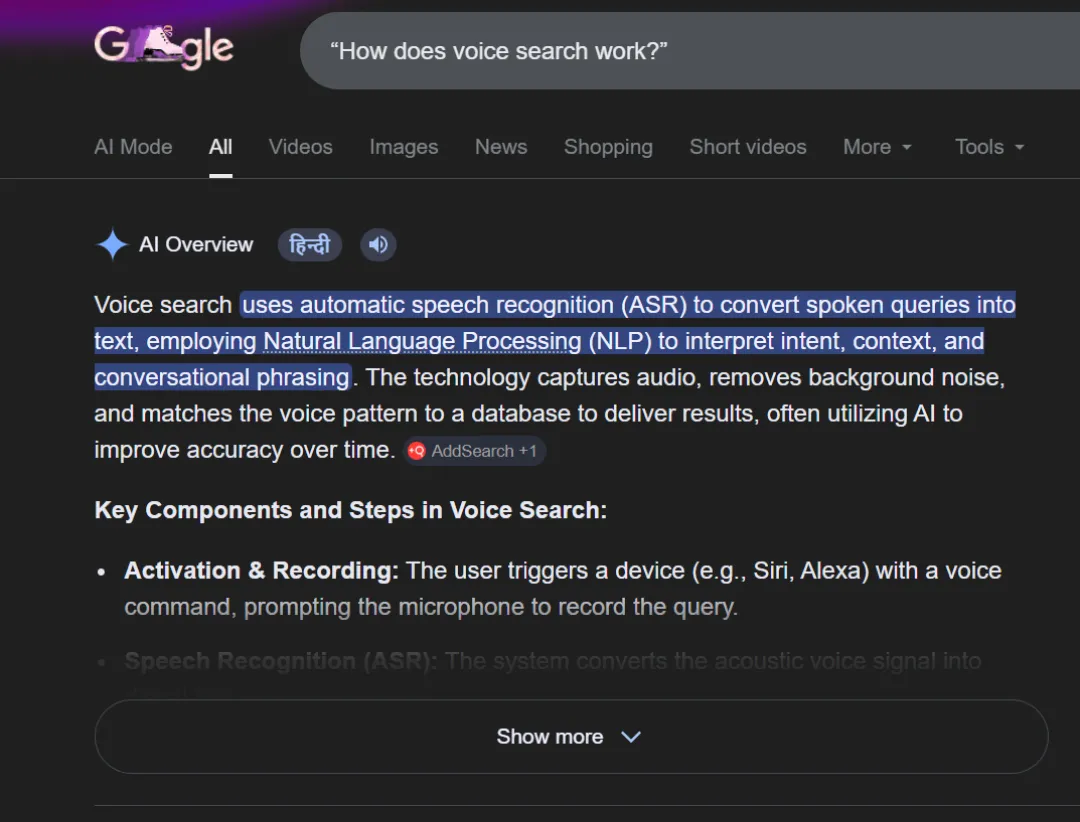
These voice search optimization tips can help you rank for featured snippets and AI Overviews:
- Answer the question directly within the first few lines
- Use headings that sound like actual questions
- Keep answers short and specific
- Use simple formatting (lists, steps, definitions)
In voice search, featured snippets aren’t just “nice to have.”
And with AI Overviews growing fast, they’re becoming an even bigger doorway into voice visibility.
2. Answer Boxes (Direct Answers / Instant Results)
Answer boxes are slightly different from featured snippets.
These are the results where Google gives the answer instantly without needing to quote a full website paragraph. Think of simple queries like:
- “How tall is the Eiffel Tower?”
- “What’s the time in New York?”
- “How old is Elon Musk?”
- “What is 100 dollars in rupees?”
These answers usually come from Google’s internal data sources, its Knowledge Graph, or trusted databases, making structured data critical for mobile app voice search optimization.
Now here’s the catch: you don’t always “rank” for answer boxes in the traditional sense.
But you can still benefit from them if:
- Your brand is an entity Google recognizes
- Your structured data is accurate
- Your website is consistent with public sources
For businesses, this matters because answer boxes are often what voice assistants use when users ask quick fact-based questions.
So even though they’re not “SEO-friendly” in the classic way, they still influence visibility massively.
3. People Also Ask (PAA)
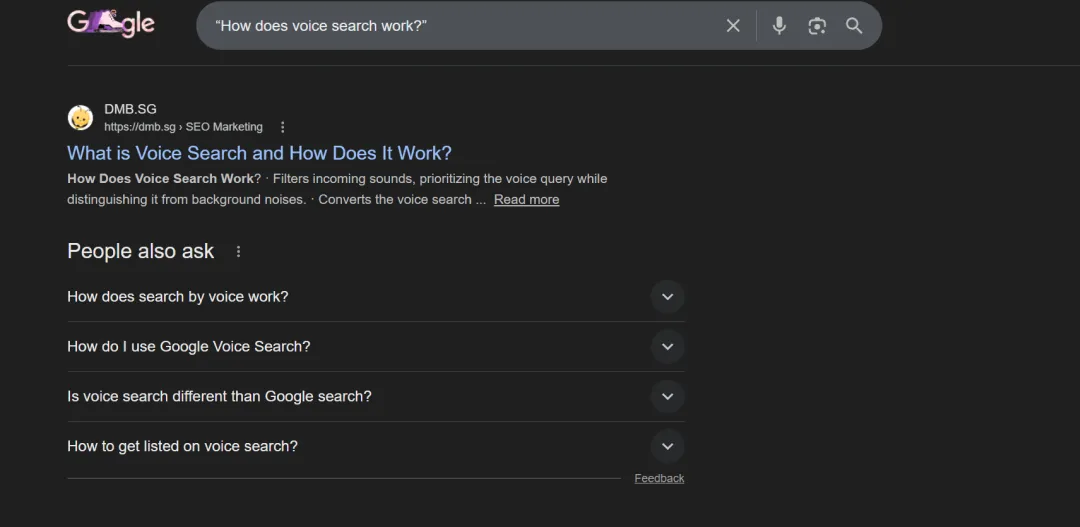
People Also Ask is one of the most underrated goldmines in SEO, especially for voice.
These are the expandable question boxes Google shows mid-SERP, like:
- “Is voice search good for SEO?”
- “How do I optimize for voice search?”
- “What percentage of searches are voice-based?”
Each question opens up a short answer, and Google pulls that answer from a website it trusts.
Why does PAA matter for voice search?
Because PAA questions are written exactly the way people speak. They’re natural, conversational, and usually long-tail. In other words, they match voice queries perfectly.
If your content is structured properly, you can rank for multiple PAA questions even if your main page isn’t ranking #1.
That’s one of the best advantages voice search optimization can offer.
How to optimize for PAA:
- Add mini FAQ sections inside your blog (not just at the end)
- Use subheadings that start with “What,” “How,” “Why,” and “When”
- Keep answers short but complete (2–4 lines works best)
- Don’t overcomplicate your wording
Think of PAA as Google giving you a cheat sheet of what people are asking out loud.
4. Knowledge Panels (Brand Visibility + Trust Signals)
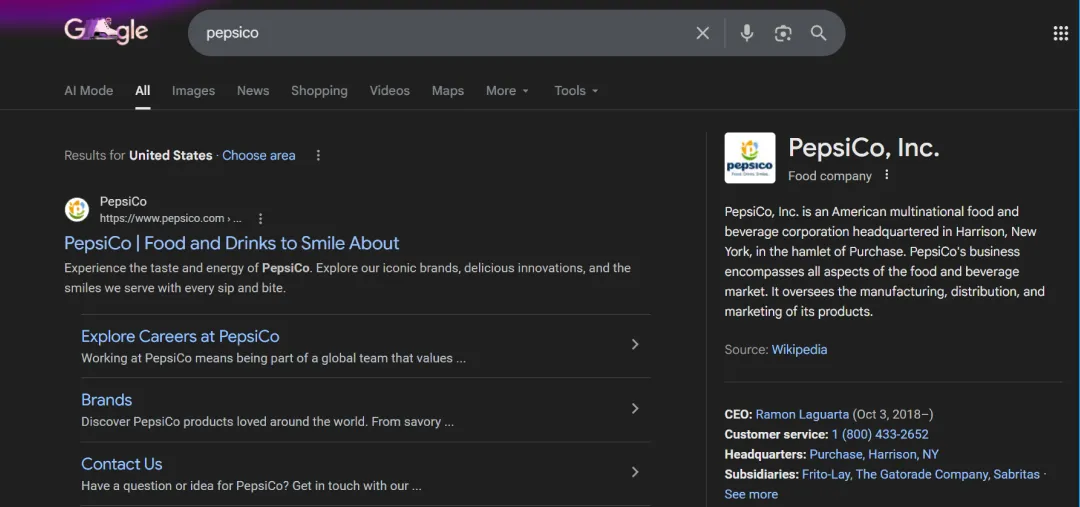
Knowledge panels are those big information boxes that show up on the right side of desktop search results (or at the top on mobile). They typically appear for:
- brands
- public figures
- businesses
- movies, books, apps, etc.
For example, if someone searches a company name, Google might show:
- official website
- reviews
- contact details
- social profiles
- CEO/founder name
- headquarters location
Knowledge panels are powered by Google’s Knowledge Graph, and they’re strongly tied to authority and credibility, the two pillars of effective AI and voice search optimization.
From a voice search perspective, knowledge panels matter because voice assistants often rely on them when someone asks things like:
- “What does [company] do?”
- “Where is [business] located?”
- “What are the opening hours of [brand]?”
- “Is [brand] legit?”
If Google has a clean knowledge panel for your business, it becomes much easier for voice assistants to pull correct information.
How to strengthen knowledge panel presence:
- Keep your Google Business Profile updated
- Maintain consistent name, address, and phone number (NAP) across directories
- Use structured data on your website
- Build entity credibility (mentions, backlinks, Wikipedia-style references if possible)
Knowledge panels are less about “ranking” and more about being recognized as a legitimate entity.
And in voice search, recognition is everything.
5. Local Pack Results (The Real Voice Search Battlefield)
If you’re a local business, the Local Pack is where voice search becomes brutally competitive.
Local Pack results are the top 3 business listings that show up with a map when someone searches:
- “best salon near me”
- “dentist open now”
- “plumber in Brooklyn”
- “coffee shop nearby”
Voice assistants often pull results directly from these listings, especially for “near me” searches.
And here’s the important part:
Most voice searches aren’t informational. They’re transactional.
Someone asking:
“Which is the best pizza place near me?”
isn’t doing research. They’re hungry and ready to act.
That means if you’re not ranking in the Local Pack, you’re missing the highest-intent traffic possible.
Local Pack rankings are influenced by:
- proximity to the user
- Google Business Profile optimization
- reviews and star rating
- keyword relevance in business categories
- NAP consistency across platforms
- local backlinks and citations
In other words, your website alone won’t carry you here. Your entire local SEO presence has to be clean.
Why These SERP Features Matter So Much for Voice Search
In normal search, ranking #5 still gets clicks. In voice search, ranking #5 might as well not exist. Because voice assistants don’t give users options. They give users answers.
So if you want voice visibility, your voice search optimization strategy needs to shift from: “How do I rank on page one?”
to:
“How do I structure my content so Google can confidently extract it?”
Featured snippets, PAA, local packs, and knowledge panels are basically Google’s “trusted answer zones.” And voice assistants pull heavily from those zones.
If you can win those spots, you don’t just rank, you get recommended. So yes, voice search SEO is basically snippet SEO. If your content isn’t structured in a way that Google can lift and read instantly, you won’t get chosen.
Voice Search Optimization Strategies
A. Keyword Research for Voice Search
If you approach voice keyword research like traditional SEO, you’ll miss the point.
Voice keywords are rarely short. This applies equally to websites and mobile app voice search optimization, where queries tend to be even more conversational.
People don’t ask: “web design company.”
They ask: “Which web design company is best for small businesses?”
Or:
“How much does it cost to hire a web designer in London?”
A practical way to do voice keyword research is simple:
Think like a human, not like an SEO tool.
If your friend asked you the question in real life, how would they say it? That’s your keyword.
To find these queries, use tools like:
AnswerThePublic (great for question clusters)
Google Autocomplete (simple but effective)
Ubersuggest / SEMrush / Ahrefs
People Also Ask section (highly underrated)
People Also Ask is basically Google telling you: “This is what humans keep asking.” Listen to it.
B. Content Optimization
Once you have voice-friendly keywords, you need to format content in a way voice assistants can actually use.
Voice search favors content that sounds natural. If your page reads like a legal contract, it’s not going to match conversational intent well. A strong voice-optimized page usually does one thing really well:
It answers the question immediately.
If someone searches “What is voice search optimization?”
Your page should answer in the first 2–3 lines. Ideally in 30–50 words. Then you can expand. This improves your chances of ranking in featured snippets, which is where most voice answers come from.
Another smart move is to add FAQ sections.
FAQs are basically built for voice search because they naturally include:
- question phrasing
- clean answers
- structured formatting
Even your headings should look like real questions:
- “How does voice search work?”
- “Why does voice search matter for local SEO?”
- “How do I optimize my content for Siri?”
The more “human” your structure looks, the easier Google can map it to spoken queries.
C. Technical SEO for Voice Search
Voice search is heavily mobile-driven, which makes technical SEO non-negotiable. This is even more critical in mobile app voice search optimization, where performance directly impacts usability.
Voice search users want fast answers, and Google prioritizes pages that load quickly and deliver information cleanly.
Key technical priorities:
1. Site Speed
Slow websites don’t win voice search. The consumers are looking for quick answers, and heavy websites will not be able to make the cut.
2. Mobile Friendliness
Your site should be responsive and friction-free. Most voice searches happen on mobile, so a desktop-only experience can be detrimental.
3. Structured Data (Schema Markup)
Schema helps search engines understand your content better.
For voice SEO, focus on:
- FAQ Schema
- LocalBusiness Schema
- Product Schema (for ecommerce)
Google also has speakable schema, designed for content that can be read aloud. It’s not widely adopted yet, but it’s worth exploring for publishers.
4. HTTPS
If your site isn’t secure, it’s automatically seen as lower trust. Voice assistants prefer credible sources, and HTTPS is the bare minimum.
D. Local SEO for Voice Search
Local SEO is where voice search becomes a goldmine. Most voice queries are local even when the user doesn’t say “near me.” Google assumes location intent based on the device’s signals.
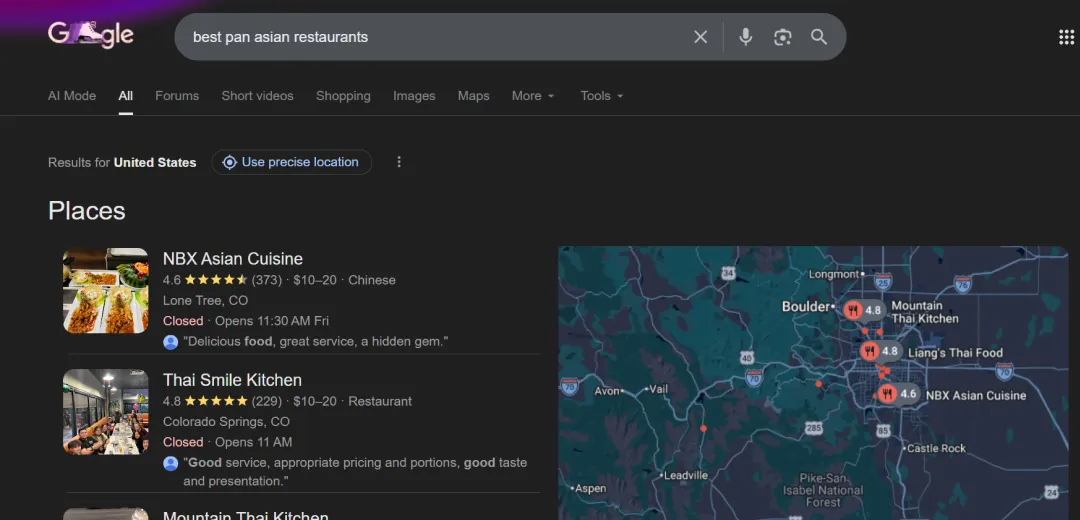
The first thing you need to optimize is your Google Business Profile:
- correct business hours
- accurate categories
- services listed
- updated photos
- correct address and phone number
Then comes NAP consistency. Your business info should match everywhere: Google, Yelp, Bing Places, directories and industry listings.
Even minor inconsistencies weaken your local trust signals. Reviews also matter more than people think.
Voice assistants love businesses with strong ratings and volume. A company with 4.7 stars and 300 reviews will get recommended far more often than one with 4.1 stars and 20 reviews.
Reputation management is now an important part of voice SEO.

E. Accessibility and User Experience
Voice search overlaps heavily with accessibility best practices. If your content is easy for humans to read, it’s also easier for search engines to extract and deliver as a spoken answer.
Voice-friendly content is usually:
- well-structured with headings
- broken into short paragraphs
- formatted with lists where needed
- written in clear language
Also include the following in your website for a better experience:
- alt text for images
- transcripts for videos/audio
- clean navigation
These improvements also strengthen voice search SEO for apps, where user experience directly impacts engagement.
Measuring and Monitoring Voice Search Performance
Here’s the annoying part: voice search tracking isn’t clean.
Google Search Console doesn’t label a query as “voice.” So you can’t just open a report and say, “This is my voice traffic.”
But you can still measure it indirectly.
Track things like:
- question-based keywords (“how,” “what,” “where,” etc.)
- long-tail conversational queries
- featured snippet rankings
- People Also Ask visibility
Google Search Console is still your best tool. Filter your queries by question words and optimize pages around them. Tools like SEMrush and Ahrefs help too, especially for tracking snippet ownership.
On the other hand, manual testing is underrated. Ask Siri, Alexa, and Google Assistant your target questions. See what comes up. If it’s not you, study who is winning and why.
Emerging Trends and the Future of Voice Search
Voice search is evolving fast, driven by AI and voice search optimization advancements. Search engines are moving toward multimodal interactions, where users can:
- speak
- type
- upload images
- continue the conversation seamlessly
Generative AI is also changing how answers are delivered. Assistants are starting to summarize across multiple sources instead of relying on one snippet.
Voice search is also becoming more commerce-driven. People are using assistants for:
- reordering products
- subscription purchases
- recommendations
For ecommerce brands, this makes schema markup, catalog accuracy, and reviews even more important.
And NLP is improving quickly. Assistants are getting better at follow-up questions, meaning voice search is becoming less like “search” and more like an actual conversation.
Which means SEO is shifting again, away from keyword obsession and toward intent + entity optimization.
Real-World Case Studies: Brands Already Winning with Voice Search
Voice search optimization isn’t limited to websites anymore. Today, the most effective strategies combine voice search optimization for websites and voice search engine optimization for mobile apps, creating a seamless experience across platforms.
Some brands focus on discoverability through search (web), while others push deeper into action-driven experiences through apps. The strongest strategies do both.
1. Walmart: Voice Search for Smarter Shopping + Inventory Efficiency

Walmart has actively integrated voice functionality through its “Ask Sam” voice assistant, mainly designed to help employees manage tasks like inventory and store operations.
But the more consumer-facing impact comes from how Walmart has supported voice-based grocery ordering.
Why this matters:
Walmart isn’t using voice search as a gimmick. They’re using it as a convenience layer, making it easier for customers to order essentials without manually browsing product categories.
Voice Search SEO takeaway:
If your ecommerce store isn’t optimized for conversational product searches (“order detergent,” “buy milk,” “reorder groceries”), you’re not just missing traffic, you’re missing repeat customers.
2. Starbucks: Voice Ordering Through Alexa and Samsung Bixby
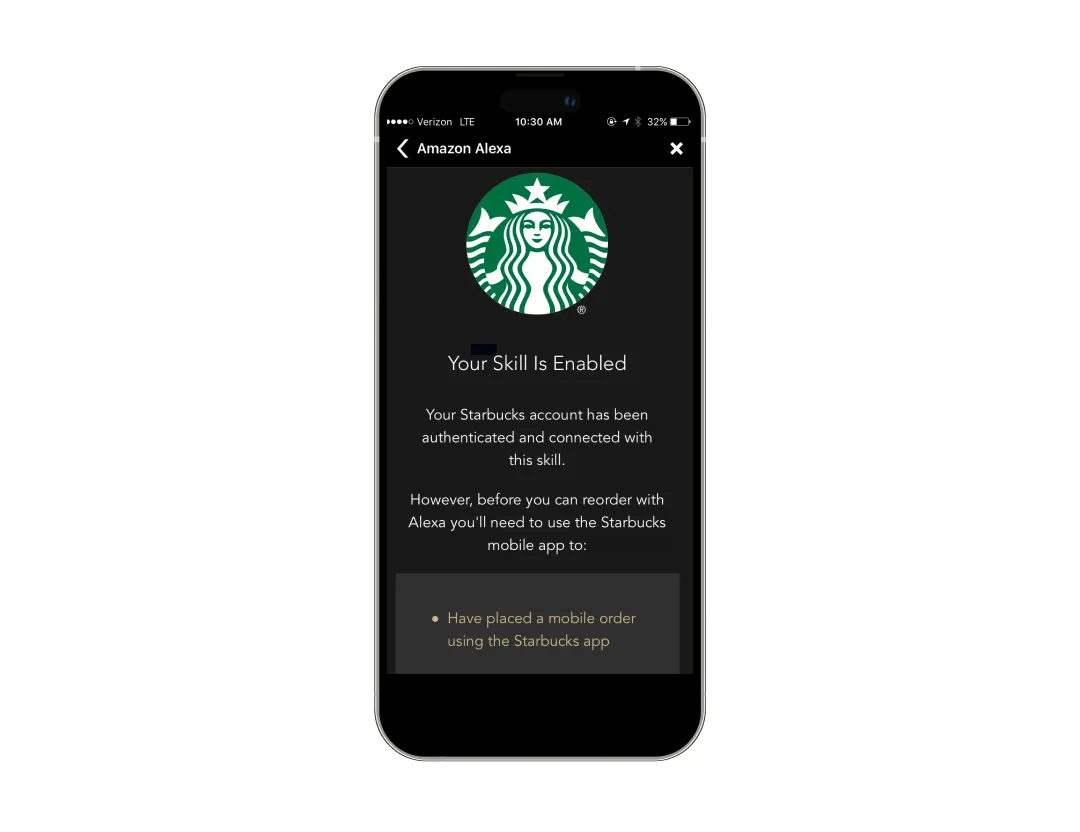
Starbucks has taken voice search into the transactional zone by enabling voice ordering through a custom Amazon Alexa skill. They also integrated voice ordering with Samsung Bixby in South Korea.
This means that mobile app voice search optimization lets customers place an order without even opening the Starbucks app.
Why this matters:
This is exactly where voice search is headed: fewer clicks, fewer screens, and faster decisions.
Starbucks understands that convenience wins. If someone can order coffee while getting dressed or driving, that’s a competitive advantage.
Voice Search SEO takeaway:
If you’re a consumer brand, voice search optimization isn’t only about ranking—it’s about making your product/service “voice-ready” across platforms people already use.
3. Nike: Google Assistant for Real-Time Product Updates
Nike integrated Google Assistant to support voice-activated sneaker sales and real-time updates through smart speakers.
For a brand like Nike, where product drops are time-sensitive and demand is insane, voice becomes a shortcut. Customers don’t want to browse. They want instant information.
Why this matters:
Nike is essentially reducing friction in the buying process. When voice becomes a channel for product discovery, the brand that shows up first wins the customer’s attention.
Voice Search SEO takeaway:
If your product launches depend on urgency, you should be optimizing for “best,” “latest,” and “where to buy” queries. Voice search SEO for apps and websites thrives on immediacy.
4. Domino’s: Voice-Activated Pizza Ordering
Domino’s is one of the most well-known examples of voice commerce done right. The company enabled voice-activated pizza ordering through multiple platforms, including their mobile app, Google Home, and Alexa.
So yes, you can literally order pizza without touching your phone.
Why this matters:
Domino’s didn’t treat voice as “nice to have.” They treated it as an ordering shortcut. And in food delivery, speed and convenience matter more than branding campaigns.
Voice Search SEO takeaway:
Service-based businesses (restaurants, salons, clinics) should treat voice search as a conversion channel, not just a visibility channel. People searching by voice are usually ready to act.
5. Salesforce: Einstein Voice for CRM Updates

Salesforce developed “Einstein Voice,” allowing users to verbally log data, update CRM records, and interact with Salesforce hands-free.
This is less about consumer voice search and more about voice becoming part of business workflow automation.
Why this matters:
Salesforce is solving a real pain point: people hate manual CRM updates. Voice makes it faster, and faster means adoption.
Voice Search SEO takeaway:
For SaaS and B2B companies, voice isn’t only about ranking on Google. It’s about how customers interact with software in real time. This highlights the rise of AI agent voice search optimization, where voice becomes part of operational systems, not just search.
If you’re also looking to improve how your app gets discovered beyond voice interfaces, this guide on mobile app SEO strategies breaks down how to optimize visibility across app stores and search ecosystems.
Actionable Steps for Voice Search Implementation
If you’re thinking, “Okay, cool… but what do I actually do now?”
Good question. Because voice search optimization doesn’t need a 6-month strategy deck.
You can start tightening things up immediately.
Here are the steps that matter first:
1. Fix your “definition problem”
Most blogs start with a long introduction that says a lot, but answers nothing.
Voice search doesn’t have patience for that.
If your page targets something like “voice search optimization,” your first 3–4 lines should give a clean definition. No storytelling. No filler. Just the answer.
Then expand.
2. Add questions inside your content (not just at the end)
Most sites throw FAQs at the bottom like an afterthought.
Instead, sprinkle mini Q&A sections throughout the page, using subheadings like:
- How does voice search actually work?
- Why do featured snippets matter?
- What are the best tools for voice keyword research?
That layout looks natural because it mirrors how humans think: question → answer → next question.
3. Rewrite headings like a real person would speak
This is a small change, but it’s powerful.
Instead of:
“Benefits of Voice Search”
Try:
“Why are people using voice search so much now?”
Voice assistants are literally built to respond to questions. So give Google what it wants.
4. Focus on “near me” optimization
If you’re a local business, voice search is basically free demand.
But only if your Google Business Profile is updated properly.
Check:
- correct address
- business hours
- categories
- services
- phone number
- website link
- photos (yes, photos matter)
Then make sure your business info is consistent everywhere else too. Google doesn’t trust businesses that look messy online.
5. Stop writing like you’re trying to impress Google
Write like you’re answering a customer. Short sentences help. Lists help. Straight answers help.
If your content sounds like a “whitepaper introduction,” you’re making it harder for voice assistants to extract your message.
Voice search favors clarity over creativity.
6. Add FAQ schema where it makes sense
Schema isn’t glamorous. But it’s useful.
If your page has question-answer blocks, FAQ schema increases the chances of your content being picked up for People Also Ask and snippet placements.
| Bonus Read: See how AI in Marketing can Help Transform Strategies for Better Engagement
Conclusion
Voice search optimization isn’t coming “in the future.” It’s already baked into how people search today. And the scary part is this: voice search doesn’t give you ten chances to win. You only have one shot.
That’s why the goal isn’t just to rank high. It’s to become the answer Google pulls instantly. So if you want to win voice search:
- answer questions faster
- write like people actually speak
- structure content cleanly
- strengthen local signals
- aim for snippets, not just rankings
Because voice search is simple in theory.
The assistant reads one answer.
And that answer gets the customer.
Frequently Asked Questions
What is voice search optimization?
Voice search optimization is the process of improving your website so it ranks for voice-based searches made through assistants like Siri, Alexa, and Google Assistant. It focuses on conversational keywords, direct answers, and structured content.
Does voice search affect SEO rankings?
Yes. Voice search changes how search engines interpret intent. It increases the importance of long-tail keywords, featured snippets, local SEO, and content that answers questions quickly
How do I find voice search keywords?
Start with Google’s People Also Ask section, Google autocomplete, and tools like AnswerThePublic. Voice keywords usually look like full questions, not short phrases.
Why is voice search important for local businesses?
Because voice searches are often urgent and location-driven. People commonly ask things like “best café near me” or “find a plumber open now.” If your Google Business Profile isn’t optimized, you’ll miss these leads.
What type of content works best for voice search?
FAQ pages, how-to guides, short definitions, and content formatted with clear headings and bullet points perform best. Voice assistants prefer content that can be read aloud easily.
How do I rank in Google voice search results?
You improve your chances by targeting question-based keywords, optimizing for featured snippets, improving site speed, adding structured data, and strengthening local SEO signals like reviews and Google Business Profile accuracy.

Uncover executable insights, extensive research, and expert opinions in one place.
Related Content