Share It On:
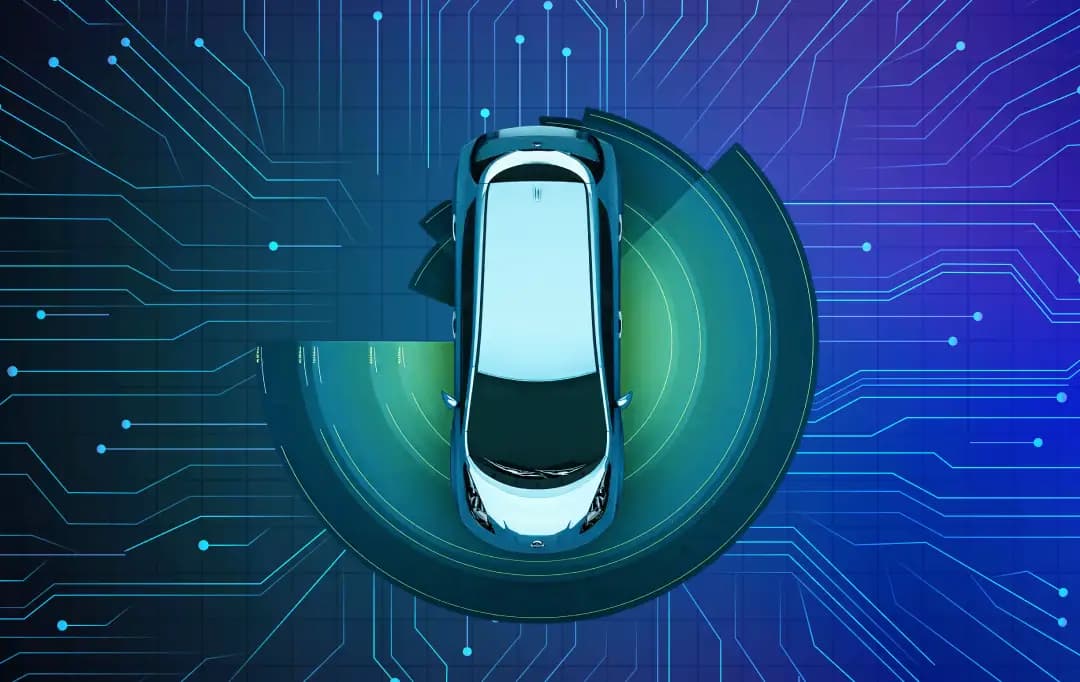 A deep dive into how AI in transportation has led to the development of autonomous fleets, voice assistants, and UGVs to take over the wheel across industries.
You press a button on your screen, and within three minutes, a car arrives. You order it at midnight, and a package is dropped off at your door the following afternoon. We are so accustomed to this smooth speed that we tend to confuse it with modern magic. However, when you peep under the hood, you will discover that it’s the magic of AI in the transportation industry.
When we think of AI in transport, we often picture a robot sitting in the driver’s seat. But the technology’s real power is far more expansive. AI is the invisible pilot steering the massive, chaotic web of global logistics.
It is the force calculating millions of variables per second, like weather patterns to engine vibration, to save billions in fuel, slash delivery times, and prevent accidents before they happen. Now, let’s know more about the core technologies, benefits, trends and more.
Core Technologies Of Artificial Intelligence in Transportation
To understand how the Trillion-Dollar Pilot operates, we need to look at the tech stack powering it. These are the anatomy of a smarter, safer transport network.
1. Artificial Intelligence (AI) & Machine Learning (ML): The Brain
AI in autonomous vehicles and in the overall transportation is the decision-maker, setting the logic. Machine Learning digests massive historical datasets to predict the future. It powers the transportation industry by forecasting demand spikes, calculating fuel-efficient shipping routes, and even enabling Generative AI to handle complex customer service queries or negotiate freight contracts instantly.
2. Computer Vision: The Eyes
While AI thinks, Computer Vision sees. Using input from cameras and LiDAR allows vehicles to "read" the world in real-time. It also helps in identifying lane markings, deciphering speed limit signs, and detecting a pedestrian stepping off a curb milliseconds before a human could.

3. IoT & Sensors: The Nervous System
Engineers have thousands of sensors built into engines, roads and shipping containers that constantly convey essential health information, creating new opportunities for IoT Mobile App Development in connected transportation ecosystems. IoT can be used to monitor tire pressure on a truck, or to check the temperature of shipments of vaccines, which means that AI is never deprived of the real-time data it requires to take action.
Key Applications: How AI Takes the Wheel?
AI in the transportation industry is already active and optimizing every mile of the global supply chain. Here is how AI development companies are taking over the heavy lifting in four critical areas, through some of their key applications and AI use cases:
1. Real Self-Driving Revolution
While self-driving cars grab the headlines, the real revolution is happening in industrial transport. For example, Aurora is actively running fully driverless rigs on public highways. This has turned the 200-mile stretch between Dallas and Houston into the world’s first autonomous freight corridor.
Another foremost example of AI and transportation is Zipline, which uses autonomous drones to parachute blood and vaccines to hospitals in Rwanda. Their AI pilot handles wind and weather instantly, reducing in-hospital maternal deaths by over 50% in served areas.
2. Smart Traffic Management: Ending the "Phantom Jam"
We’ve all sat at a red light with absolutely no cross-traffic. AI is making that obsolete. Cities like Singapore use AI-driven systems that adjust traffic lights in real-time based on actual vehicle density rather than fixed timers.
These systems have been shown to reduce idle time and cut emissions. Also, by communicating with vehicles, the AI infrastructure itself becomes a traffic controller, smoothing out phantom jams caused by unnecessary braking.
3. Predictive Logistics: The Amazon Effect
Amazon patented a system that moves products to a local warehouse before you even click "buy." The AI ensures the item is close enough by the time the order is placed in reality. Now, here Amazon uses the power of AI and machine learning to analyze search patterns and regional trends, calculating the probability of a sale. This pre-emptive strategy slashes delivery times and significantly reduces last-mile costs.

4. Predictive Maintenance: Hearing the Problem Before it Breaks
The AI algorithms interpret the data of the IoT sensors, such as vibration, temperature, or even sound, instead of waiting to see the smoke come out of an engine. The AI can scan the audio frequencies against a database containing healthy engines to identify a certain bearing failure weeks before it breaks, especially when powered through scalable AIaaS platforms that process fleet-wide sensor data in real time. This will avoid disastrous breakdowns on the road, saving fleets thousands of dollars in towing fees and lost time in cargo.

5. The Co-Pilot Experience
AI voice assistants are moving beyond simple commands to create a more comfortable, hands-free, and inclusive riding experience. These systems are usually run on Large Language Models (LLM) and can comprehend natural language, local dialect, and multi-faceted and multi-turn queries, making in-car dialogue safe. In passenger cars, navigation, climate, and media are governed by assistants so that the drivers do not need to take their hands off the wheel and look at the road.
6. AI-Powered Defense Mechanisms
In defense and security, AI is piloting the Unmanned Ground Vehicles (UGVs) and Robotic Combat Vehicles (RCVs). These platforms employ AI to support navigation and detection of threats, as well as combat support, minimizing the risk to the human personnel.

For example, Milrem Robotics' “THeMIS” is a multi-mission UGV acquired by over 19 nations (including NATO members) for combat, logistics, and reconnaissance. Also, Rheinmetall’s Mission Master UGV is an AI-enabled autonomous platform used for surveillance, target detection, and combat support.

Advantages of Incorporating Artificial Intelligence in the Transportation Industry
AI in transportation unlocks massive economic and social value. Here are some of the key benefits:

1. Safety First
Human error, that is, distraction, fatigue, or poor judgment, is the cause of most road accidents. So, the foremost benefit of AI in the transportation industry is that it can minimise such accidents to some degree. As an example, AI systems do not text, become tired and are capable enough to respond to dangers within milliseconds — one of the most practical generative AI use cases emerging in modern transportation systems. Therefore, AI has the potential to save countless lives and reduce healthcare costs associated with accidents.
2. Operational Efficiency
To logistics businesses, fuel is an enormous cost. Route optimization based on AI is the shortest way, and also takes into consideration traffic, weather, and vehicle load in real-time. Such accuracy can save on fuel expenditures and shorten the delivery time, improving the bottom line of companies worldwide.
3. Sustainability
AI can be an effective weapon in combating climate change. It directly reduces emissions by optimizing routes to eliminate idle time and unnecessary miles. Moreover, AI is essential in regulating electric vehicle (EV) fleets, forecasting battery consumption, and scheduling the charging process to minimize the impact on the power grid.
4. Accessibility & Inclusion
For the elderly, the blind, and those with disabilities, driving is often impossible. AI-driven autonomous vehicles (AVs) promise to restore independence to millions. It’s about social equity, allowing people to get to doctors’ appointments or jobs without relying on rigid paratransit schedules or expensive taxis.
5. Dynamic Public Transit
Forget rigid bus timetables that never match reality. AI is powering Micro-transit shuttles that dynamically alter their routes based on real-time ride requests (like a mix between a bus and an Uber). This solves the First Mile/Last Mile problem, connecting people in suburbs to major train lines efficiently.

Challenges to the Adoption of AI for the Transportation Industry
While the future is bright, the road ahead is not without hurdles. Realizing the full potential of using AI in transportation requires overcoming significant challenges. Let’s look at some key challenges here:
1. Infrastructure Gaps
AVs need an ecosystem. They require smart cities with powerful 5G networks, intelligent lights and cameras installed in the road infrastructure to transmit important information to serve optimally. There are still a lot of areas where this basic technology is lacking.
2. Data Privacy & Security
A networked fleet represents a treasure of information, and thus it is an attractive target of cyberattacks. There is a high risk of hackers assuming control of a car or stealing important location and shipping information, and this security issue requires much more serious cybersecurity measures on an industrial level.
3. The Moral Dilemma
This is the contemporary hanging problem. Stakeholders across the world are wondering, how should a self-driving car be coded to respond in the event of an inevitable crash? Should it favor its passengers, pedestrians, or the way of minimum overall harm? The question of who is to bear the blame, the manufacturer, the software developer or the owner, should an accident happen with an autonomous system, is still an elaborate legal and ethical area.
4. The Invisible Environmental Cost
In spite of the fact that AI will use less fuel on the road, the process of training such massive models absorbs colossal amounts of energy. For instance, a study predicts that by 2026, data center electricity consumption will approach 1,050 terawatt-hours.
Therefore, self-driving algorithms and other requirements posed by AI in transportation that are driven by data centers demand huge amounts of cooling and electricity. Now, this follows a paradox within the industry: Is it possible to reduce transport emissions without increasing digital emissions significantly?
Suggested Read: Growing Power of AI Apps in Self-Driving Cars
Future Trends in Artificial Intelligence-Powered Transportation
The future of AI in transportation offers a complete convergence of vehicle, infrastructure, and user into a seamless, intelligent network. The global AI in Transportation Market is projected to exceed $21.4 billion by 2033, growing at a CAGR of over 19.5% from $3.6 billion in 2023.`
Here are some foundational AI trends toward fully autonomous mobility, enabling all elements of the transport ecosystem to communicate in real-time.
- The global Automotive Vehicle-to-Everything Market is growing extremely popular and is forecasted to reach $9.5 billion by 2030. This V2X technology allows cars, infrastructure, and pedestrians to exchange data on speed, trajectory, and hazard warnings with near-zero latency.
- Safety Over Horizon communication prevents accidents that current on-board sensors can't see. This technology can easily detect a vehicle running a red light around a blind corner, or a pedestrian stepping out from behind a parked bus.
- In the future, AI is also moving from managing personalized human journeys to focusing on providing a seamless travel experience. This has led to an overall growth of the global Mobility as a Service (MaaS) Market, which is projected to reach $40.1 billion by 2030. It is driven heavily by AI for pricing, scheduling, and routing.
- Moving forward, most AI development companies will consolidate all transport options (bus, train, ride-share, scooter) into a single app. They will follow AI Concierge, and this offers the fastest, greenest route, optimized for the user's preferences and real-time needs.
- In the coming years, the focus will also be shifted to regulations and compliance. This will lead to a shift in governments and international bodies, like the UN, which are increasingly advocating for ethical guidelines, recognizing the potential for AI to prevent road deaths by 2030. It also provides equitable access to data, and ethical use of algorithms is established globally.
Lastly, AI in the transportation industry is already here. It’s making logistics faster, safer, and affordable for everyone. The question for your business isn't if AI will change things, but how fast you can embrace this road to competitive advantage.
Frequently Asked Questions
How is AI used in transportation to cut costs and save lives?
The use of AI in transportation leads to efficiency through autonomous vehicles, optimization of schedules in transport, and improved road safety mechanisms. The applications greatly minimize human error, accidents, and expensive fleet downtimes within the industry at large.
What is the main value of machine learning in transportation for fleet reliability?
Machine learning in transportation helps predict component failures weeks before they happen by using massive data from sensors on cars. The ability to maximize vehicle availability, minimize unforeseen repairs and radically increase the overall reliability of the operations of logistics providers makes this an active, predictive form of maintenance.
How does deep learning in transportation specifically enhance autonomous safety?
The system of deep learning in transportation incorporates complicated neural networks to handle live camera and LiDAR data. This enables the autonomous cars to identify objects instantly, anticipate human movement, and make safer and split-second decisions to drive in a complex traffic environment.
How does Generative AI add competitive value to logistics planning?
Generative AI in transportation creates value through simulating millions of unique traffic and demand scenarios. The ability assists companies to precisely predict the risk of the supply chain, generate alternative routes dynamically and optimally, and save customers and resources dramatically.
Beyond autonomous cars, how else is AI used in transportation to boost sustainability?
The transportation sector uses AI to improve sustainability through the application of smart city technology to dynamically regulate traffic flows. This minimizes idle time, ultimately decreases fuel usage and streamlines Electric Vehicle (EV) charging infrastructure, propelling greener conduct throughout the world supply chains.

Uncover executable insights, extensive research, and expert opinions in one place.
Related Content