Share It On:
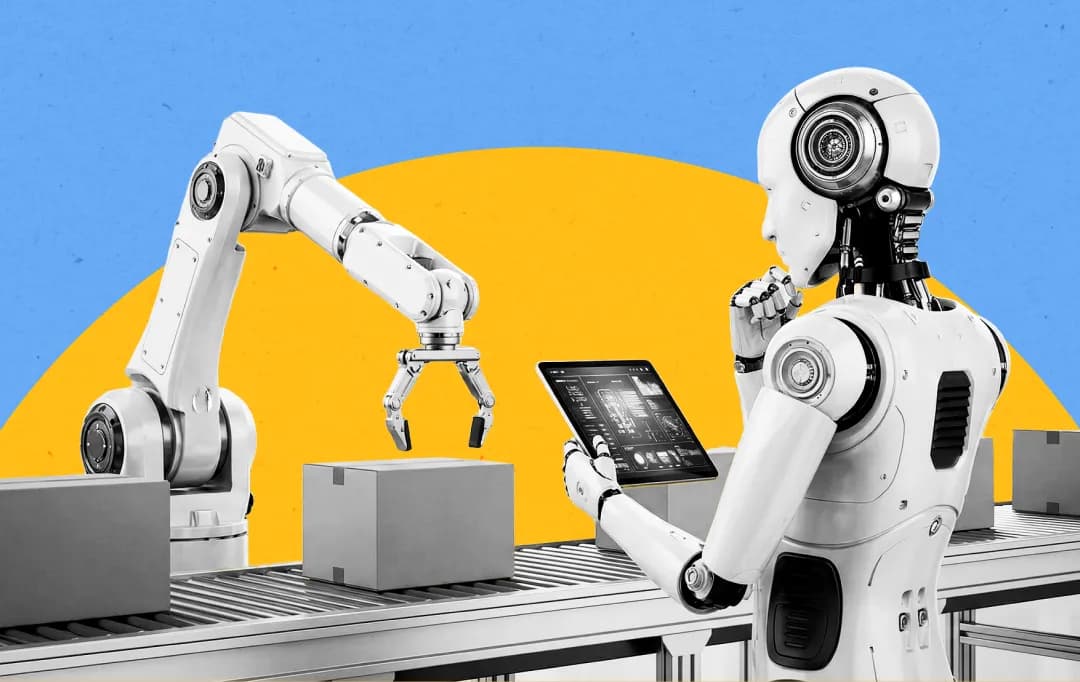 The real difference between AI and automation isn’t intelligence—it’s responsibility. And to understand that line better, this guide dissects the operational DNA of AI vs Automation—separating rule-based efficiency from adaptive intelligence.
Stop confusedly nodding when your CTO mentions "intelligent automation" and "hyperautomation" in the same breath. They aren’t synonyms. They aren’t even siblings. They are distant cousins who barely tolerate each other at family reunions.
One is a workhorse; the other is a thinker.
In the tech world, we have a bad habit of collapsing distinct technologies into buzzword gumbo. But if you are signing checks or designing workflows, you cannot afford that linguistic laziness.
Automation is about reliability. It’s the assembly line. It’s "if this, then that." It never gets tired, but it never gets smarter. Artificial intelligence? That’s about adaptability. It’s the messy, chaotic, brilliant capability to look at data and say, "Wait, that doesn’t look right," or "Here is a better way."
The distinction matters because the check size differs. The implementation timeline differs. And the failure rate? That differs wildly. We are going to cut through the noise. No fluff. Just the unvarnished mechanics of AI vs. Automation.
Quick Summary: What is the Difference Between AI and Automation?
Before dissecting the mechanics, here is the strategic breakdown of how these technologies differ:
- The Core Distinction: Automation is about adherence (following static rules efficiently). AI is about judgment (adapting to data and making decisions).
- The Failure Point: Automation fails when the environment changes (e.g., a software update). AI fails when the data is biased (e.g., poor training history).
- The Strategy: The most effective approach is Orchestration—using automation to execute repetitive tasks and AI to handle complex variability.
Now, let’s go into details!
Definitions and Concepts: The Hands vs. The Brain
Let’s strip it down. Automation is your digital hands. It is rigid, efficient, and blissfully ignorant of context. It follows pre-defined rules without question. If you tell a script to delete all emails containing the word "invoice," it will delete the legitimate invoice from your biggest client just as happily as it deletes a phishing scam. It doesn’t care. It just executes.
This is where the confusion often starts. People see a computer doing a task and scream "AI!" But if there is no learning, no pattern recognition, and no deviation from the script, it is just code. It is process automation.
Now, introduce the brain.
Artificial Intelligence (AI) is the layer of cognition. It doesn’t just execute; it evaluates. It uses machine learning to digest a data set, identify a pattern, and make a probabilistic decision. It deals in shades of gray.
When we talk about AI and Robotics, we are often referring to this convergence—the machine that can move (automation) and the machine that can see and decide where to move (AI).
For instance, an automated arm in a car factory welds the same spot every 45 seconds. An AI-powered arm looks at the metal, sees a slight imperfection, and adjusts the weld angle by 2 degrees in real-time. That subtle shift is the trillions of dollars of difference between the two industries.
The Rise of the Learning Machine
We are currently living through a shift that makes the Industrial Revolution look like a minor software update. The history of AI is littered with false starts, but we have hit escape velocity. We aren’t just coding rules anymore; we are training models.
Consider AI in IT Services. It used to be simple scripts resetting passwords. Now? It’s Large Language Models (LLMs) parsing thousands of error logs to predict a server outage three days before it happens. That isn’t just faster; it’s fundamentally different work.
|
Not Sure Whether You Need AI Or Automation? |
Key Differences and Similarities: The Mechanics of "Doing"
If you are trying to decide where to allocate budget, you need to understand the mechanics. Automation thrives on static rules. It loves structure. Give it a messy Excel sheet, and it breaks. Give it a standardized CSV, and it’s heaven.
AI, specifically, has character. For instance, generative AI thrives on chaos. It eats unstructured data—emails, Slack messages, blurry PDFs—and structures it.
Here is the breakdown that most folks won’t show you because it makes their "AI-powered" tools look basic:
| Feature | Automation (The Doer) | AI (The Thinker) |
|---|---|---|
| Core Function | Executes repetitive tasks based on triggers. | Simulates human reasoning and decision-making. |
| Input Type | Structured data (Forms, Database rows). | Unstructured data (Voice, Images, Natural Language). |
| Adaptability | Zero. If the rule breaks, the bot stops. | High. Adapts to new inputs via pattern recognition. |
| Outcome | Predictable, consistent output. | Probabilistic, creative, or optimized output. |
| Example | Spam filtering based on sender lists. | Semantic analysis of email content to detect tone. |
There is a nuance here. We often see Narrow AI—AI designed for one specific task—masquerading as general intelligence. A chess bot is brilliant at chess and useless at making coffee. Automation is even narrower. It doesn’t play chess; it just moves the pawn to E4 because line 10 of the code said so.
However, the gap is closing. AI automation is the hybrid child of these two parents. It uses AI to handle the messy input and automation to execute the clean output.
The Role of Complexity
When tasks get complex, automation fails. It hits a wall called "exception handling." If a customer address is written as "Apt 4" instead of "Unit 4," a rigid Robotic Process Automation (RPA) bot might crash. AI looks at that and understands they are semantically identical.
This leads us to a critical realization about the future of AI. It isn’t about replacing automation; it’s about uncapping it. It’s about removing the brittle nature of rule-based systems.
Integration and Collaboration: The "Intelligent" Workflow
You don’t have to choose one. In fact, you shouldn’t. The most potent businesses in 2026 are those mastering AI orchestration. This is the art of making the brain and the hands work in concert.
Imagine a customer service workflow.
- AI (The Brain): A customer sends a furious email. Natural Language Processing (NLP) reads it, detects high negative sentiment, categorizes it as a "Billing Dispute," and extracts the invoice number.
- Automation (The Hands): The system triggers a workflow. It logs the ticket in Salesforce, pings the account manager on Slack, and pulls the invoice details from SAP.
- AI (The Brain): It drafts a personalized, empathetic response based on the customer’s history and the specific billing error.
- Human (The Oversight): An agent reviews the draft.
- Automation (The Hands): The email is sent.
This is intelligent automation. It seamlessly weaves machine learning (ML) into the gears of the business.
We are seeing this heavily in AI use cases across enterprise sectors. It’s no longer just about "making things faster." It is about making things resilient. If you just had automation here, the bot would have sent a generic "We received your ticket" auto-reply, likely infuriating the customer further.
The Integration Pain Points
It is not all sunshine. Integrating these systems is a nightmare of API calls and data hygiene. Integration with the IT ecosystem implies that your legacy systems can talk to modern AI models. Often, they can’t. You need middleware. You need AI development companies who understand not just the fancy algorithms, but the dusty, ancient SQL databases that actually hold your customer data.
But when it works? It feels like magic.
Business Impact and Adoption: Adapt or Die
Let’s talk money. Why are we doing this?
Cost savings and productivity. That’s the boardroom answer.
The real answer? Survival.
In 2026, if your competitor uses predictive analytics to stock inventory and you are using a spreadsheet and a hunch, you are dead. You just don’t know it yet. The adoption of AI-powered IT services has moved from "experimental" to "infrastructure."
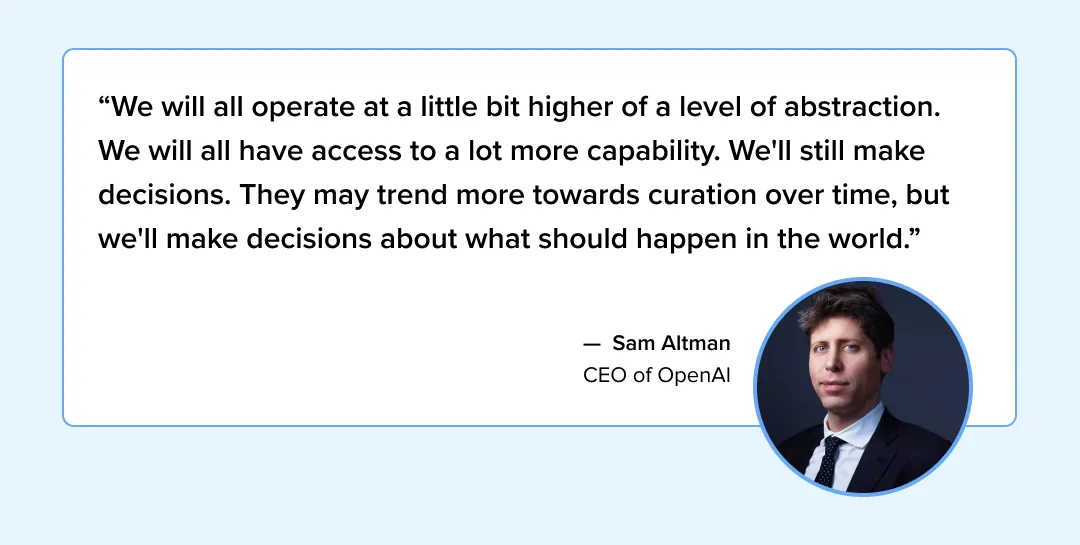
This quote implies that the very tools we use to automate—the software itself—are becoming fluid, adaptive agents.
Adoption isn't just about buying software. It is about cultural rewiring. AI consulting companies are charging fortunes right now not to install software, but to teach executives how to stop micromanaging processes that machines can do better.
The Workforce Anxiety
There is fear. Real fear. "Will this robot take my job?"
Let’s look at AI’s impact on employment and the future of jobs. The data suggests a shift, not an erasure. We are seeing a massive demand for people who can manage these systems. We don't need data entry clerks; we need data auditors. While it is also true that thousands of people have been laid off and replaced with AIs, the market is still evolving, and so are skilled workers.
We need people who understand types of AI and can select the right tool for the job. Do you need a sledgehammer (LLM) or a scalpel (Regression Model)? The human provides the context; the machine provides the scale.
Benefits and Limitations: The Unvarnished Truth
The benefits are seductive.
- Consistency: Automation never has a bad coffee morning.
- Scalability: You can spin up 1,000 AI agents in minutes. You cannot hire 1,000 humans in a year.
- Data Processing: AI can read all of the internet. You can read maybe one book a week.
But the limitations? They are terrifying if ignored.
Data dependency is the Achilles heel. If your historical data is biased, your strategy will just automate bias. It will make bad decisions faster and with more confidence.
Then there is the "Hallucination" problem. Automation does exactly what you say, even if it’s wrong. AI sometimes does what it thinks you want, which might be totally made up. This is why human oversight is non-negotiable in business-critical workflows, and that’s where the job security for folks who keep up with the evolving world of AI comes into the picture.
The Maintenance Trap
Automation scripts are brittle. One UI change in your CRM, and the bot breaks. This is one of the major reasons why enterprises today carefully evaluate automated testing vs manual testing workflows before scaling AI-powered automation. AI automation is more resilient, but it drifts. The model that worked in January might degrade by June as market conditions change. You need constant monitoring. This isn't "set it and forget it." It is "set it and babysit it."
Consider AI in apps. We demand instant AI-powered personalization. Netflix doesn't just "automate" a list of movies; it uses deep learning to predict that because you watched a grim documentary on Tuesday, you might want a light comedy on Wednesday. That’s a benefit automation alone cannot deliver.
Use Cases and Examples: Where Rubber Meets Road
Let’s look at the real world.
- Marketing: AI and social media are inseparable now. Automation posts the tweet at 9:00 AM. AI writes the tweet, generates the image, and predicts the virality score.
- Finance: Expense management. Automation matches receipts to transactions. AI flags that the steak dinner in Vegas probably isn't a "Client Meeting" based on the time stamp and the attendees.
- Development: AI won’t replace developers, but it is changing them into architects. Instead of writing boilerplate code, they prompt the AI to build the scaffolding, and they focus on the complex logic.
We are seeing AI prompts becoming a form of coding syntax. The ability to write a good prompt is now as valuable as knowing Python.
Take Alaya AI or similar distributed data platforms. They use blockchain and AI to label data. It’s a use case that didn’t exist five years ago. Or look at sales AI. It listens to your Zoom calls, analyzes the prospect's hesitation pauses, and coaches you in real-time to offer a discount. That is not automation. That is augmentation.

Future Trends: The Agentic Shift
This is where it gets wild. We are moving from "Chatbots" to Agentic AI.
Old Automation: "Turn on the lights."
New AI: "I noticed you’re working late and squinting; I’ve adjusted the lighting to reduce eye strain and ordered your usual Thai food because your calendar says you have no break until 9 PM."
AI agents are the next frontier. These are autonomous software entities that can pursue goals, not just tasks. They use multi-agent systems to talk to each other. The marketing agent talks to the sales agent, and they agree on a campaign without a human meeting.
We are also seeing the rise of AI chip makers designing silicon specifically for these agentic workloads. It’s no longer about generic CPUs. It’s about Neural Processing Units (NPUs) that live on the edge, in your phone, in your car.
The Open Source Rebellion
While the giants fight, open-source AI agents are democratizing this power. You don’t need a billion-dollar budget to deploy a Narrow AI for your inventory. You can download a model, fine-tune it, and run it locally. This is huge for privacy and cost.
AI in transportation is also graduating from "Cruise Control" (Automation) to full Level 5 Autonomy (AI). It is the ultimate test of machine learning vs. automation. One follows the white lines; the other predicts that the child on the sidewalk is about to chase a ball into the street.
Conclusion
We are standing at a fork in the road. One path is the status quo: better macros, faster scripts, cleaner rules. That is automation and AI in its infancy. The other path is artificial intelligence and automation fused into a cognitive fabric that runs our world.
The real difference isn’t technical. It’s philosophical. Automation asks, "How do I do this task?" AI asks, "Why are we doing this task, and is there a better result?"
Your job is to ensure that as you deploy these AI frameworks, you are answering the "Why," not just the "How."
The future belongs to the curious, not the compliant.
Frequently Asked Questions
What is the main difference between AI and automation?
Automation follows preset rules to perform repetitive tasks. AI uses data to learn, adapt, and make decisions without explicit programming for every scenario. Think of automation as a train on tracks, and AI as a 4x4 off-road vehicle.
Can artificial intelligence and automation be used together?
Absolutely. This is called Intelligent Automation or Hyperautomation. You use AI to analyze data and make decisions, and then use automation to execute those decisions instantly.
What are the agentic AI vs. automation differences?
Agentic AI can set its own sub-goals to achieve a larger objective and adapt to roadblocks. Traditional automation will simply stop or error out if it encounters an obstacle it wasn't explicitly programmed to handle.
Will AI automation services replace human jobs?
They will replace tasks, not necessarily entire jobs. Roles will shift from "doing" to "managing" and "verifying." However, ethical AI deployment requires us to retrain the workforce for this shift.
Is AI-powered automation expensive for small businesses?
It used to be. But with the rise of AI automation tools that are plug-and-play (like Zapier mixed with OpenAI), even solopreneurs can leverage this tech today.
What is AI vs. automation in simple terms?
Automation is doing the same thing faster. AI is doing a new thing smarter.
What are some AI vs. automation examples?
Automation is a spreadsheet macro that sums up columns. AI is a tool that looks at those sums and predicts you will go bankrupt in six months if you don't cut spending.
What are the differences between artificial intelligence and automation when it comes to data?
Automation needs structured, clean data (databases). AI can handle unstructured, messy data (videos, emails, conversations).

Uncover executable insights, extensive research, and expert opinions in one place.
Related Content