Share It On:
 You’ve Hit the Goldmine of Lead Generation Statistics — Here’s How Smart Companies Are Turning Data Into Dollars.
While everyone's busy regurgitating the same tired tactics from 2019, the actual game has shifted beneath our feet. The companies absolutely dominating their markets right now? They're not following yesterday's playbook. They're writing tomorrow.
Here's what nobody wants to admit: we're in the middle of a lead generation revolution, and most businesses are still showing up with stone-age tools. Their problem? They’re not keeping up with the latest lead generation statistics and trends.
We are in an era where AI isn't just changing the rules, it's torching the rulebook. Content marketing has mutated into something unrecognizable from five years ago. And those "dead" channels everyone wrote off? They're quietly printing money for those who bothered to evolve.
We have evidence in the form of stats gathered from the internet to validate the statement. As you dive deeper, you will realise this isn't another fluffy listicle promising magical growth hacks. These are 65+ hard-hitting lead generation trends that expose exactly what's working, what's failing spectacularly, and where the smart players are placing their bets in 2026.
Fair warning: some of these numbers might sting. They might make you realize you've been bleeding budget on outdated strategies. Good. That discomfort is your competitive advantage waiting to happen.
Let's rip off the band-aid and see what's really driving growth in today's market.
Key Lead Generation Statistics and Trends: Navigating Tomorrow's Landscape
Let's dissect the quantitative intelligence actively steering the course of lead generation. This will afford you a precise understanding of what’s genuinely working and illuminate precisely where burgeoning opportunities await.
B2B Lead Generation Insights
The terrain of B2B lead generation is in a perpetual state of flux, primarily propelled by rapid digitalization and a distinct, almost fervent, prioritization of lead quality over sheer volume. Enterprises are increasingly channeling significant lead generation resources into sophisticated techniques tailored to attract and develop high-value prospective clientele.
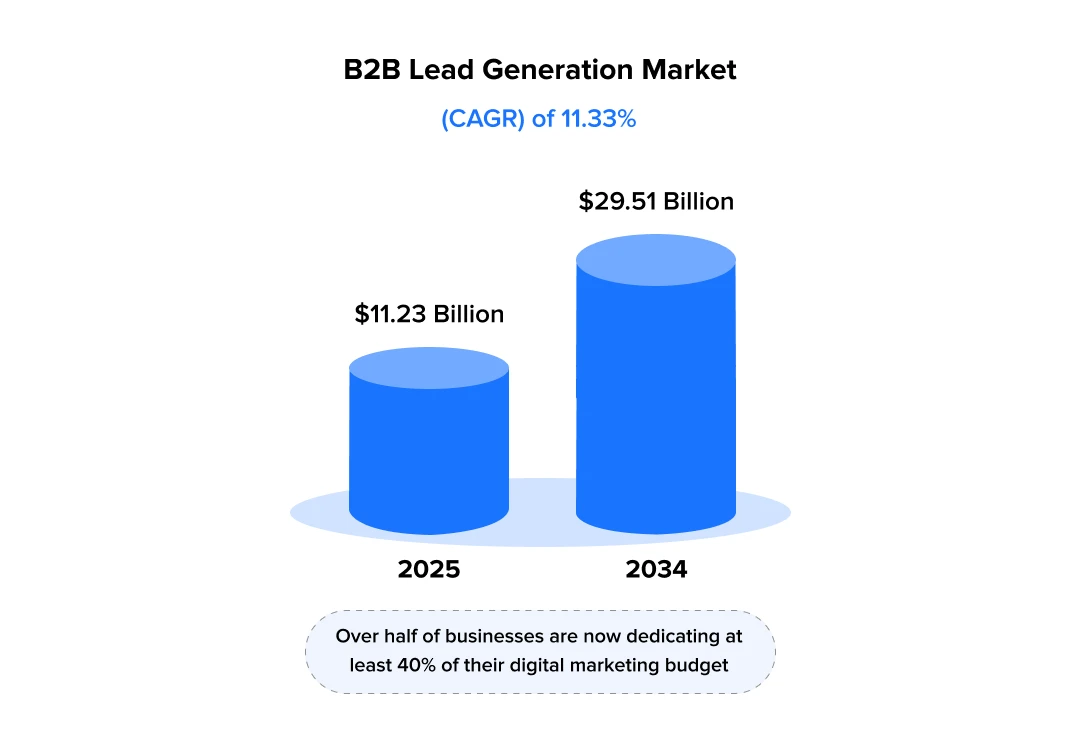
1. The B2B lead Generation market stands poised for remarkable expansion, forecast to surge from USD 11.23 billion in 2026 to a staggering USD 29.51 billion by 2034. This represents a robust compound annual growth rate (CAGR) of 11.33%. (Market Research Future)
2. A striking observation reveals that over half of businesses are now dedicating at least 40% of their digital marketing budget specifically to lead generation initiatives. This demonstrates a significant focus on acquiring new customers through digital channels. (Affiliate Summit)
3. Account-Based Marketing (ABM) decision-makers surveyed reported that their ABM programs yield 21% to 50% higher ROI. Notably, 23% of all global respondents even reported an ROI of 51% to 200% higher, demonstrating ABM's significant impact across various regions. (Forrester)
4. Smaller enterprises are projected to seize the largest market share in B2B lead generation during 2023, commanding approximately 40% of the global market. A testament to their agility. (Market Research Future)
5. A notable 68% of B2B businesses openly admit to ongoing struggles with lead generation, underscoring the persistent and often vexing challenges within this crucial domain. (Salesmate)
6. While the overall challenge of lead generation is widely acknowledged, specific operational issues also emerge. According to Dux-Soup's B2B Lead Generation Report 2026, 36% of B2B companies utilizing LinkedIn automation report that personalization is a key challenge in their lead generation efforts. This highlights the ongoing need for sophisticated strategies to tailor outreach effectively. (Dux-Soup)
Content Marketing for Lead Generation
Content consistently asserts its formidable power in attracting and engaging audiences. It executes a truly pivotal function in properly guiding prospects through the intricacies of the sales funnel. Undeniably, content marketing for lead generation remains a steadfast, profoundly effective, and truly indispensable strategy for businesses.
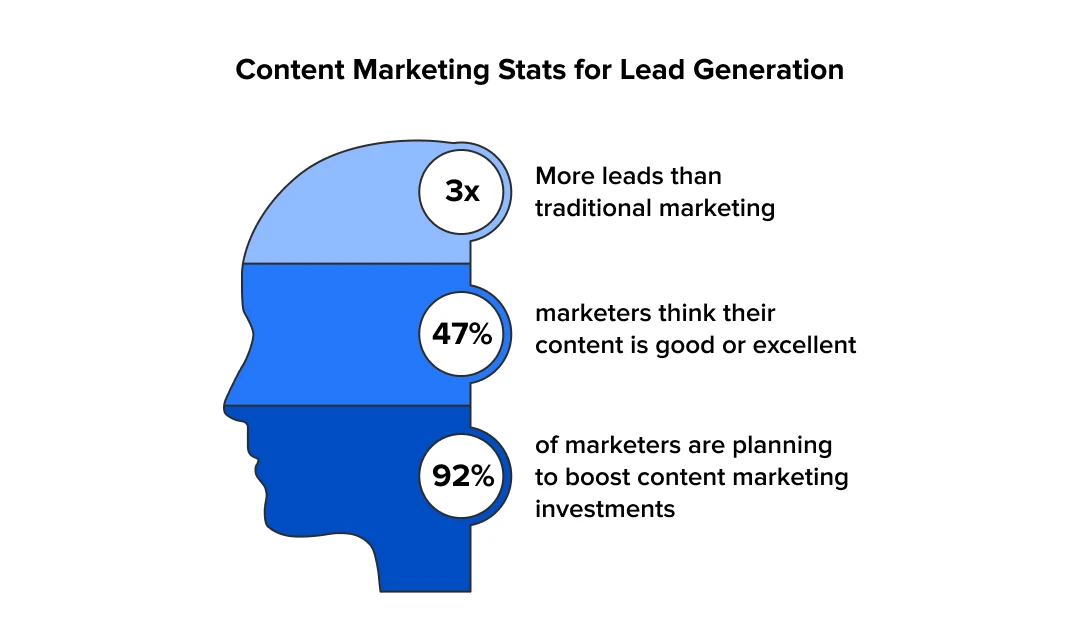
7. Content marketing, astonishingly, yields three times more leads than traditional marketing methods. That's not just efficiency; it's a paradigm shift. (Demand Metric)
8. The modern B2B purchasing process is heavily influenced by prior knowledge. Findings from TrustRadius's 2024 B2B Buying Disconnect Report indicate that a significant 78% of buyers selected products they were already familiar with before formally beginning their research. This underscores the immense value of early brand building and content efforts that establish recognition well in advance of a buyer's active search. (TrustRadius)
9. In 2023, the content marketing segment within B2B lead generation was valued at USD 3.2 billion. Projections confidently point to a rise to USD 7.4 billion by 2032, reflecting a healthy compound annual growth rate (CAGR) of 10.6%. (Market Research Future)
10. An impressive 47% of B2B marketers reported that their content abilities fell into the category of good or excellent. (Content Marketing Institute)
11. Companies that consistently nurture active blogs produce an average of 67% more leads monthly than their counterparts who eschew this practice. This firmly argues for consistent publishing. (DemandMetric)
12. An overwhelming 87% of marketers foresee content marketing as absolutely essential for generating leads and nurturing them in 2026. Its foundational role is indisputable. (BookYourData)
13. Articles that thoughtfully incorporate at least one video demonstrate a significant 70% increase in organic web traffic. Visual elements, unequivocally, matter. (Semrush)
14. Blog posts, in 2026, held the position of the fourth most popular content format (23% and 20% for B2B and B2C, respectively), trailing only the dominance of short-form video (30% for both B2B and B2C), and compelling images (29% and 30% for B2B and B2C respectively). (HubSpot State of Marketing Report, 2026)
15. 92% of all marketers plan on increasing their investment in content marketing during 2026. This signals an undeniable confidence in its efficacy. (HubSpot State of Marketing Report, 2026)
Cost Per Lead and ROI
A truly granular grasp of the cost-per-lead (CPL) coupled with a clear understanding of return on investment (ROI) isn't merely about numerical analysis; it forms the very bedrock for optimizing marketing budgets and ensuring enduring profitability.
16. On average, digital marketing firms cost USD 25 to USD 300 per hour, depending on their expertise, competition in the market, targeted clients, etc. (Digital Marketing Companies)
17. Depending on the agency’s expertise and effort required, the cost per lead can range from USD 75 to USD 3,000, based on hourly rates between USD 25 to USD 300 and 3–10 hours of work per lead. This varies with campaign complexity, target market, and service type. (Digital Marketing Companies)
18. SEO/Content Marketing experts cost between USD 25 and USD 149. Crucially, their efforts offer compounding returns over a sustained period—a true long-game strategy. (SEO Companies)
19. CPLs of Paid Search/ PPC advertising exhibit substantial variability, soaring from USD 50 to over USD 500. This wide spectrum depends heavily on the intensity of keyword competition, where high demand translates directly into higher costs. Firms providing PPC companies are generally charging between USD 50 and USD 199 per hour as well. (PPC Companies)
20. For illustration, if a social media company charges, say, USD 100 per hour, and an effort totaling 10 hours (equating to a USD 1,000 investment) yields 10 leads, the tentative Cost Per Lead (CPL) would be USD 100. It's crucial to remember that actual CPLs vary significantly based on strategy, audience, and efficiency. (Social Media Marketing Companies)
21. Email marketing, particularly when leveraging carefully curated proprietary lists, can achieve remarkably low CPLs, sometimes dipping to as little as USD 15-USD 45. This is cost-efficiency at its very best. (Internally Calculated)
22. Effective lead nurturing significantly contributes to sales success, particularly by empowering buyers through self-service resources. HubSpot's 2024 Sales Trends Report reveals that sales professionals who offer buyers self-service tools are 47% more likely to exceed their sales goals compared to those who do not. This highlights how strategically nurtured content and resources facilitate buyer autonomy, leading to higher attainment for sales teams. (Hubspot Sales Trends Report)

Email Marketing and Lead Generation
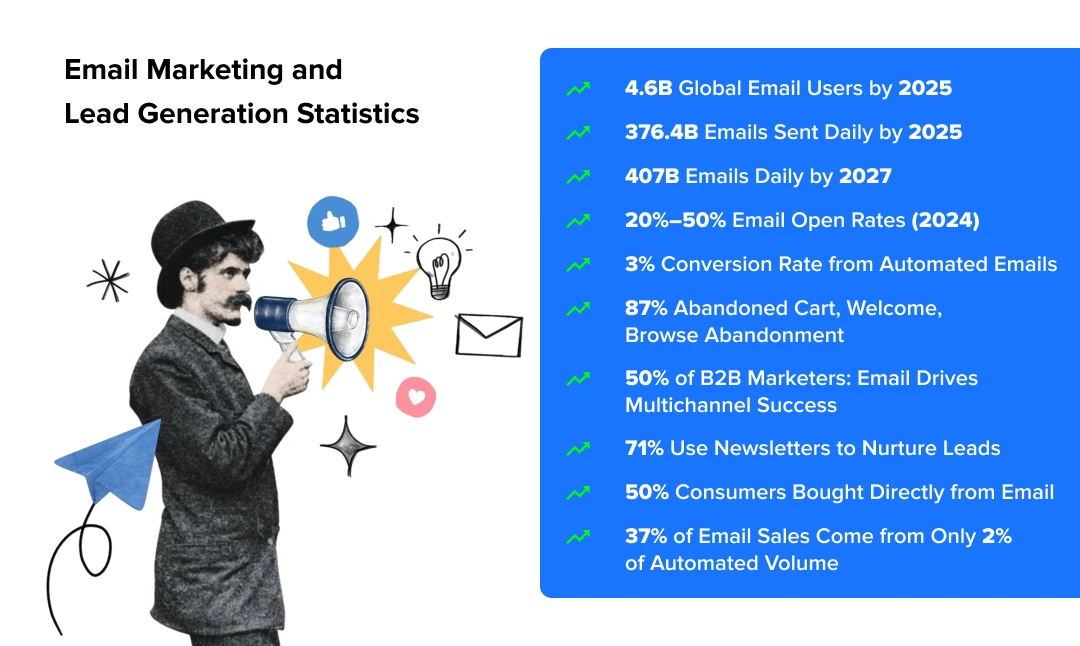
23. Email marketing lead generation remains a pivotal, indeed foundational, element of effective digital strategies. It provides a direct, highly scalable conduit to prospects and consistently delivers a compelling return on investment.
24. The projected number of global email users is set to reach 4.6 billion by 2026. A truly colossal audience awaits. (Statista)
25. The sheer daily volume of emails transmitted worldwide is expected to reach an astounding 376.4 billion by 2026. Further, by 2027, the number is expected to cross 407 billion. Clearly, email is not receding. (Statista)
26. The average open rate for email marketing campaigns ranged between 20% and 50% in 2024. What does it mean? Well, people are still actively engaging with their inboxes. (Statista)
27. Automated emails sent by some of the top ecommerce platforms showed a conversion rate of up to 3% in 2024. (Statista)
28. Collectively, top three types of automation emails included abandoned orders, welcome messages, and browse abandonment. These had a share of 87% in all automated emails. (Omnisend)
29. 50% of US-based b2b marketing lead generation experts identify email marketing as the channel with the greatest impact on their multichannel strategy, highlighting its significant role in driving revenue generation.(Emarketer)
30. Over 71% of B2B marketers actively utilized email newsletters to nurture b2b leads in 2024. This classic strategy continues to yield robust results. (Content Marketing Institute)
31. Nearly 50% of consumers reported making a purchase directly from an email in the past year. Direct conversions are a tangible reality. (2024 Global Consumer Trends Index by Marigold)
32. Automated emails were responsible for 37% of all email-generated sales in 2024, despite accounting for a mere 2% of total email volume. This is efficiency personified. (Omnisend)
Emerging Trends and Technologies in Lead Generation
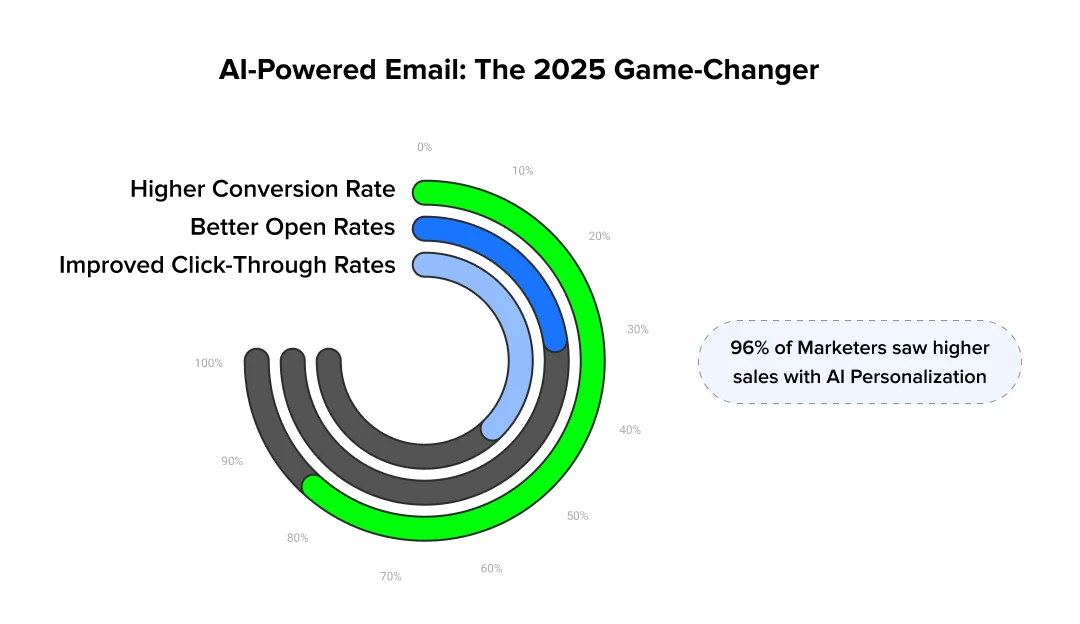
The seamless integration of advanced technologies, particularly Artificial Intelligence, coupled with a heightened, specific focus on AI-powered customer experiences, is unequivocally shaping the next evolutionary phase of lead generation tools and strategic approaches.
33. The usage of generative AI is rising at a CAGR of 36.99% between 2026 and 2031. The future, it seems, has arrived. (Statista)
34. AI-driven marketing initiatives like automated emails demonstrably lead to a 52% increase in click-through rates and a substantial 37% of sales through emails. AI’s impact is undeniably quantifiable. (Omnisend)
35. Presently, 44% of companies strategically employ marketing automation for lead generation. Furthermore, a remarkable 80% of these organizations report increased lead volumes. Automation demonstrably drives scale. (Book Your Data)
36. Almost 63% of survey takers have confirmed a positive impact of AIO on their visibility, including ranking and organic traffic. AIO covers everything from smart SEO optimization to the implementation of AI in SEO tools. This offers a significant competitive edge. (Conductor)
37. According to HubSpot’s 2026 State of Marketing Report, a survey of 1,200 marketers conducted in October 2024 shows that 96% observed higher sales due to the implementation of AI-powered personalization, underscoring AI’s ability to create impactful, customized content. (2026 State of Marketing from HubSpot)
38. The Internet of Things (IoT) trends are reshaping lead generation by enabling businesses to harness real-time data for highly targeted marketing. A 2026 MarketsandMarkets report projects the AI in IoT market to grow from USD 18.37 billion in 2024 to USD 79.13 billion by 2030, at a CAGR of 27.6%, driven by AI-powered analytics that enhance customer profiling and lead scoring through IoT device data.
39. Generative AI has become a dominant force in the enterprise. A remarkable 65% of companies now regularly use generative AI, a figure that has nearly doubled in less than a year. This explosive growth, with Marketing and Sales as a leading area of application, highlights its immediate and practical business impact. (McKinsey)
40. Nearly 25% of marketers used Generative AI tools as a part of their email marketing strategy. Just for the image generation, there’s a 340% increase witnessed between 2024 and 2026. (Litmus)
General B2B Lead Generation Trends and Challenges
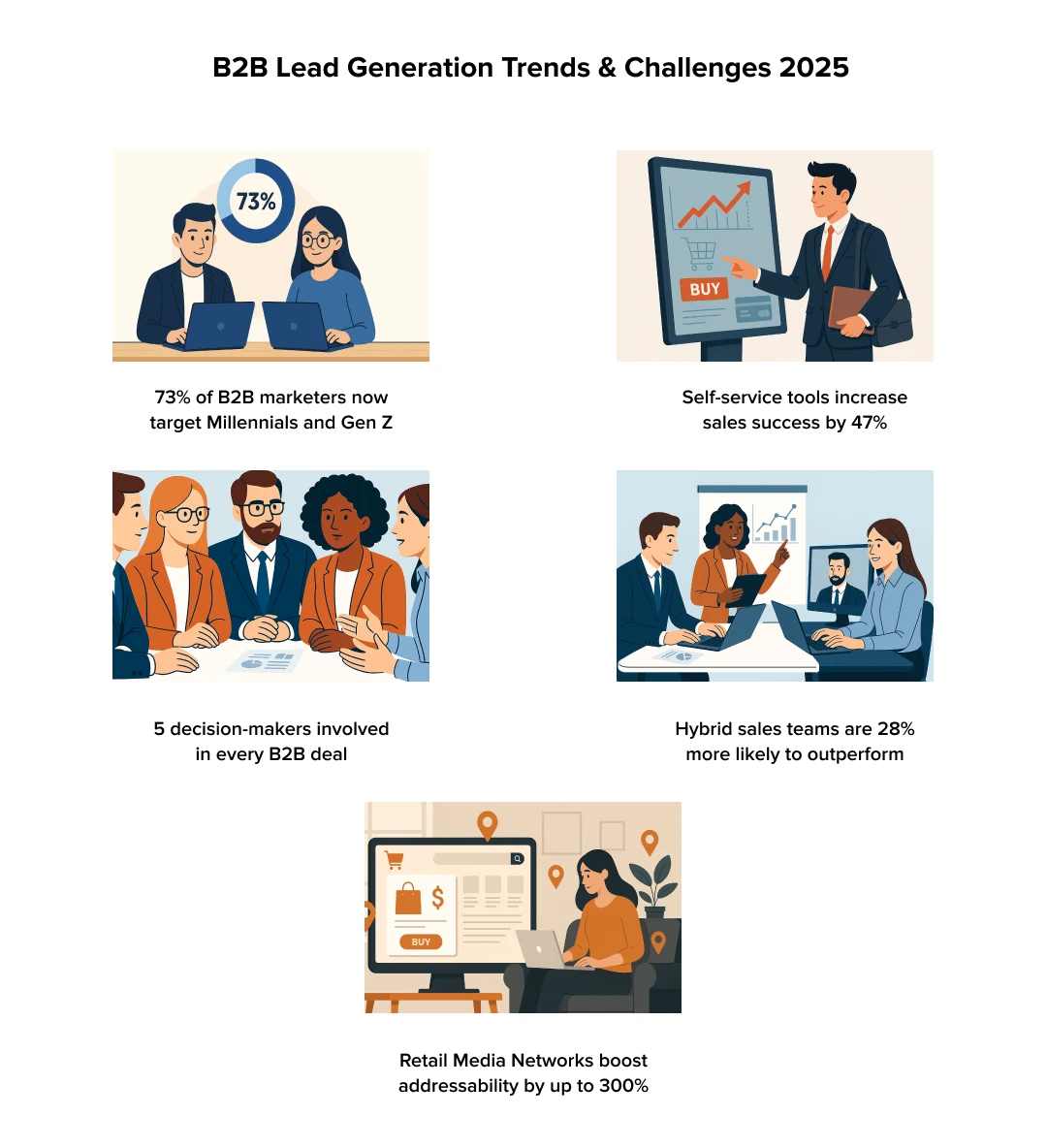
Lead generation, remarkably, maintains its top-tier position as a critical business priority. Yet, simultaneously, it presents a diverse spectrum of hurdles, inexorably demanding continuous adaptation and strategic refinement.
41. 73% of B2B marketers are prioritizing Millennial and Gen Z audiences in 2026, a shift requiring AI-driven lead generation tactics to capture digitally native buyers. (Hubspot)
42. In B2B sales, 64% of professionals now offer self-service tools like product demos, free trials, and chatbots, with 85% reporting these as highly effective. Sales teams using these tools are 47% more likely to surpass their goals, as they empower prospects to explore independently, aligning with the growing preference for self-guided buying journeys. (Hubspot)
43. With 70% of sales professionals noting increased budget scrutiny and 62% observing risk-averse behavior in 2023, multithreading—building relationships with multiple stakeholders per deal—has become critical. As deals now involve an average of five decision-makers, this strategy fosters trust and accelerates closures in cautious markets. (Hubspot)
44. Hybrid sales teams, blending remote and in-person work, are 28% more likely to outperform fully remote or in-person teams. With 71% of U.S. sales reps adopting hybrid setups in 2023, leveraging in-person meetings as the top-performing sales channel can enhance lead engagement and conversion rates. (Hubspot)
45. As 40% of browser traffic becomes cookieless, marketers are pivoting to alternative identifiers like Unified ID 2.0 and CTV IDs. These solutions, supported by comprehensive identity graphs, have increased addressability by 30% year-over-year, enabling precise lead targeting in a privacy-first digital ecosystem. (Experian)
46. In 2023, top sources for high-quality leads included social media, customer referrals, and email marketing, with webinars ranking lowest due to a shift toward independent research. Leveraging CRM data to identify and prioritize these high-performing channels can optimize lead generation efforts, ensuring resources are allocated to the most effective pipelines. (Hubspot)
47. With 45% of sales professionals overwhelmed by bloated tech stacks averaging over 200 tools, a tech stack audit can boost efficiency. Reducing redundant tools minimizes data silos, improves data quality, and frees up time for sales reps to focus on connecting with prospects, ultimately enhancing lead engagement. (Hubspot)
48. Sales professionals at companies with strong sales and marketing alignment are 103% more likely to exceed their goals. In 2023, 61% reported improved alignment compared to the previous year, emphasizing the need for regular collaboration, such as monthly standups, to ensure high-quality leads and cohesive strategies. (Hubspot)
49. Existing customers account for 72% of company revenue, making relationship maintenance critical. Regular check-ins, tailored communication using AI tools, and celebrating customer wins without immediate CTAs can foster trust, drive upsells, and generate high-quality referrals, amplifying lead generation. (Hubspot)
50. Connected TV (CTV) is gaining traction, particularly in industries like automotive and healthcare, due to its ability to deliver personalized campaigns. With crossover utility vehicles (CUVs) dominating 51% of new retail registrations, CTV’s targeted reach can engage key demographics like Millennials, enhancing lead quality. (Experian)
51. Retail media networks (RMNs) are leveraging enriched first-party data to create addressable audience segments, achieving up to 300% increased addressability across platforms. By extending campaigns to off-site channels like CTV and the open web, RMNs offer new opportunities to reach high-intent leads in 2026. (Experian)
Industry Benchmarks and Conversion Rates
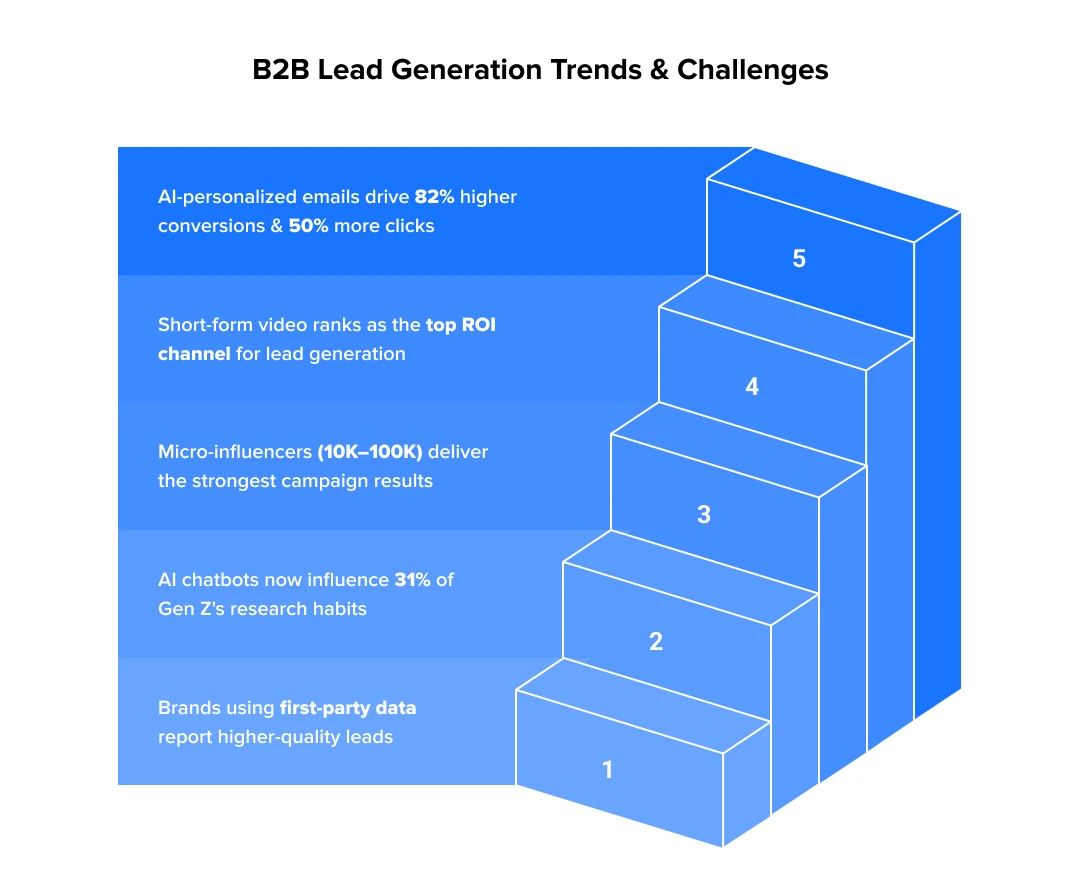
Conversion rates, predictably, demonstrate considerable variation across distinct industries. They are heavily influenced by the inherent complexity of the product or service being offered and the precise characteristics of the specific target audience.
52. Personalized email campaigns driven by AI saw an 82% higher conversion rate, 30% better open rates, and 50% improved click-through rates. (HubSpot)
53. Short-form video is the top-performing content format for lead gen, with 21% of marketers citing it as the highest-ROI channel. (HubSpot)
54. Micro-influencers (10K–100K followers) delivered the best results, with 43% of B2B and 44% of B2C marketers seeing success. (HubSpot)
55. HubSpot’s Creator Program reduced cost-per-lead by 30–40% compared to traditional ads. (HubSpot)
56. 31% of Gen Z uses AI chatbots for online research, and nearly half of marketers report increased traffic from AI-assisted search. (HubSpot)
57. Brands leveraging first-party data saw better lead quality as privacy regulations reduced third-party tracking. (HubSpot)
58. Live-streamed videos and UGC are rising in effectiveness, with 16% of marketers noting strong ROI from live content. (HubSpot)
59. AI-generated landing pages and chatbots are becoming key tools for scalable, personalized lead capture. (HubSpot)
Social Media and Lead Generation
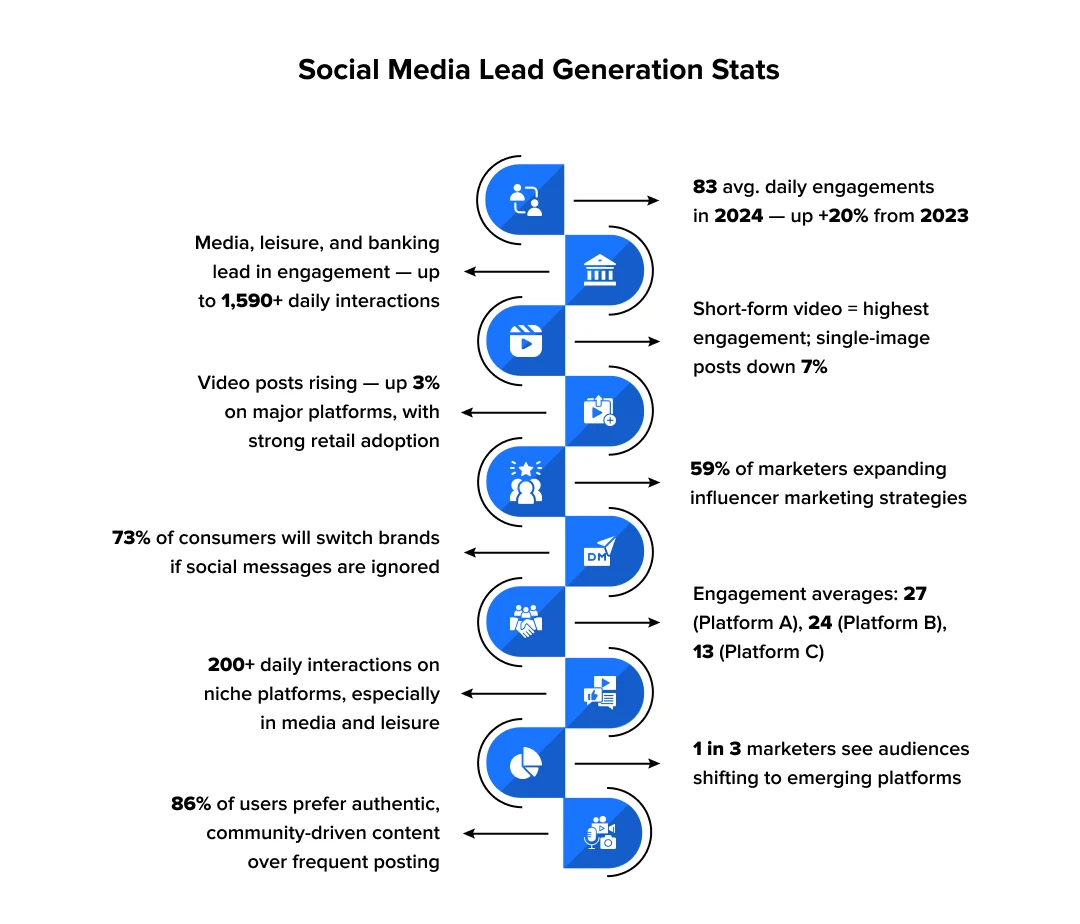
Social media B2B lead generation presents a powerful, dynamic avenue for engaging prospective customers and stimulating genuine interest, particularly within the B2B sector.
60. Brands averaged 83 daily engagements in 2024, a 20% increase from 2023, proving that strategic content outperforms volume. (Sprout Social)
61. Media, leisure, and banking dominated engagement, with media brands hitting 1,590 daily interactions, setting a benchmark for high-impact industries. (Sprout Social)
62. Video posts grew by 3% on Facebook/Instagram and 2% on X (Twitter), with retail and consumer brands leading adoption (37%+ video share on Instagram). (Sprout Social)
63. Short-form video (Reels, TikTok) drives the highest interaction rates, while single-image posts declined by 7% on Instagram. (Sprout Social)
64. 59% of marketers will expand influencer marketing strategies in 2026, leveraging creator credibility to boost leads. (Sprout Social)
65. 73% of consumers will switch to competitors if brands ignore their social messages, highlighting responsiveness as a lead-gen must. (Sprout Social)
66. Instagram reigns for engagement (27 avg. interactions/day), followed by Facebook (24/day) and X (13/day). (Sprout Social)
67. TikTok engagement is niche but growing, with media and leisure brands seeing 200+ daily interactions. (Sprout Social)
68. 1 in 3 marketers report audiences shifting to niche platforms (Threads, Bluesky, Lemon8), urging brands to diversify beyond legacy networks. (Sprout Social)
69. Personalized, community-driven content outperforms generic posts—86% of users prioritize authenticity over post frequency. (Sprout Social)

Wrapping Up: Mastering the Lead Generation Imperative
Seeing these numbers laid bare probably triggered some serious introspection about your current strategies. Maybe you realized you're part of that 68% struggling with lead generation in B2B or B2C. Or perhaps you discovered you've been sleeping on channels delivering 300% better results than what you're doing now.
Here's the brutal truth: the gap between leaders and laggards in lead generation is widening fast. By 2034, we're talking about a USD 29.51 billion market. That money isn't getting distributed equally; it's flowing to businesses willing to abandon what's comfortable for what actually works.
The data doesn't lie. AI-powered personalization isn't optional anymore. Neither is video content, authentic social engagement, or strategic automation. These aren't just marketing trends for businesses; they're the new baseline. Fall behind, and you're not just losing leads—you're becoming irrelevant.
But you've got something most of your competitors don't: clarity. These statistics aren't just numbers; they're your blueprint for stealing market share while others fumble in the dark.
The question isn't whether you'll adapt. It's whether you'll do it fast enough to matter.
Your move. Make it count.
Frequently Asked Questions
What are the most impactful lead generation marketing strategies for 2025?
Look, the game has changed. AI personalization isn't optional anymore - it's table stakes. Those generic blast campaigns? Dead. Video rules everything now, especially the quick hits under 60 seconds. ABM finally works like everyone promised it would five years ago. And here's the kicker: if you're not sitting on a goldmine of first-party data, you're already behind. The whole industry pivoted hard toward custom experiences because that's what converts.
How is social media lead generation evolving, and which platforms are most effective?
Social media lead generation is evolving towards authentic, community-driven content and responsiveness to consumer messages. While Instagram, Facebook, and X (Twitter) remain strong for engagement, niche platforms and short-form video content (like Reels and TikTok) are driving the highest interaction rates.
What role does email lead generation play in a modern marketing strategy?
Email lead generation remains a foundational and highly effective component. With projected global users reaching 4.6 billion by 2025, email marketing, particularly automated and personalized campaigns, consistently delivers low costs per lead and high conversion rates, especially when nurturing leads through self-service tools.
How does content marketing contribute to successful lead generation?
Content still wins, but only if it's actually good. Blog regularly or don't bother - algorithms punish inconsistency. Mix in video because text alone doesn't cut it anymore. Answer real problems people search for. Build trust before you even think about pitching. Content marketing companies doing this right pull 3x more leads than the "buy now" crowd. It's a long game, but it's the only game worth playing.
Why is understanding lead generation data and analytics so critical?
Understanding lead generation data and analytics is fundamental for optimizing marketing budgets and ensuring profitability. It allows businesses to identify what's genuinely working, analyze cost-per-lead (CPL) and ROI, and pinpoint emerging opportunities to refine strategies for maximum effectiveness.
What are the current trends in B2B lead generation, and what challenges do businesses face?
B2B buyers do their homework - 70% of the journey happens before they talk to sales. One great lead beats fifty tire-kickers. The new decision-makers? They're younger, digital-first, and allergic to cold calls. The struggle is real: personalizing at scale without sounding robotic, juggling fifteen different marketing tools, and getting sales and marketing to actually talk to each other. Most companies fail at least two of these.
How can businesses improve their lead nurturing statistics and conversion rates?
To improve lead nurturing statistics and conversion rates, businesses should focus on empowering buyers with self-service resources, implementing personalized email campaigns driven by AI, and leveraging automated workflows. Strong sales and marketing alignment also plays a crucial role in ensuring high-quality leads are effectively nurtured.
What impact do emerging technologies like AI and IoT have on lead generation?
AI changed everything. Predictive lead scoring actually predicts now. Chatbots handle qualification while you sleep. IoT data reveals usage patterns competitors can't touch. Generative AI lets small teams punch above their weight class. Early movers are crushing it - higher conversion rates, lower costs, happier customers. The laggards? They're still debating whether to invest.
What are typical cost-per-lead (CPL) benchmarks across different digital marketing channels?
Cost-per-lead (CPL) varies widely. Email marketing with proprietary lists can be as low as USD 15-45, while paid search/PPC advertising can range from USD 50 to over USD 500, depending on keyword competition. Digital marketing agencies typically charge USD 25-300 per hour, influencing the overall CPL based on effort.
Why is it essential to adapt to new lead generation trends quickly?
The market moves at warp speed. What worked last quarter might tank today. Buyers expect Amazon-level experiences from every brand. Stick with old tactics, watch your CPL explode while conversions flatline. Leaders experiment constantly. Laggards defend "how we've always done it." The gap between them grows wider every month. Evolution isn't optional - it's survival.


With over eight years of experience in Content Marketing, Garima has developed a strong expertise in creating, curating, and evaluating content. Her collaborative approach with stakeholders has broadened her knowledge in AI, Fintech, HealthTech, and more. As a dedicated team player, Garima actively seeks opportunities to express and enhance her creative abilities, delivering impactful content across marketing channels.
Uncover executable insights, extensive research, and expert opinions in one place.
Related Content