Share It On:
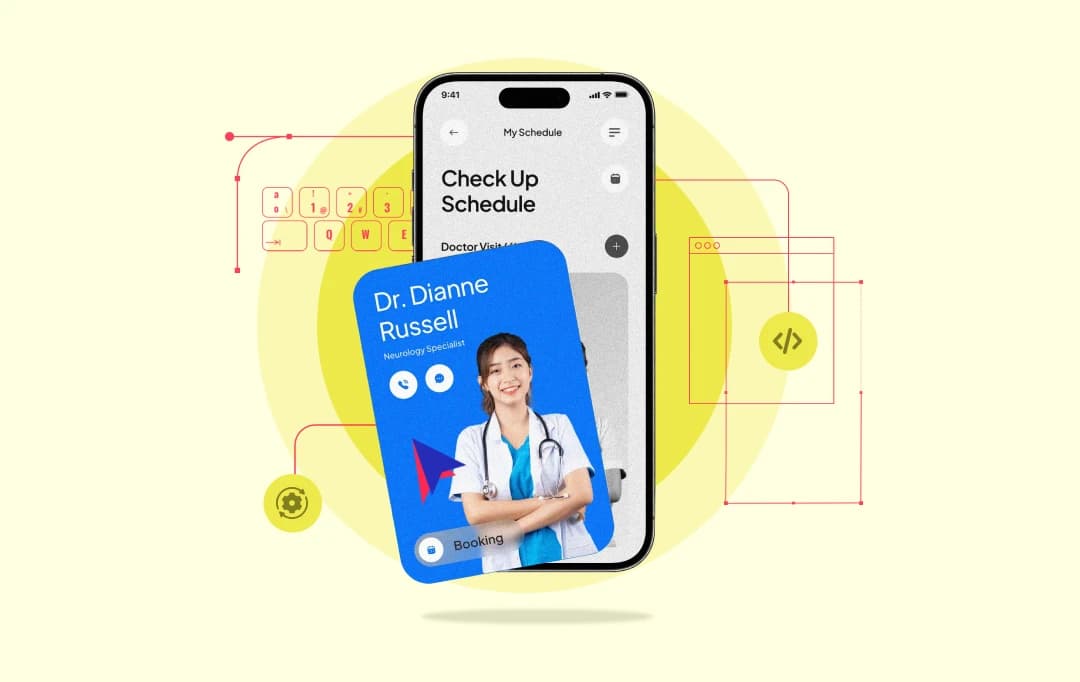 Unlock the secrets to healthcare app development success with expert insights, best practices, innovative technologies, user-centric design, and compliance strategies for a seamless and secure digital healthcare experience.
 What if managing your health were as simple as ordering coffee? Today's reality is even better! With over 70% of people using healthcare apps for instant diagnoses and health tracking, healthcare mobile app development has become the digital revolution we've all been waiting for. The mHealth market is exploding—projected to hit $88.7 billion by 2032 with an 11.8% CAGR.
From AI-powered symptom checkers to virtual consultations, patients demand convenience at their fingertips. For healthcare providers and entrepreneurs, healthcare app development isn't just an opportunity—it's essential for survival in today's digital-first world.
Ready to build the next game-changing healthcare app? Let's dive into this comprehensive guide!
Healthcare App Development Market Overview
The healthcare industry is experiencing a massive digital shift, with healthcare application development leading the charge. As demand for accessibility and better patient outcomes explodes, let's dive into the stats driving this evolution!

- The patient-centric healthcare app market is projected to reach $86.4 billion by 2030.
- This specific market segment is growing at a 14.8% CAGR between 2026 and 2030.
- The Remote Patient Monitoring is witnessing a significant CAGR of 12.7% between 2024 and 2030.
- As for the virtual mental health services, there’s another 10.09% CAGR displayed between 2022 and 2028.
Factors like smartphone health tracking, advanced remote care tech, and patient-focused models are fueling this growth. Businesses leveraging healthcare app development services are not just meeting demand, they're securing their future in this booming industry.
Types of Healthcare Apps

Here are some of the fantastic types of healthcare apps making a real difference.
1. Telemedicine Apps: These apps make remote consultations super easy and secure with features like messaging, chat, and video calls. Top examples include Doctor On Demand, Healow, Teladoc, and Amwell.
2. Patient Management Systems: These are a lifesaver for healthcare pros! Think of them as ultra-secure digital filing cabinets for patient data, helping track treatments and streamline administrative tasks. This means doctors spend less time on paperwork and more time actually caring for patients! Top examples include NextGen Healthcare, Epic Systems, and Cerner.
3. Appointment Scheduling Apps: This is for users tired of playing phone tag just to book a doctor's visit. These apps put patients in control, letting them book, change, or cancel appointments 24/7. Plus, they help clinics cut down on those annoying no-shows! Examples of appointment scheduling apps include Zocdoc, Healthgrades, Calendly, and Appointy.
4. Medication Apps: These apps are patients’ personal pill reminders, offering refill alerts and dosage info. They're especially helpful for managing complex routines, ensuring users stick to their prescribed plan. Examples include Medisafe, MyTherapy, DoseCast, and MangoHealth.
5. Chronic Disease Apps: For folks managing ongoing conditions, these apps are a godsend. They help users monitor symptoms, stay on top of medication schedules, and easily communicate with their care team. This empowers users to take charge of their health and get timely support. Examples include MySugr, HeartWise, HeartWatch, and COPD Navigator.
6. Wellness Apps: These apps are all about proactive health! They help patients track exercise, monitor nutrition, and offer personalized insights, including sleep tracking, community support, and even mental health exercises. Examples include Lifesum, Nike Training Club, MyFitnessPal, and Headspace.
7. Health Education Apps: Knowledge is power, especially when it comes to health. These health apps provide tons of reliable information on various health topics, helping users understand conditions and make informed decisions about their well-being. Examples include HELF, WebMD, Anatomy, and BetterHelp.
8. Women's Health Apps: Designed with women's unique health needs in mind, these apps offer specialized tools and resources. From cycle and pregnancy tracking to tailored health advice and community support, they cater to specific concerns to boost overall wellness. Examples include Amma, Flo Period Tracker, and Maven.

Benefits of Developing Healthcare Mobile Applications
There are many advantages for all parties involved in the development of healthcare applications. Let's make the benefits of healthcare mobile apps clear:
1. Benefits for Users
- Convenience: Patients can save time and money by scheduling appointments, getting test results, and consulting with doctors at any time and from any location.
- Personalized experience: Based on a user's medical history and preferences, healthcare apps can provide recommendations that are specific to their needs.
- Information access: People are able to obtain important health information, which encourages them to take a more knowledgeable approach to their health and make wise decisions.
- Improved care quality: By saving doctors' time and streamlining clinic operations, applications enable them to devote more of their attention to directly caring for patients.
2. Benefits for Businesses
- Revenue growth: By offering practical features, a successful healthcare app can lower no-show rates, draw in new customers, and increase service revenues.
- Cost effectiveness: Providers can cut staffing expenses and operational inefficiencies by automating scheduling, billing, and patient communications.
- Data and analytics: Apps for healthcare gather useful information that helps with market research and enhances the business plans of healthcare facilities.
- Competitive advantage: Businesses can differentiate themselves from rivals and draw in their target market by implementing creative solutions.
3. Benefits for Doctors
- Preventing burnout: Apps make it simple for physicians to handle administrative duties, including scheduling, patient records, and medical paperwork.
- Information access: With the use of EHR systems, doctors can obtain accurate and comprehensive medical data at any time, allowing for more precise diagnosis.
- Better communication: Using the app to phone or chat with patients helps to organize the conversation and cuts down on follow-up time.
- Reduced liability risks: Improved workflow guarantees the maintenance of thorough records and paperwork, including legal transcriptions, which can shield physicians from future legal problems.
Robust MVP Features for Effective Healthcare App Development
A successful healthcare mobile app development project requires considering essential features that enhance usability, security, and patient engagement. From telemedicine to data encryption, these features ensure seamless functionality, regulatory compliance, and an improved healthcare experience for both patients and providers.
1. Distinctive UI/UX Design: A visually appealing and user-friendly interface is crucial for engaging users and ensuring a positive experience. Focus on making the app intuitive and easy for patients to navigate.
2. Data Security & Compliance: The feature is essential for protecting sensitive patient data. The app must include end-to-end encryption, multi-factor authentication, and secure payment gateways for enhanced security. Additionally, it should be complied with key Compliances including HIPAA (U.S.), GDPR (EU), PIPEDA (Canada), HITECH (U.S.), and DPA (UK). By aligning with these regulations, your app development for healthcare ensures robust security, patient trust, and seamless regulatory approval.

3. Health Records & User Profiles: Users can personalize profiles with their medical history and treatment plans. This allows for tailored suggestions and creates electronic health records (EHRs) for easy access by medical facilities.
4. Prescription Management: Patients can track medications and get reminders to take them, which also helps providers monitor adherence to treatment plans.
5. Wearable Technology Integration: The app can seamlessly connect with smartwatches and fitness trackers to monitor vital signs like heart rate and sleep in real-time, greatly influencing healthcare mobile app development.
6. Instant Chat & Assistance: Offer real-time chat with healthcare professionals for quick queries and support.
7. Secure Authentication & Access: Ensure only authorized users access the app with secure login methods and strong data encryption during transfers.
8. Advanced Search & Filter: Allow users to easily find healthcare providers, services, or facilities based on various criteria like specialty, location, or ratings.
9. Reviews & Ratings: Enable users to review and rate healthcare services, helping others make informed decisions.
10. Appointment Scheduling: Let patients book, change, or cancel appointments directly through the app, with real-time notifications for both users and providers.
11. Telemedicine Channel: Facilitate virtual consultations via built-in audio and video calls, ensuring secure and private communication.
12. Secure Online Chat: Provide an encrypted chat system for patients to communicate with medical staff, keeping all conversations private.
13. Payment Options: Offer secure gateways for various medical services, supporting multiple payment methods like digital wallets, cards, and insurance billing.
14. Notifications & Reminders: Set up alerts for appointments, medication times, or health tips, with customizable preferences.
15. Electronic Health Records (EHR) Integration: Consolidate patient data, allowing doctors to easily update, access, and share information across platforms for improved care and efficiency.
Adding these innovative features is crucial for handling non-emergency medical concerns and building patient-physician trust. To incorporate these essential elements into your app, consider hiring a specialized healthcare app development company that can provide the expertise needed for a robust and compliant solution.
How to Build Healthcare Applications: Step-By-Step Explanation
Prioritizing user demands and regulatory compliance, healthcare app development necessitates meticulous strategy and implementation. This methodical strategy will guarantee that your healthcare app satisfies consumer needs and improves patient care.
Step 1: Planning and Market Research
Conduct in-depth market research before beginning the creation of your healthcare application. Decide who your target market is: patients, medical professionals, or both. Understanding the region's unique legal industry regulations in regard to your project is also essential at this point.
MAD’s Tip: To make sure your app solves real-world problems and conforms with relevant standards, work with healthcare professionals throughout the discovery phase.
Step 2: Describe the features and capabilities
When building a Minimum Viable Product (MVP), concentrate on key features that have a significant impact. Think about features like medication management, telemedicine capability, symptom checks, and appointment scheduling. To safeguard sensitive health data, give top priority to user-friendly navigation and strong security measures.
MAD’s Tip: Clearly define the technological scope of upcoming changes, allowing for scalability when patient databases, clinic branches or healthcare demands change.
Step 3: Select the Appropriate Stack of Technologies
Choose a technology stack that prioritizes security, scalability, and interoperability while meeting the unique requirements of healthcare applications. Combining React for web interfaces and Flutter for mobile applications. Node.js or Django for the backend are great options often used by skilled healthcare app developers.
MAD’s Tip: Select a stack that makes third-party integrations (such as storage, payments, EHR, etc.) easier so that your app can eventually grow to accommodate new services and technologies.
Step 4: Put the UX/UI Design into Action
The creation of healthcare mobile apps necessitates a meticulous design process. In addition to being entertaining, UI should be usable by a wide range of users, including those with disabilities and senior citizens. When discussing digital solutions, UX/UI must shorten the time needed for employee acceptance and training. Pay attention to responsive design, easy-to-use navigation, and clear graphics.
MAD’s Tip: To visualize the user path and get input early on, we advise developing a clickable prototype at this point.
Step 5: Create and Develop QA
Maintain tight coordination between the back-end and front-end development teams throughout the development lifecycle. Put in place stringent testing procedures to guarantee functionality and adherence to medical standards. Utilize user acceptability, integration, and unit testing, paying particular attention to data security and vulnerabilities.
MAD’s Tip: To make sure the app complies with pertinent healthcare laws and industry standards, incorporate a compliance audit into your testing procedure.
Step 6: Establish a Strategy for Monetization
Create a well-defined monetization plan that fits your company's requirements and the market. Take into account choices like patient subscription plans, telemedicine pay-per-use services, or joint ventures with medical providers for comprehensive solutions. Make sure the selected approach maintains user accessibility while bolstering the app's value proposition.
MAD’s Tip: To improve your approach and make sure it strikes a balance between user delight and profitability, examine competition pricing and user willingness to pay.
Step 7: Launch, Maintain, and Upgrade
The hard work starts as soon as your healthcare app is live. Establishing a responsive support system that can promptly handle any technical problems or user concerns is essential. It is essential to provide healthcare workers with thorough training materials.
MAD’s Tip: A committed development team can assist in resolving problems in a timely and effective manner, enabling speedy upgrades and fixes.
Best Practices to Follow for Healthcare App Development
Incorporate features supporting personalized medicine through AI-driven tools
The creation of healthcare apps is growing. Make sure your app stays competitive because a lot of companies are adopting the trend. To outperform the competition, try these strategies!
- Level up user engagement with intuitive, modern designs that make navigating the app feel like a rewarding quest.
- Unlock the "Trust Shield" by rigorously adhering to HIPAA guidelines for secure patient data handling.
- Achieve "Fortress Status" for patient records by implementing robust security measures and conducting regular audits.
- Earn "Connectivity Badges" by ensuring your app easily links with existing healthcare systems and third-party applications.
- Master the "Data Weaver" challenge by designing for smooth and secure data exchange across diverse healthcare platforms.
- Conquer the "Ubiquity Arena" by providing a consistent and accessible app experience across all devices.
- Power up patient outcomes by integrating AI-driven tools for tailored health plans and "Personalized Progress Tracking."
- Lead the "Innovation Race" by adopting these strategies to outperform other healthcare apps.
- Boost adherence and motivation by embedding challenges, points, and leaderboards directly into health tasks and educational modules.
Real-World Wins in Healthcare App Development
Witnessing real-world successes in healthcare app development truly shows how smart planning and deep user understanding transform visions into impactful solutions. These examples highlight how teaming up with top healthcare app developers creates apps that not only tackle technical hurdles but also empower users, elevate care, and meet global health standards.
| App Name & Developer | The Big Idea (Challenge) | How They Solved It (Solution) | Awesome Results! |
|---|---|---|---|
| DiabeticU by Appinventiv | Help users proactively manage diabetes, not just track it, while ensuring top-notch security and HIPAA compliance. | Created a user-friendly platform integrating exercise, medication, and food tracking with real-time analytics and robust privacy features. | Delivered a personalized AI assistant, scalable cloud infrastructure, and HIPAA-compliant architecture. |
| No7 Pro Derm Scan by Wolfpack Digital | Provide accurate, science-backed skincare recommendations in retail, overcoming subjective self-assessment. | Developed an IoT-powered app for Boots stores that analyzes skin (tone, pores, moisture) to give personalized, data-driven product suggestions. | Offers dermatologist-grade skin analysis (20M areas/scan), tailored product recommendations, and enhanced in-store consultations. |
| Philips Sonicare for Kids by Luxoft | Encourage kids to brush effectively and consistently, as a regulated medical product needing high engagement. | Built an engaging app with a virtual character (Sparkly) and real-time guidance via Bluetooth toothbrushes, using stories and rewards. | Led to increased brushing consistency and duration in children, measurable technique improvement, and data-driven engagement boosts. |
These healthcare app development companies and their success stories are just a glimpse of what is possible by planning the project right. The better strategy? Use their project roadmaps and inspire your product development journey. It will help you understand the key elements of your project.
Or, hire healthcare app developers who ensure that both user engagement and compliance are never compromised, helping businesses and medical institutions build transformative mobile health app solutions.
How Much Does it Cost to Build a Healthcare App?
Healthcare application development requires a large financial outlay that is impacted by several variables. Developing a complete, feature-rich application or producing a Minimum Viable Product (MVP) are the two primary situations that medical organizations and healthcare entrepreneurs usually encounter.

1. MVP Healthcare App Development Cost
Launching your healthcare app doesn't have to break the bank! For a Minimum Viable Product (MVP) of your healthcare app development solutions, expect costs to typically range from $50,000 to $100,000. This initial version focuses on core features like user registration, appointment booking, basic health monitoring, and secure communication, getting you to market faster and smarter.
Here's why an MVP is a savvy move:
- Feature Simplicity: By including only essential functions, an MVP keeps design and development streamlined, saving you money.
- Regulatory Focus: It builds in foundational compliance, like HIPAA adherence, from day one, helping manage costs while ensuring legal safety.
- Smart Strategy: While comprehensive solutions are tempting, building an MVP from the ground up is often the most cost-effective path to market.
- Expert Team: Hiring a specialized external development team can be more budget-friendly than building an in-house team.
- Lean Hosting: Initial MVP needs minimal cloud infrastructure, keeping hosting costs low as you validate your concept.
2. Full-Scale Healthcare App Development Cost
The cost can differ based on the kind of app you’re building. The cost of building a telemedicine app starts at $40,000 and goes higher than $250,000. However, the cost of building a Zocdoc-like app can be developed within $200,000. But that’s just a tentative overview. The cost varies depending on what you’re going for.
In cases, a higher cost can reflect the integration of extensive features and cutting-edge technologies like advanced EHRs, complex telemedicine capabilities, and AI.
Here's what drives the cost of a comprehensive healthcare app:
- Feature Richness: A wealth of functionalities and complex integrations significantly increases development time and cost.
- Advanced Compliance: Meeting stringent healthcare regulations demands meticulous development and ongoing maintenance, adding to the expense.
- Tailored Development: Custom solutions offer flexibility but require a greater initial investment compared to using pre-built frameworks.
- Dedicated Team: A committed team of experienced healthcare app developers is often necessary for a robust solution, impacting the budget.
- Robust Infrastructure: Scalable cloud infrastructure and powerful backend services are essential to handle high performance and user growth.
- Continuous Maintenance: Ongoing updates, feature enhancements, and infrastructure scaling contribute to long-term costs.
Trends To Look Out for in Healthcare App Development
Rapid technical breakthroughs and the growing need for easily accessible solutions are driving the field of medical application development. These developments, which range from safe patient data storage to AI-driven diagnostics, are revolutionizing the sector. Here are six key trends that are changing how mobile healthcare applications are used, along with their implications for the future.
| Trend | How it Helps | Example |
|---|---|---|
| Telemedicine | Remote consultations save hospital visits and increase accessibility. | Teladoc Health – Virtual doctor consultations |
| IoMT | Diagnostics and patient monitoring are improved by real-time health tracking. | Fitbit – Wearable health monitoring |
| Cloud Computing | Collaboration is enhanced with scalable, secure data storage. | Epic Systems – Cloud-based EHRs |
| Healthcare Cybersecurity | Robust security measures guarantee compliance and stop data breaches. | Norton Healthcare – Data encryption & security |
| AI & ML | Enhances diagnoses and offers individualized treatment regimens. | IBM Watson Health – AI-driven disease diagnosis |
| Blockchain | Guarantees the safe and open handling of patient data. | MedRec – Blockchain-powered health records |
1. Telemedicine
By enabling people to consult doctors online without physically visiting a clinic, telemedicine has completely changed the way that patients are treated. The Android healthcare app development is facilitated by these virtual consultations, which also decrease hospital wait times and increase accessibility. These features have spiked the rise of the telemedicine market to an all-time high. The market is showing a CAGR of 16.9% between 2026 and 2032.
2. Internet of Medical Things (IoMT)
Imagine your wearables and medical devices all talking to your healthcare apps! That's the power of IoMT. It enables real-time health tracking, leading to personalized treatment plans and faster diagnoses. This incredible convergence is fueling massive growth: the global IoMT market was valued at $47.32 billion in 2023 and is projected to skyrocket to $814.28 billion by 2032, boasting an astounding CAGR of 38.5% during the forecast period. This technology isn't just a trend; it's transforming how we experience healthcare.
3. Cloud Computing
Cloud computing is transforming medical application development, offering incredible benefits like cost-effectiveness, scalability, and flexibility. It provides secure data storage, easy access to vital medical records, and dramatically improves communication among healthcare professionals. This isn't just theory; the market proves it! The global healthcare cloud computing market is soaring, projected to reach over $197 billion by 2032.
4. Healthcare Cybersecurity
When it comes to digitizing patient records, security isn't just important—it's paramount. Robust cybersecurity defenses are essential for preventing devastating data breaches, ensuring legal compliance, and, most importantly, preserving patient trust. This is particularly critical given the stark financial realities: healthcare data breaches are exceptionally costly, averaging $408 per record, which is more than three times higher than the cross-industry average of $148 per record.
5. Artificial Intelligence (AI) and Machine Learning (ML)
Artificial Intelligence (AI) and ML are revolutionizing mobile healthcare applications by identifying patterns in large datasets, offering personalized treatment recommendations, and improving diagnostic accuracy.
6. Blockchain in Healthcare
Blockchain technology offers a powerful solution for healthcare, easily guaranteeing the safe, transparent, and unchangeable preservation of patient data. This not only significantly reduces fraud and unauthorized access but also dramatically improves interoperability across different healthcare providers. This growing adoption is reflected in the market's trajectory; the global blockchain technology in healthcare market size was estimated at $7.04 billion in 2023 and is expected to grow at an impressive CAGR of 63.3% from 2024 to 2030.
Conclusion
There are many advantages to developing healthcare apps for both patients and healthcare professionals. But it's important to understand that creating a healthcare app involves a large time and financial commitment.
It is now easy to calculate the cost of healthcare app development by simply evaluating the app's features, complexity, and compliance needs. Understanding each of these elements can help you make the perfect choice between Android and iOS healthcare app development, depending on what fits your target markets better. This choice will be critically defining the success of your app.
Frequently Asked Questions
How to develop a healthcare mobile app?
Follow these steps to create a healthcare app:
- Finalize a niche for your target market
- Select all the services that you think will serve you the best
- Check all the conditions and adhere to compliance and privacy
- Determine which devices need to be supported
- Create your own UI/UX design
- Reduce code-up time
Do health apps make money?
It is possible for health applications to make money via charging for downloads, requiring referral fees from providers, displaying ads, enabling in-app or premium features, and more.
What prerequisites must the healthcare app meet?
A thorough understanding of the healthcare industry, adherence to laws such as HIPAA, strong data security measures, compatibility with other healthcare systems, and an intuitive user interface are all requirements for developing healthcare apps.
What is the cost of creating a medical app?
The average cost range for creating a healthcare app is between $100,000 and $500,000. It's important to remember that this is a general estimate and that actual costs vary greatly among healthcare app categories.
What is healthcare software development?
The development of healthcare software enhances patient care, increases productivity, simplifies healthcare operations, and increases the precision of medical procedures. The process of creating the ideal healthcare app is time-consuming and complex. It's possible that not all developers are proficient with it.
How do healthcare applications work?
Applications for mobile devices that process health-related data for or on behalf of their users are known as health apps. Anybody who cares about their health can utilize them to manage, maintain, or enhance their own or their community's health. Medical applications are included under the general heading of "health apps."
What is the growth of mental healthcare apps in India?
The mental healthcare app market in India has seen significant growth, the market was valued $112.75 million in 2023 and is growing at a CAGR of 18.2% between 2023 to 2030. The expected value of the market is $363.46 by 2030.
What is the largest healthcare app development company?
Epic Systems is one of the largest healthcare app development companies, known for its comprehensive electronic health records (EHR) solutions and wide range of healthcare applications used by leading healthcare providers globally.
What is the market size for healthcare app development?
The global healthcare app market was valued at $2.4 billion in 2020 and is projected to grow at a CAGR of 14.9% from 2024 to 2030, reaching $10.2 billion by 2030 (Source: Grand View Research).
What is the use of mobile app development services in the healthcare industry?
Mobile app development services streamline healthcare delivery by enabling telemedicine, patient monitoring, appointment scheduling, and access to medical records. They enhance patient engagement and improve the operational efficiency for healthcare providers.

Uncover executable insights, extensive research, and expert opinions in one place.
Related Content