Nvidia Launches The World’s First Personal AI Supercomputer
Date: January 07, 2025
Nvidia launched a new GB10 Superchip with Project Digits, making it the world’s smallest AI supercomputer capable of running 200 Billion parameters.
Nvidia made one of the world’s biggest announcements at the recent CES 2025 event. The company has launched Project Digits, a personal AI supercomputer capable of running up to 200 billion parameters. Project Digits runs on Nvidia’s latest GB10 Grace Blackwell Superchip, which clocks a petaflop of AI computing performance for tasks like prototyping, fine-tuning, and running large AI models.
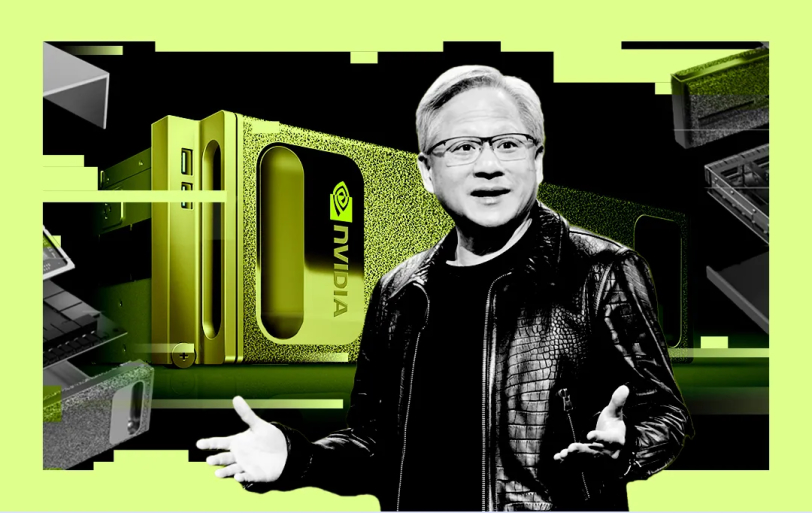
During the CES 2025 event, the founder and CEO of Nvidia, Jensen Huang, revealed the new AI technology and explained that it is aimed primarily to act as a standalone workstation for AI researchers, data scientists, and students to access Nvidia’s Grace Blackwell hardware platform. He also mentioned that Project Digits is a compact form factor that provides everything needed to seamlessly run all of Nvidia’s software products.
“AI will be mainstream in every application for every industry. With Project DIGITS, the Grace Blackwell Superchip comes to millions of developers. Placing an AI supercomputer on the desks of every data scientist, AI researcher, and student empowers them to engage and shape the age of AI,” said Jensen in a statement.
Nvidia has developed the GB10 chip in partnership with MediaTek, featuring a Blackwell GPU that connects to a 20-core Nvidia Grace CPU. These chips are hooked to a 128GB memory pool and up to 4TB of flash storage. A single unit of Project Digits can run AI models up to 200 billion parameters, corresponding equivalent capabilities to problem-solving. This will allow users to run AI models with better performance and complexity understanding than fewer parameter range ones.
The launch of the AI supercomputer will come with more announcements from Huang at the CES 2025 event. Nvidia has announced new AI blueprints that will help developers build and deploy customized AI agents with advanced capabilities in faster timelines. “The IT department of every company is going to be the HR department of AI agents in the future,” said Jensen in his keynote speech.
These AI agents will be built on Meta’s Llama models and labeled ‘Knowledge Robots.’ They can analyze large amounts of data, summarize content from PDFs and videos, and even take action on users' behalf. To enable this, Nvidia has partnered with five leading AI companies, including CrewAI, Daily, LangChain, LlamaIndex, and Weights & Biases. This partnership is formed to help integrate Nvidia’s technology with critical business tools.

By Arpit Dubey
Arpit is a dreamer, wanderer, and tech nerd who loves to jot down tech musings and updates. With a knack for crafting compelling narratives, Arpit has a sharp specialization in everything: from Predictive Analytics to Game Development, along with artificial intelligence (AI), Cloud Computing, IoT, and let’s not forget SaaS, healthcare, and more. Arpit crafts content that’s as strategic as it is compelling. With a Logician's mind, he is always chasing sunrises and tech advancements while secretly preparing for the robot uprising.
// Recommended
Pinterest Follows Amazon in Layoffs Trend, Shares Fall by 9%
AI-driven restructuring fuels Pinterest layoffs, mirroring Amazon’s strategy, as investors react sharply and question short-term growth and advertising momentum.

Clawdbot Rebrands to "Moltbot" After Anthropic Trademark Pressure: The Viral AI Agent That’s Selling Mac Minis
Clawdbot is now Moltbot. The open-source AI agent was renamed after Anthropic cited trademark concerns regarding its similarity to their Claude models.

Amazon Bungles 'Project Dawn' Layoff Launch With Premature Internal Email Leak
"Project Dawn" leaks trigger widespread panic as an accidental email leaves thousands of Amazon employees bracing for a corporate cull.

OpenAI Launches Prism, an AI-Native Workspace to Shake Up Scientific Research
Prism transforms the scientific workflow by automating LaTeX, citing literature, and turning raw research into publication-ready papers with GPT-5.2 precision.

Have newsworthy information in tech we can share with our community?

Related Content