U.S. Charges Two Chinese Nationals for Illegally Shipping Nvidia AI Chips to China
Date: August 06, 2025
Two Chinese Nationals face up to 20 years in prison for bypassing U.S. export controls by shipping high-tech Nvidia chips to China, sparking national security concerns.
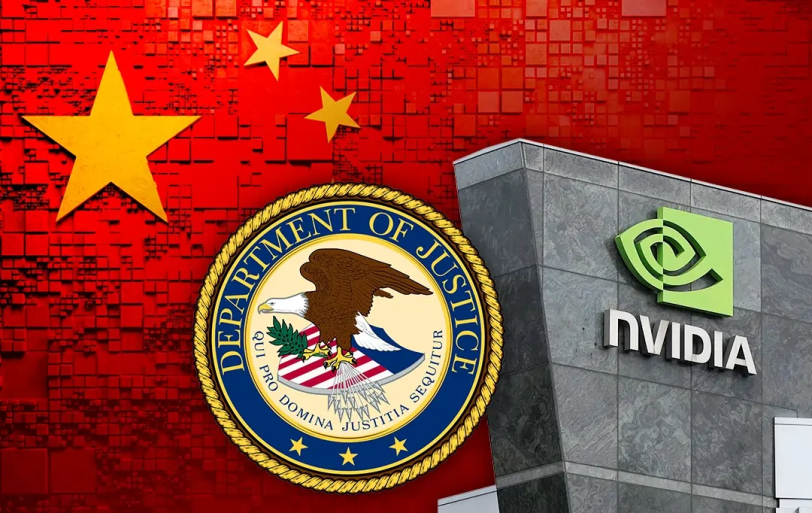
The U.S. Department of Justice (DOJ) has charged two Chinese nationals, Chuan Geng, 28, and Shiwei Yang, 28, residing in California, for illegally shipping millions of dollars’ worth of advanced Nvidia AI chips to China. They were allegedly bypassing U.S. export control laws, and the charges further highlight an escalating security issue surrounding the illicit export of microchips crucial for AI.
In-depth investigation and probe also revealed that Chuan and Shiwei were orchestrating illegal shipments from October 2022 to July 2025. This involved the illegal exportation of Nvidia’s state-of-the-art H100 General Processing Units (GPUs). These Nvidia chips are vital for running AI models and high-performance computing.
Moreover, according to the DOJ, the two suspects did not obtain the necessary export licenses for the shipments, which violated the Export Control Reform Act. Additionally, this illicit shipments were planned and routed through Malaysia, raising alarms about circumventing U.S. laws.
Law Enforcement Action and Findings
The U.S. Federal agents raided ALX Solutions, the company involved in the smuggling, and seized communication devices from the suspects. Investigators found that Geng and Yang had been arranging shipments disguised as legitimate exports to third-party countries like Singapore and Japan. However, U.S. authorities were unable to verify the destination countries, and shipments were confirmed to have gone to China.
The scheme was further exposed when ALX Solutions was discovered to have falsely declared to Super Micro Computer, a key Nvidia supplier, that it was exporting the chips to Singapore. In reality, these exports were destined for China. Customs authorities caught one such shipment last December, which contained the H100 chips and GeForce RTX 4090 GPUs.
When asked from Nvidia, the company emphasized that it only sells its products to established partners, ensuring compliance with export control regulations. They mentioned,
"We primarily sell our products to well-known partners, including OEMs, who help us ensure that all sales comply with U.S. export control rules…Even relatively small exporters and shipments are subject to thorough review and scrutiny, and any diverted products would have no service, support, or updates."
Serious Consequences and National Security Concerns
The stakes are high for the accused. If convicted, Geng and Yang could face up to 20 years in federal prison. Additionally, Yang was found to be living in the U.S. illegally after overstaying her visa, adding another layer of complexity to the case. The situation highlights the growing concern about the unauthorized export of technology with national security implications.
A Growing Trend of Illicit Chip Shipments
This case follows a broader pattern of efforts to smuggle high-performance microchips into China illegally. A report from the Financial Times revealed that, following tightened export controls, more than $1 billion worth of Nvidia chips had entered China this year alone. This reflects the significant demand for U.S.-made chips in China’s rapidly growing tech industry.
As global competition intensifies, especially in the realm of AI, such incidents raise concerns about the security of proprietary technology and the need for stricter enforcement of export laws.

By Manish
Meet Manish Chandra Srivastava, the Strategic Content Architect & Marketing Guru who turns brands into legends. Armed with a Marketer's Soul, Manish has dazzled giants like Collegedunia and Embibe before becoming a part of MobileAppDaily. His work is spotlighted on Hackernoon, Gamasutra, and Elearning Industry. Beyond the writer’s block, Manish is often found distracted by movies, video games, artificial intelligence (AI), and other such nerdy stuff. But the point remains, if you need your brand to shine, Manish is who you need.
// Recommended
Pinterest Follows Amazon in Layoffs Trend, Shares Fall by 9%
AI-driven restructuring fuels Pinterest layoffs, mirroring Amazon’s strategy, as investors react sharply and question short-term growth and advertising momentum.

Clawdbot Rebrands to "Moltbot" After Anthropic Trademark Pressure: The Viral AI Agent That’s Selling Mac Minis
Clawdbot is now Moltbot. The open-source AI agent was renamed after Anthropic cited trademark concerns regarding its similarity to their Claude models.

Amazon Bungles 'Project Dawn' Layoff Launch With Premature Internal Email Leak
"Project Dawn" leaks trigger widespread panic as an accidental email leaves thousands of Amazon employees bracing for a corporate cull.

OpenAI Launches Prism, an AI-Native Workspace to Shake Up Scientific Research
Prism transforms the scientific workflow by automating LaTeX, citing literature, and turning raw research into publication-ready papers with GPT-5.2 precision.

Have newsworthy information in tech we can share with our community?

Related Content