Trump’s Tariff Storm Rocks Fintech: Robinhood, Affirm, and SoFi Shares Plummet Amid Recession Fears
Date: April 08, 2025
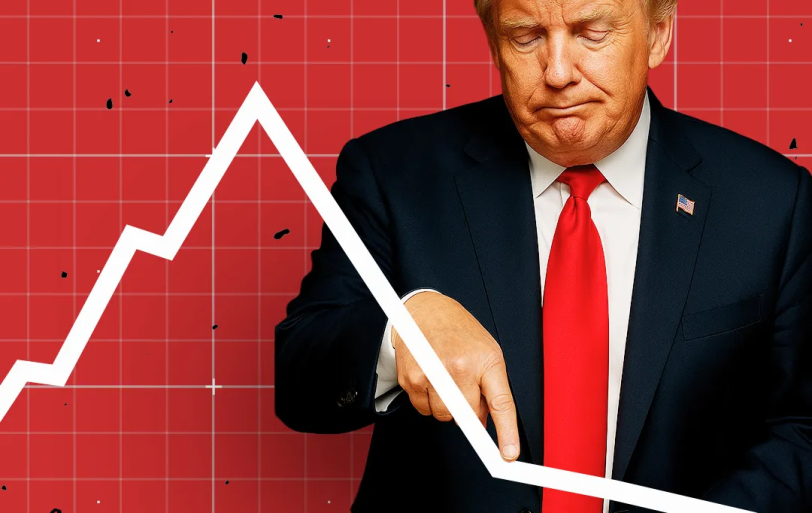
US President Trump’s new tariff strategy has plunged the financial market into chaos.
Apart from giants like Google and Microsoft, fintech stars like Robinhood and Affirm Inc. are also reeling from the heat.
Shares of these financial businesses have taken a nosedive due to the recent tariff shenanigans caused by the American government. A while back, on April 2, 2025, a 10% tariff was announced for all economies. For Wall Street, this has sparked anxiety among investors fearing that tariffs could hit fintechs harder than they already have.
Fintech products like Robinhood and Affirm depend on everyday users and their ability to repay loans, invest in stocks, and buy financial instruments. With tariffs in place, such consumers could be on the frontlines, feeling the impact of the financial crisis.
But it’s not only the loan or stock market that is set to witness the impact. A dip in the consumers’ ability to spend will also lead to a dip in the usage of debit or credit cards. This will dry out the revenue of fintech companies or banks at lightning speed.
"A recession typically hits nice-to-have mass-market consumer businesses, including fintechs, harder than other sectors because the first group to pull back spending in a recession is lower-income consumers."
James Ulan, the director of research, emerging technology at PitchBook
According to Reuters, Robinhood declined to comment on the ongoing turmoil in the financial markets.
However, an Affirm spokesperson said:
“The adoption of honest financial products like Affirm is a secular and enduring trend across market cycles. Against a backdrop of increased market volatility and uncertainty, Affirm’s products become even more compelling to both consumers and merchants.”
Affirm has also shared data stating that for the quarter ending on December 31, 2024, 2.5% of its loans were late for over 30 days, while for SoFi, 0.55% of its personal loans were delayed for over 90 days.
According to a report by the Federal Reserve, across banks, the rate of delayed consumer loans was 2.75% for 30 days or more in Q4 of 2024.
Now, it is quite clear that countless businesses are bracing for trouble after Trump’s tariffs came into action. The question is, does the US government have a contingency plan to support the businesses and consumers in the country? Or will the market spiral further downward?
This anxiety we are talking about isn’t just whispers. Experts are vocal about it.
For instance, John Hecht, Analyst at Jefferies, told Reuters,
“We know renewed inflation would be a drag on consumer credit. It crowds out excess cash flows, which means you have a deteriorating ability to pay off debt."
Investment banks like Goldman Sachs have also hinted at the rising odds of a recession in the US market. In contrast, Trump claims that these stock plummets are short-lived, leading to a massive boost for the American economy.
And with him, some economists agree!
Dan Dolev, Senior Analyst at Mizuho, said,
“If Trump's tariffs push down Treasury yields, the cost of borrowing for companies could become much cheaper, making it less risky for lenders to extend credit. This could have unintended positive consequences for all these names. I'm much more optimistic than the market is suggesting right now.”
Nick Thompson of Intro-act had a hopeful strategy to recommend. He said,
"I think the only real damage that's done so far is in psychology, and if we could get quick relief to that psychology, I think this could turn quite fast.”

By Arpit Dubey
Arpit is a dreamer, wanderer, and tech nerd who loves to jot down tech musings and updates. With a knack for crafting compelling narratives, Arpit has a sharp specialization in everything: from Predictive Analytics to Game Development, along with artificial intelligence (AI), Cloud Computing, IoT, and let’s not forget SaaS, healthcare, and more. Arpit crafts content that’s as strategic as it is compelling. With a Logician's mind, he is always chasing sunrises and tech advancements while secretly preparing for the robot uprising.
// Recommended
Pinterest Follows Amazon in Layoffs Trend, Shares Fall by 9%
AI-driven restructuring fuels Pinterest layoffs, mirroring Amazon’s strategy, as investors react sharply and question short-term growth and advertising momentum.

Clawdbot Rebrands to "Moltbot" After Anthropic Trademark Pressure: The Viral AI Agent That’s Selling Mac Minis
Clawdbot is now Moltbot. The open-source AI agent was renamed after Anthropic cited trademark concerns regarding its similarity to their Claude models.

Amazon Bungles 'Project Dawn' Layoff Launch With Premature Internal Email Leak
"Project Dawn" leaks trigger widespread panic as an accidental email leaves thousands of Amazon employees bracing for a corporate cull.

OpenAI Launches Prism, an AI-Native Workspace to Shake Up Scientific Research
Prism transforms the scientific workflow by automating LaTeX, citing literature, and turning raw research into publication-ready papers with GPT-5.2 precision.

Have newsworthy information in tech we can share with our community?
Related Content