Ram Gopal Varma Says He’ll Use AI Music For All Projects
Date: September 20, 2024
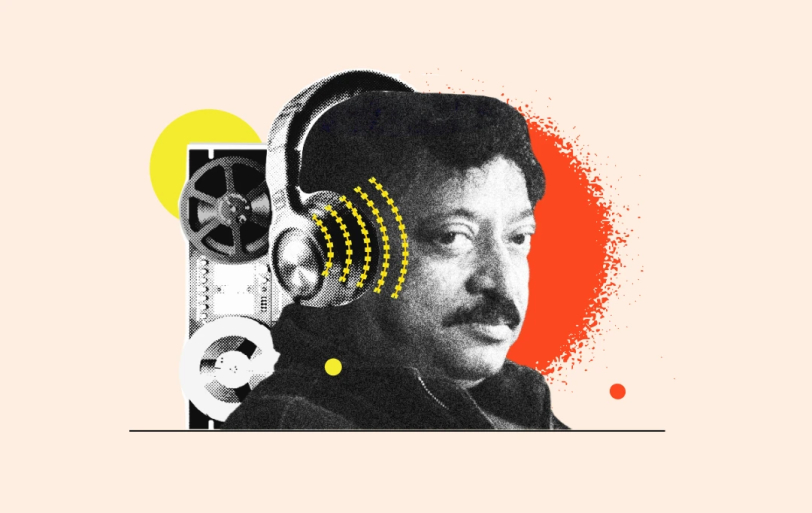
Indian Filmmaker and Producer Ram Gopal Varma has announced that he will abandon human musicians and switch to AI music for all future projects.
While the Indian music industry continues its fight against AI music for appropriate credibility, accountability, and remuneration, an Indian filmmaker has taken a completely opposite step. Ram Gopal Varma announced in an interview that he will be abandoning human musicians completely and will switch to AI-generated music for all his future endeavors. The shocking revelation came to light after RGV went on an interview with a popular tech media house.
Though his move underscores the growing penetration of AI in film, music, and other creative industries globally, his announcement comes out to be extremely aggressive for the community. Ram Gopal Varma has not expressed any negative aspects about human music production avenues but is quite optimistic about choosing AI for multiple reasons.
The filmmaker and screenwriter of some of the popular Bollywood movies, including the Sarkar series, Company, Rangeela, and Satya, has launched a new venture named RGV Den Music. The new music company will only focus on producing AI-generated music, background score, and audio effects for all movies, songs, and other projects.
RGV Den Music will only use AI music production tools, including Suno and Udio, as confirmed by RGV himself. “Eventually, the music comes from your thoughts. You need to have clarity on what you want the app to produce. It’s the taste that will matter,” he said. Varma also announced that the background score of his upcoming movie, Saree, is generated by Artificial Intelligence music tools.
The Indian film and music industries are the leading churners in the world, with 1500-2000 movies released annually. The music industry produces an unmatched amount of content ranging from 20000 to 25000 songs annually.
Varma has criticized composers for frequently missing deadlines and facing scheduling conflicts during his earlier projects. He also said that lyricists have failed to deliver the essence of what he envisioned in his songs. In his argument, human factors often disrupt the creative process negatively, making the overall production costly and time-consuming. With AI, the cost and timeline aspects reduce drastically, as he witnessed in his latest project.
“Human musicians, composers, lyricists, and singers will be vastly affected and then completely disappear in the near future as the apps keep developing at a rapid pace,” he predicted. The result of this strong opinion needs objective backing. Otherwise, it will backfire on him quite badly.

By Arpit Dubey
Arpit is a dreamer, wanderer, and tech nerd who loves to jot down tech musings and updates. With a knack for crafting compelling narratives, Arpit has a sharp specialization in everything: from Predictive Analytics to Game Development, along with artificial intelligence (AI), Cloud Computing, IoT, and let’s not forget SaaS, healthcare, and more. Arpit crafts content that’s as strategic as it is compelling. With a Logician's mind, he is always chasing sunrises and tech advancements while secretly preparing for the robot uprising.
// Recommended
Pinterest Follows Amazon in Layoffs Trend, Shares Fall by 9%
AI-driven restructuring fuels Pinterest layoffs, mirroring Amazon’s strategy, as investors react sharply and question short-term growth and advertising momentum.

Clawdbot Rebrands to "Moltbot" After Anthropic Trademark Pressure: The Viral AI Agent That’s Selling Mac Minis
Clawdbot is now Moltbot. The open-source AI agent was renamed after Anthropic cited trademark concerns regarding its similarity to their Claude models.

Amazon Bungles 'Project Dawn' Layoff Launch With Premature Internal Email Leak
"Project Dawn" leaks trigger widespread panic as an accidental email leaves thousands of Amazon employees bracing for a corporate cull.

OpenAI Launches Prism, an AI-Native Workspace to Shake Up Scientific Research
Prism transforms the scientific workflow by automating LaTeX, citing literature, and turning raw research into publication-ready papers with GPT-5.2 precision.

Have newsworthy information in tech we can share with our community?
Related Content