Microsoft And OpenAI Reach A Non-Binding Deal to Allow OpenAI to Restructure
Date: September 12, 2025
Listen to This Article
Tech giants reach preliminary agreement that paves the way for OpenAI to transform into a non-profit powerhouse.
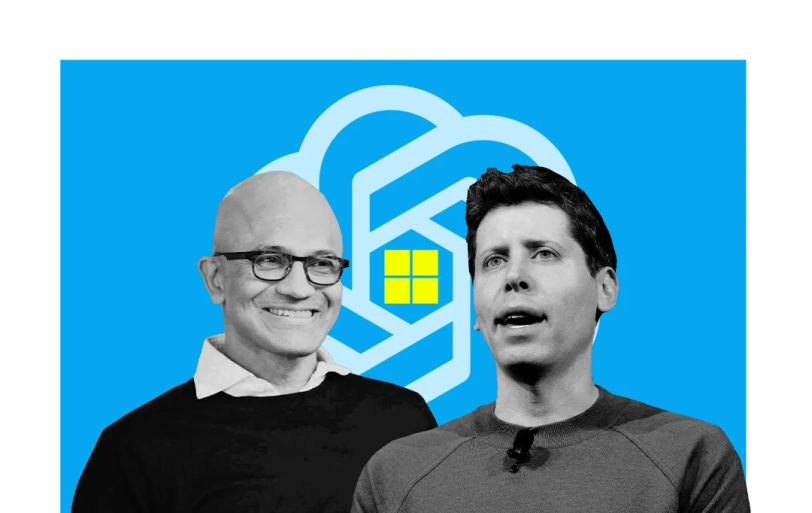
Microsoft and OpenAI have agreed on a non-binding memorandum of understanding (MOU). It paves the way for OpenAI to move toward a more conventional governance model and potentially becoming a public listing or benefit-oriented company. In the joint statement, Microsoft said:
“Microsoft and OpenAI have signed a non-binding memorandum of understanding (MOU) for the next phase of our partnership. We are actively working to finalize contractual terms in a definitive agreement. Together, we remain focused on delivering the best AI tools for everyone, grounded in our shared commitment to safety.”
Under the current non-binding deal, OpenAI’s nonprofit arm will receive more than $100 billion, approximately 20% of the $500 billion valuation the company is seeking in private markets.
Microsoft, which invested about $1 billion in 2019 and then another $10 billion in early 2023, will hold exclusive rights to market OpenAI’s software via Azure and preferred access to its technology.
Meanwhile, OpenAI is expanding its cloud compute alliances: a major data-center project called Stargate is in the works, including long-term contracts with other providers like Oracle, and some deals with Google.
What still needs to happen
- The agreement is non-binding; many details are not yet public. For instance, it’s not fully clear to what extent Microsoft will retain exclusivity for accessing OpenAI’s most recent models, or how ownership shares will be apportioned.
- Regulatory approval is required in both California and Delaware, where OpenAI’s structuring is under scrutiny. OpenAI aims to complete the conversion by the end of this year, in part to avoid losing billions in funding tied to that timeline. (Reuters).
As far as the implications suggest,
For OpenAI, this shift could mean greater flexibility in raising investment, diversifying cloud partners, and scaling more aggressively without carrying too many strings from a single major partner. For Microsoft, the deal allows it to stay in the picture, still tapping into OpenAI’s advances, even if OpenAI expands its architecture and vendors. Overall, balancing that with mission, governance, and regulatory oversight will be key.

By Arpit Dubey
Arpit is a dreamer, wanderer, and tech nerd who loves to jot down tech musings and updates. With a knack for crafting compelling narratives, Arpit has a sharp specialization in everything: from Predictive Analytics to Game Development, along with artificial intelligence (AI), Cloud Computing, IoT, and let’s not forget SaaS, healthcare, and more. Arpit crafts content that’s as strategic as it is compelling. With a Logician's mind, he is always chasing sunrises and tech advancements while secretly preparing for the robot uprising.
// Recommended
Pinterest Follows Amazon in Layoffs Trend, Shares Fall by 9%
AI-driven restructuring fuels Pinterest layoffs, mirroring Amazon’s strategy, as investors react sharply and question short-term growth and advertising momentum.

Clawdbot Rebrands to "Moltbot" After Anthropic Trademark Pressure: The Viral AI Agent That’s Selling Mac Minis
Clawdbot is now Moltbot. The open-source AI agent was renamed after Anthropic cited trademark concerns regarding its similarity to their Claude models.

Amazon Bungles 'Project Dawn' Layoff Launch With Premature Internal Email Leak
"Project Dawn" leaks trigger widespread panic as an accidental email leaves thousands of Amazon employees bracing for a corporate cull.

OpenAI Launches Prism, an AI-Native Workspace to Shake Up Scientific Research
Prism transforms the scientific workflow by automating LaTeX, citing literature, and turning raw research into publication-ready papers with GPT-5.2 precision.

Have newsworthy information in tech we can share with our community?

Related Content