Top Breakthroughs from Microsoft Ignite 2025: Redefining SaaS, Cloud Platforms & AI for Business
Date: November 19, 2025
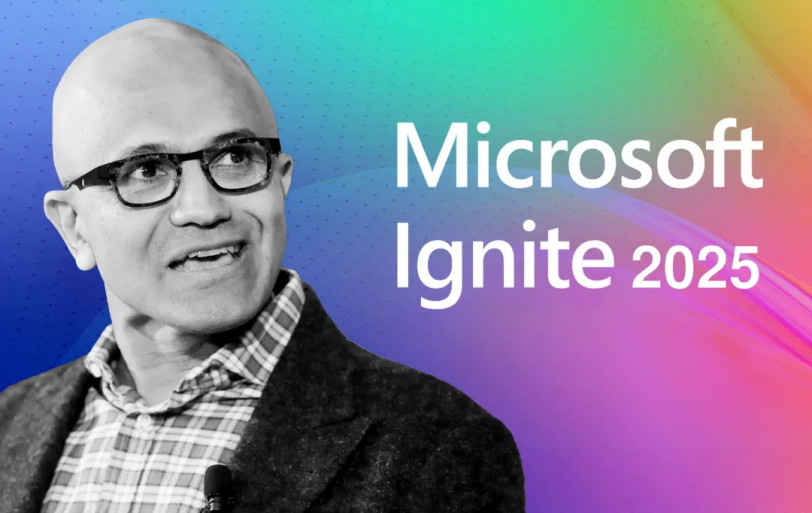
This year, Microsoft Ignite signals a major shift from AI assistants to autonomous AI agents, introducing new tools that handle sales, security, and workflow automation without human intervention.
Microsoft Ignite 2025 conference in San Francisco delivered a clear message - AI agents are no longer experiments. They are operational tools designed to work autonomously across business functions. Microsoft 365 Copilot, Azure, and Microsoft Agent 365 received major updates that push artificial intelligence (AI) from "helping with tasks" to "completing tasks independently."
Here are the six biggest announcements from Microsoft Ignite 2025 that matter for businesses, developers, and managed service providers working with cloud platforms and SaaS solutions.
1. Sales Development Agent Brings Autonomous Lead Generation
Microsoft's Sales Development Agent is now available through the Frontier preview program. This AI agent researches, qualifies, and engages leads around the clock. It connects directly to CRM tools like Salesforce and Dynamics 365, operating within Microsoft 365 apps without requiring new infrastructure.
The agent autonomously handles early-stage pipeline generation. It escalates to human sales teams only when intervention adds value. Security and governance controls come built-in through Microsoft Agent 365, making this one of the most-watched AI agent launches for revenue teams in 2025.
2. Sora 2 Integration in Microsoft 365 Copilot Changes Content Creation
Sora 2 arrives in Microsoft 365 Copilot through the Create experience. Marketing and CX teams can now generate short AI-generated video clips using natural language prompts. The tool replaces stock footage with AI alternatives and includes brand kits, voiceovers, and music tools.
This opens fresh possibilities for personalized explainer videos, onboarding clips, campaign assets, and product walkthroughs. Teams no longer wait weeks for production resources. The feature remains part of the Frontier program but signals where generative AI in content creation is heading.
3. Microsoft Agent 365 Becomes the Control Plane for Enterprise AI Agents
By 2028, businesses will deploy 1.3 billion AI agents across workflows, according to IDC. Microsoft Agent 365 addresses the governance gap. It provides unified observability across entire agent fleets through telemetry, dashboards, and alerts. IT leaders can track every AI agent being used, built, or brought into the organization.
The platform supports agents created with Copilot Studio and non-Microsoft platforms. Risk-based access policies, advanced security features, and performance measurement tools come standard. Microsoft Agent 365 eliminates blind spots and reduces shadow IT risks as AI agents become critical business infrastructure.
4. Power Apps Gains Agent-Powered Workspace for Low-Code Development
Power Apps introduced an agent-powered maker workspace that combines planning, data modeling, and app building into one AI-powered canvas. Users can generate apps by chatting with Copilot, accelerating development of service workflows and custom tools without waiting on development teams.
Power Apps also launches its own Model Context Protocol server. This allows AI agents to call capabilities built into apps, including retrieving records or submitting approvals. The update moves Power Apps closer to agent-driven customer operations, particularly valuable for businesses using cloud software and database systems.
5. Microsoft Teams Agents Integrate with Third-Party Platforms via MCP
AI agents inside Microsoft Teams channels can now integrate with third-party systems like Jira, Asana, and GitHub through the Model Context Protocol. Agents pull risk information directly from these tools, surface blockers, and schedule meetings to discuss mitigation plans.
For cross-functional teams running product, engineering, marketing, and service operations, this reduces context switches and manual follow-up. Teams agents evolve from isolated helpers to orchestrators of team-wide workflows. The Teams Admin Agent also launches in preview, automating IT administrative tasks like user provisioning and meeting monitoring.
6. Fabric IQ and Foundry IQ Unify Enterprise Data for AI Agents
Fabric IQ organizes enterprise data around business concepts rather than tables. It unifies analytics, time-series, and operational data under a semantic framework. Because all data resides in OneLake through native storage, shortcuts, or mirroring, organizations realize benefits across on-premises, hybrid, and multicloud environments.
Foundry IQ takes this further with a fully managed knowledge system designed to ground AI agents over multiple data sources, including Microsoft 365, Fabric IQ, custom applications, and the web. This single endpoint for knowledge includes routing and intelligence, enabling higher-quality reasoning and safer actions. Foundry Control Plane provides real-time security, lifecycle management, and visibility across agent platforms.
Final Verdict
At Microsoft Ignite 2025, the theme was clear. AI-powered agents backed by cloud platforms and SaaS ecosystems are no longer optional. They are becoming mission-critical for CX, collaboration & communication, business intelligence, and analytics. If your organisation still treats generative AI as a pilot, you’re already behind. Make the move now. And help your business in scaling custom SaaS journeys, agent-enabled workflows, and cloud-software transformation that deliver real CX impact.

By Manish
Meet Manish Chandra Srivastava, the Strategic Content Architect & Marketing Guru who turns brands into legends. Armed with a Marketer's Soul, Manish has dazzled giants like Collegedunia and Embibe before becoming a part of MobileAppDaily. His work is spotlighted on Hackernoon, Gamasutra, and Elearning Industry. Beyond the writer’s block, Manish is often found distracted by movies, video games, artificial intelligence (AI), and other such nerdy stuff. But the point remains, if you need your brand to shine, Manish is who you need.
// Recommended
Pinterest Follows Amazon in Layoffs Trend, Shares Fall by 9%
AI-driven restructuring fuels Pinterest layoffs, mirroring Amazon’s strategy, as investors react sharply and question short-term growth and advertising momentum.

Clawdbot Rebrands to "Moltbot" After Anthropic Trademark Pressure: The Viral AI Agent That’s Selling Mac Minis
Clawdbot is now Moltbot. The open-source AI agent was renamed after Anthropic cited trademark concerns regarding its similarity to their Claude models.

Amazon Bungles 'Project Dawn' Layoff Launch With Premature Internal Email Leak
"Project Dawn" leaks trigger widespread panic as an accidental email leaves thousands of Amazon employees bracing for a corporate cull.

OpenAI Launches Prism, an AI-Native Workspace to Shake Up Scientific Research
Prism transforms the scientific workflow by automating LaTeX, citing literature, and turning raw research into publication-ready papers with GPT-5.2 precision.

Have newsworthy information in tech we can share with our community?

Related Content