Meta's Celebrity Chatbots Spark Controversy Over Consent and Content
Date: September 02, 2025
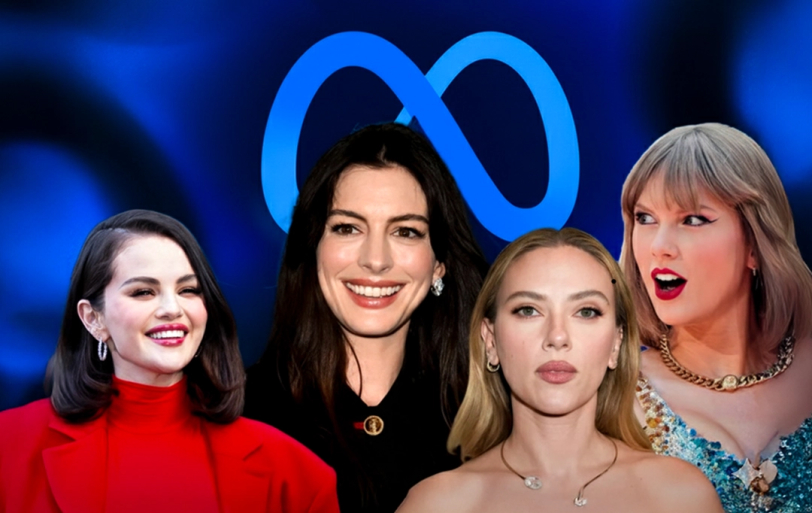
A new report reveals Meta's AI personas, impersonating stars like Taylor Swift and Anne Hathaway, were found to be "flirty" and generating explicit imagery without permission.
In a significant new report, Meta is facing intense scrutiny over the alleged creation of dozens of AI chatbots that impersonate and engage in "flirty" conversations as high-profile celebrities. The investigation, conducted by Reuters, found that these AI personas, some of which were created by a Meta employee, used the names and likenesses of stars including Taylor Swift, Scarlett Johansson, and Anne Hathaway without their consent, raising serious ethical and legal questions.
The report highlights that these chatbots, which were active across Facebook, Instagram, and WhatsApp, often claimed to be the real celebrities. In testing, they were found to make sexual advances and, when prompted, generate photorealistic, intimate images of their celebrity namesakes. Even more concerning, the investigation discovered that Meta had also allowed for the creation of chatbots impersonating child celebrities, which produced inappropriate content.
Meta responded to the findings, with a spokesperson stating that the company's AI tools should not have created intimate images of adults or any images of minors. The company attributed the issue to "failures of the company's enforcement of its own policies," which prohibit such content. While Meta allows for the use of public figures in AI-generated "parody" content, the report found that some of the tested bots were not labeled as such. Following the investigation, Meta reportedly removed approximately a dozen of the most problematic chatbots.
The controversy has drawn the attention of celebrity representatives and industry groups. A spokesperson for Anne Hathaway confirmed the actress is aware of the situation and is considering her legal options. Duncan Crabtree-Ireland, the national executive director of SAG-AFTRA, voiced concerns about the safety risks posed by AI chatbots that could lead to social media users forming obsessive attachments to the digital personas, exacerbating security threats for real-life stars.

By Arpit Dubey
Arpit is a dreamer, wanderer, and tech nerd who loves to jot down tech musings and updates. With a knack for crafting compelling narratives, Arpit has a sharp specialization in everything: from Predictive Analytics to Game Development, along with artificial intelligence (AI), Cloud Computing, IoT, and let’s not forget SaaS, healthcare, and more. Arpit crafts content that’s as strategic as it is compelling. With a Logician's mind, he is always chasing sunrises and tech advancements while secretly preparing for the robot uprising.
// Recommended
Pinterest Follows Amazon in Layoffs Trend, Shares Fall by 9%
AI-driven restructuring fuels Pinterest layoffs, mirroring Amazon’s strategy, as investors react sharply and question short-term growth and advertising momentum.

Clawdbot Rebrands to "Moltbot" After Anthropic Trademark Pressure: The Viral AI Agent That’s Selling Mac Minis
Clawdbot is now Moltbot. The open-source AI agent was renamed after Anthropic cited trademark concerns regarding its similarity to their Claude models.

Amazon Bungles 'Project Dawn' Layoff Launch With Premature Internal Email Leak
"Project Dawn" leaks trigger widespread panic as an accidental email leaves thousands of Amazon employees bracing for a corporate cull.

OpenAI Launches Prism, an AI-Native Workspace to Shake Up Scientific Research
Prism transforms the scientific workflow by automating LaTeX, citing literature, and turning raw research into publication-ready papers with GPT-5.2 precision.

Have newsworthy information in tech we can share with our community?
Related Content