Meta Plans $10 Bn Undersea Internet Cable Across The Globe
Date: December 02, 2024
The successful implementation of the undersea internet cable will make Meta the first company in the world to have its own private internet network.
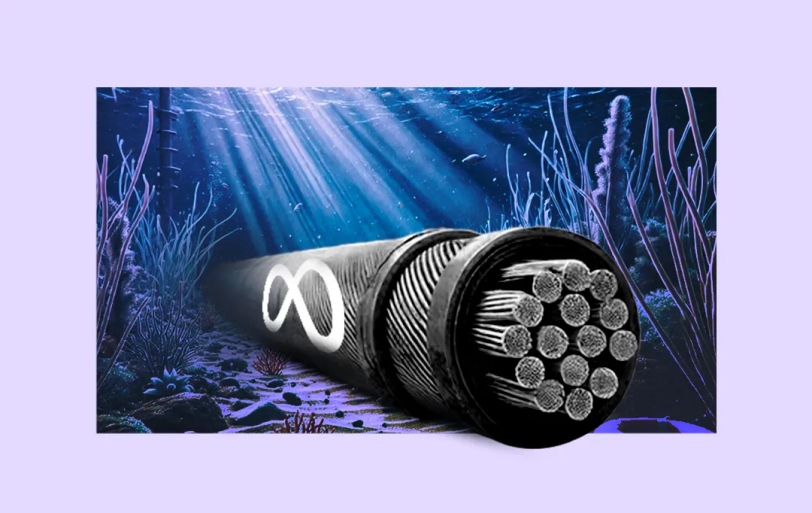
Social media giant Meta is reportedly planning to build an undersea internet cable that will spread across the globe and be privately operated by the organization. The proposed cable would cost nearly $10 billion to make and comes with multiple challenges, making the implementation tough.
According to the reports, Meta may schedule the 25,000-mile optical fiber cable under the sea from early next year onwards. These cables would power the entire Meta ecosystem, including its key product offerings of Facebook, WhatsApp, and Instagram. Currently, Meta collectively attracts more than 22% of mobile traffic globally. With the installation of the undersea internet network, the company can successfully eliminate reliance on external service providers and operators.
The envisioned $10 Billion undersea internet cable will be used solely by Meta, making it the first company in the world to have its private internet network. According to the proposed plan, the internet cable route would begin from the East Coast of the US to India via South Africa — then from India via Australia to the US’ West Coast.
Before the cable arrives, Meta will have multiple checkpoints to accomplish, including global compliances, international sea regulations, inter-country relations, and raw material supply. Ranulf Scarborough, a submarine cable industry analyst, told a news media agency that the supply for cable ships is real tight. He continued, “They’re expensive at the minute and booked out several years ahead. Finding the available resources to do it soon is a challenge.”
If completed, this will become the world’s first and biggest privately operated optical fiber cable project. The global cable systems are currently shared partly by Google, Amazon, Microsoft, and other top tech players, but none has their own private cable networks. While this may be the primary motivation factor for Meta to take up the ambitious project, there are more.
According to Meta, in recent times, the geopolitical disturbance has resulted in significant collateral and direct damages to the existing subsea cables. Last week, an internet cable was cut in the European waters over Sweden, calling out China to cooperate in an ongoing investigation on a ship controlled by the communist nation. In May, US national security officials also warned Meta, along with other key players operating from the US, that undersea internet cables are at high risk of tampering by China-controlled ships. These factors are enough to inspire immediate action by the tech giant to build its privately-run network.

By Arpit Dubey
Arpit is a dreamer, wanderer, and tech nerd who loves to jot down tech musings and updates. With a knack for crafting compelling narratives, Arpit has a sharp specialization in everything: from Predictive Analytics to Game Development, along with artificial intelligence (AI), Cloud Computing, IoT, and let’s not forget SaaS, healthcare, and more. Arpit crafts content that’s as strategic as it is compelling. With a Logician's mind, he is always chasing sunrises and tech advancements while secretly preparing for the robot uprising.
// Recommended
Pinterest Follows Amazon in Layoffs Trend, Shares Fall by 9%
AI-driven restructuring fuels Pinterest layoffs, mirroring Amazon’s strategy, as investors react sharply and question short-term growth and advertising momentum.

Clawdbot Rebrands to "Moltbot" After Anthropic Trademark Pressure: The Viral AI Agent That’s Selling Mac Minis
Clawdbot is now Moltbot. The open-source AI agent was renamed after Anthropic cited trademark concerns regarding its similarity to their Claude models.

Amazon Bungles 'Project Dawn' Layoff Launch With Premature Internal Email Leak
"Project Dawn" leaks trigger widespread panic as an accidental email leaves thousands of Amazon employees bracing for a corporate cull.

OpenAI Launches Prism, an AI-Native Workspace to Shake Up Scientific Research
Prism transforms the scientific workflow by automating LaTeX, citing literature, and turning raw research into publication-ready papers with GPT-5.2 precision.

Have newsworthy information in tech we can share with our community?

Related Content