Intel SoftBank Deal: Chip Giant Secures $2 Billion Lifeline in Strategic Investment from SoftBank
Date: August 19, 2025
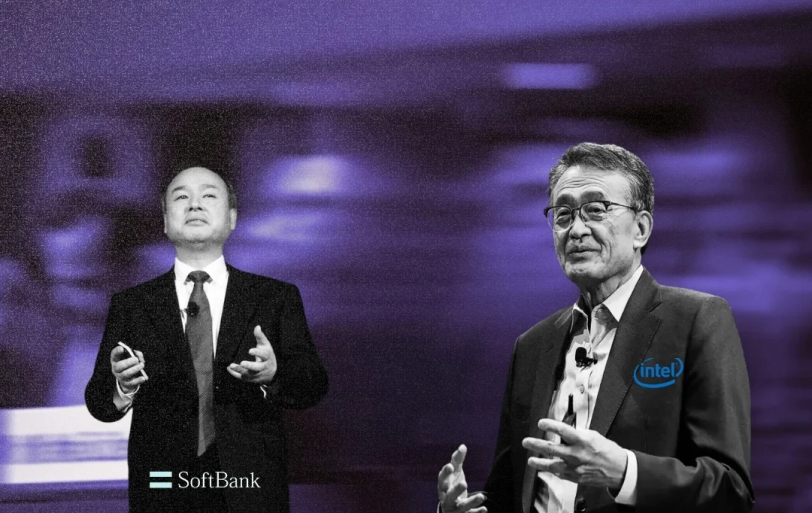
Japanese tech giant SoftBank is investing $2 billion in Intel, buying a nearly 2% stake and becoming its sixth-largest shareholder.
TLDR:
- For Intel: This is a huge vote of confidence in its costly turnaround plan to become a leader in AI and advanced chip manufacturing. While the cash is helpful, the endorsement from a major investor like SoftBank is the real prize, boosting credibility.
- For SoftBank: This is a strategic move to secure a U.S.-based supply of advanced chips for its massive AI ambitions, which include huge investments in OpenAI, NVIDIA, and a $500 billion data center project.
- Geopolitical Angle: The deal aligns with the U.S. government's efforts (like the CHIPS Act) to strengthen domestic semiconductor manufacturing, positioning Intel as a "national champion" and a key alternative to Taiwan's TSMC.
- Big Picture: The alliance could create a new powerhouse in the semiconductor industry, offering a much-needed second source for leading-edge chip manufacturing and giving Intel's foundry business a major anchor client.
Intel SoftBank Investment: A $2 Billion Vote of Confidence in U.S. Chipmaker's Revival
In a landmark move signaling a powerful vote of confidence in one of Silicon Valley’s most iconic companies, Japanese technology conglomerate SoftBank Group Corp. has signed a definitive agreement to make a $2 billion strategic investment in Intel Corporation.
The Intel SoftBank deal, announced on August 18, 2025, provides a critical capital injection and a significant strategic endorsement for the U.S. chipmaker as it navigates one of the most challenging turnarounds in its history.
This major Intel investment from SoftBank is poised to bolster Intel’s ambitious and capital-intensive push into artificial intelligence (AI) and advanced semiconductor manufacturing, positioning SoftBank Intel as a new, formidable alliance in the global technology landscape.
Under the terms of the agreement, SoftBank will purchase newly issued common stock from Intel at a price of $23 per share. This transaction will give the Japanese investment giant an equity stake of just under 2%, instantly making it Intel's sixth-largest shareholder.
The announcement was met with immediate enthusiasm from the market, with Intel’s stock (INTC) surging more than 5% in after-hours trading, a clear signal of investor approval for the newfound partnership.
Conversely, SoftBank's shares experienced a decline, reflecting a degree of market apprehension regarding the significant bet on AI leaders facing profound competitive and financial headwinds.
The official statements from both chief executives frame the deal as a long-term, strategic alignment focused on the future of technology and the reshoring of critical manufacturing to the United States. Masayoshi Son, the visionary Chairman and CEO of SoftBank, articulated a broad, foundational vision for the investment.
“Semiconductors are the foundation of every industry. This strategic investment reflects our belief that advanced semiconductor manufacturing and supply will further expand in the United States, with Intel playing a critical role”.
- Son stated
This framing elevates the deal beyond a simple financial transaction, positioning it as a cornerstone of a revitalized American technology manufacturing ecosystem.
Intel CEO Lip-Bu Tan, who has a long-standing professional relationship with Son, emphasized the personal trust and shared vision underpinning the agreement.
“We are very pleased to deepen our relationship with SoftBank, a company that's at the forefront of so many areas of emerging technology and innovation. Masa and I have worked closely together for decades, and I appreciate the confidence he has placed in Intel with this investment”.
- Lip-Bu Tan stated
While the $2 billion figure is substantial, its true significance lies not in the raw capital but in the powerful endorsement it represents. For a company like Intel, which has outlined a staggering gross capital expenditure target of $18 billion for 2025 alone to fund its turnaround, the investment covers only a fraction of its needs.
However, Intel has been battling a severe crisis of confidence, marked by a declining stock price, leadership instability, and widespread market skepticism about its ability to close the technological gap with rivals like Taiwan Semiconductor Manufacturing Co. (TSMC).
In this context, the public backing from Masayoshi Son, one of the world's most influential and aggressive technology investors, is invaluable. This endorsement serves to validate Intel's difficult and costly strategy, potentially reassuring nervous customers of its nascent foundry business, stabilizing employee morale, and attracting further investment.
It fundamentally shifts the narrative from that of a struggling giant to a strategically backed turnaround poised for a comeback.
Why SoftBank is Betting on Intel's Manufacturing Might
To fully grasp the significance of this deal, one must shift perspective from Intel's predicament to SoftBank's ambition. This investment is not merely a rescue mission or a value play on a beaten-down stock; it is a calculated, strategic move by Masayoshi Son to acquire a critical piece of the global AI infrastructure puzzle he is aggressively assembling.
For SoftBank, Intel represents the indispensable manufacturing foundation upon which its multi-hundred-billion-dollar AI empire will be built.
Son's strategic focus is unequivocally centered on dominating the AI ecosystem, from the foundational silicon to the end-user applications. This vision has been backed by a series of colossal investments in 2025 that have reshaped the technology landscape.
These include a $30 billion commitment to AI leader OpenAI, a move that tripled its stake in the dominant AI chip designer NVIDIA, and, most audaciously, leading the financing for "Stargate," a $500 billion data center project in partnership with OpenAI and Oracle.
This is where Intel enters the equation as the logical, strategic solution. Intel is the only U.S.-based semiconductor company that possesses an integrated model and a credible roadmap for leading-edge process R&D, high-volume wafer manufacturing, and advanced packaging, all on American soil.
By investing in Intel, SoftBank secures a vital foothold in a geopolitically stable, onshore supply of the very hardware its grand AI ambitions will depend upon. This is a classic supply chain vertical integration play disguised as a minority equity investment.
The Washington Angle: Geopolitics, the CHIPS Act, and a Potential Government Stake
Intel has been positioned, both by itself and by Washington, as a "national champion." U.S. officials widely view the company as the nation's best and perhaps only hope to compete head-to-head with TSMC in the critical arena of leading-edge chip fabrication.
This perception made Intel the single biggest beneficiary of the 2022 CHIPS and Science Act, a landmark piece of legislation designed to bolster the domestic semiconductor industry. The company was awarded $8.5 billion in federal grants to help fund the construction of its new and expanded fabs in states like Arizona and Ohio.
The strategic importance of Intel to the U.S. government was further highlighted by the timing of the SoftBank announcement. It came amidst a flurry of reports that the Trump administration was in active discussions to take a direct 10% equity stake in the company.
However, Reuters reported that this deal has no relation to Trump’s interests.
While the structure of such a deal remained undefined, the very existence of these talks underscores the government's view of Intel as a critical national security asset, essential for ensuring a secure supply of advanced technology for economic and military needs.
Within this highly politicized environment, Masayoshi Son has demonstrated shrewd political acumen. He has a well-documented history of aligning SoftBank's major investments with the stated priorities of the U.S. administration, having aggressively courted President Donald Trump on previous ventures.
The $2 billion investment in Intel can be interpreted as another such move, demonstrating a tangible commitment to the "America First" agenda of revitalizing domestic manufacturing and strengthening the U.S. technology base.
Rather than viewing the SoftBank investment and the potential U.S. government stake as competing or mutually exclusive events, it is more accurate to see them as complementary forces creating a powerful public-private-international coalition to resurrect a national champion.
Long-Term Implications of the New Intel-SoftBank Alliance
The strategic partnership forged between Intel and SoftBank carries long-term implications that could fundamentally reshape the competitive dynamics of the global semiconductor industry.
While the immediate capital infusion is vital, the true transformative potential of this alliance lies in the deep synergies it could unlock, potentially creating a new center of gravity to challenge the existing industry order.
This new axis offers compelling benefits for all stakeholders. For the countless companies that design chips based on ARM's architecture, it provides a desperately needed second source for leading-edge manufacturing, mitigating the immense supply chain risk associated with the heavy reliance on TSMC and Taiwan.
For SoftBank, it diversifies the manufacturing options for its most critical asset, Arm, and provides a secure silicon foundation for its Stargate ambitions. For Intel, it delivers the holy grail it has been seeking for its foundry business: a high-volume, leading-edge anchor tenant whose business can help fill its costly new fabs and justify the massive capital investments required.

By Manish
Meet Manish Chandra Srivastava, the Strategic Content Architect & Marketing Guru who turns brands into legends. Armed with a Marketer's Soul, Manish has dazzled giants like Collegedunia and Embibe before becoming a part of MobileAppDaily. His work is spotlighted on Hackernoon, Gamasutra, and Elearning Industry. Beyond the writer’s block, Manish is often found distracted by movies, video games, artificial intelligence (AI), and other such nerdy stuff. But the point remains, if you need your brand to shine, Manish is who you need.
// Recommended
Pinterest Follows Amazon in Layoffs Trend, Shares Fall by 9%
AI-driven restructuring fuels Pinterest layoffs, mirroring Amazon’s strategy, as investors react sharply and question short-term growth and advertising momentum.

Clawdbot Rebrands to "Moltbot" After Anthropic Trademark Pressure: The Viral AI Agent That’s Selling Mac Minis
Clawdbot is now Moltbot. The open-source AI agent was renamed after Anthropic cited trademark concerns regarding its similarity to their Claude models.

Amazon Bungles 'Project Dawn' Layoff Launch With Premature Internal Email Leak
"Project Dawn" leaks trigger widespread panic as an accidental email leaves thousands of Amazon employees bracing for a corporate cull.

OpenAI Launches Prism, an AI-Native Workspace to Shake Up Scientific Research
Prism transforms the scientific workflow by automating LaTeX, citing literature, and turning raw research into publication-ready papers with GPT-5.2 precision.

Have newsworthy information in tech we can share with our community?

Related Content