Google Wants AI to Do Your Shopping—And Walmart, Target Are On Board
Date: January 12, 2026
Google launches Universal Commerce Protocol with Walmart and Target, bringing AI-powered checkout and virtual shopping assistants directly to Search results.
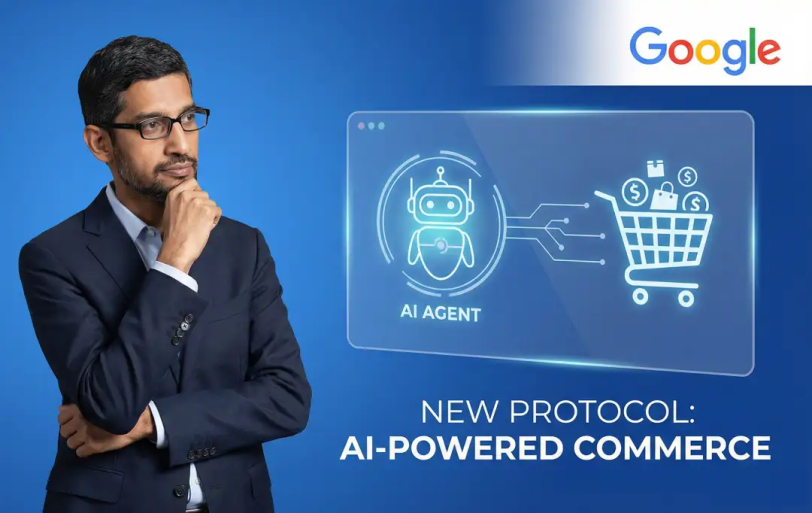
Google unveiled a sweeping initiative to position itself at the center of AI-driven retail, announcing a new open standard for agentic commerce alongside several AI shopping tools at the National Retail Federation's annual convention on Sunday.
The tech giant introduced the Universal Commerce Protocol (UCP), an open-source standard designed to streamline how AI agents handle shopping tasks from product discovery to checkout and post-purchase support. The protocol aims to create a unified system where retailers don't need to build custom connections for every AI agent that interacts with their systems.
"It's very important to have a standardized way so we can scale these things and everyone can be prepared for all the various steps to happen," Vidhya Srinivasan, vice president of Google ads and commerce, told CNBC.
UCP was co-developed with major retailers including Shopify, Etsy, Wayfair, Target and Walmart, and has garnered endorsements from over 20 companies across the retail ecosystem, including payment giants Visa, Mastercard, American Express, Stripe and Adyen.
The protocol will initially power a new checkout feature in Google's AI Mode search and the Gemini app, allowing U.S. shoppers to purchase products directly without leaving Google's platforms. Users can complete transactions using payment methods stored in Google Wallet, with PayPal integration planned for the near future. Critically, retailers remain the seller of record while Google facilitates the transaction.
Virtual Shopping Assistants and Exclusive Discounts
Alongside UCP, Google introduced Business Agent, which launches today with retailers including Lowe's, Michaels, Poshmark and Reebok. The feature functions as a virtual sales associate, appearing as a chat button in Google Search results when users search for participating retailers.
"This is to address the newer consumer behavior which is shifted toward more conversational commerce," Srinivasan explained. "We want retailers to be able to connect to users on our surfaces but using their own voice."
Google also unveiled Direct Offers, a pilot advertising program that allows retailers to present exclusive discounts to high-intent shoppers directly in AI Mode. When users express clear purchase intent, participating brands can feature special deals marked as "Sponsored deal." Early partners include Petco, e.l.f. Cosmetics, Samsonite, Rugs USA and Shopify merchants.
Racing Against Rivals in Trillion-Dollar Market
Google's push comes as tech giants compete intensely for dominance in agentic commerce, where AI completes shopping tasks autonomously on behalf of users. OpenAI announced a similar Instant Checkout feature for ChatGPT in September, partnering with Stripe on its own Agentic Commerce Protocol. Microsoft recently launched Copilot Checkout with PayPal, Shopify and Stripe integration.
McKinsey projects the retail market could represent a $3 trillion to $5 trillion opportunity globally due to AI-powered tools and agentic commerce by 2030.
Industry observers note the stakes extend beyond technology to fundamental questions about the future of online retail. Richard Crone, CEO of Crone Consulting, pointed out a potential challenge for merchants: when checkout happens on Google's platform, retailers lose the final touchpoint with customers, missing opportunities for cross-selling that typically accounts for 33% to 76% of upsells.
Yet retailers may have little choice but to participate as consumer shopping behavior rapidly evolves toward conversational interfaces. "The transition from traditional web or app search to agent-led commerce represents the next great evolution in retail," said John Furner, Walmart's incoming president and CEO, in a joint statement with Google CEO Sundar Pichai.
Google emphasized that UCP is designed to work with existing industry protocols, including its own Agent Payments Protocol (AP2), Agent2Agent (A2A) and Model Context Protocol (MCP), positioning it as a collaborative rather than proprietary approach.
The company plans to roll out additional features in coming months, including new data attributes in Merchant Center specifically designed for conversational commerce, the ability for retailers to train Business Agents on their own data, and international expansion beyond the U.S. market.

By Arpit Dubey
Arpit is a dreamer, wanderer, and tech nerd who loves to jot down tech musings and updates. With a knack for crafting compelling narratives, Arpit has a sharp specialization in everything: from Predictive Analytics to Game Development, along with artificial intelligence (AI), Cloud Computing, IoT, and let’s not forget SaaS, healthcare, and more. Arpit crafts content that’s as strategic as it is compelling. With a Logician's mind, he is always chasing sunrises and tech advancements while secretly preparing for the robot uprising.
// Recommended
Pinterest Follows Amazon in Layoffs Trend, Shares Fall by 9%
AI-driven restructuring fuels Pinterest layoffs, mirroring Amazon’s strategy, as investors react sharply and question short-term growth and advertising momentum.

Clawdbot Rebrands to "Moltbot" After Anthropic Trademark Pressure: The Viral AI Agent That’s Selling Mac Minis
Clawdbot is now Moltbot. The open-source AI agent was renamed after Anthropic cited trademark concerns regarding its similarity to their Claude models.

Amazon Bungles 'Project Dawn' Layoff Launch With Premature Internal Email Leak
"Project Dawn" leaks trigger widespread panic as an accidental email leaves thousands of Amazon employees bracing for a corporate cull.

OpenAI Launches Prism, an AI-Native Workspace to Shake Up Scientific Research
Prism transforms the scientific workflow by automating LaTeX, citing literature, and turning raw research into publication-ready papers with GPT-5.2 precision.

Have newsworthy information in tech we can share with our community?

Related Content