You Can Now Call ChatGPT At 1-800-CHATGPT
Date: December 19, 2024
The newly launched feature is available in the US for now. WhatsApp users can call ChatGPT by dialing 1-800-242-8478.
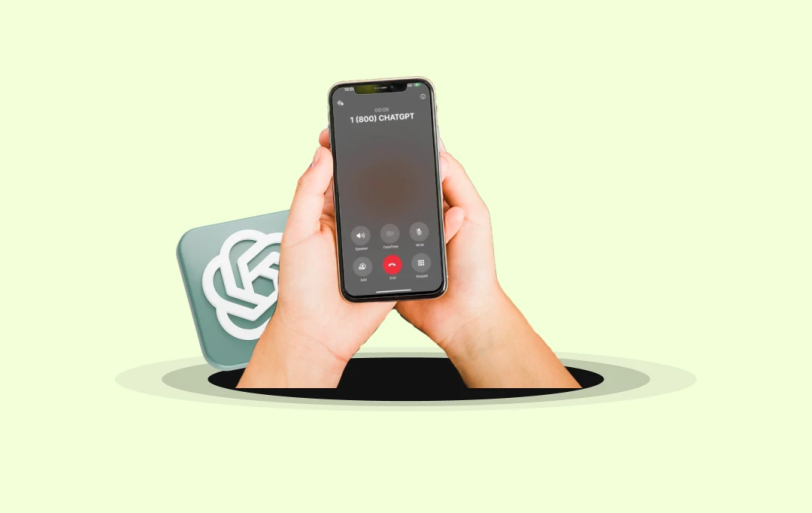
OpenAI concluded its 10th day of ‘12 Days of Ship-mas’ by rolling out a unique and intriguing feature on ChatGPT. Users in the US can now directly call ChatGPT by dialing 1-800-CHATGPT and have a voice conversation with the AI chatbot for free. OpenAI’s Chief Product Officer Kevin Weil said on a live stream that this project was conceptualized and developed only a few weeks ago.
The free calling feature is limited to 15 minutes per user per month and is made available only for ChatGPT users in the US region. OpenAI did not disclose whether it plans to roll out the calling feature to more regions later. The calling feature is enabled using OpenAI’s real-time API, and GPT-4o mini powers the messaging feature through WhatsApp API integration.
OpenAI has also launched a text conversation feature for global users. WhatsApp users from anywhere in the world can start a message conversation with ChatGPT at 1-800-242-8478. Unlike the 15-minute cap placed on the calling feature, the messaging limit may vary. OpenAI has vaguely announced daily caps to manage system capacity and will share a warning as users approach the limit.
The calling feature can also be extended beyond the 15-minute cap if users can spin up Google Voice numbers and spend as much time talking to the AI chatbot as they want.
OpenAI has declared that these conversations and the user voices in the calls will not be used to train the AI models. As both of these services are experimental, the long-term sustenance of these features is unclear.
OpenAI strongly feels that this feature will open access to the AI chatbot and its capabilities to more traditional technology users. Currently, the calling and messaging features do not require an active ChatGPT account to offer assistance. This feature is also helpful for advanced ChatGPT users on mobile and website platforms, as they can use the calling feature for ad-hoc requirements outside their scope.
OpenAI is not the first player to introduce a calling feature to access its services. Google launched GOOG-411 back in 2007 to offer free directory assistance by voice. However, it allegedly used the callers' voices to expand its library and silently shut down the service without any prior notice. The move may also motivate other players to offer traditional access points to interact with their AI chatbots.

By Arpit Dubey
Arpit is a dreamer, wanderer, and tech nerd who loves to jot down tech musings and updates. With a knack for crafting compelling narratives, Arpit has a sharp specialization in everything: from Predictive Analytics to Game Development, along with artificial intelligence (AI), Cloud Computing, IoT, and let’s not forget SaaS, healthcare, and more. Arpit crafts content that’s as strategic as it is compelling. With a Logician's mind, he is always chasing sunrises and tech advancements while secretly preparing for the robot uprising.
// Recommended
Pinterest Follows Amazon in Layoffs Trend, Shares Fall by 9%
AI-driven restructuring fuels Pinterest layoffs, mirroring Amazon’s strategy, as investors react sharply and question short-term growth and advertising momentum.

Clawdbot Rebrands to "Moltbot" After Anthropic Trademark Pressure: The Viral AI Agent That’s Selling Mac Minis
Clawdbot is now Moltbot. The open-source AI agent was renamed after Anthropic cited trademark concerns regarding its similarity to their Claude models.

Amazon Bungles 'Project Dawn' Layoff Launch With Premature Internal Email Leak
"Project Dawn" leaks trigger widespread panic as an accidental email leaves thousands of Amazon employees bracing for a corporate cull.

OpenAI Launches Prism, an AI-Native Workspace to Shake Up Scientific Research
Prism transforms the scientific workflow by automating LaTeX, citing literature, and turning raw research into publication-ready papers with GPT-5.2 precision.

Have newsworthy information in tech we can share with our community?

Related Content