Bill Gates Says AI Will Replace Most Jobs, But These Three Might Survive
Date: March 28, 2025
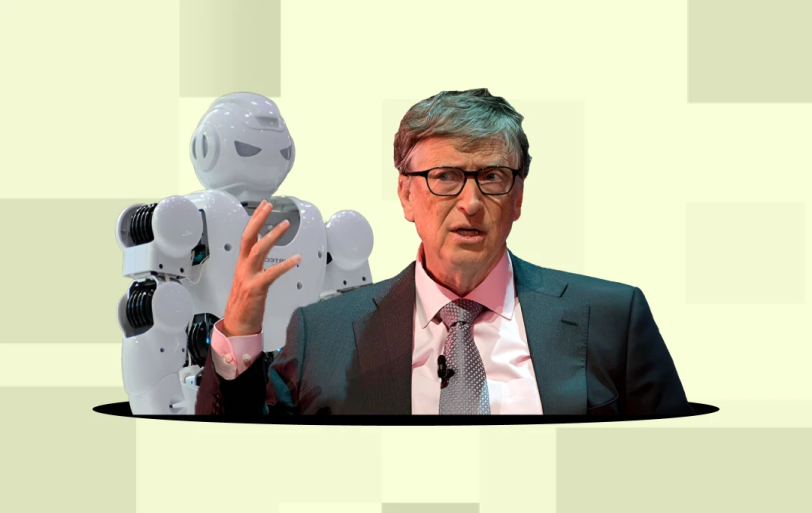
Bill Gates warns of an AI-dominated future, predicting most jobs will vanish—except coding, energy, and biology may endure.
Forget flying cars or robot butlers — Bill Gates says the real future is one where most human jobs vanish entirely, thanks to AI. And no, he’s not joking.
In a candid chat with Jimmy Fallon, the Microsoft co-founder warned that the age of “free intelligence” is arriving fast. The future, he said, belongs to artificial intelligence, and it might not leave many traditional careers intact.
Gates painted a picture of a world powered by AI-driven doctors, tutors, logistics managers, and even automated food production systems. “AI will replace humans for most things,” he said, calling the rise of artificial intelligence “very profound and even a little bit scary.”
But amid the sweeping disruption, Gates pointed to three fields he believes are more future-proof than others: coding, energy, and biology.
Coders: Still in Control
Despite the hype around AI writing its own code, Gates doesn’t believe programmers are going to become obsolete anytime soon. Human software developers still play a vital role in building, training, and supervising AI systems, not to mention solving the complex, real-world problems that machines struggle to understand. Think of coders as the ones steering the AI ship.
Energy Experts: Powering the Transition
From renewables to nuclear, the energy sector isn’t something AI can take over with a click. Gates emphasized the need for human expertise to manage energy systems, balance sustainability and efficiency, and guide policy. The future of energy, he said, will still depend on skilled humans to make the hard calls.
Biologists: Breaking New Ground
When it comes to pushing the boundaries of science, Gates is betting on biologists. While AI can crunch numbers and spot patterns, it can’t generate the kind of curiosity or innovative thinking that leads to breakthroughs in health and life sciences. According to Gates, we still need biologists to help us understand how life works.
In his words, the AI revolution is inevitable — but it doesn’t have to be catastrophic. Gates sees an opportunity to redirect human effort toward solving the world’s toughest problems, from climate change to global health. Still, he admits, the ride ahead will be anything but smooth.
“It’s going to be a little bit scary,” he told Fallon. “But it’s also going to be amazing.”

By Arpit Dubey
Arpit is a dreamer, wanderer, and tech nerd who loves to jot down tech musings and updates. With a knack for crafting compelling narratives, Arpit has a sharp specialization in everything: from Predictive Analytics to Game Development, along with artificial intelligence (AI), Cloud Computing, IoT, and let’s not forget SaaS, healthcare, and more. Arpit crafts content that’s as strategic as it is compelling. With a Logician's mind, he is always chasing sunrises and tech advancements while secretly preparing for the robot uprising.
// Recommended
Pinterest Follows Amazon in Layoffs Trend, Shares Fall by 9%
AI-driven restructuring fuels Pinterest layoffs, mirroring Amazon’s strategy, as investors react sharply and question short-term growth and advertising momentum.

Clawdbot Rebrands to "Moltbot" After Anthropic Trademark Pressure: The Viral AI Agent That’s Selling Mac Minis
Clawdbot is now Moltbot. The open-source AI agent was renamed after Anthropic cited trademark concerns regarding its similarity to their Claude models.

Amazon Bungles 'Project Dawn' Layoff Launch With Premature Internal Email Leak
"Project Dawn" leaks trigger widespread panic as an accidental email leaves thousands of Amazon employees bracing for a corporate cull.

OpenAI Launches Prism, an AI-Native Workspace to Shake Up Scientific Research
Prism transforms the scientific workflow by automating LaTeX, citing literature, and turning raw research into publication-ready papers with GPT-5.2 precision.

Have newsworthy information in tech we can share with our community?
Related Content