Apple and SpaceX Partner to Bring Starlink Connectivity to iPhones in Surprise Collaboration
Date: January 30, 2025
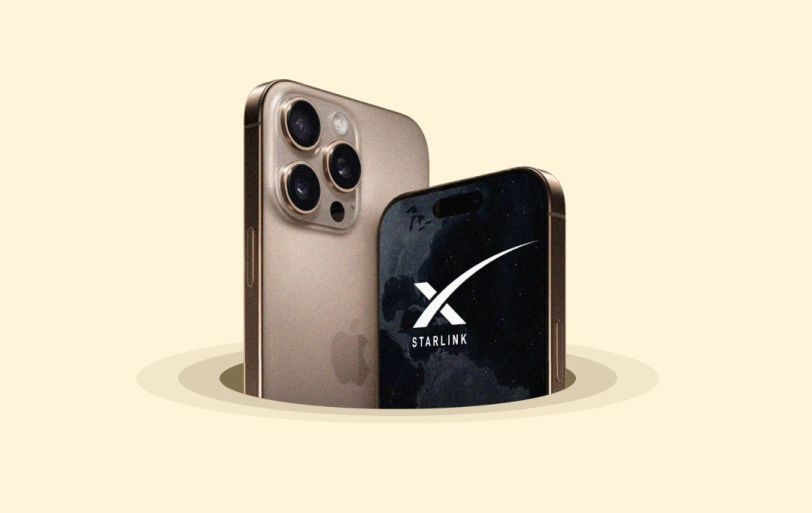
Apple partners with SpaceX and T-Mobile to bring Starlink satellite connectivity to iPhones, allowing users to text from remote areas without cellular service.
Apple, in a secret tie-up, joined hands with T-Mobile and SpaceX to integrate satellite connectivity via Starlink in iPhones, allowing users to receive and make SMS messages in regions with no cellular connectivity. In a sharp deviation in its satellite direction, the feature, incorporated in a low-key manner in its most recent update, iOS 18.3, is in beta testing for a group of testers at the moment.
A Major Expansion of Satellite Services
The new partnership will enable certain T-Mobile iPhones to have direct connectivity with Starlink satellites when out of range with traditional network connectivity. To date, Apple has only supported satellite connectivity with Globalstar, a collaboration that began with the 2022 launch of the 14th edition of iPhones.
T-Mobile has begun notifying users enrolled in the Starlink beta program. A message sent to participants reads:
"You’re in the T-Mobile Starlink beta. You can now stay connected with texting via satellite from virtually anywhere. To start experiencing coverage beyond, please update to iOS 18.3."
T-Mobile and SpaceX’s Role to Expand Starlink Mobile Coverage
T-Mobile and SpaceX initially announced plans for Starlink-powered mobile service in 2022, but until now, the feature had been marketed primarily for Samsung devices. T-Mobile confirmed that while the beta program is currently limited, the full Starlink rollout for Apple devices is expected to reach "the vast majority of modern smartphones" by late 2025.
SpaceX CEO Elon Musk hinted at further improvements in a post on X, stating:
Medium resolution images, music & audio podcasts should work with the current generation Starlink direct-to-phone constellation.
— Elon Musk (@elonmusk) January 29, 2025
Next generation constellation will do medium resolution video. https://t.co/yfDPbkgSJH
Apple’s Starlink Partnership Dirupts Satellite Industry
Apple’s decision to integrate Starlink marks a major shift in its satellite communication strategy. In late 2024, Apple invested $400 million in Globalstar, securing a 20% stake in the company. However, its new collaboration with SpaceX suggests a move towards diversifying satellite partners, likely in response to increasing competition in the satellite broadband sector.
Globalstar’s stock fell 11% in premarket trading on Wednesday following reports of Apple’s Starlink integration. Meanwhile, competitors such as AST SpaceMobile continue to push for regulatory approvals to establish their own satellite communication services.
The Future of Satellite Connectivity in Smartphones
While Starlink’s iPhone compatibility remains in its early testing phase, a broader launch is expected next year. The collaboration between Apple, SpaceX, and T-Mobile highlights the increasing role of satellite technology in consumer mobile devices, offering users new options for communication beyond traditional cellular networks. Only time will tell whether this is a long-term union in the works or a one-off experiment.

By Arpit Dubey
Arpit is a dreamer, wanderer, and tech nerd who loves to jot down tech musings and updates. With a knack for crafting compelling narratives, Arpit has a sharp specialization in everything: from Predictive Analytics to Game Development, along with artificial intelligence (AI), Cloud Computing, IoT, and let’s not forget SaaS, healthcare, and more. Arpit crafts content that’s as strategic as it is compelling. With a Logician's mind, he is always chasing sunrises and tech advancements while secretly preparing for the robot uprising.
// Recommended
Pinterest Follows Amazon in Layoffs Trend, Shares Fall by 9%
AI-driven restructuring fuels Pinterest layoffs, mirroring Amazon’s strategy, as investors react sharply and question short-term growth and advertising momentum.

Clawdbot Rebrands to "Moltbot" After Anthropic Trademark Pressure: The Viral AI Agent That’s Selling Mac Minis
Clawdbot is now Moltbot. The open-source AI agent was renamed after Anthropic cited trademark concerns regarding its similarity to their Claude models.

Amazon Bungles 'Project Dawn' Layoff Launch With Premature Internal Email Leak
"Project Dawn" leaks trigger widespread panic as an accidental email leaves thousands of Amazon employees bracing for a corporate cull.

OpenAI Launches Prism, an AI-Native Workspace to Shake Up Scientific Research
Prism transforms the scientific workflow by automating LaTeX, citing literature, and turning raw research into publication-ready papers with GPT-5.2 precision.

Have newsworthy information in tech we can share with our community?

Related Content