Anthropic Launches Claude Code for Web and iOS
Date: October 21, 2025
Listen to This Article
The $500M revenue AI coding assistant moves beyond command-line with browser-based interface, enabling parallel development tasks and mobile coding access.
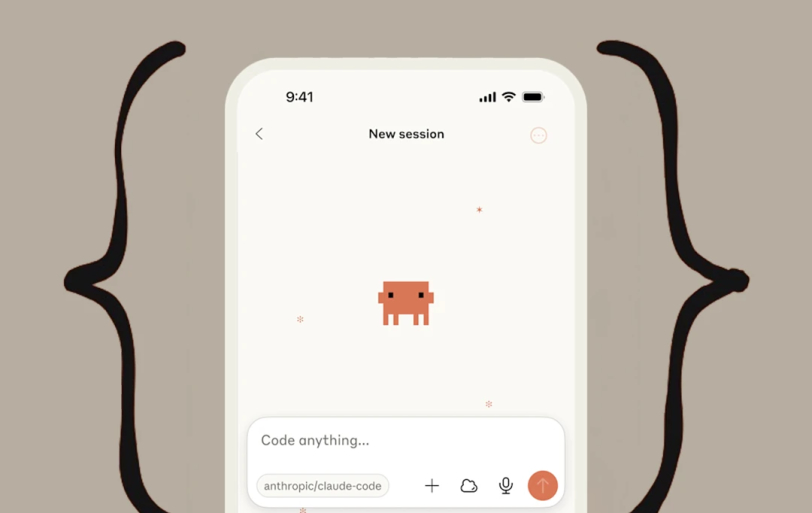
Anthropic launched a web application for its popular AI coding assistant Claude Code, marking a significant expansion beyond its command-line origins as the company aims to make AI-powered development accessible directly from browsers.
The new web interface, now available in beta as a research preview, allows developers to manage multiple AI coding agents simultaneously without opening a terminal. The launch comes as Claude Code has experienced explosive growth, with a 10x increase in users since its broader release in May and now generates more than $500 million in annualized revenue for Anthropic, according to TechCrunch.
Cloud-Based Coding Revolution
Available to subscribers of Anthropic's Pro ($20/month) and Max ($100-$200/month) plans, Claude Code for web enables developers to connect GitHub repositories, describe their needs, and let the AI handle implementation autonomously. Users can access the service at claude.ai by clicking the "Code" tab.
"As we look forward, one of our key focuses is making sure the CLI product is the most intelligent and customizable way for you to use coding agents," Cat Wu, Anthropic Product Manager, told TechCrunch. "But we're continuing to put Claude Code everywhere, helping it meet developers wherever they are. Web and mobile are a big step in this direction."
The platform allows developers to run multiple coding tasks in parallel across different repositories from a single interface, with each session operating in its own isolated environment featuring real-time progress tracking. Developers can actively guide Claude while it works through tasks, with automatic pull request creation and clear change summaries.
Mobile Expansion and Security Architecture
In addition to the web launch, Anthropic introduced Claude Code for iOS as part of the research preview, enabling developers to review code, run small tasks, and monitor ongoing coding sessions from their mobile devices. The company acknowledges this is an early preview and plans to refine the mobile experience based on user feedback.
Security remains paramount in the cloud execution model. According to Anthropic's announcement, every Claude Code task runs in an isolated sandbox environment with strict network and filesystem restrictions. Git interactions are handled through a secure proxy service that ensures Claude can only access authorized repositories, protecting code and credentials throughout the workflow.
Developers can configure custom network settings to control which domains Claude Code can connect to from its sandbox, such as allowing access to download npm packages for testing and validation purposes.
Shifting Developer Workflows
The web interface is particularly suited for specific use cases, including answering questions about project architecture, handling bug fixes and routine tasks, and backend changes where Claude Code can employ test-driven development to verify modifications.
Remarkably, Anthropic claims that 90% of Claude Code itself is written by the company's AI models. Wu, formerly an engineer, revealed she rarely writes code manually anymore, primarily reviewing Claude Code's outputs instead.
This shift represents a broader transformation in software development. CEO Dario Amodei predicted earlier this year that AI should soon write 90% of code for software engineers. While this may already be reality within Anthropic, the transition across the broader technology industry faces mixed reception.
While the terminal will likely remain Claude Code's home base, Anthropic's expansion to web and mobile platforms signals a commitment to meeting developers wherever they work. The cloud-based sessions share rate limits with all other Claude Code usage, maintaining consistency across platforms.

By Arpit Dubey
Arpit is a dreamer, wanderer, and tech nerd who loves to jot down tech musings and updates. With a knack for crafting compelling narratives, Arpit has a sharp specialization in everything: from Predictive Analytics to Game Development, along with artificial intelligence (AI), Cloud Computing, IoT, and let’s not forget SaaS, healthcare, and more. Arpit crafts content that’s as strategic as it is compelling. With a Logician's mind, he is always chasing sunrises and tech advancements while secretly preparing for the robot uprising.
// Recommended
Pinterest Follows Amazon in Layoffs Trend, Shares Fall by 9%
AI-driven restructuring fuels Pinterest layoffs, mirroring Amazon’s strategy, as investors react sharply and question short-term growth and advertising momentum.

Clawdbot Rebrands to "Moltbot" After Anthropic Trademark Pressure: The Viral AI Agent That’s Selling Mac Minis
Clawdbot is now Moltbot. The open-source AI agent was renamed after Anthropic cited trademark concerns regarding its similarity to their Claude models.

Amazon Bungles 'Project Dawn' Layoff Launch With Premature Internal Email Leak
"Project Dawn" leaks trigger widespread panic as an accidental email leaves thousands of Amazon employees bracing for a corporate cull.

OpenAI Launches Prism, an AI-Native Workspace to Shake Up Scientific Research
Prism transforms the scientific workflow by automating LaTeX, citing literature, and turning raw research into publication-ready papers with GPT-5.2 precision.

Have newsworthy information in tech we can share with our community?

Related Content