AI Trickster Poses as Marco Rubio in a Bold Scam Targeting US Officials
Date: July 09, 2025
The US State Department investigates high-tech deception of officials and ministers as fake voice messages and texts spark alarm.
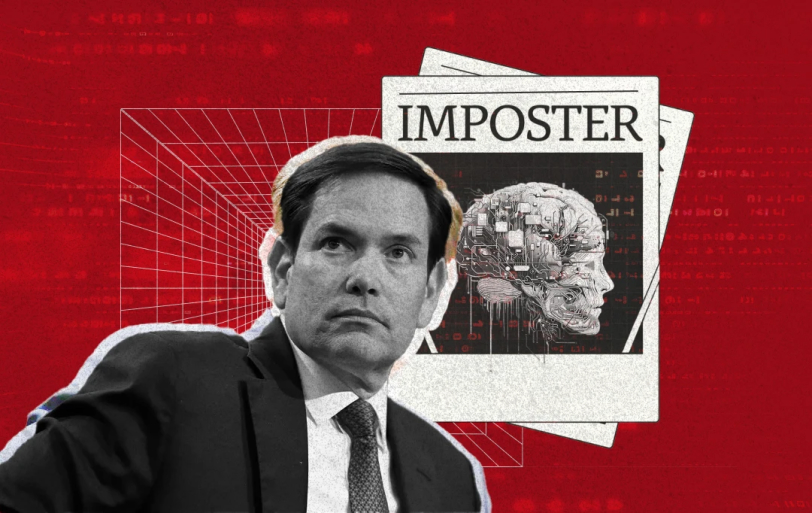
A cyber impostor using artificial intelligence impersonated U.S. Secretary of State Marco Rubio to contact high-profile officials. According to a State Department cable dated July 3, the unknown culprit utilized AI-generated voice messages and texts to contact three ministers.
The scam began in mid-June when the impostor created a Signal account under the display name “marco.rubio@state.gov,” a fake address mimicking official State Department credentials. The fraudster sent convincing voicemails and texts, attempting to trick recipients into sharing sensitive information or access to accounts using a Signal account.
The State Department cable stated,
“There is no direct cyber threat to the department from this campaign, but information shared with a third party could be exposed if targeted individuals are compromised."
A Wake-Up Call for Cybersecurity
David Axelrod, former senior adviser to President Barack Obama, also shared his opinion about the incident’s implications on X. He mentioned,
“A Marco Rubio impostor is using AI voice to call high-level officials…This is the new world in which we live, and we’d better figure out how to defend against it because of its implications for our democracy and the world.”
His call for urgent action underscores the broader threat: as AI tools grow more advanced, distinguishing fact from fiction becomes a high-stakes challenge for governments and individuals alike.
What’s Next?
While Senator Rubio has yet to comment directly on the matter, sources close to his office have indicated that steps are being taken to address the breach. Law enforcement is already investigating, and experts are calling for new regulations to manage the ethical and security concerns surrounding AI technology.
For now, this scam serves as a stark reminder of how much we need to rethink our approach to digital security. If we don’t find a way to protect against AI misuse, this could become a much larger problem than anyone anticipated.

By Arpit Dubey
Arpit is a dreamer, wanderer, and tech nerd who loves to jot down tech musings and updates. With a knack for crafting compelling narratives, Arpit has a sharp specialization in everything: from Predictive Analytics to Game Development, along with artificial intelligence (AI), Cloud Computing, IoT, and let’s not forget SaaS, healthcare, and more. Arpit crafts content that’s as strategic as it is compelling. With a Logician's mind, he is always chasing sunrises and tech advancements while secretly preparing for the robot uprising.
// Recommended
Pinterest Follows Amazon in Layoffs Trend, Shares Fall by 9%
AI-driven restructuring fuels Pinterest layoffs, mirroring Amazon’s strategy, as investors react sharply and question short-term growth and advertising momentum.

Clawdbot Rebrands to "Moltbot" After Anthropic Trademark Pressure: The Viral AI Agent That’s Selling Mac Minis
Clawdbot is now Moltbot. The open-source AI agent was renamed after Anthropic cited trademark concerns regarding its similarity to their Claude models.

Amazon Bungles 'Project Dawn' Layoff Launch With Premature Internal Email Leak
"Project Dawn" leaks trigger widespread panic as an accidental email leaves thousands of Amazon employees bracing for a corporate cull.

OpenAI Launches Prism, an AI-Native Workspace to Shake Up Scientific Research
Prism transforms the scientific workflow by automating LaTeX, citing literature, and turning raw research into publication-ready papers with GPT-5.2 precision.

Have newsworthy information in tech we can share with our community?
Related Content