3-Mile Island Being Revived To Power Microsoft Data Centers
Date: September 23, 2024
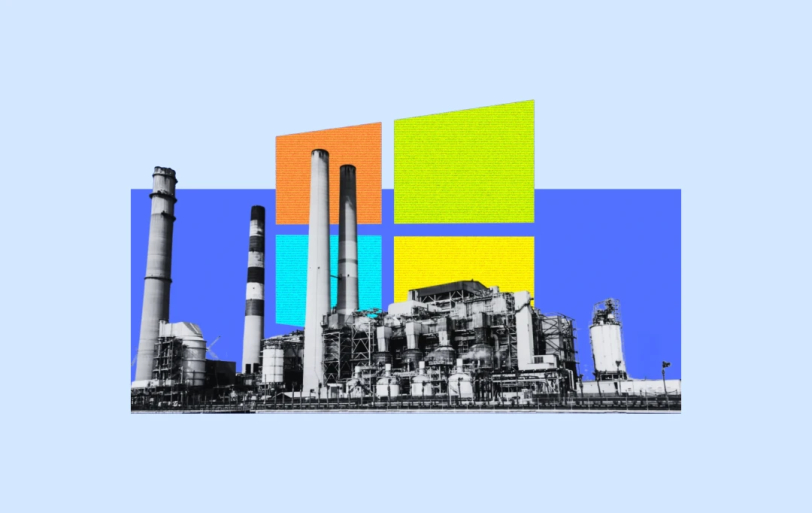
Microsoft is making a remarkable move by restarting an infamous three-mile island station with a powerful nuclear power production capability.
A new war is emerging due to the boom of AI. It is the war for maximum power sanctions to fuel their humongous consumption needs. Amid a growing drought of available power from the traditional grids, Microsoft is switching to nuclear power for a sustainable source. The Three Mile Island nuclear power station is being restarted as an in-house power station for Microsoft data centers.
Microsoft has struck a 20-year deal with Constellation Energy to draw power from the Crane Clean Energy Center, formerly known as Three Mile Island Nuclear Generating Station. The standalone island on the Susquehanna River in Londonderry Township, near Harrisburg, Pennsylvania, has a long history with one of the deadliest commercial nuclear accidents in US history.
However, the 1979 nuclear disaster’s official casualty count has remained zero to date. This was also registered as the world’s third worst in the history of mankind after Chornobyl and Fukushima. Contrary to common belief, Unit 1 of the nuclear reactor remained operational up until 2019, when it was decommissioned for economic reasons.
That’s why Microsoft’s effort will get both immediate and long-term results by pursuing nuclear power from the 3-mile island. According to Microsoft’s agreement with Constellation, the 837-MW unit 1 reactor will require much more than just a jumpstart to begin operations. A lot of work has to be done to ensure on-premise safety and prevention of hazards by repurposing the turbine, generator, main power transformer, and coolant and control systems.
"This agreement is a major milestone in Microsoft's efforts to help decarbonize the grid in support of our commitment to become carbon-negative. Microsoft continues to collaborate with energy providers to develop carbon-free energy sources to help meet the grids' capacity and reliability needs," said Bobby Hollis, VP of Energy Microsoft.
The race for more power to fuel the generative AI demand at the consumer and business levels is unmatchable by the existing grids. The consumption of data centers in the US alone is expected to grow to 35 GW by 2030. This number can also be subjected to explosive expansion, owing to the lack of future outlook on AI advancements. Big tech players are at the front of the line, with regulators and local power authorities keeping them in check for now. New policies to monitor and control power distribution are under development for the biggest makers of AI apps.

By Arpit Dubey
Arpit is a dreamer, wanderer, and tech nerd who loves to jot down tech musings and updates. With a knack for crafting compelling narratives, Arpit has a sharp specialization in everything: from Predictive Analytics to Game Development, along with artificial intelligence (AI), Cloud Computing, IoT, and let’s not forget SaaS, healthcare, and more. Arpit crafts content that’s as strategic as it is compelling. With a Logician's mind, he is always chasing sunrises and tech advancements while secretly preparing for the robot uprising.
// Recommended
Pinterest Follows Amazon in Layoffs Trend, Shares Fall by 9%
AI-driven restructuring fuels Pinterest layoffs, mirroring Amazon’s strategy, as investors react sharply and question short-term growth and advertising momentum.

Clawdbot Rebrands to "Moltbot" After Anthropic Trademark Pressure: The Viral AI Agent That’s Selling Mac Minis
Clawdbot is now Moltbot. The open-source AI agent was renamed after Anthropic cited trademark concerns regarding its similarity to their Claude models.

Amazon Bungles 'Project Dawn' Layoff Launch With Premature Internal Email Leak
"Project Dawn" leaks trigger widespread panic as an accidental email leaves thousands of Amazon employees bracing for a corporate cull.

OpenAI Launches Prism, an AI-Native Workspace to Shake Up Scientific Research
Prism transforms the scientific workflow by automating LaTeX, citing literature, and turning raw research into publication-ready papers with GPT-5.2 precision.

Have newsworthy information in tech we can share with our community?

Related Content