Artificial Intelligence Is About To Change The Mobile Payment Apps That We Know Today

Date: May 09, 2025
Mobile app are taking help from AI more than our knowledge
In recent years mobile apps have dramatically affected almost every business sector with its invasion. The integration of mobile app technology in the banking industry has proven the most efficient way to digitize the payment process. Now, the artificial intelligence is acting as a tool to evolve the mobile apps in order to make them smarter. Against to what we thought, the mobile payment process is integrating the AI technology sooner than we expected.
Artificial intelligence is the stream of technology that homes the terms like machine learning, Predictive Analysis, Speech to Text, Natural Language Processing (NLP), Machine Vision, Image Recognition, and Expert Systems. Most of the payment mobile apps are already leveraging technologies such as chatbots and text recognition systems, P2P money transfer and streamlined payment. The money transaction services such as PayPal are integrating their chatbots to the social media apps to enable the user to make a transaction within the app between the contacts.
However, along with these AI integrations in the mobile payment services are continuously exploring the AI to solve the payment process. Here are some ways AI is revolutionizing the mobile payment applications.
1. Saving Time And Effort With Grab and Go Applications
In order to provide service that focuses on saving the user’s time and effort the mobile applications let users do shopping without any hassle. With the help of speech recognition, pre-order via text and making payment through bots users can buy anything from the store using the app. This will help the users in ditching the need of going to the shop and standing in the queue to make a payment, just go and grab the ordered item.
2. Machine Learning Enhances The Fraud Detection Service
Fraud detection system needs to be updated with the time and traditional methods and ways are no longer capable of detecting the fraudulent activities now. In order to make sure the flawless security of the payment system, all the transaction needs to be observed without any scope of error. A large number of transaction requires being reviewed manually in order to put a curb on the fraud payment activities. Machine learning equipped fraud detection systems have been used by the payment services to secure the payment process. The system is capable of improving itself consistently by learning every time any fraudulent payment detected to cope up with the different tactics of the fraudsters. In addition, the system also reviews the immense amount of transactions easily. This application gives the glimpse of the potential future of AI in the security and protection system.
3. Machine Learning Helps In Reducing False declines
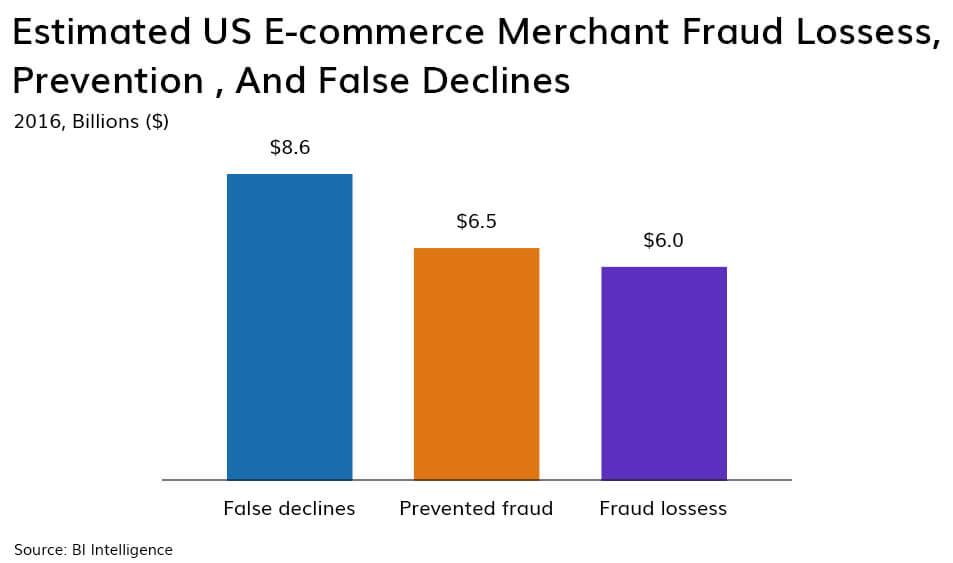
According to a report from the BI intelligence, false declines considered as the non-fraudulent transaction causes more loss to the companies than a fraudulent transaction. This makes the implementation of machine learning security system with predictive capabilities necessary to reduce the false declines. The report states that Falsely decline transactions caused an $8.6 billion loss in 2016, whereas the actual fraud loss projected as $6.5 billion in 2016.
The mobile payment system is expected to explore new ways of leveraging the AI in coming time. Let us know what you think about recent AI news, advancement and controversies over the past few months via comments.

By Arpit Dubey
Arpit is a dreamer, wanderer, and tech nerd who loves to jot down tech musings and updates. With a knack for crafting compelling narratives, Arpit has a sharp specialization in everything: from Predictive Analytics to Game Development, along with artificial intelligence (AI), Cloud Computing, IoT, and let’s not forget SaaS, healthcare, and more. Arpit crafts content that’s as strategic as it is compelling. With a Logician's mind, he is always chasing sunrises and tech advancements while secretly preparing for the robot uprising.
// Recommended
Pinterest Follows Amazon in Layoffs Trend, Shares Fall by 9%
AI-driven restructuring fuels Pinterest layoffs, mirroring Amazon’s strategy, as investors react sharply and question short-term growth and advertising momentum.

Clawdbot Rebrands to "Moltbot" After Anthropic Trademark Pressure: The Viral AI Agent That’s Selling Mac Minis
Clawdbot is now Moltbot. The open-source AI agent was renamed after Anthropic cited trademark concerns regarding its similarity to their Claude models.

Amazon Bungles 'Project Dawn' Layoff Launch With Premature Internal Email Leak
"Project Dawn" leaks trigger widespread panic as an accidental email leaves thousands of Amazon employees bracing for a corporate cull.

OpenAI Launches Prism, an AI-Native Workspace to Shake Up Scientific Research
Prism transforms the scientific workflow by automating LaTeX, citing literature, and turning raw research into publication-ready papers with GPT-5.2 precision.

Have newsworthy information in tech we can share with our community?

Related Content