- 1. OWASP Mobile Application Security Verification Standard (MASVS)
- 2. OWASP MASWE (Mobile Application Security Weakness Enumeration)
- 3. PCI DSS v4.0 (Payment Card Industry Data Security Standard)
- 4. NIST 800-53 Revision 5
- 5. CVE Standards (Common Vulnerabilities and Exposures)
- 6. ISO/IEC 27001 & 27002 (Information Security Management Systems)
- 7. SOC 2 (Service Organization Control Type II)
- 8. SBOM Standards (Software Bill of Materials – SPDX, CycloneDX)
 Share It On:
 A single overlooked SDK can turn your mobile app into an attack surface overnight. In 2026, mobile app security standards define whether your product survives audits, breaches, and enterprise scrutiny. From MASVS to PCI DSS and SBOM visibility, this
 Forget the "nice-to-haves." In 2026, mobile app security standards are the only thing standing between your company and a televised Senate hearing. We are looking at a market projected to hit $30.8 billion by 2030 (Research and Markets), not because CEOs suddenly love compliance, but because the alternative is extinction.
"We don't have a cybersecurity problem – we have a software quality problem. We don't need more security products – we need more secure products."
— Jen Easterly, Director, CISA
Most boardrooms ignored this memo, and here is the cold reality: as an SNS Insider report states, 42% of enterprise data breaches now start with a mobile app. If you are still treating security as a final checklist item before pushing to the App Store, you are already compromised. This is one of the defining mobile security trends of the decade: attackers go where distribution is easiest, and trust is highest.
For apps handling sensitive onboarding, financial access, or identity verification, the stakes are even higher. Whether it is biometric checks, document uploads, or parsing passport data through an MRZ (Machine Readable Zone), every integration point becomes part of your attack surface.
Satya Nadella recently gave his engineers a binary choice that defines this new era:
"If you’re faced with the trade-off between security and another priority, your answer is clear: Do security."
— Satya Nadella, CEO, Microsoft
He wasn't kidding. But he left out the ugly part: even with that mindset, your foundation is being hammered by automated AI agents 24/7. The perimeter is gone. Your code is the perimeter. The growing overlap between AI and cybersecurity has accelerated both attack automation and defensive monitoring at a scale most teams were never built to handle.
|
Secure Your Code Before You Ship. Browse our directory of elite cybersecurity experts . |
Critical Mobile App Security Standards to Keep a Check On in 2026
Mobile security in 2026 is no longer about isolated compliance checklists — it is about aligning development, governance, and real-time threat visibility under unified standards. The following frameworks define how serious organizations design, test, audit, and continuously defend their mobile applications against modern attack surfaces.
1. OWASP Mobile Application Security Verification Standard (MASVS)
- Core focus: Security testing depth and coverage
- Industry: Mobile application development and assurance
- Maintained by: OWASP
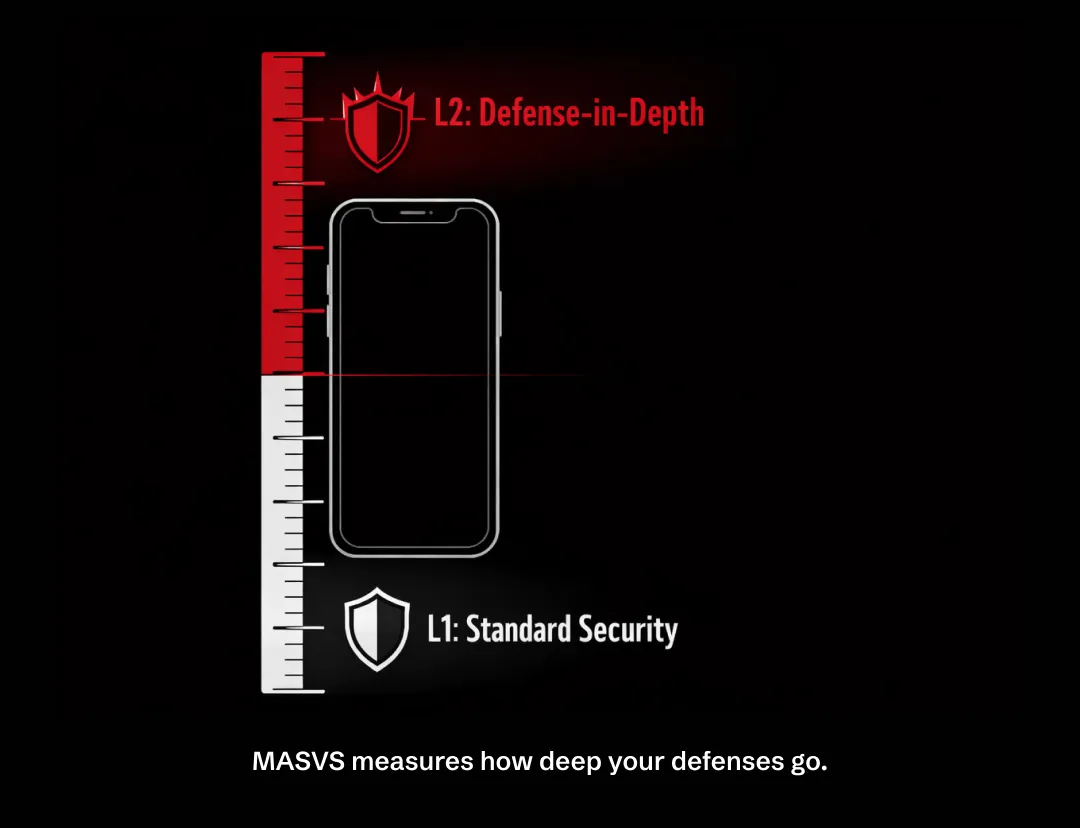
MASVS pairs naturally with MASWE, but they do different jobs.
MASWE explains what can go wrong. MASVS defines how thoroughly you checked. It introduces security levels (L1, L2, R) that indicate how deep testing went, from baseline protections to hardened, high-risk environments.
For mobile apps, MASVS is often used during penetration testing or pre-release assurance. It also integrates naturally into modern mobile app testing workflows, especially where automated validation and continuous integration pipelines are involved. Instead of saying “we tested the app,” teams can say “this release meets MASVS L2,” which immediately communicates scope and seriousness to auditors and clients.
MASVS becomes especially relevant when security testing is outsourced. It prevents shallow assessments that technically “pass” but miss entire classes of mobile-specific issues like IPC abuse, insecure inter-app communication, or improper certificate validation.
If MASWE reduces confusion for developers, MASVS reduces ambiguity for everyone else.
2. OWASP MASWE (Mobile Application Security Weakness Enumeration)
- Core focus: Weakness enumeration and classification
- Industry: Mobile and general software development
- Maintained by: OWASP
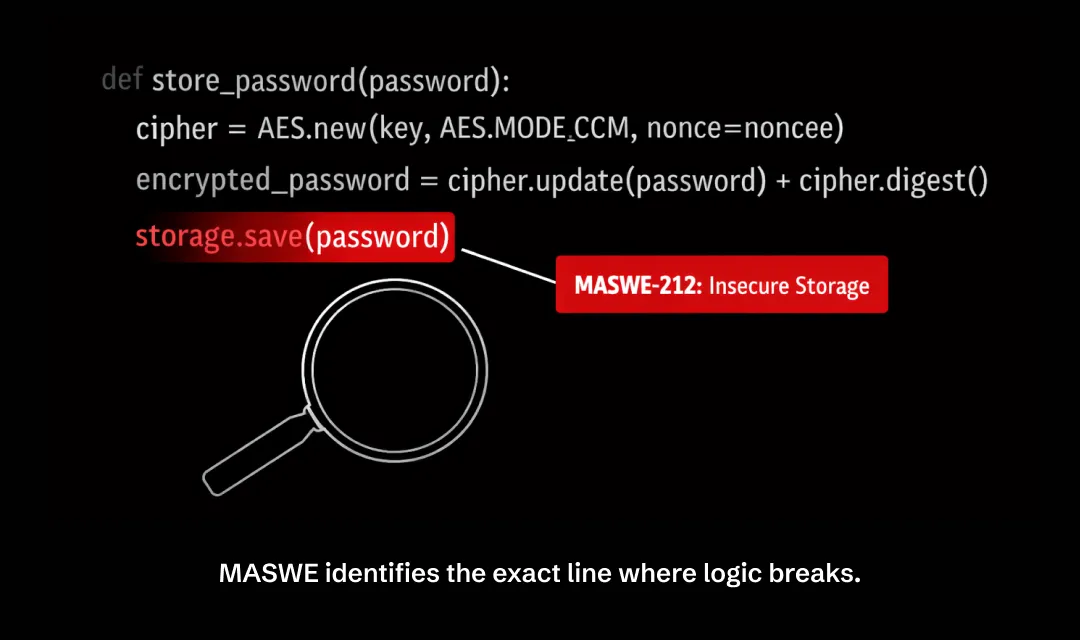
Most mobile teams say they “follow OWASP,” but what they usually mean is that they skim the Mobile Top 10 once a year. That list is useful, but it stays abstract on purpose. MASWE exists because abstraction breaks down the moment you’re staring at real code during active app development cycles.
MASWE is not a checklist of risks. It is a catalogue of how those risks actually appear in mobile applications. Instead of stopping at “Insecure Data Storage,” it describes the specific ways developers get it wrong: credentials cached in plaintext preferences, encryption keys hardcoded for convenience, backups silently copying sensitive files to the cloud, or logout flows that never truly invalidate local state.
That difference matters during audits. When a finding is framed as a MASWE weakness, it points directly to a code pattern or configuration decision. Engineers don’t have to guess what the auditor meant. They can trace the issue, reproduce it, and fix it without translating security language into development reality.
After the 2025 OWASP updates, MASWE leaned heavily into problems that reflect modern mobile delivery. Supply chain weaknesses are now central, not edge cases. SDK updates, CI/CD signing, dependency resolution, and build integrity are treated as attack vectors because that’s where real incidents are coming from. Error handling also received more attention, largely because crashes, retries, and silent failures often leak more information than success paths — sometimes triggered by simple UX mistakes that can invite security risks.
Teams that work with MASWE daily don’t feel “more secure.” They feel less confused. That’s the real gain.
3. PCI DSS v4.0 (Payment Card Industry Data Security Standard)
- Core focus: Payment security and client-side protection
- Industry: Finance, e-commerce, fintech
- Governed by: PCI Security Standards Council
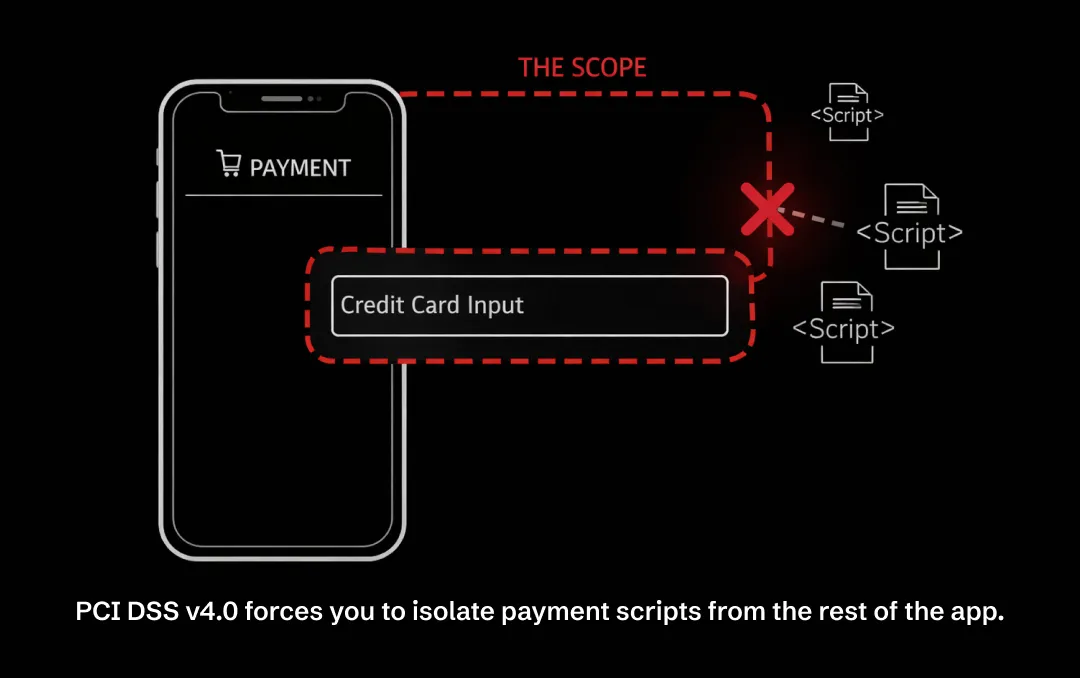
PCI DSS used to live comfortably on the server side. Mobile teams could argue that payments were handled elsewhere, usually by a gateway or embedded checkout. Version 4.0 quietly closed that escape hatch.
As of March 31, 2025, the transition period ended, and mobile apps that render payment flows are fully in scope. If your app loads a payment page inside a webview, executes JavaScript during checkout, or runs third-party SDKs alongside card entry, PCI applies directly to the client.
The uncomfortable part is script responsibility. PCI DSS v4.0 assumes that if code runs in your payment flow, you are accountable for it. That includes analytics libraries, monitoring tools, A/B testing scripts, and anything else that shares execution space with card data. If one of those scripts is compromised and skims information, it is treated as a failure of control, not bad luck.
Auditors now expect teams to know exactly what runs during payment interactions and to prove that changes are detected. “We trust the vendor” is no longer a defensible position. You are expected to limit what loads, isolate what can’t be removed, and monitor the rest continuously.
This has forced design changes. Many apps now strip payment screens down to the bare minimum, disabling non-essential SDKs entirely. It’s less elegant, but it passes audits and reduces blast radius. Given the size of ongoing fines for non-compliance, most organizations don’t debate the trade-off for long.
4. NIST 800-53 Revision 5
- Core focus: Security and privacy controls
- Industry: Government, defense, regulated enterprise
- Published by: National Institute of Standards and Technology
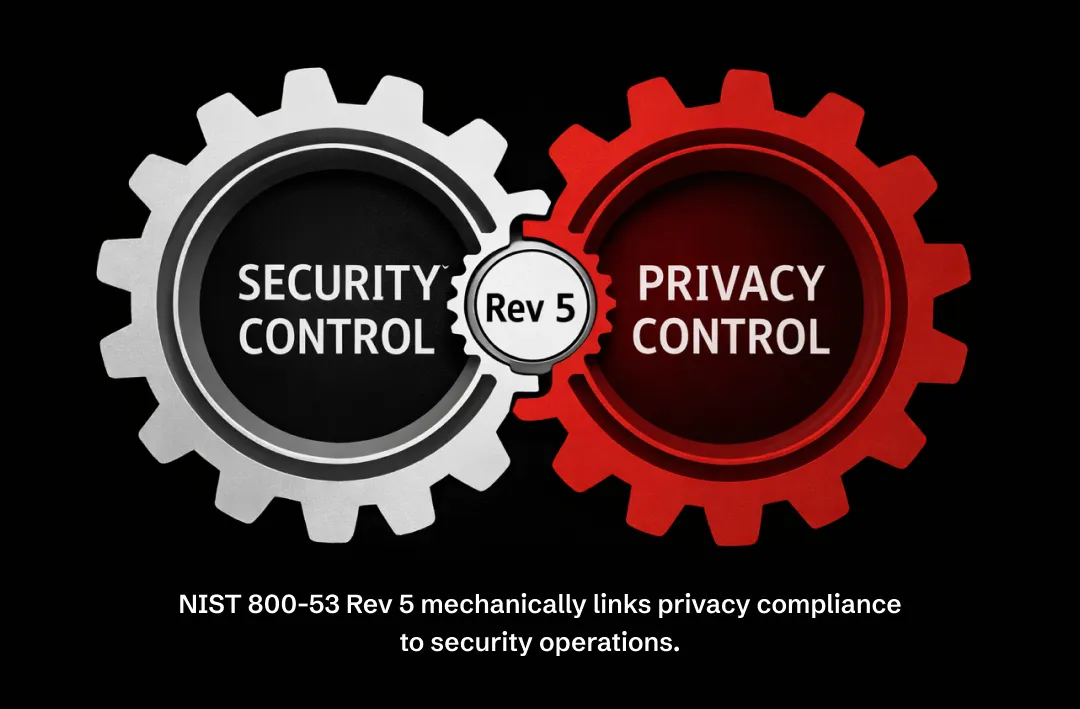
NIST 800-53 has always been heavy, but Revision 5 changed what is considered heavy. Earlier versions treated privacy as something adjacent to security. Rev 5 folds it directly into the control set.
For mobile applications, this shows up in uncomfortable places. Analytics pipelines, diagnostic logs, background telemetry, and passive data collection are no longer neutral implementation details. They are evaluated as security controls. Collecting more data than necessary is treated as a weakness, even if the data is well encrypted. In regulated regions, alignment with GDPR expectations and structured data minimization policies has become inseparable from technical compliance reviews.
Revision 5 also formalized supply chain risk management in a way that mobile teams can’t ignore. Third-party SDKs, external APIs, and cloud services now fall under explicit control requirements, including stricter enforcement of mandatory access control policies in enterprise environments.
5. CVE Standards (Common Vulnerabilities and Exposures)
- Core focus: Vulnerability identification and tracking
- Industry: Global cybersecurity operations
- Managed by: CVE Program
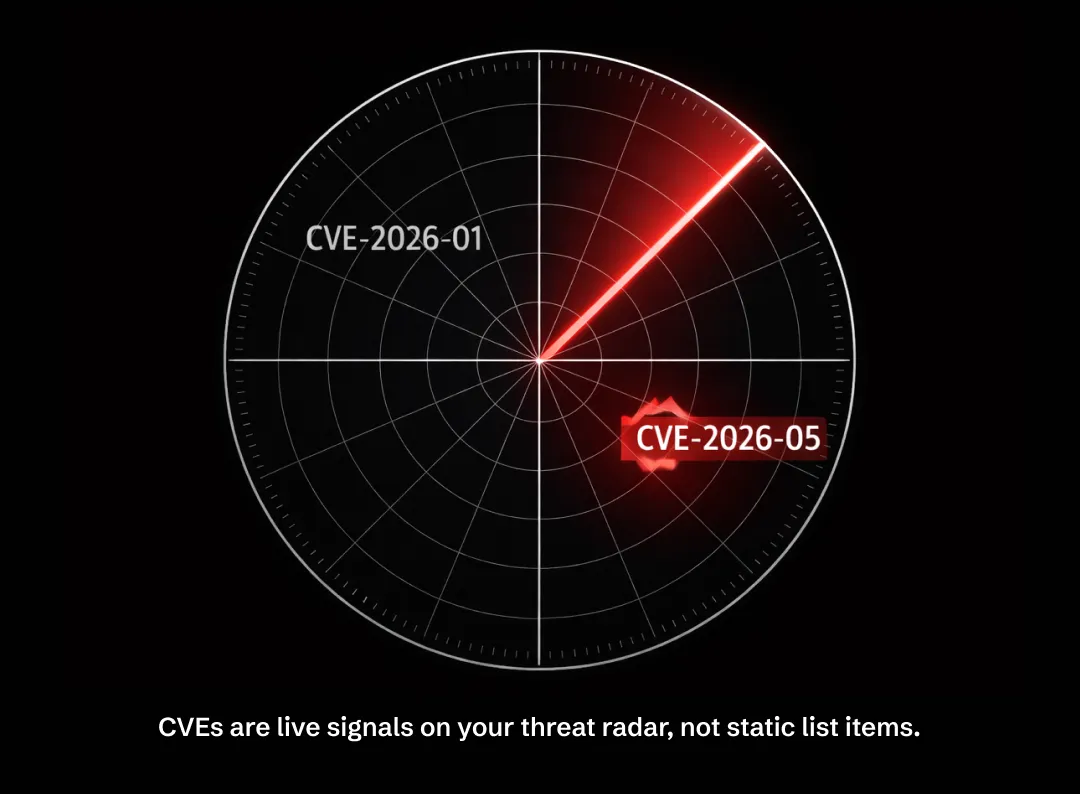
CVE used to be something security teams reviewed periodically. That mental model is outdated.
In 2025, the volume of disclosed vulnerabilities crossed a point where manual tracking stopped working. More importantly, exploitation speed increased. Mobile platforms, particularly Android, saw a rise in zero-click vulnerabilities that require no user interaction and lead directly to remote code execution.
Once these vulnerabilities are disclosed, they don’t sit idle. Proof-of-concept exploits circulate quickly, often within a day. Waiting for a scheduled release cycle to respond means accepting known exposure.
Modern mobile teams treat CVEs as live signals, not reference entries. Vulnerability feeds are tied to software bills of materials, so teams can immediately answer a simple question: Does this affect us or not? If the answer is yes, fixes move through emergency paths that bypass normal feature prioritization. This level of responsiveness is often what separates a mature app development company from teams that still rely on reactive security cycles.
At this point, failing to react to CVEs isn’t a matter of risk appetite. It’s a visibility problem, and attackers benefit from it every time.
6. ISO/IEC 27001 & 27002 (Information Security Management Systems)
- Core focus: Organizational security governance
- Industry: Enterprise, SaaS, regulated global businesses
- Published by: International Organization for Standardization
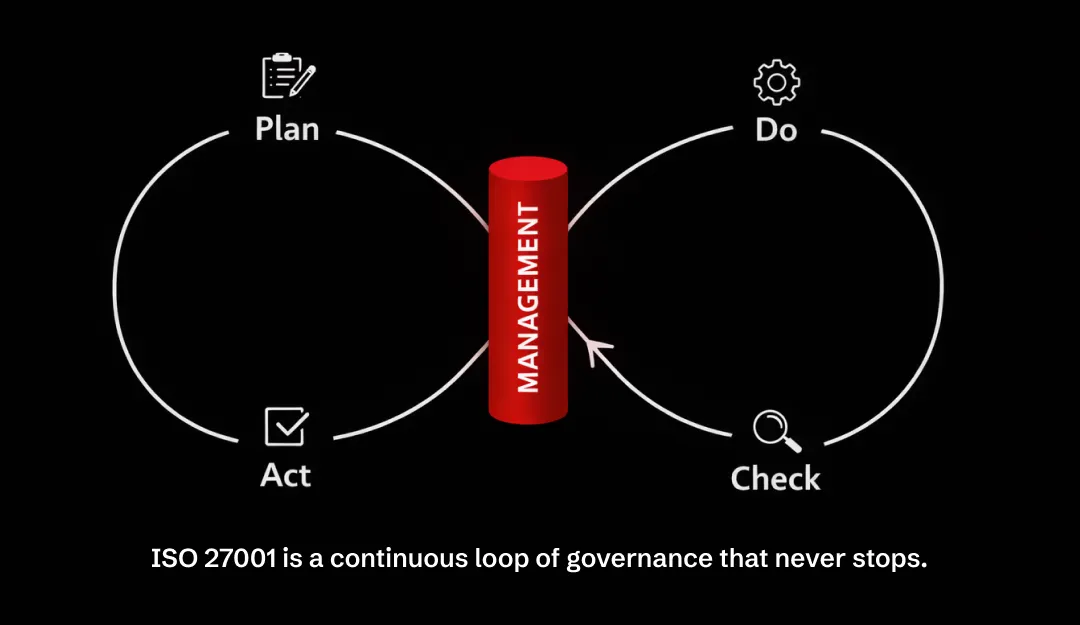
ISO 27001 doesn’t tell you how to write secure mobile code, and that’s exactly why it complements the standards you already have. In enterprise environments where digital compliance in IT is audited continuously, ISO becomes less about certification and more about operational credibility.
Where MASWE and CVEs deal with technical reality, ISO 27001 deals with organizational behavior. It answers questions that auditors and enterprise buyers quietly care about:
- Who owns mobile security decisions?
- How are risks reviewed when the app changes?
- What happens when a breach occurs at 2 a.m.?
For mobile teams, ISO 27001 usually shows up indirectly. It affects how releases are approved, how incidents are handled, and whether security decisions survive staff turnover. ISO 27002 adds practical guidance around access control, asset management, logging, and supplier relationships, all of which map cleanly to mobile SDK usage and CI/CD pipelines.
This standard matters less for startups and more for companies selling into enterprises or operating across regions. It’s often the difference between “your app is secure” and “your company is trustworthy.”
7. SOC 2 (Service Organization Control Type II)
- Core focus: Trust, availability, and data protection over time
- Industry: SaaS, cloud-backed mobile platforms
- Issued by: American Institute of CPAs
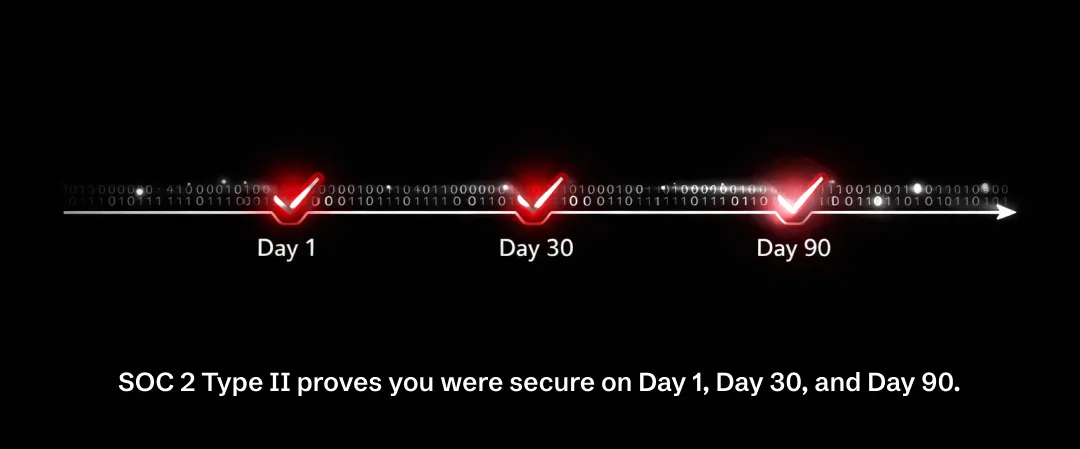
SOC 2 is not mobile-specific, but mobile apps that rely heavily on backend services are increasingly judged by it.
SOC 2 Type II focuses on whether controls work consistently over time, not just on paper. For mobile ecosystems, this affects:
- Authentication flows
- Session handling
- Data synchronization
- Incident response processes
While the audit is backend-heavy, mobile teams feel its impact. Logging, monitoring, access controls, and deployment practices must align with the guarantees made in the SOC report. A mobile app that bypasses or weakens those controls becomes a liability.
SOC 2 matters most when mobile apps are part of a broader platform sold to enterprises. Buyers may never ask about MASWE or CVEs directly, but they will ask for a SOC 2 report.
8. SBOM Standards (Software Bill of Materials – SPDX, CycloneDX)
- Core focus: Dependency transparency and traceability
- Industry: Enterprise security, government, supply-chain risk management
- Backed by: Linux Foundation
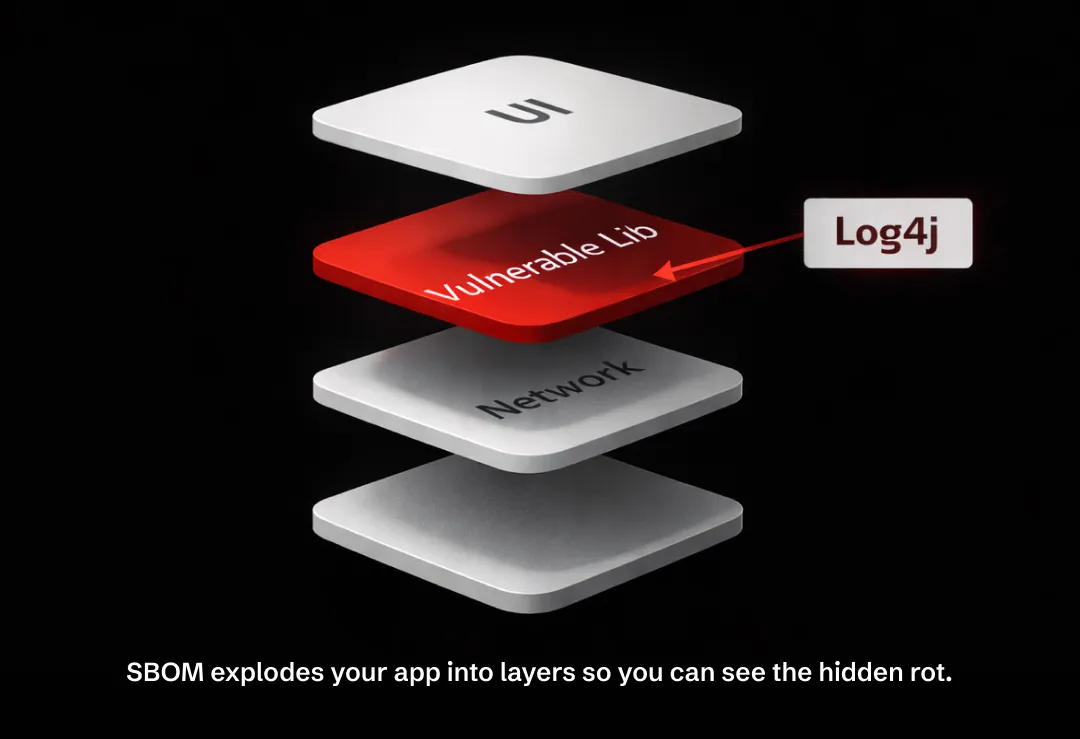
If CVEs represent the speed of threats, SBOMs represent visibility.
Modern mobile apps depend on dozens of libraries and SDKs, many of which update silently. SBOM standards like SPDX and CycloneDX provide a structured way to document exactly what’s inside an app at build time.
This visibility becomes especially important as teams experiment with AI in apps and integrate third-party AI SDKs whose update cycles move faster than traditional release governance.
In practice, SBOMs connect everything:
- CVE feeds can be matched automatically against app components
- Supply chain risks flagged by NIST 800-53 become traceable
- MASWE findings can be tied back to specific dependencies
SBOMs are becoming unavoidable in regulated environments and are increasingly requested in enterprise security reviews. They don’t prevent vulnerabilities, but they make ignorance impossible.

Conclusion: This Is Not About Checklists
OWASP MASWE and MASVS push teams closer to the code. PCI DSS v4.0 drags client-side payment flows into the spotlight. NIST 800-53 Rev 5 and ISO 27001 expand the conversation beyond encryption into governance, supply chain visibility, and data privacy accountability. CVEs and SBOM standards remove the excuse of “we didn’t know.”
Individually, each framework solves a narrow problem. Together, they define the modern landscape of mobile app security technologies — not as isolated tools, but as interconnected responsibilities that stretch from development to procurement to incident response, especially in a world increasingly shaped by AI in app security expectations.
The uncomfortable shift in 2026 is this: security can’t be episodic. It cannot live in quarterly audits, penetration test reports, or pre-release review cycles. It must be embedded in architecture decisions, dependency selection, CI/CD pipelines, and telemetry controls from day one.
For any of you still asking how to improve your mobile app security, the answer is rarely a new tool. It’s a structural discipline. It’s reducing unnecessary SDK exposure. It’s tying SBOM visibility to live CVE feeds. It’s limiting what runs inside payment flows. It’s documenting ownership and escalation paths before something breaks.
The best mobile app security practices now look almost boring from the outside — disciplined dependency tracking, minimized data collection, monitored SDK behavior, documented release controls, and continuous vulnerability response. But boring is stable. And stable is defensible.
The teams that adapt aren’t necessarily the most innovative. They’re the most consistent. They treat visibility as non-negotiable. They assume compromise is possible and design accordingly.
Security, at this point, is not a badge. It’s infrastructure.
And infrastructure is only invisible when it works.
Frequently Asked Questions
What are the biggest mobile app security standards in 2026?
The shift to AI-powered mobile app security is massive. We are also seeing a hard pivot toward "passwordless" authentication and end-to-end encryption for mobile apps becoming standard, even for non-financial apps.
How do you ensure the security of user data in your mobile applications?
Stop trying to build your own crypto. Use established libraries, follow mobile app encryption best practices, and implement a mobile app security checklist that includes API testing.
What are mobile security apps?
These are dedicated defense apps—think endpoint protection for phones. They act as the "immune system" for the device, offering real-time threat defence against malware and phishing.
How can I effectively secure mobile app user data?
Minimize what you collect. You can't lose what you don't have. For what you keep, ensure data security at rest and in motion using OWASP MASVS guidelines.
Is blockchain in app security actually useful?
Yes, but mostly for audit trails. Blockchain in the enterprise mobile app industry is great for proving who did what and when, which is critical for digital compliance in IT.
What role does Python play in secure app development?
Python in app development is huge for backend security tools and scripts. However, be careful with third-party Python libraries; they are a frequent vector for supply chain attacks.

Uncover executable insights, extensive research, and expert opinions in one place.
Related Content