Share It On:
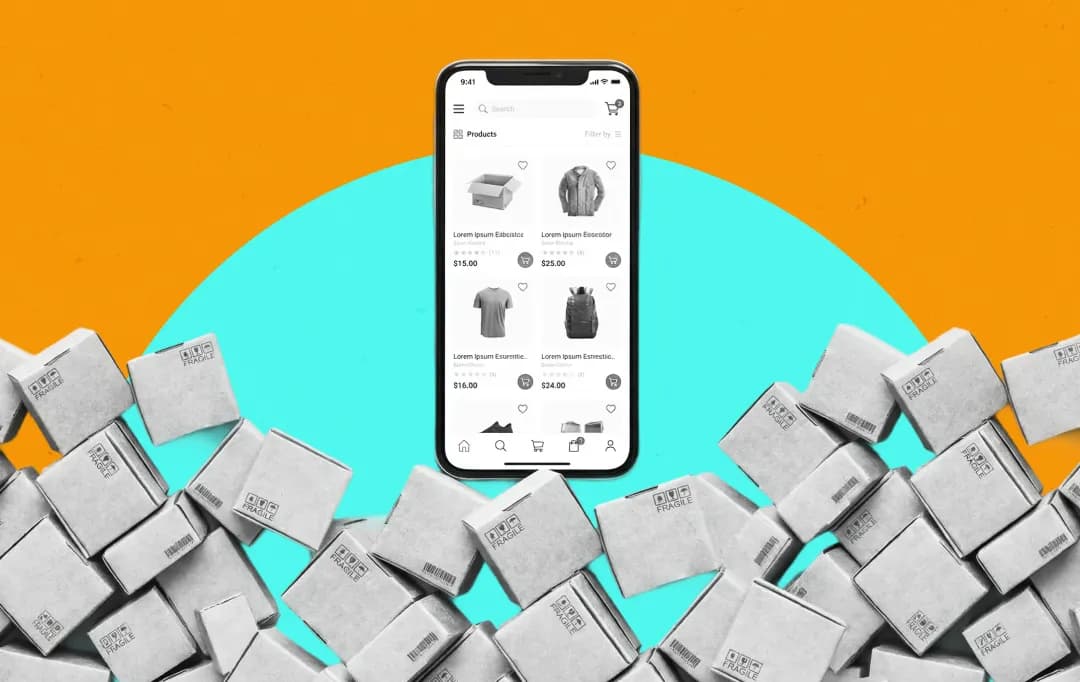 Discover the six key benefits of scaling through ecommerce apps and explore the transformative impact of AI, 5G, and headless architecture on the modern storefront.
In a world where people check their phones before anything, having a mobile-responsive website is the bare minimum. Thus, it goes without saying that if you don't have that, you’re already behind the curve. If you want to actually scale, you need to dive into the world of ecommerce application development.
Whether you’re a startup or a mid-sized brand, the Ecommerce app development benefits are no longer just "nice-to-haves"—they’re the backbone of survival in a hyper-competitive market.
Key Benefits of Ecommerce App Development
Why bother with an app when you have a website? Because an app is like a VIP pass to your customer’s pocket. Here are the key benefits of ecommerce apps that actually move the needle:
1. Loyalty Programs That Actually Work
Apps allow you to use push notifications—the ultimate "don't forget me" tool. Unlike emails that get lost in the spam abyss, push notifications have much higher open rates. You can gamify the experience with points, exclusive "app-only" drops, and rewards that keep users coming back for more.
2. Speed and Performance (No Lagging Allowed)
Mobile websites tend to be slower than mobile apps since they save information on the device. That additional speed is a game-changer in a world where a 2-second delay can take a sale away. The interface should be smooth and snappy to make sure that your users do not feel rage-quit and go to a competitor.
3. On Steroids of Personalization.
Your application is a personal channel to your user. You can follow their behavior and see what they like and strike them with personalized offers that actually make sense to them. We are referring to customized home feeds and product suggestions that give the sense that the app actually understands them.
4. Direct Marketing Channel 24/7
When a user downloads your application, he or she has guaranteed an everlasting presence on the most personal device. You can contact them at any time, regardless of the algorithm manipulations on social media or being hidden in your clogged inbox. It is the best means of remaining in mind, but not annoying.
5. Higher Conversion Rates
It’s a fact—users convert better on apps. Features like "one-click checkout" and integrated digital wallets make spending money way too easy (for the customer) and way more frequent (for you). When the friction is gone, the sales start flowing.
6. Deep Data Insights for Growth
Through the ecommerce application development process, you can integrate advanced analytics that show you exactly where users drop off. This level of granular data—like heatmaps and session recordings—helps you tweak your UX until it’s basically flawless, making your marketing spend much more efficiently.

Latest Technologies Used In Ecommerce App Development
If you’re going to build something, don’t build it with tech from 2018. The app development trends for 2026 are all about immersion and intelligence.
1. Generative AI for Shopping Assistants
We’re way past "Hello [Name]" emails. Modern apps use AI to predict what a user wants before they even know it. In fact, The AI shopping assistant market is valued at approximately $4.34 billion in 2025 and is projected to reach $37.45 billion by 2034, growing at a CAGR of 27%.
2. Augmented Reality (AR) "Try-Ons"
"Try before you buy" is the new vibe. AR-enabled apps are seeing a 25% CAGR growth as of 2026, allowing users to visualize products—be it a couch or a pair of kicks—in their own space. It drastically reduces return rates because people know exactly what they’re getting.
3. Headless Commerce Architecture
This tech separates the front-end from the back-end, giving you the flexibility to change the look of your app without breaking the engine. Around 60% of ecommerce companies were expected to adopt this by last year to ensure they can pivot their UI/UX faster than ever.
4. 5G-Enabled Ultra-Fast Experiences
With 5G becoming the standard, your app can handle heavy lifting like 4K video product demos and real-time inventory updates without breaking a sweat. It enables a "zero-latency" feel that was impossible just a few years ago.
5. Voice Commerce Integration
Thanks to smart assistants, voice search is blowing up. The global voice and speech recognition market is projected to hit $53.67 billion by 2030. Integrating voice search in your app makes shopping literally hands-free and accessible.
6. One-Tap Payments & Blockchain
Integrating Apple Pay, Google Pay, and even crypto wallets is essential. People want to pay and go. Blockchain is also creeping in for better supply chain transparency, letting customers see exactly where their high-end goods came from.
Key Challenges You May Face in Ecommerce App Development
It’s not all sunshine and rainbows. Building a high-performing app comes with its own set of "yikes" moments that you need to prep for.
1. Security & Data Privacy Nightmares
With regulations like GDPR and CCPA, you can't play fast and loose with user data. E-commerce apps are prime targets for hackers. Ensuring end-to-end encryption and secure payment gateways is a non-negotiable must. One breach and your brand reputation is toast.
2. Scalability During Peak Seasons
If your app crashes on Black Friday, you’re in trouble. Building an architecture that can handle sudden traffic spikes—going from 100 users to 100,000 in minutes—is one of the biggest hurdles for growing brands. You need a cloud-native setup that scales on the fly.
3. Platform and Device Fragmentation
Deciding between iOS, Android, or a cross-platform solution (like Flutter or React Native) is a headache. You want a consistent experience across all devices, but every screen size and OS version behaves differently. Testing for this is a marathon, not a sprint.
4. Navigating the SDLC and Timelines
Managing the SDLC (Software Development Life Cycle) without losing your mind is hard. From discovery and wireframing to coding and QA, projects often "scope creep" into oblivion. Staying on track requires a disciplined ecommerce mobile app development guide and a team that knows how to hit deadlines.
5. Managing the Ecommerce Mobile App Development Cost
Budgeting is tricky. Between hiring a top-tier ecommerce mobile app development company or partnering with an experienced app development agency that understands both scalability and user experience, and managing ongoing server costs, the bills add up. You have to decide where to splurge (like UI/UX) and where to save (like using third-party APIs).
6. User Retention & Maintenance
Getting someone to download the app is only half the battle. If you don't keep it updated with bug fixes and new features, users will delete it faster than a bad meme. Maintenance usually costs about 15-20% of the initial build every single year.
|
Avoid The Pitfalls! Partner with Ecommerce Development Companies in India and Enjoy a No-hiccup App |
The Future belongs to the Fast
Now, with all these ecommerce app development benefits, the gap between "standard" and "stellar" is widening. Consumers are tired of clunky interfaces and generic emails; they want experiences that feel intuitive, personal, and instant.
Choosing to invest in a mobile presence is a commitment to longevity. It’s a move that says you’re not just chasing today's sale, but building a home for your brand on the one device your customer never leaves behind. The question isn’t whether you can afford the ecommerce mobile app development cost, but whether you can afford to stay invisible in a mobile-first world.
Frequently Asked Questions
What are the biggest ecommerce mobile app advantages for growing brands?
The main win is "customer stickiness." Unlike a browser tab that gets closed and forgotten, an app lives on the home screen. It offers faster load times and offline access, which are massive advantages of mobile commerce apps when trying to lower bounce rates.
Why should you get an e-commerce application if you already have a website?
Think of it as the difference between a billboard and a personal assistant. An app allows for deep integration with phone features like cameras for AR and GPS for local deals. It’s the best way to offer a truly personalized, high-speed shopping journey.
What role do ecommerce app developers play in the success of the project?
They are the architects of your digital storefront. Expert ecommerce app developers don't just write code; they ensure your app is secure, follows the latest UX trends, and integrates seamlessly with your existing inventory and payment systems to prevent technical glitches.
How do the advantages of mobile commerce apps impact long-term ROI?
By boosting the Average Order Value (AOV) through AI-driven recommendations and "one-click" checkouts, apps significantly increase Life Time Value (LTV). While the upfront cost is higher, the massive jump in conversion rates usually makes the investment pay for itself quickly.

Uncover executable insights, extensive research, and expert opinions in one place.
Related Content