Share It On:
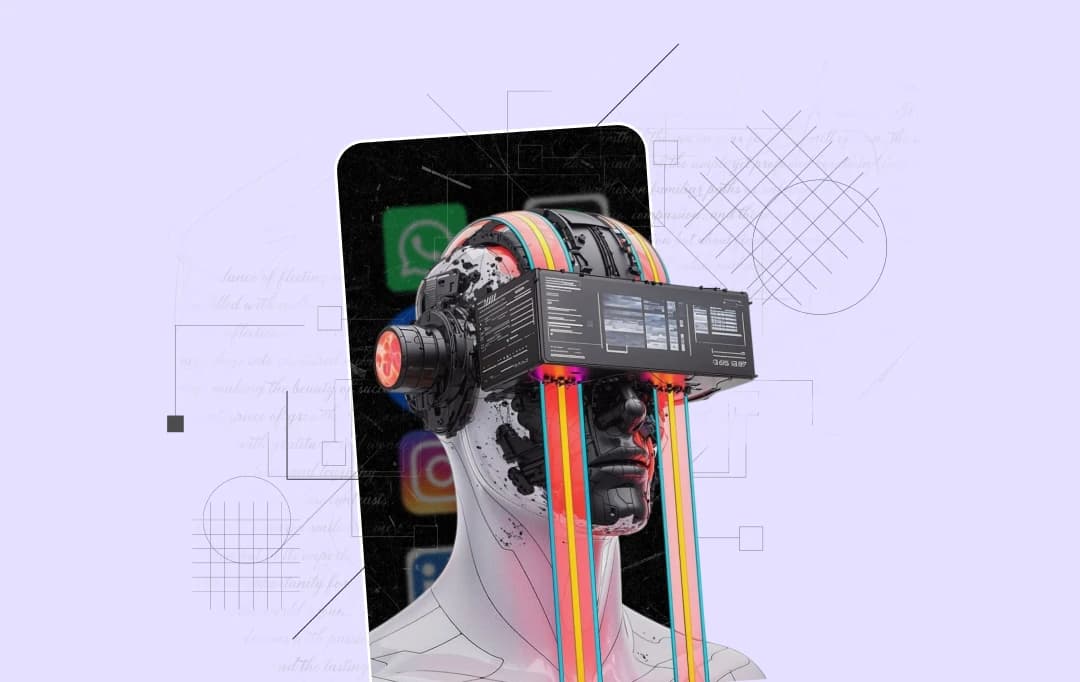 Discover how AI in mobile apps is redefining user experiences—eliminating bottlenecks, rethinking navigation, and unlocking transformative use cases that will shape mobile innovation in 2026.
Imagine reaching for your phone – something most of us do hundreds of times daily. Now, picture those interactions becoming less about tapping through menus and more like having an intuitive conversation. You're not alone if you've wished your apps understood you better. In fact, recent studies show a 60% user preference for more personalized and proactive app experiences. As we hurtle towards 2026, Artificial Intelligence isn't just a buzzword; it's the engine powering this shift.
Think about how apps like Spotify already curate personalized playlists or how Google Lens can identify objects in real-time. These are just glimpses of the advancements unfolding today, where AI isn't just a feature – it's the experience. Get ready to explore the top 5 groundbreaking ways AI in mobile apps is set to redefine how we connect, create, and navigate our digital lives in 2026. It's about to get a whole lot smarter.
Top 5 AI Use Cases in Mobile Apps for 2026
The mobile app landscape in 2026 is poised for a seismic shift, driven by the increasing sophistication and integration of AI in mobile apps.
| Use Case | AI Technologies Used | Real-World Example | Key Benefits | Future Outlook |
|---|---|---|---|---|
| Hyper-Personalized Shopping Experiences | Recommendation engines, predictive analytics, and user behavior modeling | Amazon app recommends not just products but related accessories based on past interactions | Boosts conversions, increases average order value, and builds customer loyalty | Dynamic merchandising, AI-generated offers, and emotion-based personalization |
| Intelligent Tutoring Systems in Education | Natural language processing (NLP), machine learning, and student behavior tracking | Khan Academy’s AI tutor "Khanmigo" adapts lessons to each student’s pace and gaps | Personalized learning, improved retention, and real-time feedback | AI tutors that support multimodal learning and emotional understanding |
| AI-Driven Diagnostics in Healthcare | Computer vision, deep learning, neural networks | SkinVision analyzes skin lesions using AI and smartphone cameras for early cancer detection | Early diagnosis, reduced human error, and scalable screening | Wider diagnostic use (e.g., heart, lungs), AI-integrated patient monitoring |
| AI-Powered Process Automation for Businesses | Robotic process automation (RPA), predictive analytics, and AI agents | UiPath is a leading company in the field of robotic process automation (RPA) that uses AI to streamline repetitive and rule-based business tasks | Increased efficiency, reduced costs, and smarter task assignment | Rise of autonomous enterprise apps with decision-making bots |
| AI-Generated Content Creation | Generative AI (LLMs), image generation models, and prompt engineering | Canva and Figma allow mobile users to create branded content and social posts using AI | Saves time, enables ideation, and democratizes content creation | On-device GenAI for real-time content editing and personalization |
Let's dive into the top 5 AI use cases in mobile apps that are set to redefine our interactions in the coming year.
1. Hyper-Personalized Shopping Experiences
Imagine opening your shopping app and finding exactly what you need, without even typing a word. That’s the magic of artificial intelligence mobile apps in 2026. These apps learn from your browsing patterns, previous purchases, and even your scrolling habits to deliver hyper-personalized product recommendations. Whether suggesting hiking boots based on your recent interest in camping gear or offering a curated outfit that matches your taste, the experience becomes uniquely tailored.
This smart personalization not only boosts user satisfaction but also drives serious business results—studies show brands see a 10–15% revenue lift through AI-driven recommendations. And as personalization goes deeper with dynamic pricing and smart merchandising, the app experience begins to feel more like a helpful guide than a sales pitch.
Top Real-World Examples:
- Amazon – Personalized product suggestions based on behavior and purchase history
- Spotify – Tailored playlists based on listening habits
- ASOS – Style match feature recommending similar fashion products
- Etsy – Curated recommendations aligned with user interests and recent views
2. Revolutionizing Education with Intelligent Tutoring
Traditional, one-size-fits-all learning is rapidly becoming outdated, and AI-powered mobile apps are leading the change in 2026. These apps go beyond static lessons—they adapt to each learner’s pace, strengths, and challenges. Whether it’s identifying where a student struggles or accelerating advanced learners, intelligent tutoring systems deliver tailored content and real-time feedback.
For instance, if a student struggles with verb conjugations, the app offers focused practice, while another breezes into advanced topics. This smart, responsive support helps students grasp concepts more effectively. Studies show such AI-driven education tools can boost academic performance by up to two letter grades. With this level of personalization, mobile learning becomes more intuitive, efficient, and engaging than ever before.
Top Real-World Examples:
- Duolingo – Personalized language lessons and adaptive feedback
- Khan Academy – AI-supported tutoring pathways for core subjects
- Socratic by Google – Step-by-step help tailored to student questions
- Quizlet – Smart practice tests based on user performance
3. Empowering Healthcare with AI-Driven Diagnostics
Healthcare is undergoing a transformation, and one of the most powerful AI use cases in mobile apps is diagnostics. By 2026, mobile health apps will increasingly use AI to analyze medical images, like X-rays or skin photos, with precision that rivals medical professionals. This means early detection of conditions like tumors or skin cancer can happen straight from a smartphone, helping users seek timely treatment.
These AI-driven insights won’t replace doctors but will act as intelligent assistants, speeding up diagnosis and improving accuracy. For instance, dermatology apps can flag risky moles in seconds, making specialist referrals more efficient. As AI becomes more advanced, it empowers both patients and practitioners by delivering faster, smarter, and more accessible healthcare through mobile technology. Real-world AI use cases in healthcare include symptom checkers, virtual nursing assistants, and predictive analytics for early diagnosis.
Top Real-World Examples:
- SkinVision – Analyzes skin spots for early signs of melanoma using AI
- Qure.ai – Interprets radiology scans like X-rays and CTs with clinical-grade accuracy
- Ada Health – Provides AI-based symptom analysis and health guidance
- PathAI – Assists in diagnosing disease through AI-enhanced pathology analysis
4. Boosting Business Efficiency Through AI-Powered Automation
By 2026, artificial intelligence mobile apps won’t just support businesses—they’ll run the show behind the scenes. AI chatbots are stepping in to handle the boring stuff: think auto-filing expense reports, assigning tasks smartly, and flagging issues before they become problems. No more drowning in spreadsheets or micromanaging calendars. Imagine a CRM app that knows which leads to follow up with and when, before the sales rep even thinks about it.
These tools aren’t just efficient; they’re game-changers. According to Deloitte, intelligent automation can improve efficiency by up to 40%. That’s time and energy redirected toward strategy, creativity, and real growth. AI isn’t replacing teams—it’s helping them work smarter, faster, and sharper.
Top Real-World Examples:
- Salesforce Einstein – Predictive insights and task automation
- Zoho CRM – Smart lead scoring and workflow suggestions
- Expensify – Auto-scans receipts and fills out reports
- Trello + Butler – Rule-based automation for project boards.
5. Unleashing Creativity with AI-Generated Content on the Go
AI in mobile apps is revolutionizing how we create content on the go, bringing creativity right to your fingertips. Imagine an app that can whip up engaging social media posts, tailored for each platform, complete with catchy captions and the perfect hashtags. Or picture an AI-powered tool that helps you draft website copy or come up with the most creative taglines, all while aligning with your brand’s voice.
For small business owners, this means quickly generating high-quality content without the hassle. While AI isn’t here to replace human creativity, it’s a powerful ally in streamlining content creation, cutting down on time, and sparking new ideas. As AI continues to evolve, it’s setting the stage for faster, smarter content creation—empowering businesses to stay ahead in the digital world.
Top Real-World Examples:
- ChatGPT – Empowering users to generate everything from blog articles and marketing copy to social media posts and emails in minutes
- Lately.ai – AI-driven content for marketing and social media engagement
- Jasper.ai – Your AI writing assistant for blog posts, email copy, and more
- Canva – Smart design tools that make creating stunning visuals a breeze

Developer Enablers: Essential Tools & SDKs Powering AI in Mobile Apps
Want to build truly smart mobile apps that feel like they get you? Well, the good news is that in 2026, the toolkit for creating these AI-powered mobile apps is seriously impressive. Forget clunky integrations – we're talking about seamless ways to bake intelligence right into the heart of your app. Think real-time smarts, the ability to understand what users are saying, and even recognize what they're looking at – all happening right there on your device.
Key players making this magic happen? Check out these awesome tools and SDKs:
- TensorFlow Lite: Imagine bringing the power of Google's machine learning directly to your artificial intelligence mobile apps. It's designed for speed and efficiency on mobile, making real-time predictions a breeze.
- Core ML: Core ML is the best option if you're developing for the Apple ecosystem. It makes it easy to include machine learning models into apps for iOS, macOS, watchOS, and tvOS while flawlessly maximizing performance.
- Firebase ML: For developers who wish to incorporate machine learning capabilities without requiring extensive knowledge, this is quite helpful. It makes it simpler to get started with AI-powered mobile apps by providing both on-device and cloud-based solutions for tasks like picture categorization and natural language processing.
What’s great about these SDKs is how much easier they make life for developers. Instead of building everything from scratch, they can plug in smart features quickly and focus on what really matters—creating a better app experience. Since a lot of the processing happens right on your phone, things run faster and your data stays more private. Whether it’s smarter shopping, personalized healthcare, or more fun ways to learn, these tools are helping shape the next wave of intelligent mobile apps.
Key Benefits of AI in Mobile Apps for Businesses and Users
AI-powered mobile apps offer a wealth of advantages, benefiting both businesses and users in transformative ways:
1. Enhanced User Experience
AI improves the intuitiveness of mobile apps by providing tailored experiences according to user activity. Custom interfaces or personalized recommendations increase user engagement, which fosters loyalty.
2. Improved Efficiency and Productivity
AI reduces manual labor and frees up time for more strategic endeavors for organizations by automating repetitive chores. This increases operational efficiency and production in various sectors. The AI impact on mobile apps is especially significant, enabling smarter features, real-time personalization, and seamless automation that enhance user experiences.
3. Data-Driven Insights
Large volumes of user data can be analyzed by AI in mobile apps to yield insightful information that helps companies target marketing campaigns, optimize products, and make well-informed decisions.
4. Cost Savings
By automating processes and improving workflows, AI helps businesses save on resources and operational costs, enabling them to invest in other growth areas.
5. Better Decision-Making
With predictive analytics and real-time data processing, businesses can make smarter decisions faster, from adjusting marketing strategies to anticipating user needs.
The Future of AI in Mobile Apps: What's Next?
The future of AI in mobile apps looks incredibly promising, with advancements that will further reshape how we interact with technology. Here’s what we can expect:
1. Seamless Personalization
As AI technology evolves, mobile apps will offer even more hyper-personalized experiences. From customized interfaces to predictive suggestions, apps will understand user preferences better than ever, creating seamless, intuitive interactions.
2. Voice and Gesture Control
Voice recognition and gesture control are set to become more integrated into mobile apps, making navigation hands-free and more natural. This will open up new possibilities for accessibility and user convenience.
3. Advanced Security Features
AI in app security is implemented through advanced biometrics, facial recognition, and behavioral analysis, making mobile apps safer and more secure for users.
4. AI-Powered Automation
More businesses will leverage AI for automation within mobile apps, improving everything from customer service (via chatbots) to data processing, which will drive efficiency and speed.
5. Augmented Reality (AR) Integration
AI will further blend with AR technologies, creating smarter apps that offer immersive, context-aware experiences, whether it’s virtual try-ons in retail or real-time navigation in travel apps.

Conclusion
So, after exploring the exciting world of AI in mobile apps for 2026, one thing’s pretty clear—AI isn’t just a buzzword anymore. It’s becoming the backbone of how apps work, think, and respond. Whether it’s curating products just for you, helping you learn faster, or even writing content on the fly, AI is turning everyday apps into smart, responsive experiences. The future? It’s already here—and it’s getting smarter by the swipe.
These top 5 use cases aren’t just trends—they’re real examples of how mobile apps are becoming smarter and more in tune with how we live and interact. It’s no longer just about what an app can do, but how well it understands what we need. From smarter shopping to creative content tools, AI in mobile apps is quietly making our daily lives easier, faster, and a little more personal. And honestly, that’s the kind of future we’re here for. Get ready for a smarter app world!
Frequently Asked Questions
How does AI enhance mobile apps in 2025?
Voice assistants, real-time language translations, and personalized recommendations are all made possible by AI. With automation and predictive analytics, it increases productivity and makes apps faster, smarter, and easier to use for users in a variety of industries.
What are the top AI use cases in mobile apps?
Intelligent chatbots, voice recognition, predictive text, augmented reality filters, and personalized information delivery are some of the main application cases. These characteristics improve user involvement, expedite work, and produce smooth, personalized interactive experiences.
How does AI improve app personalization?
AI uses user behavior analysis to provide personalized information, such as purchase recommendations or carefully chosen playlists. In apps like streaming or e-commerce, it increases user satisfaction and retention by creating unique experiences based on real-time preference learning.
Can AI in mobile apps ensure data privacy?
Absolutely! AI protects user data through sophisticated encryption and anonymization. While privacy-focused algorithms guarantee safe, compliant experiences and reduce data sharing, on-device AI processing increases trust in apps that handle sensitive data.
How does AI enhance mobile app accessibility?
AI makes it possible for visually challenged people to access services like voice navigation, real-time captioning, and image recognition. With features like adaptable interfaces and language translation, these tools make apps inclusive and facilitate easy interaction amongst a variety of audiences.
Why is AI-driven UX critical for mobile apps?
AI-driven UX provides dynamic interfaces and easy navigation in anticipation of user demands. Predictive typing and gesture recognition are examples of features that produce seamless, captivating user experiences that keep users interested and guarantee apps remain competitive in 2025.

Uncover executable insights, extensive research, and expert opinions in one place.
Related Content