Share It On:
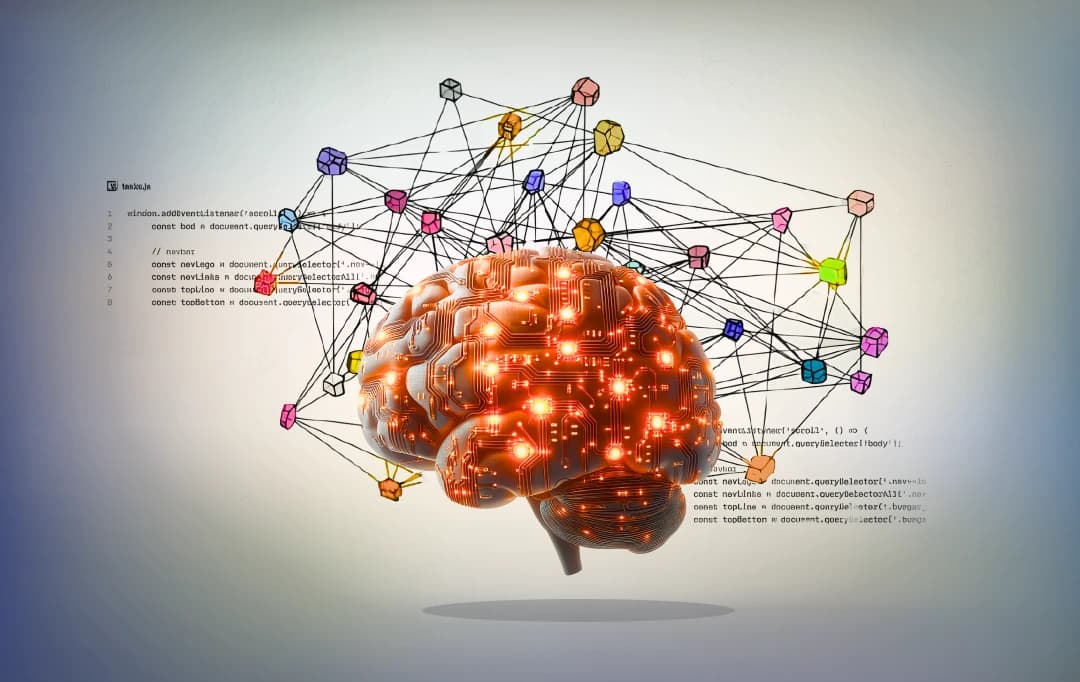 Explore the innovative technology behind the Automatic Lexicon Induction, a self-evolving system that creates and manages linguistic knowledge without human intervention.
|
TL;DR |
It's frustrating when AI-generated language tools feel rigid, missing new slang or industry jargon, and requiring constant manual updates. You and your team waste valuable time tweaking keyword lists and updating dictionaries, all because most systems can't adapt on their own.
An ALI-based system is a breakthrough solution to this problem. It is an Automatic language system that constructs and updates its vocabulary. Thus, unlike a fixed dictionary, this engine keeps monitoring how words are utilized, identifies new words as they emerge, and grasps changing meanings in different contexts.
In this blog post, we'll dive deeper into the world of Automatic Lexicon Induction. We'll explore exactly how this technology works, from its core mechanisms to its ability to self-correct. Let’s get started!
What is an Automatic Lexicon Induction?
Automatic Lexicon Induction (ALI) is a method in natural language processing (NLP) that automatically creates, organizes, and manages a dictionary or a vocabulary specific to a subject. Unlike static dictionaries, ALI systems observe language in real-time and adapt their vocabulary as new words and meanings emerge, providing a more dynamic approach to managing linguistic knowledge with minimal human intervention (though usually not entirely without it).
How is an ALI Different from a Traditional Dictionary?
Standard dictionaries and tagging software need explicit human involvement and control. It is a snapshot of language, which gets updated only by a time-consuming, manual procedure. The famous Oxford English Dictionary has around 500,000 entries in 1,000 years, contributed by human agents, and it gets updated just 4 times a year. But Automatic Lexicon Induction (ALI) has the capacity to cover and adapt vocabulary in a much shorter time frame.
That’s because ALI is radically different; it learns dynamically and self-improves. Its most basic operations are producing, structuring, and releasing new units of AI-driven language models to understand, which occur with limited human oversight, rather than being fully manual..
ALI doesn’t just search for words; it learns and establishes their meanings independently, continuously observing language’s evolution. This makes ALI highly beneficial in rapidly evolving fields where new vocabulary is constantly introduced, allowing AI systems to remain relevant without manual intervention. Top NLP Companies use ALI technology to dynamically build and update language models for better context understanding across various NLP use cases.
How does ALI Work?
An Automatic Lexicon Induction (ALI) system works based on three fundamental principles: computational, behavioral, and semiotic. Here’s how each principle functions:
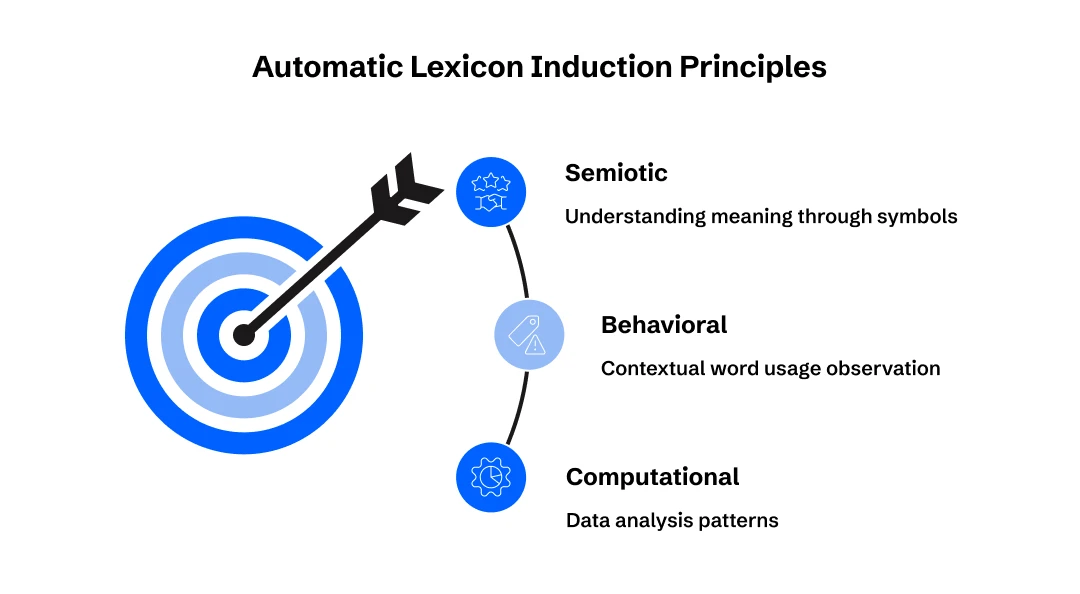
- Computational: The method goes through huge quantities of data on social media and scientific articles to find patterns and connections among words. This is the raw material out of which it learns.
- Behavioral: ALI doesn’t examine a word in isolation. It observes how words co-occur in context. It helps them understand that a word like "gig" can have different meanings in contexts like the music industry or the gig economy, allowing them to learn nuanced variations in meaning.
- Semiotic: ALI applies semiotic principles by learning how words and symbols fit together to convey meaning. This helps the system create a more complete understanding of language, recognizing not only what a word is but what it means in various contexts.
The Self-Learning Loop of ALI
What sets Automatic Lexicon Induction (ALI) apart is its adaptive learning mechanism. Here's how it works:
- Observe: The method is constantly observing digital platforms and text sources for new words and phrases and the evolving context of the existing ones.
- Learn & Infer: It uses machine learning to infer meanings and create temporary definitions for new terms.
- Validate: The ALI will then verify its new information by cross-checking with other sources of data. For example, if it realizes "unplugging" is a new word to indicate leaving technology behind, it will verify if that term is regularly employed in the latest articles and other recent updates.
- Refine & Deploy: When a term has been validated, the ALI refines its lexicon and allows the AI systems it is servicing access to this new linguistic data. This information feeds back into the observation phase, creating a recursive cycle of ongoing enhancement.
Now, this adaptive mechanism enables new words to be seeded into digital environments. For instance, an ALI might identify the name of a novel experimental medication from research articles and automatically incorporate it into its vocabulary.
This instantly makes the word available to other AI systems, such as clinical trial analysis or medical chatbots, without any human needing to manually enter the new data. This smooth, self-improving process is a huge step ahead of static, human-curated linguistic repositories.
Application of Automatic Lexicon Induction
Today, Automatic Lexicon Induction (ALI) systems are reshaping how information is found, understood, and ultimately valued. Their influence is driving economic and cultural shifts, creating new forms of digital wealth while redefining how emergent communication in AI-driven language models is handled.
Here are a few core industries where ALI technology is making a significant impact:
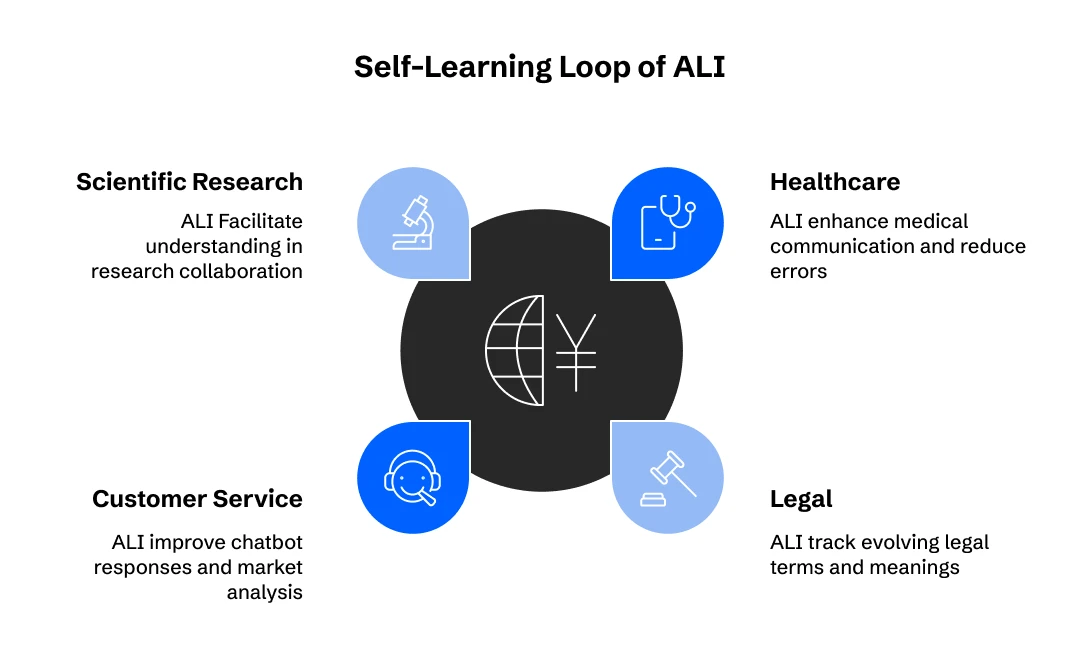
- Healthcare and Medical Documentation: ALI systems automatically track and update medical terms, including new medications and treatment protocols. This real-time adaptation helps minimize miscommunication and improve the accuracy of medical documentation.
- Legal and Regulatory Compliance: ALI monitors changes in legal terminology across jurisdictions, flagging updates when common terms acquire new meanings due to evolving regulations.
- Scientific Research and Collaboration: Fields like quantum computing or synthetic biology that rapidly generate new terminology could benefit from systems that automatically build specialized dictionaries from published papers and lab notes. This would help researchers from different institutions understand each other's work more quickly.
- Scientific Research and Collaboration: ALI systems automatically build specialized lexicons from published papers, streamlining collaboration between researchers in fields like quantum computing and synthetic biology.
- Customer Service and Market Intelligence: According to research, 75% of customers agree that chatbots aren’t able to handle complex questions. That’s because companies lag behind in using these methods to track the way customers actually define products and issues. Rather than depending on keyword lists, ALI systems track new slang, dialects, and sentiment changes, enhancing chatbot responses and improving customer service efficiency without relying on static keyword lists.
Note: Many of these are active areas of research and pilot use, but not yet mainstream, fully-automated deployments.
Related read: AI in Customer Service

How is ALI Reshaping the Digital Public Sphere?
ALI powers natural language processing. Moreover, it goes beyond specific industries; Automatic Lexicon Inductions would have a profound impact on the internet's core infrastructure.
1. The Method Used by Modern AI and Search
At its core, the relationship between ALIs, AI, and search is one of bringing order to chaos. Therefore, ALI provides the binding, imposing a logical structure that allows machine learning models to see not just words, but the web of relationships connecting them. This is the mechanism that powers direct answers that now appear in our search results.
Search giants like Google and Bing don’t use “ALI systems” directly, but they do apply similar techniques (entity recognition, embeddings, knowledge graphs) that serve the same function of dynamically interpreting evolving language.
2. A New Playbook for Digital Content and Marketing
The ripple effects of this change have completely altered the landscape for digital marketers and content creators. The game of Search Engine Optimization (SEO) is no longer about finding clever ways to stuff keywords onto a page. Instead, it has matured into the practice of speaking the machine's native tongue.
By embedding structured data, creators can explicitly tell a search crawler what their content is about, defining entities and their attributes. This dramatically improves the odds of achieving prominent visibility.
For marketers, the payoff is immense; campaigns can now be targeted based on the semantic meaning behind a user's query, reaching audiences with a level of precision that was previously unimaginable.
3. The Rise of Semantic Capital and Digital Infrastructure
This new way of structuring information has given birth to a powerful economic concept: Semantic Capital. It’s not an established academic term, but can be used as a conceptual framing. When data is placed within a well-designed ALI system, it transforms from simple text into a dynamic, valuable asset. Its worth is no longer confined to the information itself, but is amplified by its machine-readability and its ability to be integrated across platforms.
For instance, a local restaurant’s website is no longer just a digital flyer but a source of structured data points like hours, menu items, and location that can be automatically pulled into Google Maps, voice assistants, and recommendation engines. This metadata has become the essential infrastructure upon which a modern digital presence is built, a durable asset that constantly works to establish relevance and attract customers.
Advantages of the ALI Application
Adopting a forward-thinking approach to data structuring is a strategic move that unlocks significant competitive advantages. From operational efficiency and groundbreaking market insights, let’s explore the key benefits that ALI presents.
1. Automation & Operational Efficiency
ALIs can automate knowledge and language organization at an unprecedented scale, creating a real-time knowledge and language base that adapts without manual intervention. This frees up valuable human resources from data management to focus on higher-level strategic analysis and decision-making.
2. Niche-Domain Specific Expertise
An AI can be trained on specialized data sets to become an expert in a specific field. For instance, it can build a lexicon for the Indian legal system by reading court documents, or for the medical community by analyzing clinical trial reports. This creates highly accurate, domain-specific language tools that general-purpose dictionaries could never achieve.
3. Data-Driven Objectivity
Unlike human lexicographers who might have biases about which words are official or important, an AI is purely data-driven. If a word is being used frequently and consistently by a community, the ALI will log it. This removes gatekeeping and provides a true, empirical snapshot of how language is actually being used in the wild.
Helpful read: How is ChatGPT Optimizing Language Models
Risks & Strategic Challenges of ALI Application
While the opportunities are significant, the path forward is not without considerable risk. Let’s examine the key strategic risks that require careful consideration and proactive management for ALI.
1. Platform Monopolization & Supplier Risk
The market risks consolidation around a few dominant ALI platforms, creating "semantic monopolies." Therefore, dependence on a single proprietary standard could dictate market visibility and introduce significant long-term supplier and platform risk.
2. Market Fragmentation & Interoperability
The proliferation of competing, closed-off ALI systems could lead to the creation of data silos and hinder cross-platform communication. This lack of interoperability would increase integration costs and undermine collaborative efforts across industries.
3. Data Integrity & Governance
AI language models or LLMs, which are trained on ALI, tend to learn from vast, unfiltered internet data and are at high risk of inheriting and scaling societal biases. This poses a direct threat to brand reputation and creates compliance challenges, demanding robust governance and human oversight to ensure data integrity.

Conclusion
Automatic Lexicon Inductions are changing how machines process language. Unlike a static dictionary that can't keep up, ALIs learn from the messy, fast-moving nature of real conversation. This isn't just a background technical fix; it's a new way to build digital tools and find value in what language actually means.
For businesses, this offers a precise way to connect with people. As language keeps evolving, any organization that wants to stay relevant will need this kind of adaptive technology to truly keep up with how its audience speaks.
Frequently Asked Questions
What is an Automatic Lexicon Induction (ALI)? Is it just another ChatGPT?
While generative language AI like ChatGPT is a master at using our language, an Automatic Lexicon Induction System is totally different. It’s all about language evolution in AI, and the tech that explores when AI creates its own language from scratch, rather than just copying how we talk. It’s less of a chatbot and more of a language builder.
How can an AI invent a language?
AI doesn’t “invent” languages through ALI. ALI expands vocabulary from human text. The idea of AI creating new languages comes from emergent communication research, where multiple AIs develop their own codes to interact.
Are there dangers to letting AI develop its own way of talking?
The risk applies to emergent AI languages, not ALI. Emergent systems can become opaque and hard to monitor. With ALI, the challenge is ensuring accuracy, avoiding bias, and keeping language use transparent.
Will these AI languages remain a mystery to us?
Not necessarily, while we may not "speak" these languages, the field of computational linguistics AI provides tools to analyze them. Researchers can study the structure, grammar, and patterns of these emergent languages to understand their logic. The goal isn't for humans to learn them, but to develop oversight systems that can interpret the AI's "intent" and ensure its communications are safe and predictable.

Uncover executable insights, extensive research, and expert opinions in one place.
Related Content