 Need a definition fast? Bookmark this guide to software development terminology for instant access to clear explanations of key coding concepts and workflows.
Code builds the product, communication builds the value. Basically, great software is written in code, but rooted in communication. Yet, the gap between Business Speak and Dev Talk often feels like an ocean. When a developer mentions refactoring technical debt and a stakeholder hears we need more money for the same thing, projects stall.
Whether you are looking to standardize vocabulary to keep up with shifting software development trends or simply trying to decipher your dev team’s updates, this software development glossary is your cheat sheet.
We have curated the most critical terms in the software development lifecycle, from A to Z, stripping away the fluff to give you clear, actionable definitions. Whether you are building the product or footing the bill, this is your roadmap to technical literacy.
67 Essential Software Development Terms (Sorting A to Z)
Here’s a complete software glossary with all the essential terms you must learn before moving ahead with your next software development project-
A
1. Acceptance Criteria
This refers to a set of pre-defined conditions that a software product must comply with to be accepted by a user, customer, or other supervising system. This basically aligns the developer’s output with the stakeholders’ expectations.
2. Agile
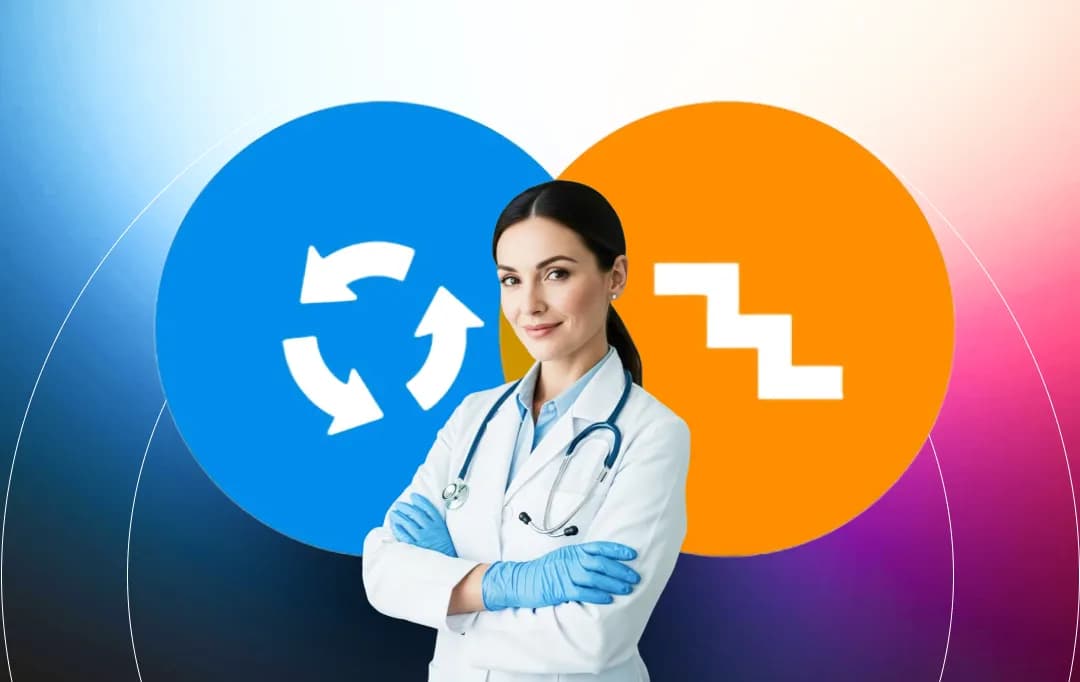
A project management methodology characterized by building products in short, incremental cycles known as "sprints." In the debate for Agile vs. Waterfall, the former is usually preferred as it focuses on flexibility, supports continuous improvement, and rapid delivery of value.
3. Algorithm
This refers to step-by-step instructions that a computer follows in order solve a problem or complete a task. If the input is accurate, the result will consequently be correct.
4. Alpha / Beta Testing or AB Testing
The stages of testing a product before full release. Alpha is internal testing by employees. Beta is external testing where the actual users try the product in a real-world environment to find bugs the team may have missed.
5. API (Application Programming Interface)
An API is a set of rules that allows multiple software applications to communicate with each other. It is the specific part of a computer program that is designed to talk to other programs, rather than to a human. It lets two different systems share information or features without having to share their entire code with each other.
B
6. Backend
The server-side of software that users generally do not see. It handles the database, server logic, and application architecture. In simpler terms, this is the engine that powers the core functionality of the website or app.
7. Bug
An error, flaw, or fault in a computer program that causes it to produce an unexpected (mostly incorrect) result. This can include anything from minor visual glitches to critical security vulnerabilities.
8. Build
The process of converting source code files into a standalone software artifact that can be run on a computer.
C
9. Cache
A temporary storage area that keeps a copy of frequently accessed data so it can be loaded faster next time. Cache can cause a website to load slowly the first time you visit, but snaps open instantly the second time.
10. CI/CD (Continuous Integration / Continuous Deployment)
CI/CD (Continuous Integration/Continuous Delivery) is a software development practice that automates the process of building, testing, and deploying applications. It enables developers to integrate code changes frequently and automatically release them to production-ready environments. This ensures faster, more reliable updates with fewer errors.
11. Cloud Computing Services
Cloud computing services are the on-demand delivery of IT resources, such as servers, storage, and software, over the internet with pay-as-you-go pricing. Instead of buying, owning, and maintaining physical data centers, you get to access technology services as needed from a cloud provider.
12. CMS (Content Management System)
Software that allows non-technical users to create, manage, and modify website content without needing to code. The most popular example of a CMS is WordPress.
13. Code Review
Code review is basically a quality assurance practice. Developers examine each other's code before it is merged into the main codebase. This helps catch bugs early, improves code quality, and facilitates knowledge sharing among the team.
|
Need a Team that Guarantees Code Quality? Outsource to the best software development companies featured on our list! |
D
14. Database
A database is structured information, or organized data. This is typically stored electronically in a computer system. This is where your application/product stores user profiles, transaction histories, and product inventories.
15. Deployment
Deployment is simply hitting ‘Publish.’ Think of it like writing a blog post or an email. While you are typing it, it is a draft that only you can see. Deployment is the moment you hit the publish button and it becomes visible to everyone else.
16. DevOps
A combination of Development and Operations. It is a culture and set of practices that automates the processes between software development and IT teams, allowing them to build, test, and release software faster and more reliably.
17. DNS (Domain Name System)
DNS primarily functions as the phonebook of the Internet. It translates human-readable domain names into IP addresses that computers use to identify each other.
18. Documentation
Documentation is the written text that accompanies software. It explains how the code works (for other developers) or how to use the application (for end-users). Good documentation makes all the difference between a product you can maintain and one you have to rewrite.
E
19. Encryption
The process of encoding information so that only authorized parties can access it. It is essential for protecting sensitive business data (like passwords and credit card numbers) from cyber threats.
20. End-to-End (E2E) Testing
A testing methodology used to test whether the flow of an application is performing as designed from start to finish. During the testing, developers simulate real user scenarios to ensure the system works properly.
F
21. Framework
A platform that provides a foundation for developing software applications. Web application development frameworks (like React for frontend or Django for backend) offer pre-written code and standard structures, so developers don't have to reinvent the wheel for every project.
22. Frontend
This is the client-side of software, everything a user sees and interacts with on a screen. This includes the layout, buttons, images, and navigation menus.
23. Full Stack
Refers to a developer who is proficient in both frontend (what users see) and backend (server logic) development. Full-stack developers can build a complete web application from scratch.
G
24. Git
Git is the most widely used version control system. It tracks changes in source code during software development. Git allows multiple developers to work on the same project simultaneously without overwriting each other's work.
25. GUI (Graphical User Interface)
An interface that allows users to interact with electronic devices through graphical icons and audio indicators (like windows, scrollbars, and buttons) instead of text-based command lines.
H
26. HTML/CSS
The fundamental building blocks of the web. HTML or HyperText Markup Language provides the structure of a webpage, while CSS or Cascading Style Sheets controls the visual styling and layout.
27. HTTP/HTTPS
Hypertext Transfer Protocol abbreviated as HTTP, is the protocol used for transmitting data over the web. HTTPS is the secure version, encrypting communications between your browser and the website (indicated by the lock icon in your address bar).
I
28. IDE (Integrated Development Environment)
A software suite that provides comprehensive facilities to computer programmers for software development. It typically includes a code editor, build automation tools, and a debugger. Two of the most common examples of IDEs are Visual Studio Code and IntelliJ.
29. Iteration
In Agile development, an iteration is a set period of time (usually 1-2 weeks) during which development takes place. At the end of each iteration, a working piece of software is produced.
J
30. JSON (JavaScript Object Notation)
A lightweight format for storing and transporting data. It is easy for humans to read and write, and easy for machines to parse and generate. While strictly the standard for API data exchange, it has recently become essential for JSON Prompting, a technique used to ensure Large Language Models (LLMs) output structured, code-ready responses.
K
31. Kanban
Kaban is a visual workflow management method. It uses a board to visualize work, limit work-in-progress, and maximize efficiency.
32. Kubernetes
An open-source system for automating deployment, scaling, and management of containerized applications. It helps businesses manage complex applications running across many different servers.
L
33. Latency
The delay before a transfer of data begins following an instruction for its transfer. In business terms, high latency means a slow website, which often leads to lost customers.
34. Legacy Code
Source code that relates to a no-longer-supported or manufactured operating system or other computer technology. It is often difficult to maintain but crucial to business operations until it can be refactored or replaced.
35. Load Testing
A type of performance testing that simulates a real-world load on any software, application, or website (like having 1,000 users click "Buy" at once) to see if it crashes.
M
36. Microservices
An architectural style where an application is structured as a collection of loosely coupled services. Instead of one giant monolith app, you have many small services (e.g., one for payments, one for login, one for search) that talk to each other. This makes scaling easier.
37. Middleware
This is a software that acts as a bridge between an operating system or database and applications. It functions as the glue that helps different software platforms and devices communicate with each other.
38. MVP (Minimum Viable Product)
A version of a product with just enough features to be usable by early customers who can then provide feedback for future product development. MVP developers build these versions to provide the fastest, most affordable way to validate a business idea.
N
39. Native App
A software application built for use on a specific platform or device (like iOS or Android). Native apps typically offer better performance and user experience than hybrid or web apps, but require separate codebases.
40. No-Code / Low-Code
Development platforms that allow non-programmers to build applications using visual drag-and-drop interfaces instead of writing code line-by-line.
O
41. Open Source
Software with source code that anyone can inspect, modify, and enhance. Open source promotes collaboration and is the foundation for many modern technologies (e.g., Linux, Android).
42. OOP (Object-Oriented Programming)
A programming paradigm based on the concept of objects, which can contain data and code. It helps organize complex software design into manageable, reusable pieces.
P
43. Plugin
A software add-on that is installed on a program to enhance its capabilities. For businesses, plugins are a cost-effective way to add features like a payment gateway without building them from scratch.
44. Prototype
A prototype is an early sample, model, or release of a product built to test a concept or process. It is a visualization tool used to align stakeholders on the design before full-scale development begins.
Q
45. QA or Quality Assurance
A systematic process used to determine whether a product or service meets specified requirements. QA involves testing and monitoring the software engineering processes to ensure quality.
R
46. Refactoring
The process of restructuring existing computer code without changing its external behavior. It is cleaning up the code to make it more readable, maintainable, and efficient. Refactoring is primarily essential for preventing technical debt in the future.
47. Regression Testing
Re-running functional and non-functional tests to ensure that previously developed and tested software still performs after a change. Regression testing checks that fixing one thing didn't break another.
48. Responsive Design
An approach to web design that makes web pages render well on a variety of devices and window or screen sizes. It ensures your site looks good on both a massive desktop monitor and a small smartphone.
49. REST (Representational State Transfer)
One of the most fundamental software development terms is REST, the most common architectural style for designing networked applications (APIs). It relies on a stateless, client-server, cacheable communications protocol—virtually always HTTP.
S
50. SaaS (Software as a Service)
A software distribution model where a third-party provider hosts applications and makes them available to customers over the Internet (e.g., Salesforce, Slack, Google Workspace).
51. Scalability
The capability of a system, network, or process to handle a growing amount of work, or its potential to be enlarged to accommodate that growth.

52. Scrum
A specific framework within Agile methodology that helps teams work together. It encourages teams to learn through experiences, self-organize while working on a problem, and reflect on their wins and losses to continuously improve.
53. SDLC (Software Development Life Cycle)
The overarching process used by the software industry to design, develop, and test high-quality software. It encompasses the entire life of the project, from the initial idea (requirements) to the final output and maintenance.
54. SDK (Software Development Kit)
A collection of software development tools in one installable package. It facilitates the creation of applications by providing a compiler, debugger, and a software framework.
55. Stack (or Tech Stack)
The combination of programming languages, frameworks, and tools used to build a web or mobile application. Common stacks include LAMP (Linux, Apache, MySQL, PHP) or MEAN (MongoDB, Express, Angular, Node.js).
T
56. Technical Debt
In software terms, this refers to the implied cost of additional rework caused by choosing an easy (limited) solution now instead of using a better approach that would take longer. Like financial debt, if you don't pay it off (by refactoring), the 'interest' (complexity/bugs) accumulates, making future development slower.
57. TDD (Test-Driven Development)
A software development process where developers write the test for a specific function before they write the code to fulfill that function. It ensures code is robust from day one.
U
58. UAT (User Acceptance Testing)
The final phase of the software testing process is where actual software users test the software to make sure it can handle required tasks in real-world scenarios. It is the final "sign off" before the product goes live.
59. UI (User Interface)
The specific assets users interact with—buttons, layouts, color schemes, and typography. It focuses on the look and layout.
60. UX (User Experience)
The overall experience a person has when using a product, especially in terms of how easy or pleasing it is to use. While UI is visual, UX is about the journey and functionality.
V
61. VPN (Virtual Private Network)
A service that creates a secure, encrypted connection to another network over the Internet. It is often used by remote developers to securely access company servers.
W
62. Waterfall
A traditional project management methodology where the project is divided into distinct phases (Requirements, Design, Implementation, Verification, Maintenance) that happen sequentially. One phase must be completed before the next begins.
63. Webhook
A way for an app to provide other applications with real-time information. Unlike an API (where you ask for data), a Webhook shoots data over to you automatically when a specific event happens (e.g., "Send me a notification every time a user pays").
64. Wireframe
A visual guide that represents the skeletal framework of a website or app. It is a low-fidelity blueprint that focuses on structure and layout without distracting details like colors or images.
X
65. XML (Extensible Markup Language)
A markup language that defines a set of rules for encoding documents in a format that is both human-readable and machine-readable. It is often used for data interchange, though JSON is now more common in web development.
Y
66. YAGNI ("You Aren't Gonna Need It")
A principle of extreme programming that states a programmer should not add functionality until deemed necessary. It prevents wasting time building features that might be useful later but are never actually used.
Z
67. Zero-Day Exploit
A cyberattack that occurs on the same day a weakness is discovered in software. At that point, it's exploited before a fix becomes available from its creator.
Outsource the Work, Not the Understanding!
The best software developers in the USA, India, or anywhere in the world promise innovation and growth at scale. But while geography may determine your cost, your technical literacy determines your control.
Knowing these software terminologies ensures that when you sit across the table, whether it's with a boutique agency or an enterprise team, you aren't just paying bills, you are driving value. You have the language; now go build the legacy!

Uncover executable insights, extensive research, and expert opinions in one place.
Related Content