Share It On:
 Insights into why traditional SEO isn't enough anymore and how GEO will determine your digital visibility in the age of ChatGPT and beyond.
|
Key Takeaways 1. Search is shifting from clicks to citations - optimize for AI references, not just Google rankings. 2. Comprehensive, well-structured content beats keyword density for AI engine selection. 3. Early GEO adoption secures citation authority before competition saturates the space. |
Did you know? By 2028, an estimated 36 million people will use generative artificial intelligence for their search queries (Statista). This calls out for a new search optimization technique called Generative Engine Optimization (GEO).
Now, what is GEO?
It is a practice of optimizing your content to be found, accurately represented, and ranked favorably within answers generated by generative AI models and chatbots like Perplexity AI, ChatGPT, Gemini, and more.
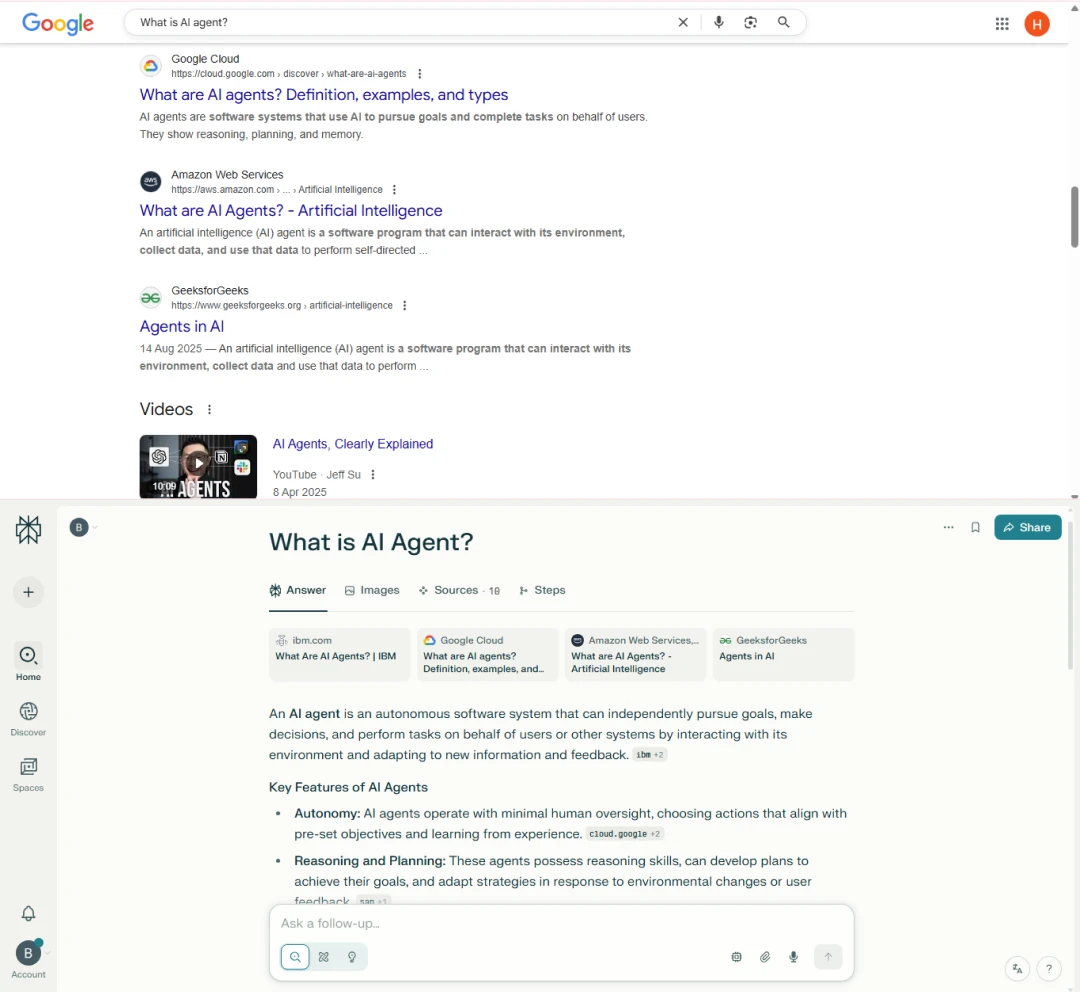
These platforms generate direct, conversational answers that alter how users discover information. When users receive comprehensive answers directly from AI engines, the motivation to click through to individual websites diminishes significantly.
Let’s be honest, businesses that are relying solely on traditional SEO strategies might just face potential invisibility with this new search evolution. Therefore, companies should now target and optimize for citation and reference within AI responses and not just traditional rankings, to maintain competitive visibility.
GEO vs. Traditional SEO: Key Differences
The fundamental shift from traditional search engines to AI-powered platforms requires a complete rethinking of optimization strategies. While SEO focuses on ranking visibility, GEO prioritizes citation authority and conversational relevance.
| Aspect | Traditional SEO | Generative Engine Optimization |
|---|---|---|
| Primary Goal | Rank high in search results | Get cited in AI-generated responses |
| Content Focus | Keyword-optimized pages | Comprehensive, context-rich information |
| User Intent | Query-based searches | Conversational, natural language requests |
| Content Structure | Title tags, meta descriptions, headers | Structured data, semantic markup, and FAQ formats |
| Optimization Target | Search engine algorithms | AI model training and retrieval systems |
| Traffic Source | Organic search results | Direct AI responses with potential citations |
| Content Style | Keyword density and placement | Natural, authoritative, conversational tone |
| Technical Requirements | Page speed, mobile-friendly design | Schema markup, API accessibility, structured data |
| Content Length | Varied based on keyword competition | Comprehensive, long-form content preferred |
| Update Frequency | Periodic content refresh | Continuous accuracy and relevance updates |
Core Philosophical Differences
Traditional SEO operates on the principle of competing for attention within the SERP. GEO operates on the principle of becoming the trusted source that AI systems reference and synthesize. This shift changes how businesses approach content creation and performance measurement in the digital landscape.
Why GEO Matters in Today’s Digital Landscape?
The search landscape is experiencing unprecedented transformation as user behavior shifts toward conversational, AI-powered interactions. Understanding these changes is critical for maintaining digital visibility through GEO. Here’s why GEO matters in the contemporary scenario:
- As mentioned, 36 million people will use generative artificial intelligence for their search queries by 2028. That’s mainly because Generative AI platforms provide conversational responses that combine information from multiple sources, with immediate and detailed answers.
- GEO implementation establishes citation authority. It positions brands as trusted sources that AI systems reference when constructing responses across multiple platforms.
- Companies mastering GEO will secure consistent representation across the expanding ecosystem of AI-powered search platforms in the future.
How Does Generative Engine Optimization Work?
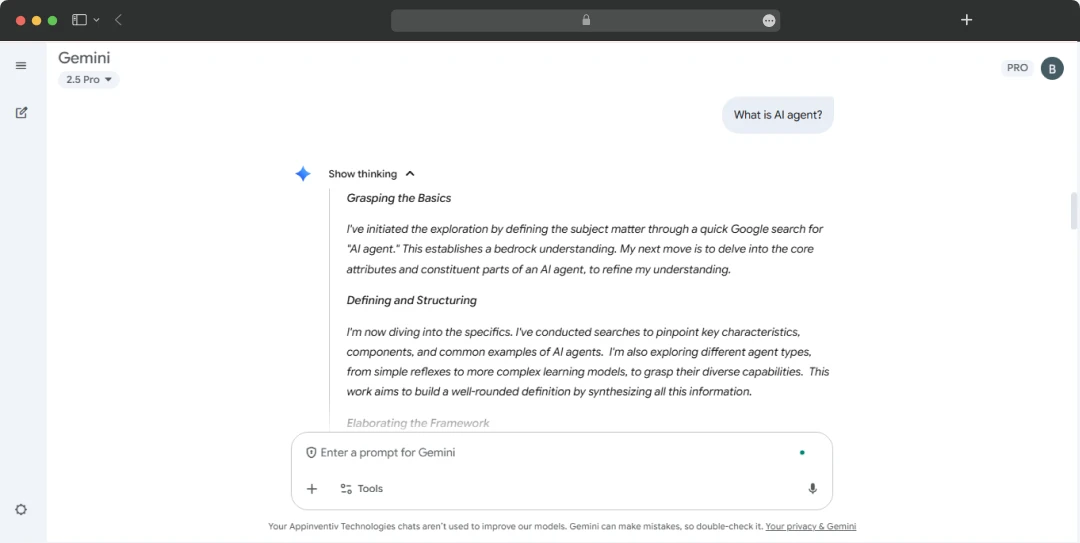
The shift to AI-powered search represents a fundamental change in how content gets discovered and used. Unlike Google's traditional approach of ranking web pages, these new systems work more like research assistants. Here’s how GEO works!
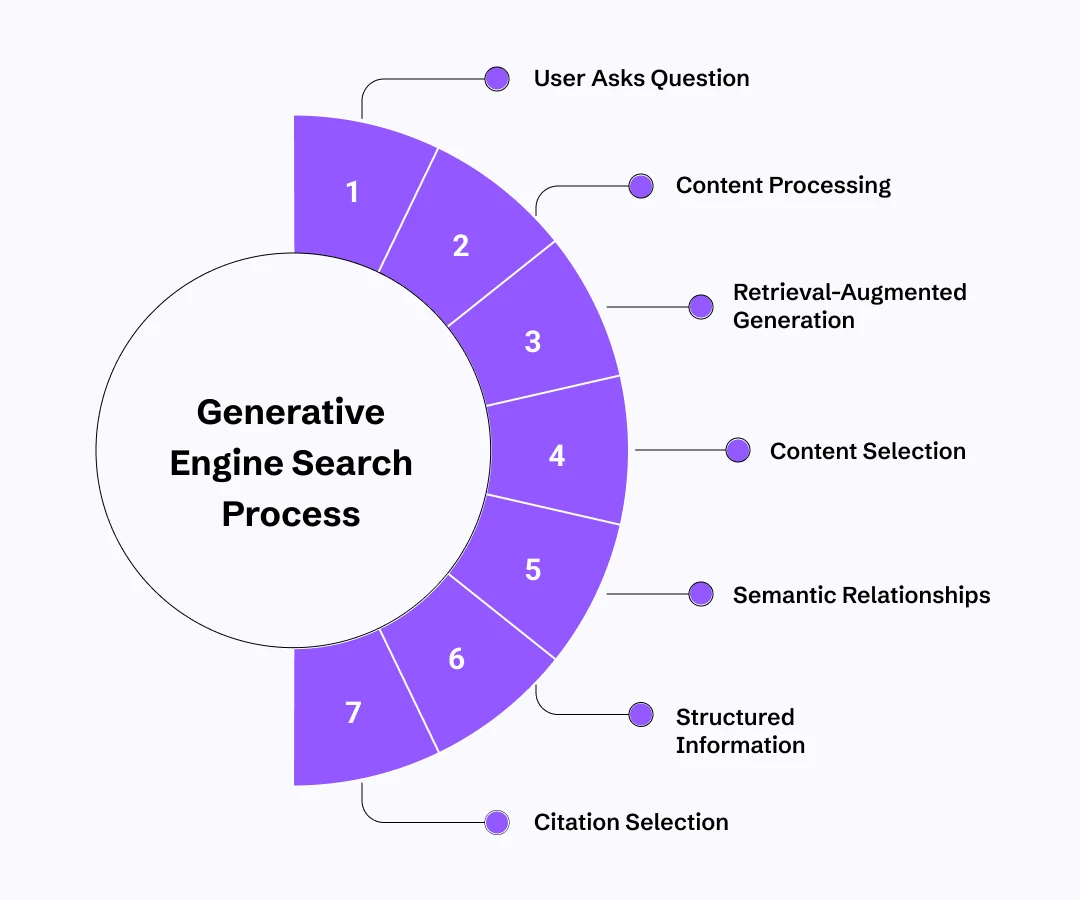
1. Content Processing: When someone asks a generative AI platform a question, it reads through relevant content to understand what information would best answer that specific question
2. Retrieval-Augmented Generation (RAG): Now, these generative engines quickly scan through hundreds of articles and pull out the most relevant points.

3. Content Selection: Content that is comprehensive and authoritative is favoured. If you've written a thorough explanation of a topic with clear examples and supporting data, you're more likely to get cited than someone who just touched on the subject briefly.
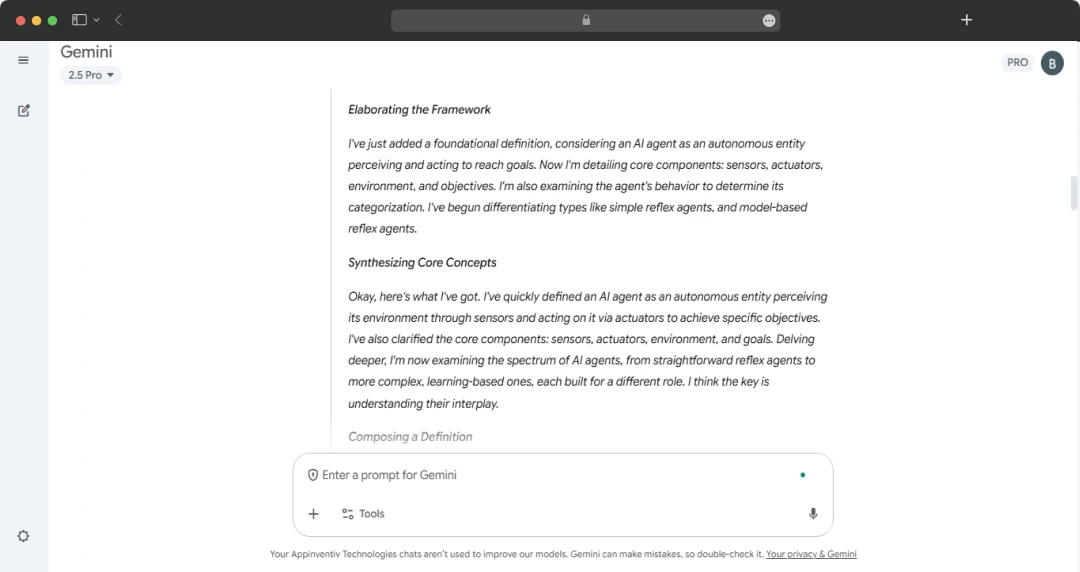
4. Semantic Relationships Matter: The AI understands that "customer acquisition cost" relates to "marketing spend" and "lifetime value," even if those exact phrases don't appear together. That’s because generative engines are smart enough to comprehend a contextual understanding that further makes conversational, well-structured content more likely to be selected.
5. Structured Information Gain Priority: If your content uses clear headings, bullet points, and organized sections, AI systems can more easily extract and reference specific information. Hence, most likely, your content gets priority.
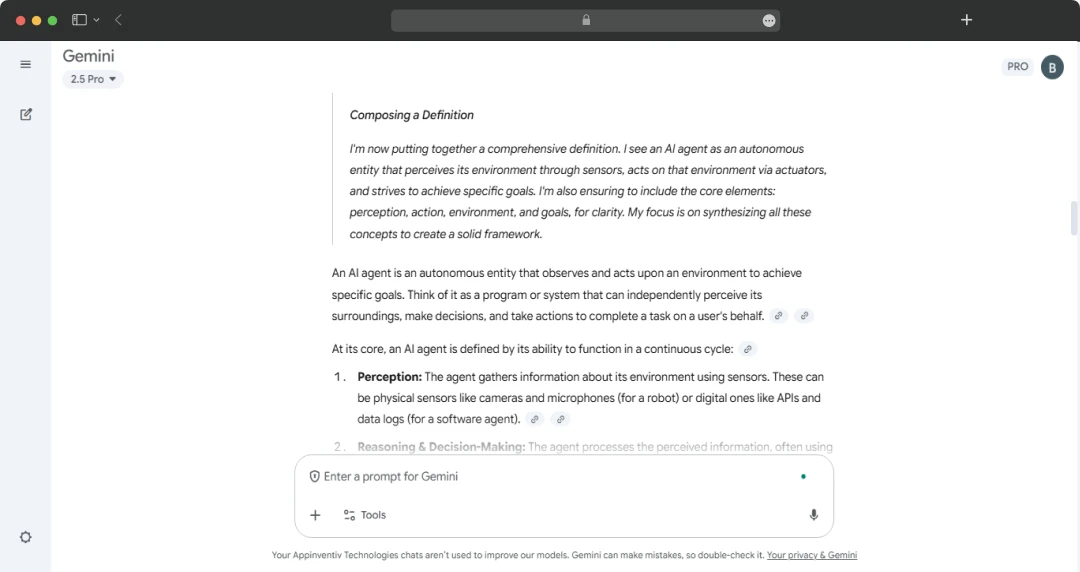
6. Citation Selection: The citation process typically involves the AI finding 3-5 authoritative sources that collectively provide a complete answer. Getting included in these citations means your content needs to contribute something valuable to that complete picture.
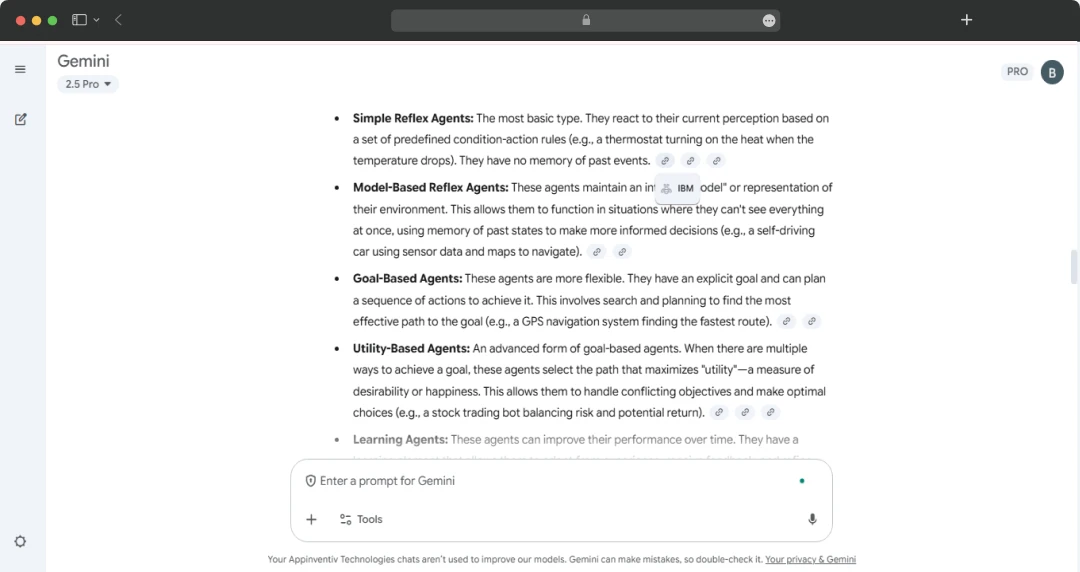
Generative Engine Optimization Best Practices
Getting cited by AI engines requires a complete shift from traditional SEO tactics. Based on what's working right now, here are some of the GEO strategies that actually move the needle.
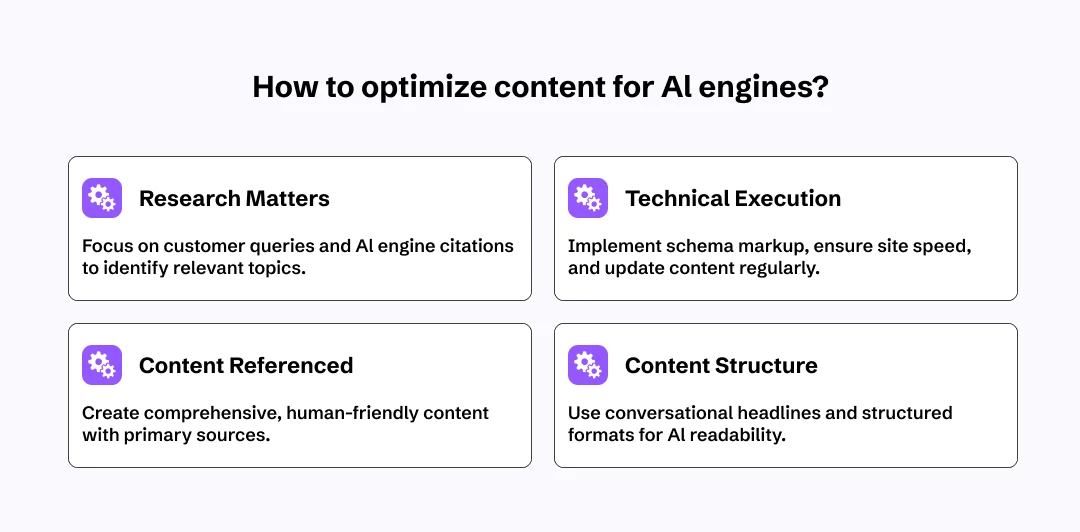
1. Research that Matters
- Stop chasing search volume and keyword difficulty numbers. Start with the long questions your customers actually ask during sales calls or support tickets. These are the queries people pose to ChatGPT and Perplexity.
- Map every possible angle and related query of your topic. If you sell accounting software, don't just write about "accounting software features." You can cover other topics and related queries like small business bookkeeping mistakes, cash flow management fears, and more.
- Analyze what AI engines currently say about the particular query or topic. Run searches in ChatGPT and Perplexity to see which sources they're citing, then figure out what those sources have covered and addressed. You can cover all that information and include any value-adding information that might have been overlooked. Perform a thorough competitive content analysis on SERP for the particular query and see what your competitors have written about.
2. Content that Gets Referenced
- Heard the popular concept of writing called, Explain Like I'm 5? So, basically, you should explain any topic or complex concept in simple terms. Remember, you need to write for humans first and structure your content for machines so that AI can easily extract key points.
- With GEO, length matters more than ever. Those 800-word blog posts don't work anymore. AI systems favor comprehensive resources that cover topics exhaustively - think 2,500+ words when appropriate.
- Include primary sources and data. AI engines prefer content that references original research, surveys, or studies.
- Answer follow-up questions within your content. When someone learns about your main topic, what's the next logical question they'd ask? Address it
3. Content Structure Strategies
- Headlines should be used in a conversational and natural language tone. For example, it can read like: "What happens if I don't file my taxes on time?" beats "Tax Filing Deadline Consequences" every time.
- Use numbered steps, infographics, graphs, and bullet points extensively. AI systems favour structured information more effectively than dense paragraphs.
- Create comprehensive FAQ sections based on real customer questions, not made-up ones. Plus, cross-referencing to related topics within your content to show topical authority
4. Technical Execution
- Schema markup helps AI understand your content type, expertise level, and credibility signals.
- Site speed is beneficial. It directly impacts whether your content gets crawled effectively for AI training.
- Regular updates of your content are the best content marketing strategy. It keeps you relevant. AI trains on data that values fresh, current information over outdated resources.
- Most importantly, focus backlink efforts on industry publications and authoritative sites that AI systems already trust and reference.
- Continuously monitor your GEO strategy's performance and adapt to evolving AI trends, using SEO tools like Ahrefs to track your content's visibility in LLM responses.
- Implement an LLMs.txt file to control how generative AI models interact with your content. For WordPress sites, independent plugins like Yoast SEO offer tools to easily generate a custom LLMs.txt file.
GEO and SEO: Why You Need Both?
The biggest blunder you can make is treating GEO and SEO as competing strategies when they're actually complementary. Traditional SEO still drives the majority of web traffic and remains essential for capturing users who prefer browsing answers from AI overviews and search results rather than relying on AI responses.
Meanwhile, GEO positions your content for the growing segment of users who expect direct answers from generative engines. Think of SEO as securing your presence in the current search landscape while GEO prepares you for where search is heading.
Smart organizations recognize that different users have different search preferences and behaviors. Some people want to click through multiple sources and compare options, while others prefer immediate, synthesized answers.
By implementing both strategies simultaneously, you capture traffic from traditional search engines while building citation authority in AI systems. Moreover, content optimized for AI citation has begun to perform better in traditional search results because it tends to be more comprehensive and authoritative.
Helpful Read: What is Answer Engine Optimization?
Future of GEO
Industry analysts suggest that search engine volume will drop by 25% in 2026 with the dominance of AI chatbots and other virtual assistants. Additionally, ChatGPT receives 2.5 billion prompts from global users every day, with estimates suggesting it could surpass Google's traffic by October 2030. Now, the window for early adoption of GEO is narrowing rapidly. Companies that have already begun implementing GEO strategies will establish citation authority while competition remains relatively limited.
In conclusion,
GEO represents the fundamental shift that will determine digital visibility in an AI-first world. Traditional SEO built the foundation, but GEO secures the future. Organizations that adapt their content strategies now to prioritize comprehensive, authoritative information over keyword optimization will capture the growing segment of users. Ultimately, the question isn't whether to implement GEO strategies, but how quickly you can begin.

Frequently Asked Questions
What's the difference between SEO and GEO?
SEO focuses on ranking high in search result lists to get clicks, while GEO optimizes content to be cited and referenced within AI-generated answers. Traditional SEO targets keywords for visibility; GEO prioritizes comprehensive, authoritative content that AI systems trust enough to include in their responses.
What's the difference between GEO and Answer Engine Optimization?
Generative Engine Optimization (GEO) focuses on influencing the detailed, narrative answers within large AI models like Gemini or ChatGPT. In contrast, Answer Engine Optimization (AEO) aims to provide direct, factual answers to capture specific spots like featured snippets and voice search results for a single, authoritative response.
Can GEO replace traditional SEO completely?
Not yet. While GEO is essential for future visibility, traditional SEO still drives the majority of web traffic and remains crucial for users who prefer comparing multiple sources. The smartest approach combines both strategies to capture audiences across different search preferences and platforms.
How do generative AI and traditional SEO work together?
They complement each other perfectly. Traditional SEO still drives traffic from people who prefer browsing multiple sources, while GEO captures users who want immediate answers through generative AI platforms. Smart businesses use both strategies simultaneously to maximize visibility across different search behaviors and platforms.
How do generative AI answer engines work?
These engines scan vast amounts of content, identify the most relevant and trustworthy sources for a query, and then synthesize information from multiple sources into a single coherent response. They prioritize content that's well-structured, factually accurate, and comprehensive over traditional ranking signals.

Uncover executable insights, extensive research, and expert opinions in one place.
Related Content