Share It On:
 Find out how Amazon PPC advertising can connect your product with high-intent buyers who are actively searching to make a purchase. Unlock advertising strategies and achieve higher profits.
It is often frustrating to see your first Amazon product listing sit at the bottom of page three, generating maybe two or three views a day. It didn't matter that the product had better reviews than the competition or that the price was competitive. The problem is nobody could find it. That's when we realized the power of Amazon advertising as a game-changer tool for sellers and businesses. By utilizing Amazon’s advertising options, businesses were able to enhance their visibility, ultimately driving more traffic and sales.
The Amazon marketplace is a crowded digital shelf, but it's not a mystery to crack. It’s a space built on data, and learning to leverage its advertising tools is the key to unlocking visibility and sales. It is now essential for any seller, product owner, brand, or digital marketer to advertise their products on the Amazon ecosystem in order to increase sales and make money. From basic concepts to advanced strategies that enable you to convert each click into a profitable conversion, this guide serves as your roadmap for navigating the world of Amazon advertising.
What is Amazon Advertising?
Amazon advertising is Amazon’s native marketing solution that lets sellers and brands promote their products directly to consumers browsing the Amazon marketplace. The platform works on a pay-per-click (PPC) model, which means sellers only have to pay when a consumer actually clicks on their ads. By implementing an Amazon advertising strategy, the Amazon platform makes it incredibly cost-effective compared to traditional advertising, where sellers pay for impressions regardless of engagement. The ads appear in prime locations, which are at the top of search results, within product listings, and even on competitor product pages.
How Marketing on Amazon is Different From Other Advertising Platforms?
When someone searches on Google, they might be researching, comparing, or just browsing. But on Amazon? They're shopping. They have their credit card ready and are looking for the perfect product to buy. This makes Amazon's conversion rates significantly higher than most other advertising platforms.
Amazon knows exactly what customers buy, what they search for, what they click on, and even what they add to their cart but don't purchase. This wealth of shopper data is what powers your campaigns, helping you target the right customers at the perfect moment in their buying journey. Through its advertising tools, Amazon provides you with access to this invaluable data, allowing you to refine your strategies and boost conversions.
Types of Amazon Marketing Ads
Amazon offers several advertising formats, each serving different goals and reaching customers at various stages of their shopping journey. Let us explore each ad type for complete understanding.
1. Sponsored Products
Sponsored Products is the VIP pass for every seller and business that wants to get their product listed at the top of Amazon’s search results. Sponsored Products are simple PPC ads (Pay-per-click) that promote individual product listings. The products under this type of advertising achieve a special “Sponsored” badge and appear directly in search results and on product detail pages.
If you are opting for this type of advertising format, then it is not necessary for a brand to get registered on Amazon, and one can launch a campaign in under ten minutes. These ads work particularly well for new product launches because they immediately place the product at the top of relevant searches, bypassing the slow climb up organic rankings.
2. Sponsored Brands
Sponsored Brands act like a mini billboard for your brand. It lets you display multiple products or your brand story in a single ad unit. This type of advertising appears at the very top of search results as banner-style ads featuring your brand logo, a custom headline, and up to three products.
There’s a catch here! If you want to feature your products in the Sponsored Brands category, then you need to enroll in the Amazon Brand Registry to use them. The best part is, if you qualify, these ads are incredibly powerful for building brand recognition on a platform like Amazon. Here, you are introducing the shoppers to the entire catalog instead of showcasing a single product. Sponsored Brands also contains an option to include video ad options. Video ads stand out dramatically in search results because videos generally catch the eye. Posting your product’s 15-30 second video generates higher click-through rates.
3. Sponsored Display
Do you want your product to be displayed in an ad both on Amazon and across the web? If yes is the answer, then Sponsored Display is your go-to option. These are retargeting ads that reach customers both on and off Amazon, appearing on product pages, customer review pages, and even external websites and apps.
But what makes Display ads unique? It’s their targeting flexibility. You can target customers who viewed your products but didn't buy, shoppers browsing competitor products, or audiences based on specific interests and categories. The algorithm automatically optimizes your bids based on conversion likelihood. Sponsored Display ads work best when you are considering remarketing and increasing brand awareness on different platforms. They keep your products in front of potential customers even after they leave Amazon, bringing them back when they're ready to make a purchase.
Benefits of Advertising on Amazon
Let’s get straight to the point why spending money on Amazon advertising can benefit you.
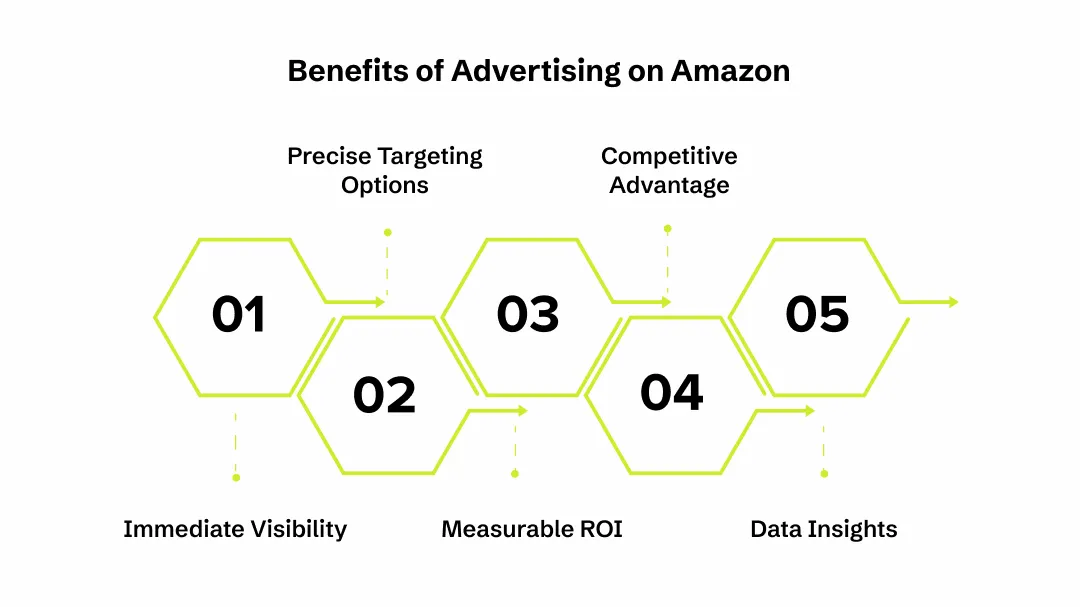
1. Immediate Visibility: Every seller or business owner is in the rat race of getting their products listed at the top. But there are only a few who are opting for this smarter option of getting their products advertised on the Amazon marketplace. Organic ranking takes time, and you need sales history, reviews, and SEO optimization in less time. Advertising bypasses all of that, putting your product in front of shoppers immediately. This is essential, especially when you are launching new products that have zero sales history. Businesses investing in ecommerce solutions can also benefit from understanding the ecommerce app development benefits that help improve customer engagement and shopping experiences.
2. Precise Targeting Options: The product you are targeting is already being searched for by many people on the marketplace. With a competitive Amazon advertising strategy, you get the privilege of targeting your product with the right keywords, categories, interests, and even past purchase behavior. Here, you are not laying a wide net hoping to catch someone interested in your product. Rather, you are specifically reaching people who are already looking for what you sell.
3. Measurable ROI: If you opt for the Amazon advertising option, you can get an extensive amount of data. You can track important metrics, such as ACOS (Advertising Cost of Sale), ROAS (Return on Ad Spend), and CTR (Click-Through Rate), which will help you optimize your campaigns for better ROI. This transparency leads to continuous optimization and ensures the money spent on ads is giving profitable results.
4. Competitive Advantage: Your competitors are spending huge amounts on advertising their products on Amazon. And if you haven’t planned it yet, then you are essentially handing them your potential customers. Amazon follows an auction-based, data-driven approach where a well-organized product listing outperforms a campaign. Amazon advertising follows a pay-per-click model, which means businesses only need to pay when a customer clicks on their ad.
5. Data Insights: Campaign performance data can move from guesswork to informed strategies by analyzing campaign metrics. It shows the complete insight into which keywords drive sales, what customers search for, and which products resonate with your target audience. This information is gold for product development and framing competitive business strategies. These insights become even more valuable when combined with machine learning in retail to better understand customer behavior and optimize marketing efforts.
Understanding Amazon Marketing Cost
One of the first questions that comes to your mind while planning to go for advertising on Amazon is "How much does Amazon advertising cost?" There is no direct answer, as the cost depends on several factors. Understanding the requirements helps define the cost structure, which enables you to budget effectively. There is no minimum budget required for advertising a product on Amazon. Therefore, you can start and test as per your budget and track results accordingly.
Amazon operates on a pay-per-click (PPC) model. You set a maximum bid for how much you're willing to pay each time someone clicks your ad. The actual cost per click varies based on keyword competitiveness, product category, and demand for the product in the market. Businesses operating on Amazon advertising set a daily budget through the Amazon PPC system for their campaigns. They can bid on relevant keywords where costs are determined by the number of clicks their ads receive and can partner with experienced pay-per-click companies to maximize their results. Amazon provides a range of advertising solutions for sellers and businesses to set different budgets and advertising goals based on their products and requirements.
Step-by-Step Guide to Launching Your First Amazon Advertising Campaign
Follow these steps for a successful Amazon advertising campaign.
Step 1: Complete the Basics
Before thinking about launching your first Amazon advertising campaign, make sure you have completed the basics. Add high-quality product images, a compelling title with relevant keywords, describe the product in clear and concise bullet points, and write a detailed product description for your product before advertising on Amazon.
Step 2: Log in to Seller Central
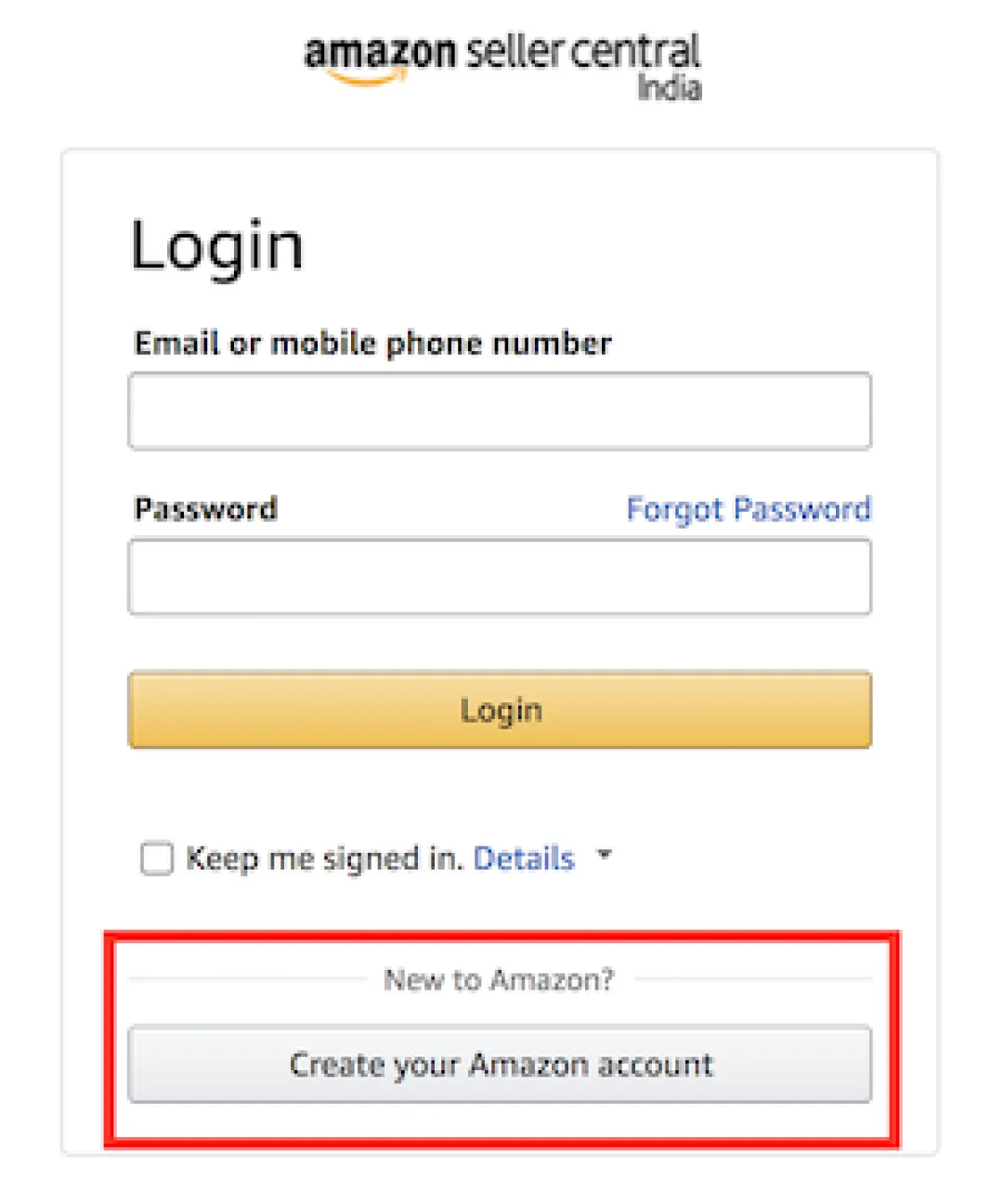
Click on “Seller Central” and log in with your credentials. Browse the “Advertising” tab in the main navigation and click on “Campaign Manager.”
Step 3: Create Your Campaign
Click on "Create Campaign" and choose which campaign type is suitable for you. For beginners, it is recommended to start with a basic “Sponsored Products” campaign type.
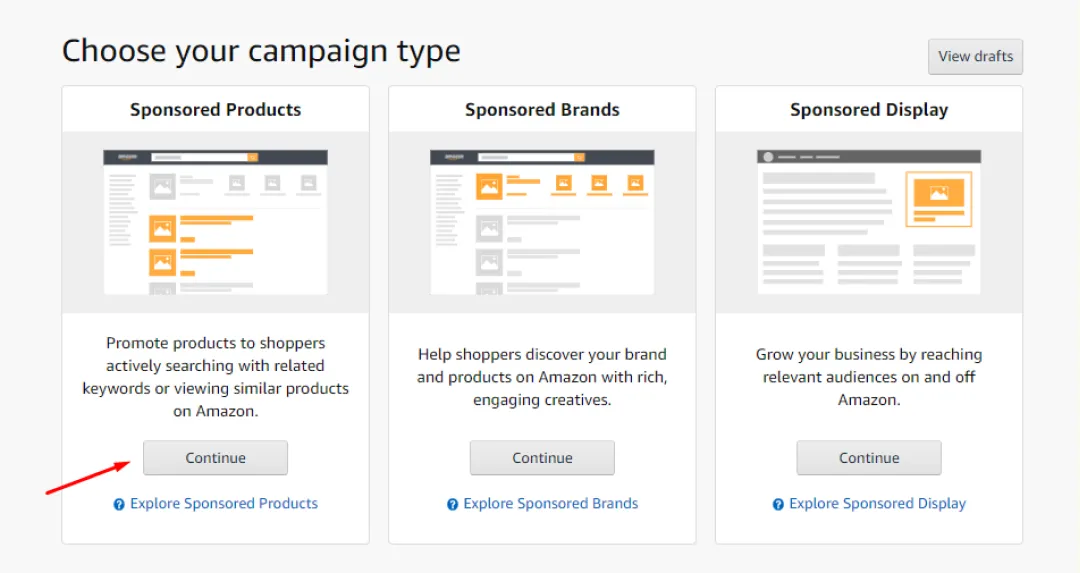
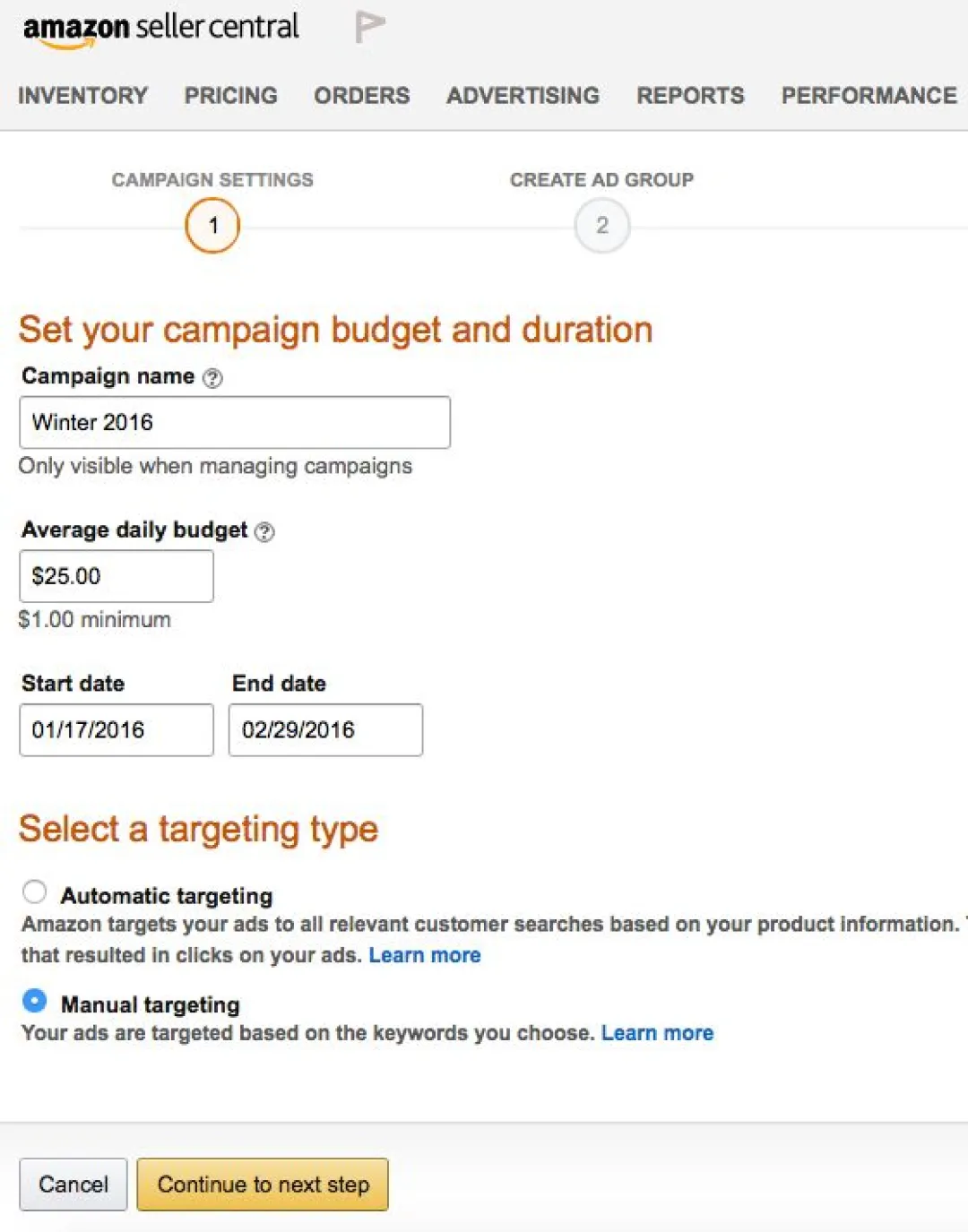
Step 4: Name Your Campaign and Set a Budget
Choose a relevant title for your campaign that will make it easy to recognize your campaign later. You can name it like "ProductName-Launch" or "Laptop-Brand-Sale" so that you can instantly identify your campaign approach later. Also, set your daily budget. For testing, a budget of $10-$20 per day provides enough data to see what's working. You can always increase the budget for your campaign later, based on its performance and requirements.
Step 5: Choose Your Product
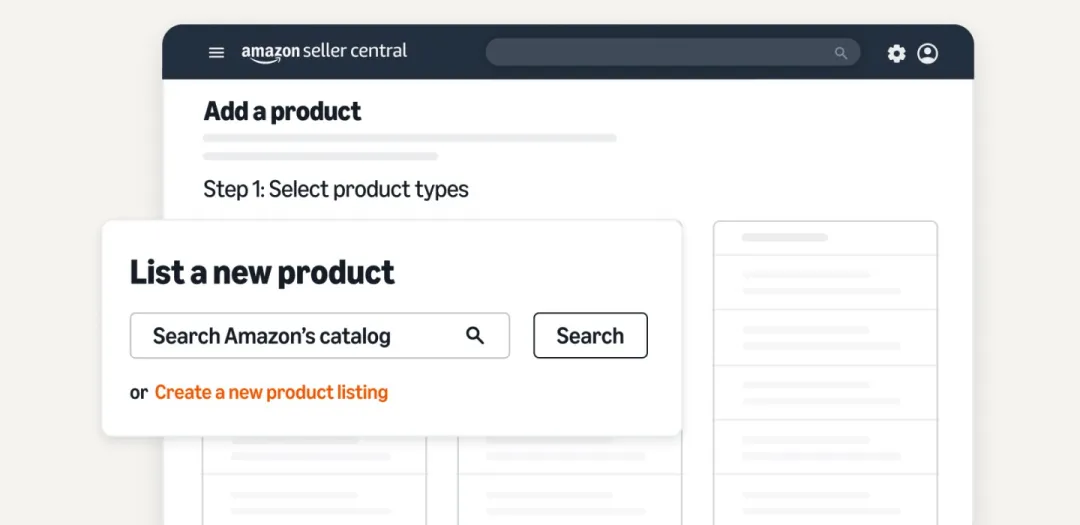
Select the products you want to promote. A product with a strong listing, high-quality images, detailed descriptions, and ideally, some customer reviews should be your choice. It is always recommended to focus on top-performing products, which typically have 10 or more reviews and a 4-star rating or higher. Such products give better results as compared to products with few or no reviews.
Step 6: Select Relevant Keywords
If you are opting for manual targeting and advertising your product for the first time, then choosing the right keyword should be your primary strategy. Always act like you are a buyer and think about what you would type into the search bar to find a particular product. Tools like Amazon's search bar suggestions or third-party softwares can help to find high-volume, relevant keywords that are performing well.
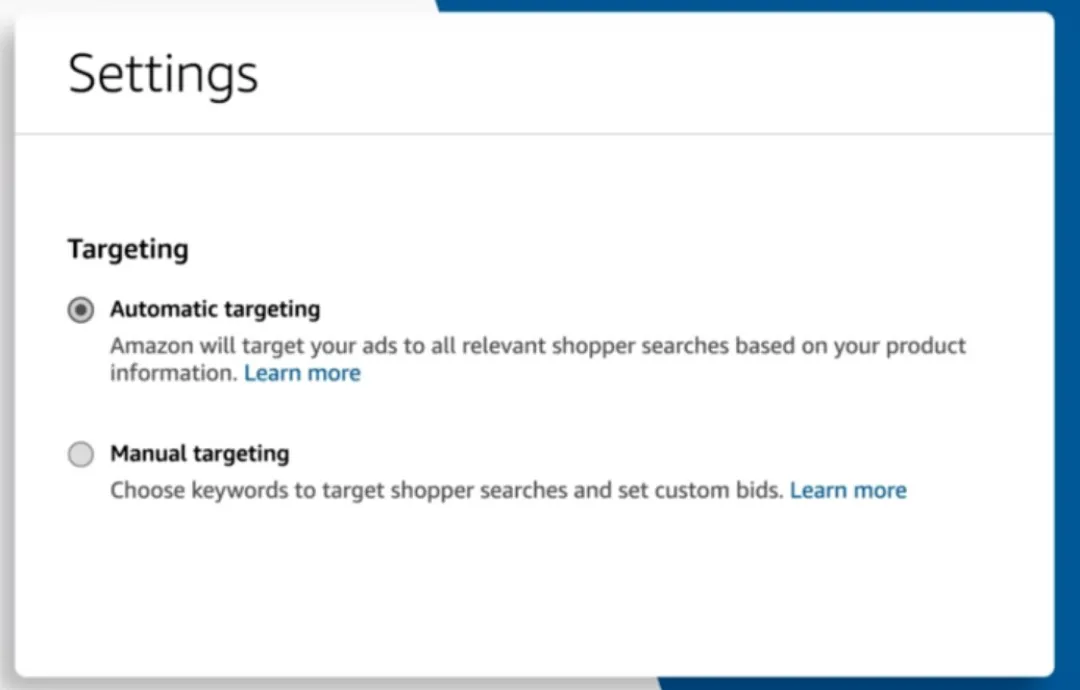
Step 7: Pick Your Targeting Strategy
Here, you have two choices to choose from for your first advertising campaign:
- Manual Targeting: In manual targeting, you manually enter the keywords you want to target. This gives you more control and allows you to be very specific about your product search.
- Automatic Targeting: This is the easiest and a great way to start, where a built-in search tool is used to find relevant keywords that are driving sales. Amazon’s algorithm automatically targets relevant customer searches and product pages based on your product listing.
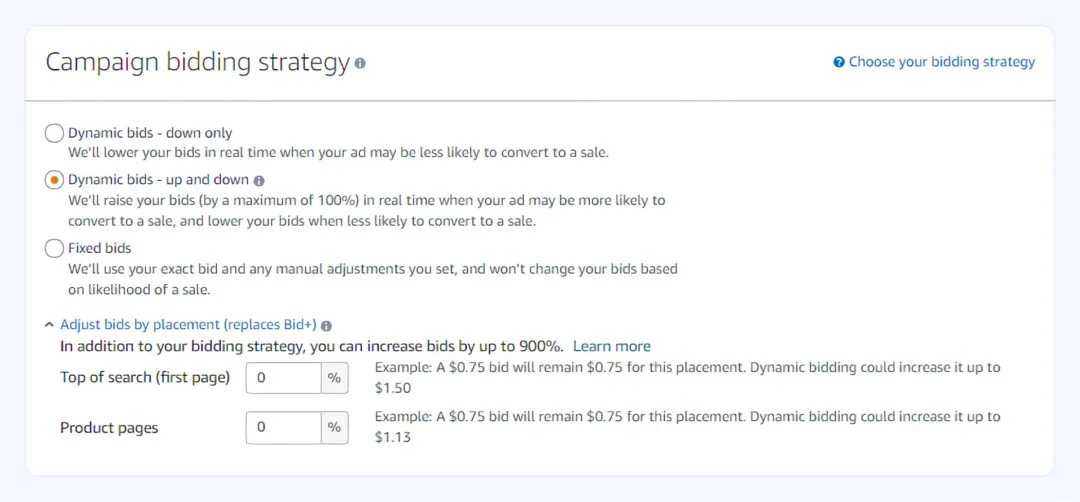
Step 8: Select Your Bid
Amazon offers three bidding strategies:
- Dynamic Bids (Down Only): Amazon lowers the bid when the ad is less likely to result in a conversion. This is the safest option for beginners.
- Dynamic Bids (Up and Down): Amazon adjusts the bid both higher and lower based on conversion likelihood. This can increase costs but also improve performance.
- Fixed Bids: In this, the bid stays constant regardless of conversion likelihood.
Step 9: Launch and Monitor Your Campaign
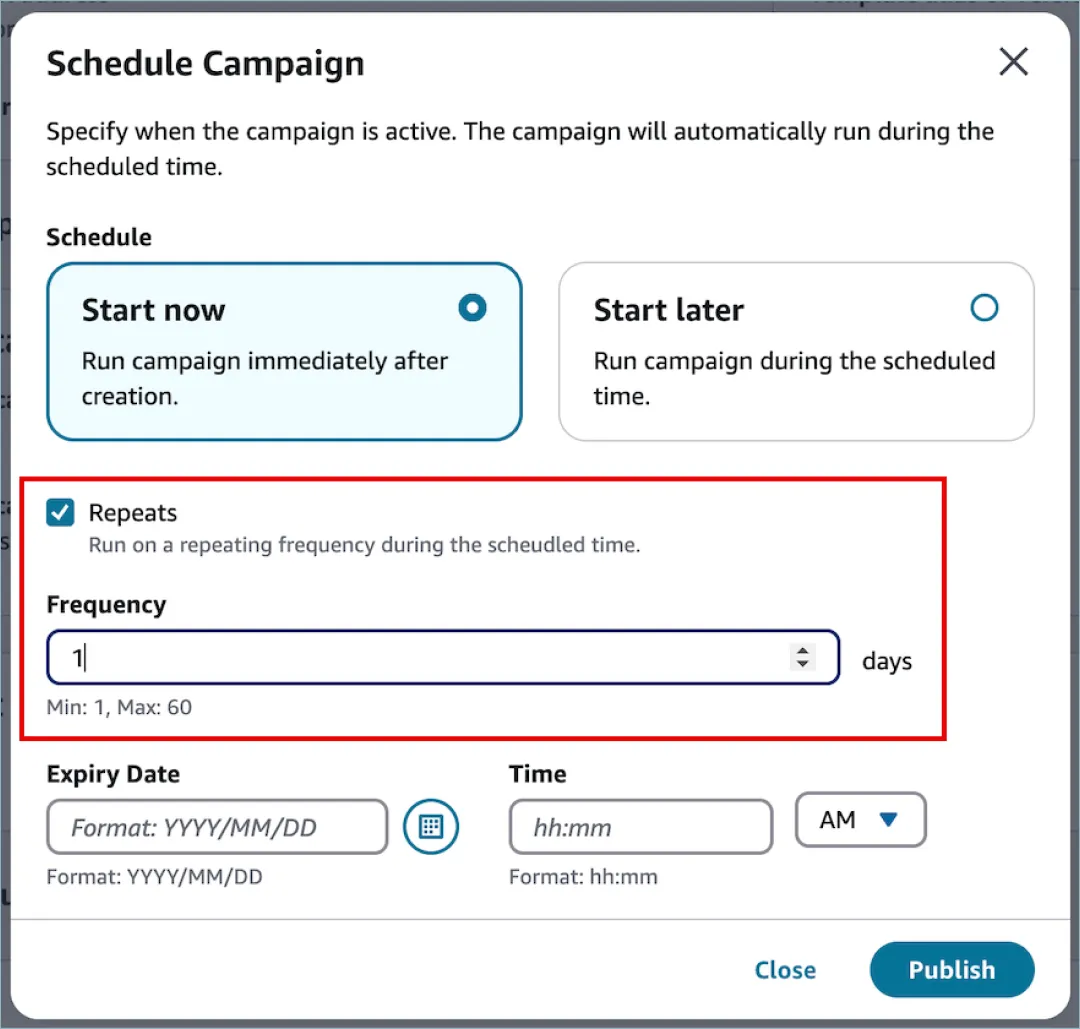
Review all the details effectively and then click "Launch campaign." Your ads should start showing within a few hours. Also, don't expect immediate results, thinking that it will do wonders overnight. Give your campaign at least two weeks to gather meaningful data. Check performance every few days and see how it is performing.
Pro tip: A great strategy for your first advertising campaign is to begin with automatic targeting for a week or two. After analyzing the "Search Term Report," you can find high-performing keywords and use them to build a more focused manual campaign.
Best Practices for Amazon Advertising Success
- Optimizing Product Listings: Your product listings should be optimized with clear, keyword-rich titles, bullet points, and descriptions. High-quality images are essential, along with up-to-date inventory and pricing. Also, ensure there are 4-5 reviews of your products, as products with reviews tend to show better results than products with zero reviews.
- Using Relevant Keywords: Your target keywords should best match your product. Don’t just focus on popular keywords; consider long-tail keywords also that might have less competition but still attract relevant traffic. Use a mix of both short and long-tail keywords for better performance.
- Monitoring and Adjusting Campaigns: If you are thinking that you have set the keywords and launched your campaign, now the work is done. Then, the answer is NO. Don’t just sit and forget about it. Regularly check which ads are performing well and which need adjustments. Identify high-performing keywords, add negative keywords, and optimize ads on a weekly basis for better results.
- Analyzing Performance Data: Amazon provides a detailed report that gives insights into your campaign performance. The data provided is your gold mine. You can use this data to make informed decisions on where to improve. Also, pay attention to your ACOS (Advertising Cost of Sales). This metric shows what percentage of your sales goes to advertising. If your ACOS is higher than your profit margin, you're losing money. If it's lower, you're profitable.
Common Mistakes to Avoid in Your Amazon Digital Marketing Journey
Everyone knows what’s good, but many forget to analyze the bad practices. Here are a few for better understanding.
1. Ignoring Negative Keywords
Negative keywords? What is this? This is a big mistake that people often make while advertising their first campaign on Amazon. Negative keywords prevent your ads from showing for irrelevant searches. For example, if you sell premium wireless headphones, add "cheap," "budget-friendly, and “wired” as negative keywords. This stops irrelevant users from clicking your ad, saving you money for more qualified customers.
2. Not Setting a Budget
As a beginner, you are not sure how much to spend on your ad. And you end up spending a lot, but the results are not good, and you are not gaining any profit from the sales. It’s easy to get carried away, and this might lead you into debt. Always set a daily budget for your campaigns or connect with digital marketing companies who will keep an eye on your ad spend. They will give you the right idea about how much less or more to spend based on the product and market demand.
3. Focusing Only on Low Bids
Amazon suggests bid ranges for good reason. While it’s tempting to bid low to save money, it can sometimes lead to your ads not showing up at all. You can't gather data or generate sales if your ads don't run. Start with a moderate bid, check campaign performance and sales, and then you can adjust your bidding strategy based on the product performance.
4. Bad Product Listings
Advertising enhances your product's strengths and weaknesses. If your product has terrible reviews or a poorly optimized listing, ads will just send traffic to a page that doesn't convert. Do your homework and fix the fundamentals before advertising.
5. Forgetting About Seasonality
It is not like every product will perform well throughout the year. Search volumes fluctuate throughout the year. It can happen that a red hoodie will perform well in December, especially during Christmas, but fail to perform well in summer. Therefore, it is important to adjust your campaigns based on seasonal patterns that are relevant to your products.
Key Metrics to Track
- ACOS (Advertising Cost of Sale): The percentage of attributed sales that you spent on advertising is known as the ACOS (Advertising Cost of Sale). (Ad Spend / Ad Sales) x 100 is the formula to calculate ACOS. For example, if you spend $10 on ads and make $50 in sales, your ACOS is 20%. A lower ACOS is better, but a "good" ACOS really depends on your profit margins and business goals.
- ROAS (Return on Ad Spend): This is the opposite of ACOS. It displays the amount of money you make for each dollar you spend. The formula is (Ad Sales / Ad Spend). Based on the above example, the ROAS will be 5. The higher the ROAS, the greater is the profit and campaign effectiveness.
- CTR (Click-Through Rate): The percentage of people who click on your ad after viewing it is known as the click-through rate, or CTR. A high CTR indicates that your advertisement is very appealing and relevant.
- Conversion Rate: The percentage of people who click on the ad and purchase the products you sell is known as the conversion rate. A high conversion rate suggests that the ad is reaching the right audience and that your product listing is compelling.
Summing Up
Amazon advertising is the one-stop solution for sellers who want to compete seriously in the market. The marketplace is too crowded and competitive; therefore, relying only on organic rankings makes it difficult for sellers to perform well in the market. Adhering to Amazon's advertising strategy, the platform gives you immediate visibility, precise targeting, and measurable results that directly impact your bottom line. Many businesses also leverage AI chatbots benefits to enhance customer support, improve engagement, and increase conversions. The opportunity is real as Amazon customers are searching for products like yours right now. Get started today, stay consistent with optimization, and watch your Amazon business grow.
Frequently Asked Questions
What is a good ACOS target?
A good ACOS target depends on your business goals and product margins. Generally, an ACOS between 15% and 30% is ideal for most sellers, but higher-margin products can afford a higher ACOS.
What is the cost to start advertising on Amazon?
There is no such defined cost. You can start advertising on Amazon for as little as $1 per day. However, a daily budget of $10-$20 is generally recommended for better results. This allows you to generate enough data to analyze and optimize the campaigns properly, ensuring you see meaningful results and a return on your investment.
How long does it take to see results from Amazon advertising?
Sellers can not see the results immediately after launching a campaign. Initial clicks and impressions on the product appear within hours of launching a campaign, but comprehensive performance data takes 2-3 weeks to accumulate. If the listing is solid and you have targeted the right audience, then sales can start within the first week, though optimization continues for months.
Do I need to register my brand to advertise on Amazon?
It depends. Brand registration is not required for sellers who are opting for Sponsored Products campaigns. However, enrollment in Amazon Brand Registry is required when opting for Sponsored Brands and Sponsored Display campaigns. Beginners generally start with Sponsored Products, then explore other ad types after enrolling in Brand Registry to access additional advertising options and brand protection features.
How do I set up my first Amazon ad campaign?
Selecting a product is the first step in creating your first campaign. Next, decide on an ad type, pick the right keywords, define your budget and bids, and launch. Track the impact of your campaign and make necessary adjustments.

Uncover executable insights, extensive research, and expert opinions in one place.
Related Content