Share It On:
 Witness the revolution! Learn about the diverse and powerful uses of generative AI in mobile apps, driving next-level personalization and creativity.
Generative technology has increasingly become an integral part of our mobile app experiences by creating personalized, real-time content tailored to individual preferences. But don’t confuse it with features like getting the next word suggestion on your keyboard when you type a message; that’s predictive modeling. Generative AI in your mobile apps can write your texts for you, summarize huge PDFs, and improve the way you write. But that’s not its limit.
For instance, travel apps now generate complete itineraries within seconds, factoring in budget, destination preferences, and time constraints. AI photo editing apps create professional-quality enhancements with a single tap, transforming ordinary snapshots into magazine-worthy images.
But here’s something you need to understand: if the app merely applies predefined filters, it’s not generative. But if it creates new pixels, objects, or compositions, then it is.
This transformation of these abilities of the tech is driving unprecedented market growth. The generative AI sector, as per Grand View Research, reached $16.87 billion in 2024, with projections hitting $109.37 billion by 2030.
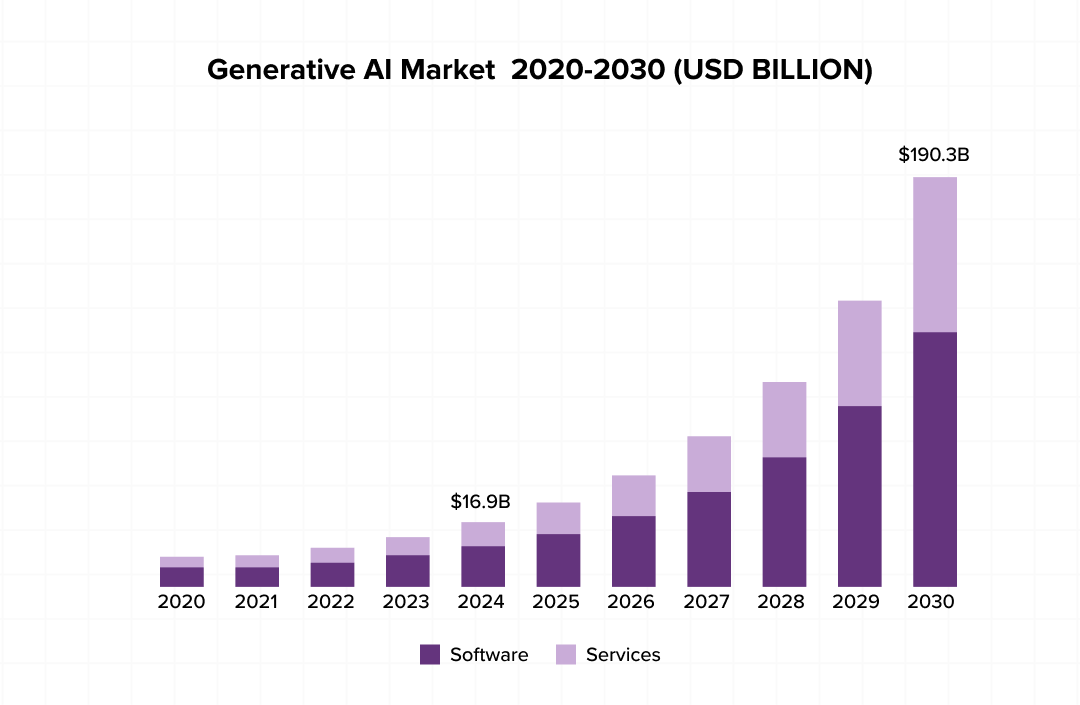
This surge signals a paradigm shift where mobile apps evolve from information consumers to content creators. Generative capabilities are becoming essential rather than competitive advantages.
Our guide explores user-facing innovations (like personalization), backend optimizations (including automated content creation), industry-specific implementations, and the technical strategies shaping next-gen mobile experiences.
The mobile landscape is changing fast, and understanding these applications is crucial for staying competitive.
Why Should Mobile Apps Integrate Generative AI?
People talk to their phones differently now. They ask questions, make requests, and expect real answers—not error messages or confused responses.
Smart technology learns from how people actually use apps, then creates content that fits their specific needs. The current landscape of healthcare app development can be a great example here. Instead of generic fitness advice, modern healthcare apps are designed to build workout routines around your actual medical conditions, recommend foods based on symptoms you've logged, and generate health summaries that focus on what matters to you personally.
This approach saves serious development time, too. Rather than manually writing thousands of different content pieces or responses, apps can create personalized versions on the spot. Companies using AI in mobile apps report much higher user engagement, which explains why generative AI adoption has become crucial for staying relevant in competitive markets.
How Is Generative AI Transforming Mobile App Industries?
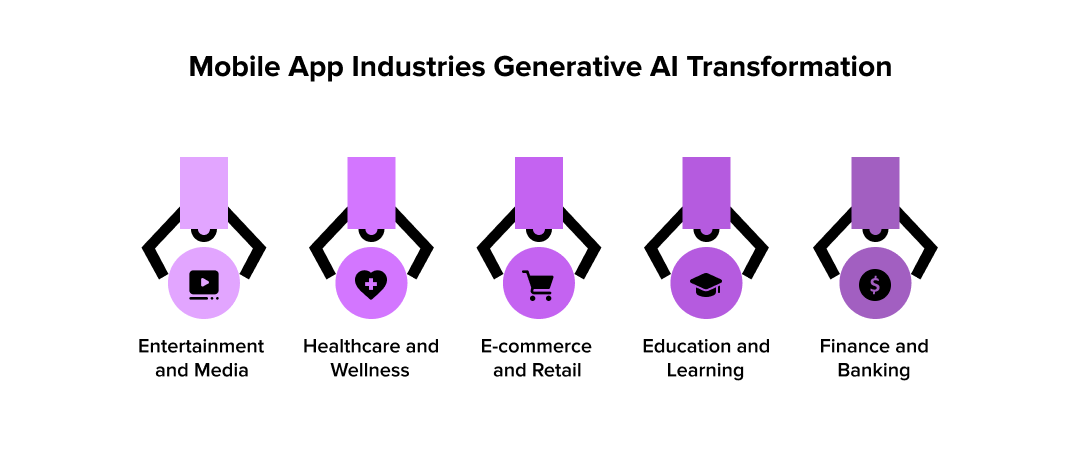
Generative AI is fundamentally reshaping mobile app industries by transforming static, one-size-fits-all applications into dynamic, intelligent platforms that adapt to individual user needs in real-time. This technology enables apps to create personalized content, automate complex processes, and deliver contextually relevant experiences that evolve based on user behavior and preferences.
Generative AI is transforming mobile apps with smarter experiences, personalization, and automated workflows, while new generative AI trends are shaping the future of mobile application development.

What are the Common Use Cases of Generative AI in Mobile Apps?
Mobile app developers are implementing generative technology across diverse functionalities, creating applications that produce original content rather than simply displaying existing information. These mobile app generative AI use cases demonstrate practical applications that solve real user problems while enhancing engagement and retention metrics.
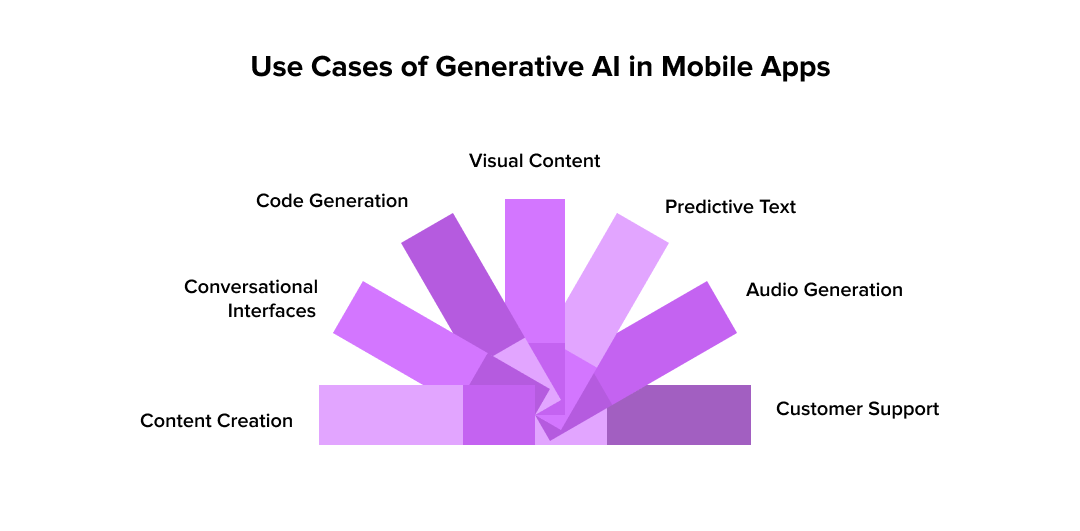
1. Content Creation and Personalization
By evaluating user behavior, preferences, and demographic information, generative AI allows mobile apps to produce highly customized experiences in real time. E-commerce platforms provide targeted product descriptions and graphic material, news applications make personalized summaries, and social media platforms create individualized captions and suggestions.
This transformative approach—leveraging AI in app personalization—enables platforms to dynamically adapt content and interfaces to each user's tastes, driving deeper engagement and satisfaction.
All app categories saw a marked increase in engagement rates and enhanced conversions as a result of this clever tailoring, which also includes automatic visuals, thumbnails, and promotional materials that appeal to certain users.
2. Conversational Interfaces and Chatbots
Intelligent AI chatbots have revolutionized user interactions by moving beyond scripted responses to deliver contextual, human-like conversations that understand intent and sentiment. These systems generate personalized responses based on conversation history and user needs while maintaining brand consistency.
From banking apps providing tailored financial advice to healthcare applications offering symptom analysis, chatbots adapt to individual situations and learn from each interaction. Through increasingly precise, pertinent responses that get better over time, this evolution has improved customer happiness while drastically lowering support expenses. Ensuring the responsible use of generative AI is also central to building and maintaining trust as these technologies reshape customer support experiences .
3. Code Generation and Development Assistance
Programming is now accessible to non-technical people thanks to development-focused apps that employ generative AI to automatically generate useful code fragments, full functions, and entire application components from natural language descriptions.
According to project needs, these AI code generators provide technical documentation, improve existing code, offer customized coding exercises, and develop API specifications. Applications for learning programming adjust their level of difficulty according to performance indicators, whereas code review programs automatically recommend security and optimization enhancements.
For teams with different levels of technical experience, this solution drastically cuts down on development time, preserves consistency in code quality, and speeds up time-to-market for applications.
4. Visual Content Generation and Editing
Generative AI is increasingly being used in video editing, design, gaming, and augmented reality applications to democratize professional-level capabilities. These applications create unique filters, avatars, logos, and virtual worlds automatically based on user preferences and the context of the material. A major shift is now occurring as more creative tools integrate on-device generative AI, enabling fast, privacy-conscious editing and personalized creativity directly on smartphones, tablets, and AR headsets without needing the cloud.
Without the need for costly software or technical know-how, users may produce realistic AR integrations, personalized gaming experiences, and publication-ready content. Through intelligent automation and adaptable interfaces that learn from user behavior and industry norms, this shift has made professional design tools accessible to regular users, enabling the development of high-quality content.
5. Predictive Text and Smart Composition
Based on user behavior and recipient relationships, generative AI in mobile communication apps generates intelligent text recommendations, full sentences, and contextually relevant responses. These programs provide accurate translations that maintain cultural context while offering real-time grammar fixes, style enhancements, and tone modifications.
While preserving individual writing styles and cutting down on time spent on routine correspondence in both personal and professional contexts, voice-to-text systems generate accurately formatted transcriptions with automatic capitalization and punctuation, greatly increasing communication efficiency.
6. Audio and Music Generation
By empowering people to create high-caliber music, podcasts, and sound design without the need for costly equipment or formal expertise, generative AI transforms the production of audio content for mobile apps. While podcast systems produce automated transcriptions and tailored suggestions, music applications produce creative compositions depending on genre and mood choices.
For accessibility and localization, voice synthesis technology generates natural speech in a variety of languages, while sound design applications generate personalized audio effects based on user choices. The democratization of audio production gives content producers access to professional skills that were previously unattainable.
7. Automated Customer Support
Personalized troubleshooting instructions, automated FAQ answers, and intelligent ticket prioritizing based on user behavior and device data are now all made possible by support systems using generative AI. These systems offering AI in customer service produce sentiment analysis reports, resolution deadlines, and adaptive documentation that accommodate team procedures and user skill levels.
AI-powered support technologies optimize resource allocation, decrease resolution times, and enhance customer happiness by automating common questions and building searchable knowledge bases. When needed, they can also smoothly escalate difficult situations to human agents.
Here are some use cases to give you an example:
| App Category | Example Apps | AI Application |
|---|---|---|
| Conversational AI | ChatGPT, Gemini, Microsoft Copilot, skywork.ai | Human-like text responses, task assistance, and email drafting |
| Image/Video Generation | Adobe Express, PicsArt AI, DALL-E | Text-to-image creation, video generation, and visual asset creation |
| Content Recommendations | Netflix, Spotify | Personalized suggestions, interface customization |
| Creative Writing | Copy.ai, Rytr | Marketing copy, blog posts, social media content |
| Interactive Storytelling | AI Dungeon, AI Tales | Dynamic storylines, character dialogues, and adaptive gaming |
| Language/Accessibility | Be My Eyes, Text-to-Speech apps | Image-to-text conversion, translation, voice synthesis |
| Music Creation | Amper Music, AIVA | Original compositions, backing tracks, sound effects |
| Design Tools | Canva AI, Figma AI | Logo creation, layout suggestions, design automation |
| Coding Assistance | GitHub Copilot, Replit | Code generation, debugging, and documentation |
| Health & Fitness | MyFitnessPal AI, Headspace | Personalized workouts, meditation sessions, and health insights |
The diversity of the uses of generative AI in mobile applications continues expanding as developers discover new opportunities for content creation, user interaction, and process automation. Finding precise consumer demands and putting solutions in place that offer real value rather than novelty elements is key to success.
The Road Ahead: Future of Generative AI in Mobile Apps
The mobile app industry is at a turning point in its history, when generative technology offers previously unheard-of possibilities as well as solutions for difficult problems that demand quick fixes. Which apps succeed in this changing environment will depend on how well they comprehend these challenges and get ready for new advancements.
As for how it’s impacting AI trends, here are some numbers we gathered!
1. Privacy and Data Security Concerns
User trust remains fragile, with 57% of consumers globally agreeing that AI poses a significant threat to their privacy. Mobile apps face additional scrutiny as 60% of users express concerns that tools are primarily a way for AI development companies in the USA ans across the globe to collect more data. This growing focus on generative AI security is pushing businesses to prioritize secure AI architectures, transparent data policies, and privacy-first mobile experiences.
2. Battery Life and Performance Optimization
Technical limitations continue to constrain widespread adoption, with 38% of respondents believing AI features will drain a device’s battery life. This issue forces developers to strike a balance between device performance and functionality, which has a direct impact on user experience and retention rates.
Maintaining competitive advantage in resource-constrained contexts requires optimizing algorithms for mobile processors, putting in place effective caching mechanisms, and giving consumers fine-grained control over AI features.
3. Market Saturation and Differentiation
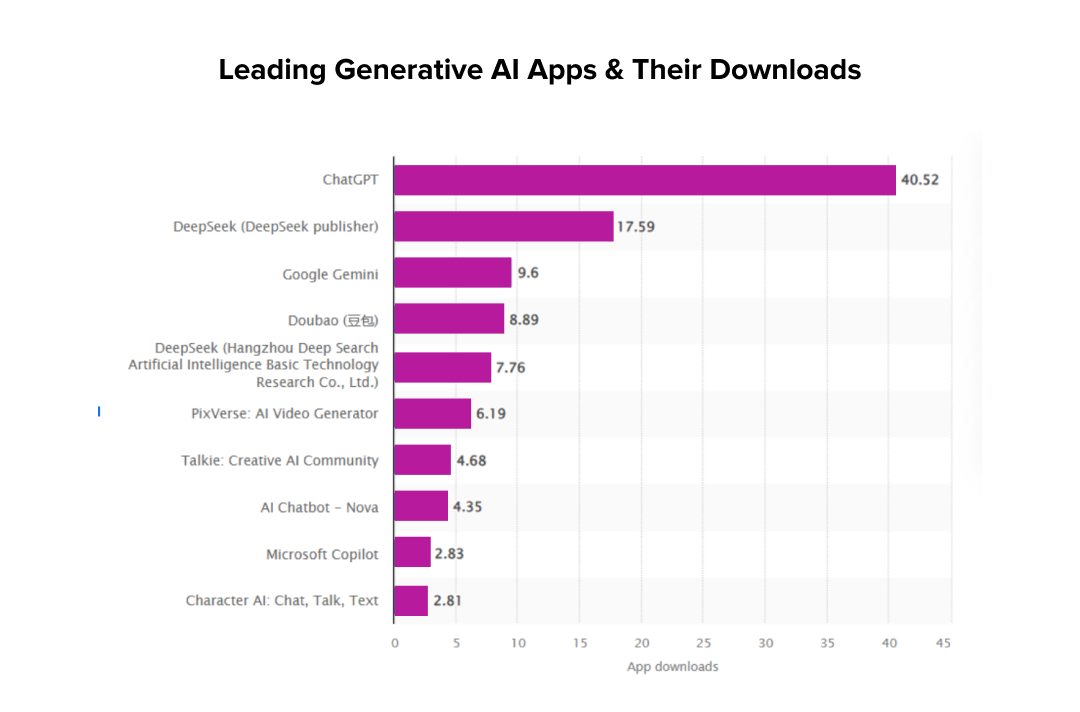
The market for generative AI applications is increasing rapidly in spite of increased competition. 25 different Generative AI apps made more than 10 million downloads, and 16 of them generated at least $10 million in IAP revenue in 2024. In January 2026, ChatGPT had over 40.5 million downloads, making it extremely difficult for new competitors to gain market share. Success requires concentrating on certain use cases rather than competing directly with well-established platforms.
4. Regulatory Compliance and Ethical Standards
As governments throughout the world implement AI governance frameworks, regulatory pressure is increasing. The technology community recognizes this urgency, with 91% of IEEE study respondents agreeing that 2026 will see "a generative AI reckoning" regarding what the technology can or should do. Apps need to prepare for stricter compliance rules, content moderation standards, and transparency pledges that will alter the way they plan and manage their operations.
5. Enterprise Adoption and Integration
Business applications are driving significant growth, with 71 percent of organizations regularly using generative AI in a minimum of one business function. However, 64% would use generative AI more if safety and security were guaranteed, and 45% would use it more if integrated into existing technology. This creates opportunities for mobile apps that prioritize seamless enterprise integration and robust security features.
6. Future Applications and Market Expansion
Moving forward, recommended uses of generative AI in 2026 center on targeted industry solutions over generic platforms. Recent surveys indicate 70% of customer experience leaders will deploy AI across multiple touchpoints by 2026. Instead of trying broad-spectrum applications, companies that achieve breakthrough outcomes concentrate on underserved market sectors, develop in-depth sector knowledge, and create precise problem-solving tools.
7. Development Complexity and Resource Requirements
Building these features isn't simple—82% of developers now use generative AI across multiple development stages, creating workflow complexity most teams weren't prepared for. Success requires investing in new skills, robust testing systems, and infrastructure that can handle AI workloads without compromising app performance or release timelines.

Conclusion: The Future of Generative AI in Mobile Apps is Already Here
Any well-known app you open today will demonstrate the use of generative technologies. Fitness applications create workouts around your schedule and constraints, Spotify creates tracks that perfectly capture your mood, and online retailers recommend items that seem hand-picked for your preferences. This isn't experimental technology anymore—it's become the standard users expect.
The real impact of several uses of generative AI in mobile apps goes beyond flashy features. People's interactions with their devices have completely changed as a result. Platforms that generate individualized experiences in real-time are more competitive than apps that only show static data.
Frequently Asked Questions
What are the uses of generative AI in mobile apps?
Generative AI uses powers diverse mobile app functions that create original content rather than process existing data:
- Content personalization - Personalized news feeds, songs, and product suggestions
- Conversational interfaces - Voice assistants and intelligent chatbots
- Visual creation - Photo editing, design generation, and AR experiences
- Text assistance - Smart keyboards, writing tools, and translation services
- Audio production - Music composition and voice synthesis
How is generative AI changing creative work?
Generative AI democratizes professional-level creative skills by promoting human innovation and automating technology procedures. These days, music platforms create backing tracks for any genre, design programs create logos and marketing materials instantly, and writing tools provide astute suggestions that maintain individual style, freeing up artists to focus on ideas rather than execution.
Which industries benefit most from generative AI in mobile apps?
Due to their needs for content and customization, the sectors with the highest adoption rates are finance, e-commerce, healthcare, entertainment, and education. User involvement in these sectors has been shown to rise quantitatively; for instance, streaming apps have 40% greater retention rates, while healthcare applications with personalized recommendations and adaptive interfaces have better patient compliance rates.
What are the main challenges of implementing generative AI in mobile apps?
Mobile apps that use generative AI face a number of challenges in a variety of fields.
- Significant storage requirements, computing limitations, and battery drain are examples of technical constraints.
- Business obstacles include high development costs, privacy issues, and regulatory compliance.
- Steep learning curves for new features and problems with trust are obstacles to user adoption.
- Market challenges include intense competition and the need for a clear difference among rising consumer expectations.
How much does it cost to integrate generative AI into mobile apps?
Building generative features costs anywhere from $50,000 for basic setups to $500,000+ for advanced functionality. You'll also pay monthly fees for cloud processing and model access. Most developers start with existing APIs like OpenAI's to test user interest before investing in custom development.
What programming languages and tools are used for generative AI mobile development?
TensorFlow and PyTorch frameworks allow Python to dominate backend development, while Swift and Kotlin manage native mobile interaction. Well-known technologies include Hugging Face models, Google's ML Kit, and OpenAI APIs. Cloud platforms like AWS, Google Cloud, and Azure provide scalable infrastructure, and many developers use Flutter or React Native for cross-platform deployment.

Uncover executable insights, extensive research, and expert opinions in one place.
Related Content