Share It On:
 Avoid the trap of rushed builds—see how the Software Development Life Cycle (SDLC) improves every stage of development.
Look, here's what nobody tells you about the software development life cycle: it's not just another corporate acronym. It's the difference between shipping products that work and burning millions on software that nobody wants to use.
Your best weapon against possible chaos in any journey from idea to a final digital product is a clear process. That’s the software development life cycle, or SDLC. This is not just another tech acronym. The SDLC process is your strategic framework. It helps you turn a great idea into a working, secure, and valuable product.
What is a Software Development Life Cycle?
Let's keep this simple. The software development life cycle (SDLC) is a roadmap. It gives your team a series of clear phases to follow. These steps guide you from a rough concept to a finished and maintained piece of software. It’s the difference between a disciplined army with a battle plan and a mob running into a fight.
The SDLC helps you answer the big questions in the right order.
- What are we building and why?
- How will we build it? Did we build it right?
- How do we keep it running?

Software Development Life Cycle Phases
Let's make this real. Without an SDLC, developers might start coding features they think are cool. The result? Testers would get a broken product. The marketing team would have nothing to sell. All that transitions into chaos.
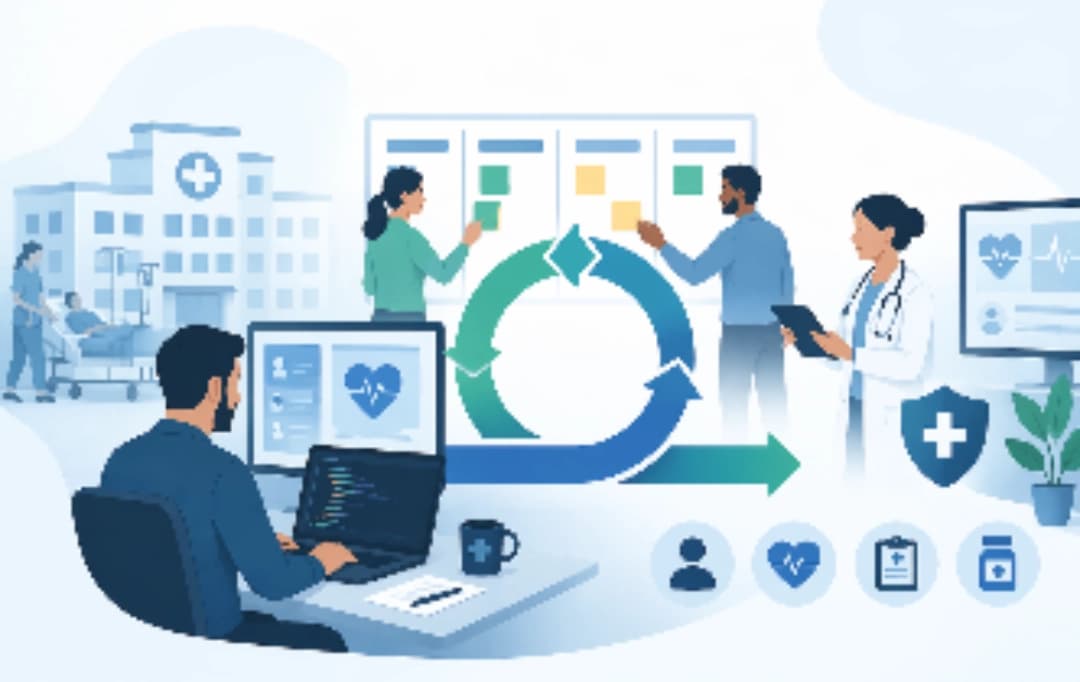
The stages of the software development life cycle keep the development journey clean and technical:
1. Planning
Leaders define the goal in a Project Charter: "Create a subscription-based tool to help remote teams manage tasks and communication." They conduct a feasibility study and secure a budget.
2. Requirements
The team creates a Software Requirements Specification (SRS) document. This document details functional requirements (users must be able to create, assign, and comment on tasks) and non-functional ones (the platform must support 1,000 concurrent users with less than 2-second page loads). This is where the knowledge of software development trends comes in handy.
3. Design
Architects map out the system. They create a High-Level Design (HLD) for the overall microservices architecture and a Low-Level Design (LLD) detailing each service and its API.
4. Development
Now, the engineers write the code based on the design, using a version control system like Git to manage changes.
5. Testing
QA teams execute a multi-layered testing strategy for an impactful software risk analysis. Unit tests check small code blocks, Integration tests ensure services communicate correctly, System tests validate the entire platform, and User Acceptance Testing (UAT) is done with a beta group of project managers.
6. Deployment
The tool is pushed to production using a CI/CD pipeline. The team might use a Canary Release, deploying to a small set of beta customers first to monitor for issues before a full launch. This is a critical part of any modern SaaS application development strategy.
7. Maintenance
A team keeps watching the tool with monitoring software. They fix bugs (corrective maintenance) and add new features based on user feedback (perfective maintenance).
This structured flow prevents the chaos that sinks projects.
The Brutal Importance of a Good SDLC
Why use a formal process? Because the other option is failure. The hard truth is that many software projects are set up to fail. A 2023 survey published by Statista found that configuration or change management issues led to over 64% of software failures by February.
A good SDLC attacks the root causes of failure. But the software development life cycle's importance exists beyond that:
1. Saves Money
IBM found that a bug can increase the software development cost up to 15 times more compared to one fixed during the early phase of development. An SDLC helps you find these problems early when they are cheap to fix.
2. Creates Clarity
When you have clear stages and deliverables, everyone knows their job. There are no more "I thought you were doing that" talks that kill progress. It defines who is responsible for what, from the product manager signing off on requirements to the QA lead approving a build.
3. Manages Risk
A good process forces you to check for risks upfront. Through feasibility studies and risk analysis in the initial phases, you find potential technical, financial, and market-related problems before you have spent millions, not after.
4. Improves Quality
You build a better product by including specific quality checks and security tests at every stage. Quality becomes a proactive, continuous effort rather than a reactive, last-minute inspection. This helps you move from fixing bugs to building quality from the start.
5. Enhances Predictability and Scalability
You can't scale chaos. A repeatable process means you can more accurately predict timelines and budgets. It gives you a playbook to onboard new engineers or even entire teams without derailing the project, making growth manageable instead of destructive.
6. Ensures Stakeholder Alignment
The SDLC's structured phases create formal checkpoints, like design reviews and user acceptance testing. This forces critical conversations between business leaders and technical teams, ensuring the product being built is the product that's actually needed. It prevents the dreaded "this isn't what we asked for" disaster at the finish line.
7. Meets Compliance and Regulatory Demands
In many industries like finance, healthcare, or government, a documented process isn't just a good idea—it's often a legal requirement. The SDLC provides a clear, auditable trail of documentation and sign-offs that satisfy regulators and protect your business. An example of such documents can be a software development agreement signed between clients and the service provider.

SDLC Models: Choosing Your Battle Plan
The SDLC gives you the stages, but software development life cycle models give you the strategy. There is no single "best" model. The right way to choose an SDLC model depends on your project, your team, and how much you expect things to change.
Is SDLC a waterfall or agile? This is a simple question with a clear answer. The SDLC is the whole lifecycle. Waterfall and Agile are just two models for managing it.
| Model | Description | Best For |
|---|---|---|
| Waterfall | A straight-line model. You must finish each phase before the next begins. It is rigid and has a lot of rules. | Projects with fixed, clear needs that will not change. |
| Agile | A flexible model that works in small cycles ("sprints"). It focuses on customer feedback and quick changes. | Projects where needs are expected to change. It's the most common model used today. |
| V-Model | A version of Waterfall that adds a testing step for each development phase. It focuses heavily on quality checks. | Projects where mistakes are very costly, like in medical or flight software. |
| Spiral Model | A model focused on managing risk. The project moves through planning, risk analysis, building, and review in a loop. | Large, complex projects where you need to check for risks at every turn. |
| DevOps Model | A culture and a process that joins Development (Dev) and Operations (Ops). It automates everything from code to deployment. | Teams that want to move fast and release updates all the time. |
Staying aware of new methods is also key. The world of software development is always changing, and modern challenges often require modern solutions.
SDLC Security: Don't Add Armor at the End
One of the biggest mistakes you can make is to treat security as a final step. That's like building a castle and then trying to dig a moat. Good software development life cycle security puts security into every single phase. We call this DevSecOps. As the requirement of SDLC evolves, DevSecOps trends are developing in parallel.
The main idea is to "shift left." This means you move security from the end of the process to the very beginning.
- Planning: Include security needs from day one. A tip? Pair up AI and cybersecurity for better defense.
- Design: Look for threats before you write any code.
- Development: Use secure coding rules.
- Testing: Use security tests to find weak spots.
- Maintenance: Watch the live app for new threats.
Getting this right can be hard, which is why many leaders partner with expert software development companies to build security into their process from the start.
Best Practices vs. Hard Realities in the SDLC
The path is clear, but walking it is hard. Here are some best practices and the real challenges you will face.
| The Hard Reality (The Challenge) |
The Data-Driven Impact (Why It Hurts) |
The Best Practice (The Solution) |
|---|---|---|
| Unclear Goals & Requirements | When the target is fuzzy, teams build the wrong product. This leads to massive rework, wasted effort, and a solution that fails to meet critical business needs. | Requirements Gathering: Create a detailed Software Requirements Specification (SRS) document. Get formal sign-off from all stakeholders before any code is written. |
| Scope Creep | Uncontrolled changes steadily inflate budgets and push deadlines. This forces teams to make compromises on quality and turns promising projects into late and overpriced failures. | Implement Formal Change Control: Document the initial scope and enforce a strict process for any changes. Every new request must be evaluated for its impact on cost, timeline, and resources before approval. |
| Poor Communication | Silos between teams and stakeholders lead to critical misunderstandings and missed requirements. This guarantees a final product that doesn't match expectations and erodes trust. | Establish a Communication Plan: Define who needs what information, when, and how. Use centralized project management tools to act as a single source of truth, eliminating confusion from scattered messages. |
| Inadequate Resource Planning | Spreading key team members too thin creates project-wide bottlenecks. This leads to burnout, guarantees delays, and encourages shortcuts that compromise the quality of the work. | Proactive Resource Management: During the planning phase, identify the exact skills and roles needed. Allocate resources early and use management tools to track allocation in real-time to prevent overload. |
| Neglecting Quality Assurance | Skipping rigorous testing accumulates "technical debt." This makes future updates slower and more expensive and ultimately erodes customer trust when bugs inevitably appear in production. | Integrate Continuous Testing: Embed quality assurance throughout the entire lifecycle. Automate tests, conduct peer code reviews and run security checks continuously. Make quality everyone's job, not just QA's. |
SDLC vs. Project Management: What's the Difference?
This is a final key point.
The SDLC defines the steps to build software (the "what").
Project Management is the job of planning and guiding the project to meet its goals (the "how").
Your project manager uses the SDLC as their map. They manage the schedule, the team, and the budget. The SDLC gives you the structure. Project management gives you the control to get it done. Whether you hire a team in-house, work with global talent from Software Development Companies in the USA or, find experts from cost-efficient talent pools like Software Development Companies in India, this process is your key to success.
The software development life cycle is not about pointless rules. It is about survival. It's the frame that helps you manage the hard work of building technology. It is how you move from chaos to control. As a leader, you do not need to code, but you must understand the process. Your company’s future depends on it.
Frequently Asked Questions
What are the 7 phases of SDLC?
The seven key phases are Planning, Requirements Gathering, Design, Development, Testing, Deployment, and Maintenance. These steps guide a software project from an idea to a finished product and beyond.
Is SDLC a waterfall or agile?
The SDLC is the total framework, not a single method. Waterfall and Agile are two different models used to manage the SDLC. The waterfall methodology is a straight-line path. Agile is a flexible, looping path. You choose the model that fits your project.
What is SDLC for beginners?
For beginners, the SDLC is a recipe for building software. You follow steps in a specific order to get a good result. You plan first, then design, then build, and then test. This simple order helps you create a quality product that works.
Why is SDLC security important?
SDLC security is vital because fixing security flaws after launch is very expensive and can ruin your company's trust. By adding security to every phase (DevSecOps), you protect data, prevent hacks, and keep customers safe.

Uncover executable insights, extensive research, and expert opinions in one place.
Related Content