Share It On:
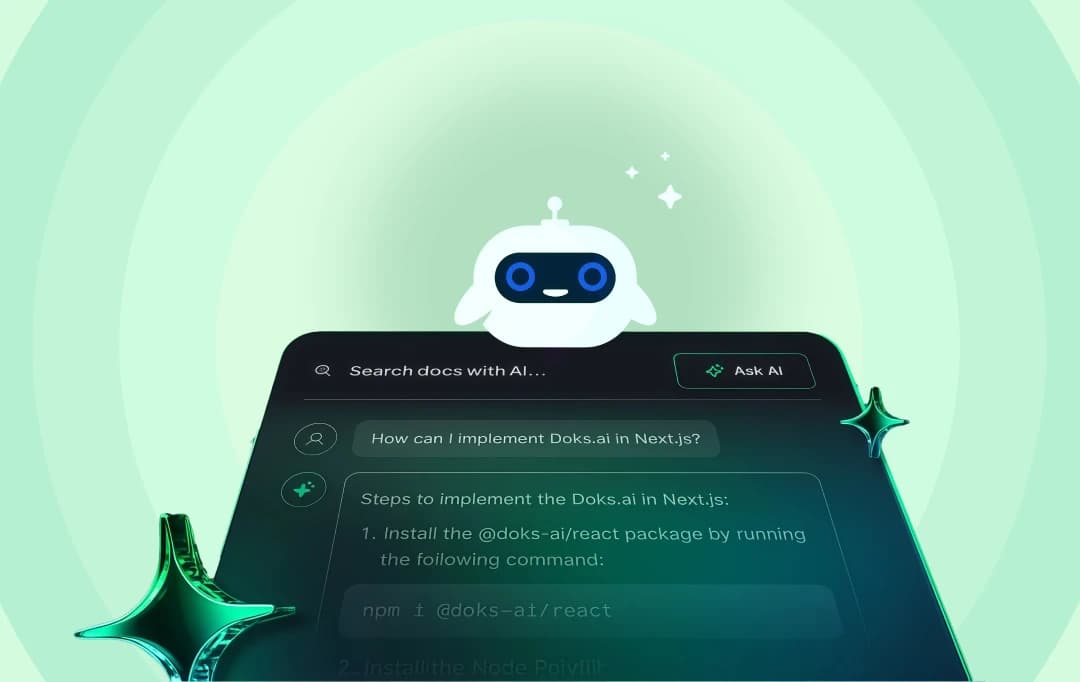 Moving far beyond rigid scripts, today's AI chatbots use machine learning to learn from every interaction, grasp complex context, and proactively solve user needs.
AI Let's redefine what a 'chatbot' means in 2026. The clunky, rule-based bots that once defined the experience are now relics. Today, we're dealing with intelligent conversational AI that doesn't just follow scripts; it understands intent, learns from context, and anticipates user needs with remarkable accuracy.
For any forward-thinking business, this evolution represents a powerful strategic advantage. This isn't about simply automating replies; it's about deploying a scalable workforce that resolves complex customer issues, personalizes engagement at every touchpoint, and frees your human experts to drive innovation. It’s a fundamental shift from managing support tickets to actively shaping the entire customer journey.
Ultimately, AI chatbots have proven their ROI, transitioning from a 'nice-to-have' feature to a cornerstone of growth. They are no longer just a tool for cost-cutting in support centers; they are a proactive engine for generating revenue, creating operational leverage, and building deep, lasting customer loyalty.
Benefits of Chatbots for Businesses
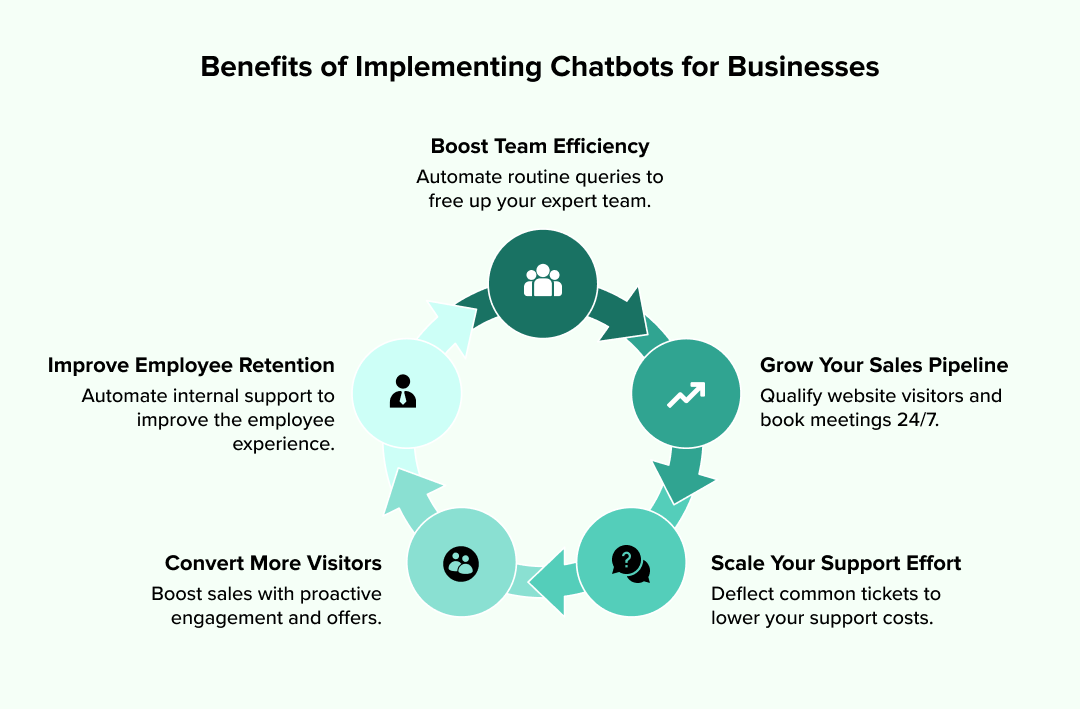
The core benefits of AI chatbots are about creating a win-win situation: your customers get a better experience, and your business becomes more efficient and profitable. Let's learn about the benefits AI chatbots bring to your business.
1. Automation of Repetitive Tasks
AI chatbots tackle the core challenge of inefficient customer service by automating up to 80% of repetitive, low-value tasks such as answering FAQs, collecting lead information, and providing order status updates. This strategic automation helps human agents to focus their expertise on high-value, complex inquiries that demand nuanced problem-solving and empathy, ultimately creating a more streamlined and cost-effective support system.
2. Generate and Qualify Leads
Chatbots are an invaluable tool for generating and qualifying leads, turning passive website visitors into active prospects. They can begin collecting visitor information even before a conversation starts and then qualify leads by asking strategic questions about the customer's journey. This saves your agents' time and ensures they connect with prospects who are already a good fit.
RapidMiner, a data science platform, successfully implemented a chatbot named MarlaBot that qualified over 4,000 leads and influenced 25% of their sales pipeline, showcasing the significant impact of a well-designed chatbot qualification system on business growth.
3. Reduces Inbound Support Tickets
A primary benefit of chatbots is the reduction of inbound customer requests. By automating answers to frequent questions, chatbots can significantly lower the number of support tickets your team needs to handle. This automation directly impacts your bottom line by reducing the need for a large support staff and cutting customer service costs by up to 30%. With routine inquiries handled instantly, your human agents are supported to focus on complex, high-value issues, leading to a more efficient team and a stronger return on your investment.
4. Increase the Conversion Rate
A chatbot directly impacts your sales funnel by proactively engaging visitors to increase conversions. By offering specific help—such as answering questions, guiding users to the right product, or presenting a tailored discount—the bot turns passive browsers into active customers. In this way, chatbots can help you increase your conversion rate by 23%, significantly boosting sales by converting visitors who might have otherwise left your site.
5. Reduces Employee Churn
Replacing an employee is a significant drain on resources. Chatbots offer a direct solution by creating a better employee experience that encourages retention. They simplify internal processes by streamlining onboarding, automating HR and IT support, and gathering confidential employee feedback. This proactive support helps you retain top talent and avoid the costly and time-consuming cycle of hiring replacement staff.

Benefits of Chatbots for Customers
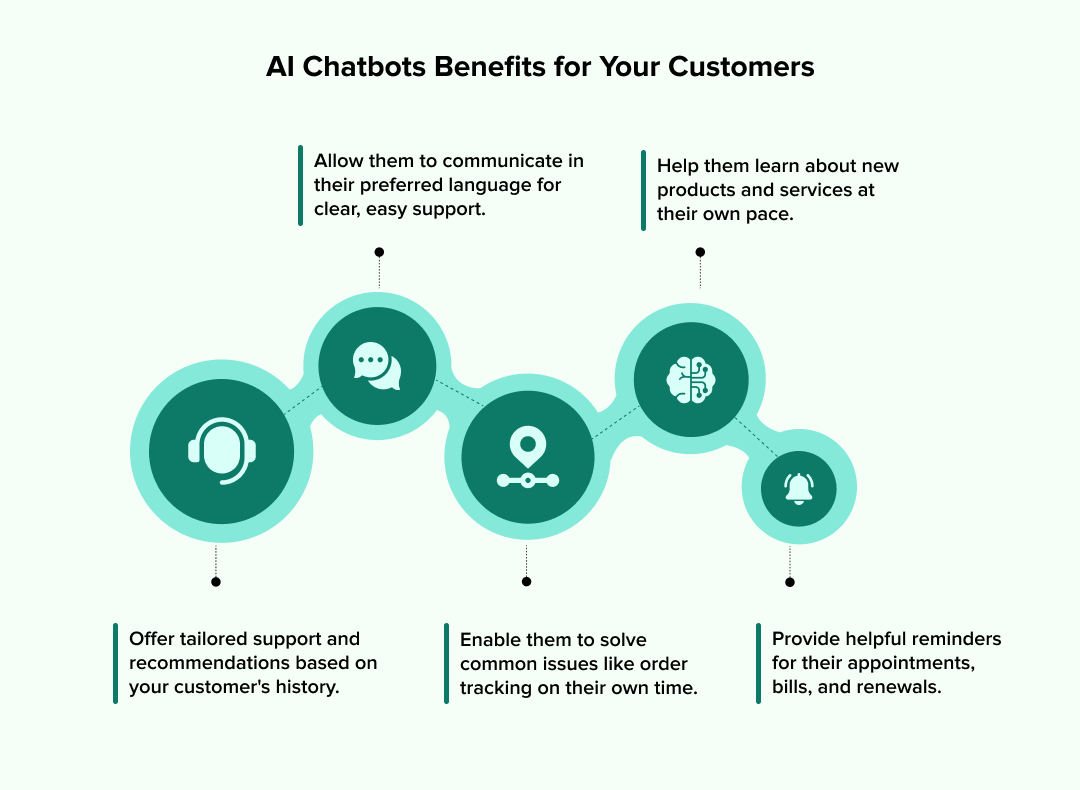
Now that you are aware of the AI chatbot benefits for business, let's take a look at how they benefit your customers.
1. A Personalized Experience
Modern customers expect a high degree of personalization, a fact confirmed by a McKinsey study where 71% of consumers stated this expectation. The AI chatbots are designed to meet this standard by securely using a customer's past history to provide relevant support and suggestions. This makes every conversation feel more helpful, efficient, and tailored to the individual.
- Customers receive relevant recommendations based on their history.
- Customers do not need to repeat their account or order details.
- A conversation can be continued across different devices without starting over.
2. Provide Multilingual Support
Effective communication is essential for a positive customer experience, regardless of the user's native language. AI chatbots facilitate this by offering multilingual support, breaking down linguistic barriers for a global audience. This capability ensures that users can articulate their needs with precision and receive clear, effective support.
- Articulate inquiries with precision in a native language.
- Receive accurate information without linguistic ambiguity.
- Experience a more accessible and inclusive service.
3. Offering Self-Service Options
Modern customers value their time and often prefer to solve problems themselves, a trend confirmed by Zendesk research showing that 67% of customers use self-service options. A great chatbot is designed for this reality, helping users with an intuitive guide to find answers and handle routine tasks, freeing your support team for more complex issues.
- Tracking the status of an order or delivery.
- Resetting a password or managing account details.
- Scheduling, rescheduling, or canceling an appointment.
- Checking an account balance or recent transaction history.
- Asking basic questions like business hours, locations, or return policies
4. Educational Guidance and Onboarding
A chatbot can act as a personal tutor, patiently guiding your customer through the features of a new product, explaining complex financial or insurance terms, or helping you get started with a new service, ensuring they feel confident and well-informed.
- Understand complex product features easily.
- Get step-by-step onboarding for new services.
- Learn at their own pace without pressure.
5. Proactive Account and Life Management
A great chatbot doesn't just wait for your customer to ask a question; it can act as a helpful personal assistant. It can proactively send them important reminders, such as an upcoming appointment, a bill's due date, or a subscription that's about to renew, helping them stay organized and avoid missed deadlines.
- Receive timely reminders for appointments or renewals.
- Get helpful alerts about your account activity.
- Stay organized with proactive notifications.
Chatbot Benefits by Industry
The benefits of AI chatbots cannot be limited to a single industry, as each industry has a different use case as enumerated below:
1. Digital Marketing and Sales
For B2B marketing and sales teams, chatbots are a primary engine for pipeline growth. Drift is a pioneer in this space, using its conversational AI to engage business prospects on a website, qualify their intent in real-time, and automatically book sales meetings.
- Provides real-time engagement on websites.
- Qualifies marketing leads conversationally.
- Provides personalized and contextual solution recommendations.
- Book sales demos and meetings automatically.
2. Insurance
In the B2B insurance sector, chatbots streamline communication between insurers, brokers, and business clients. An insurance brokerage can use a conversational platform like Intercom to qualify business leads, answer questions about complex commercial policies, and route clients to the right specialist.
- Delivers personalized quotes for business insurance.
- Explains details of complex policy coverage.
- Assists business clients with the initial claim-filing process.
- Sends automated reminders for policy renewals.
3. Real Estate
Modern real estate marketing requires nurturing leads over the long term, not just capturing them. This is where a platform like Ylopo excels with its AI chatbots, which can engage leads for months with human-like text conversations. It intelligently follows up, revives old leads, and identifies the precise moment a prospect is finally ready to speak with a human agent.
- Engages new and old leads in long-term conversations.
- Answers specific questions about properties and the market.
- Nurtures prospects automatically over weeks or months.
- Identifies the perfect time to book an appointment with an agent
4. Education and E-Learning
In higher education, chatbots are used to provide scalable, personalized support across the entire student journey. A leading example is Ivy.ai, a B2B SaaS platform used by universities to answer complex questions about admissions, financial aid, and student services, ensuring students get the instant help they need 24/7.
- Answers detailed questions on admissions and financial aid.
- Provides 24/7 support for current students and faculty.
- Frees up staff for more complex student advising.
Real Success Stories of AI Chatbots
Uncover the impact of AI chatbots in reshaping industries. These real-world success stories highlight how advanced AI is enhancing customer interactions and supporting business growth.
1. How a US Financial Giant Saved 10,000 Agent Hours with FreshChat
The Company Details
- A leading US credit card provider
- 57 million+ cardholders
- 8,000+ customer service agents
The Challenge: A Dated Approach to Support
Here were the main friction points:
- Customers faced long queues and lost chat histories.
- Agents struggled with complex, clunky software.
- The business lacked a single, unified platform for all its teams.
The Solution: A Shift to Modern, AI-Powered Messaging
After reviewing over 20 options, they chose a new path forward. Their strategy was two-fold:
- Deployed Freshchat for continuous messaging on web, mobile, and iMessage.
- Integrated a custom AI Virtual Assistant using Freshchat's flexible APIs.
- Unified all 8,000 agents and business units onto a single, secure platform.
The Results: Transformation with Freshchat
- 10,000+ agent hours saved annually via AI
- 10x growth in chat volume with zero new hires
- 60% reduction in agent training time.
- 65% boost in agent productivity.
- CSAT score increased to 4.8/5.
2. How Axioma Achieved an 89% AI Resolution Rate with Tidio's Chatbot
About the Axioma
- A UK-based mobile car body repair specialist.
- Founded in 2018.
- Over 40,000+ completed repairs.
The Challenge: Too Many Complex Questions
As Axioma's business grew, its support team was struggling to keep up with a high volume of very technical questions about car repairs and insurance.
- Customers had detailed and specific repair inquiries.
- High inquiry volume overwhelmed the support team.
- No expert support was available after business hours.
The Solution: A Specialist AI That Could Learn the Ropes
Axioma chose Tidio’s Lyro AI and focused on making it an expert in their field, capable of handling the complex nature of their business.
- Built a knowledge base with 370 specialized articles on car repair.
- Trained Lyro AI to understand complex automotive terms and processes.
- Designed sales-focused conversations to guide new customers to a quote.
The Results: Axioma's Transformation with Tidio
- 89% of customer inquiries were resolved by Lyro AI alone
- 21% sales engagement rate with their Tidio sales-oriented bots
- 24/7 expert support became available to all Axioma customers
- Average response times for all inquiries were drastically reduced
Latest Trends in AI Chatbots
You know, the AI chatbot space is evolving just really, really rapidly. It's not about those little chatty buddies anymore. They've actually become these action-oriented, proactive assistants that are able to predict what you require and perform some pretty advanced tasks independently. Let's take a closer look at some of the newer trends supporting this.
1. Hyper-Personalization with Generative AI
Chatbots are going well beyond basic interactions to provide what we're terming "hyper-personalization." Through using large language models (LLMs), they can now forecast a user's preferences and needs in real time. How? By connecting with stuff like your customer relationship management (CRM) systems, chatbots can learn from a person's purchase history and behavior, allowing them to anticipate needs before they're even expressed. This creates a much more tailored and intuitive experience.
2. Multimodal AI: Beyond Text-Based Chatbots
The future of chatbots won't be constrained to text alone. Multimodal AI will allow them to handle and react to audio, video, and images. With technologies such as computer vision and natural language processing (NLP), a chatbot can "see" and read pictures or videos. Just think about it: you would be able to send a photo of a faulty product to a support bot for troubleshooting, or talk to a voice assistant that could actually hear your tone and meaning. It's going to make exchanges so much more natural and really assistive.
3. Autonomous AI Agents
Prepare yourself, as future chatbots are becoming independent AI agents capable of executing intricate, multi-step processes without any level of human involvement. Such agents will employ sophisticated AI platforms to carry out entire processes from scratch to completion. For instance, a chatbot might book appointments for you, process payment through API interfaces, or plan an entire schedule and create reports without any intervention. They'll be capable of even detecting system failures and alerting the appropriate employees in a timely manner.
4. Emotionally Intelligent AI
Chatbots are being developed to understand and respond to human emotions. By using tools like speech emotion recognition (SER) and facial emotion recognition (FER), chatbots will be able to analyze a person's tone of voice, speed, and facial expressions to gauge their mood. This emotional intelligence will allow the chatbot to adapt its responses and provide more empathetic and supportive interactions, making the conversation feel more human-like.
Ethical and Social Implications of Chatbots
Here are some ethical and social implications of chatbots that you need to consider, including privacy concerns, the potential for bias, and the evolving dynamics of human interaction in an increasingly automated world. Let’s have a look!
1. Data Privacy and Security
Chatbots often handle a range of personal information, from contact details to sensitive financial data. The ethical responsibility for companies is to be completely transparent with users about what data is collected, how it is used, and why. Adherence to stringent data protection regulations like GDPR and CCPA is essential for maintaining user trust and avoiding legal consequences. For example, the average cost of a single data breach in 2023 was reported to be over $4.45 million, highlighting the financial stakes of data security.
2. Algorithm Biasness
AI models are trained on vast datasets, and if that data contains societal biases, the chatbot can unintentionally perpetuate discriminatory or unfair responses. For instance, a 2026 study from the University of Washington found that politically biased versions of chatbots could sway people's opinions and influence their decisions on political issues after just a few interactions. This demonstrates how biases in an AI's training data and instructions can unknowingly affect a user's perspective, posing a critical ethical challenge.
3. Impact on the Workforce
As chatbots become more capable, they automate many routine tasks, which can affect roles in fields like customer service. This transformation presents a social responsibility for companies to consider the impact on their employees, whether by providing opportunities for upskilling into more complex roles or by strategically reallocating talent. Additionally, maintaining transparency by clearly identifying the chatbot is vital for preserving the integrity of human interaction and building trust.
4. Accountability and Liability
A significant ethical challenge arises when a chatbot provides incorrect or harmful information. When a chatbot makes a mistake, who is held accountable? Is it the developer, the company that deployed it, or the user who misinterpreted the information? Businesses must establish clear frameworks for accountability and liability to address potential failures, especially in high-stakes fields like healthcare or finance, where bad advice could have severe consequences.
5. Deception and Misinformation
With their ability to generate human-like text, chatbots have the potential to be used for malicious purposes, such as spreading misinformation or propaganda. Companies have an ethical obligation to prevent their technology from being used to deceive or mislead the public. This includes implementing safeguards to verify information and being transparent about the chatbot's limitations and identity to combat the spread of false information and maintain user trust.
AI Chatbots Compared to Traditional Rule-Based Bots
Here are the key differences between AI chatbots and rule-based chatbots. AI chatbots use machine learning to evolve and improve interactions, while rule-based chatbots rely on predefined scripts for structured, consistent responses.
| Parameter | AI-Powered Chatbots | Rule-Based Chatbots |
|---|---|---|
| Learning Capability | Exhibits adaptive learning and continuous performance enhancement. | Possesses a static logic that does not evolve with use. |
| Query Complexity | Processes nuanced, contextual, and non-linear user queries via NLU (Natural Language Understanding). | Limited to recognizing pre-defined keywords and structured commands. |
| Maintenance Protocol | Autonomously improves through data analysis and machine learning. | Needs direct manual intervention and reprogramming for any updates. |
| Interaction Quality | Facilitates dynamic conversational experiences. | Engages in robotic, deterministic dialogues with limited fluidity. |
| Error & Exception Handling | Intuitively manages unexpected inputs and reroutes conversations. | Leads to failure on unrecognized inputs, resulting in errors. |
| Scalability & Extensibility | Demonstrates high scalability to accommodate increasing data and complexity. | Encounters inherent architectural constraints that limit scalability. |
What Type of AI Chatbot Do You Truly Require?
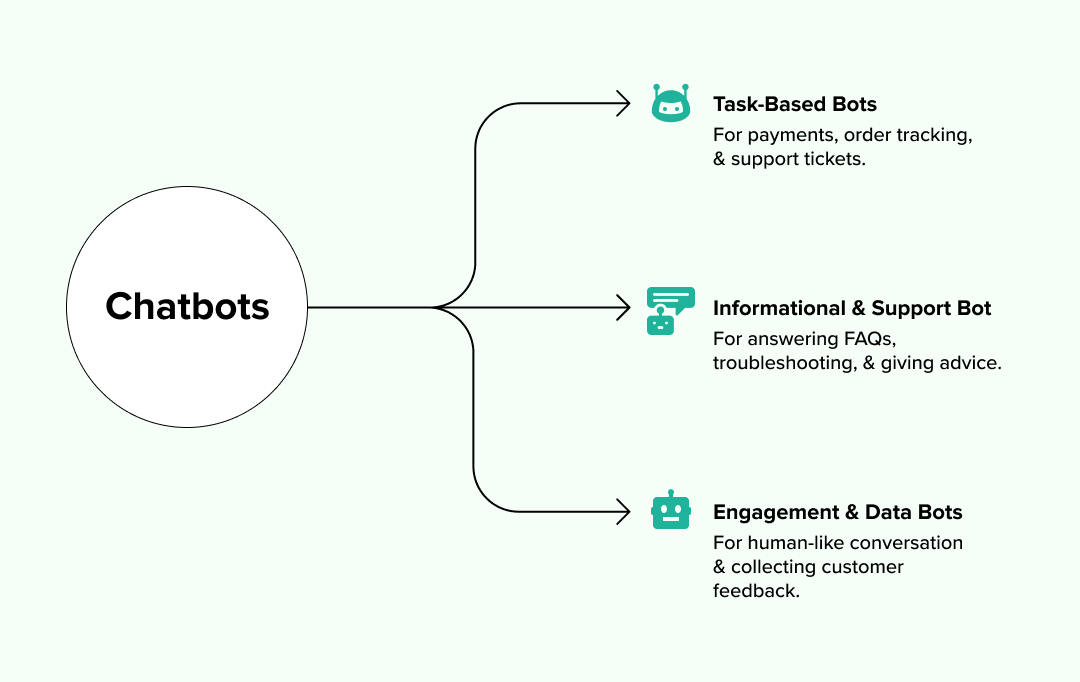
Not every chatbot is made the same. Here’s a guide to determine which type is suitable for your business:
1. Task-Based Chatbots
If automating work and getting things done are your primary objectives, this is your category. These bots are all about getting things done.
- Transactional Chatbots: Consider these your 24/7 front-line staff for getting quick, specific tasks done. They're ideal to help your customers with checking the status of an order, paying for something, or altering shipping information—all those quick questions that can really divert the time of your support staff.
- Workflow Automation Chatbots: These chatbots are ideal for automating your internal processes. For instance, they can have a conversation with a user to collect their information and automatically generate a support request or update their account in your system, without any human intervention.
2. Informational and Support Chatbots
This category is to impart knowledge and instructions when your users need it.
- Informational Chatbots: These are your question-answering bots. Imagine them as your FAQ page; they extract information from your knowledge base to provide answers to user queries so that they can immediately find what they're searching for.
- Problem-Solving Chatbots: These bots are designed to identify and resolve customer problems. They can guide users to follow a series of steps in order to resolve a typical issue. They're also intelligent enough to recognize when a problem is too complex and should be referred to a human specialist.
- Decision Support Chatbots: Consider these as a wise advisor to your customers. Suppose a person is trying to make an informed decision. In that case, such bots can offer pertinent information, compare values, and define the possible outcomes so that they can make the decision confidently.
3. Engagement and Data Collection Chatbots
This category consists of chatbots designed to interact with users and gather valuable information.
- Conversational Chatbots: They employ the most advanced AI to engage in free-flowing, human-sounding conversations, which is completely critical for customer service jobs where the goal is to make a good, warm impression.
- Feedback and Survey Chatbots: Curious to know what your customers are thinking? These chatbots simplify the process by conducting fast, automated surveys following an interaction. The feedback they collect provides you with invaluable information on how to improve your products and services.
How to Build and Implement Your AI Chatbots?
To build your own AI chatbots, just follow this simple guide
- Define Your Goal: First, identify the single, primary problem you want your chatbot to resolve. For example, it can reduce support tickets or generate more sales leads.
- Map Key Conversations: Outline the most common customer questions or the ideal sales flow the chatbot will handle. Focus on high-impact areas first.
- Choose Your Platform: Select a user-friendly chatbot builder that aligns with your goal and budget, and always use a free trial to test its capabilities.
- Design a Personality: Define a tone of voice (e.g., formal or friendly) that matches your brand and create a clear, welcoming opening message.
- Select Your Channels: Decide where your chatbot will go live, starting with your highest-traffic channels like your website, WhatsApp, or Facebook Messenger.
- Build and Test: Implement your conversation flows and test the chatbot thoroughly with your internal team before it interacts with any customers.
- Launch and Improve: After going live, continuously monitor performance against your goals (KPIs) and use data from real conversations to make regular refinements.
Conclusion
In conclusion, this exploration has demonstrated that AI chatbots are far more than a technological novelty; they are a fundamental component of modern business strategy. Advantages of chatbots are clear and multi-faceted, impacting everything from sales and customer loyalty to internal efficiency and employee retention. However, as we've seen, realizing these advantages requires a strategic approach to the real-world challenges of data, training, and security.
That's where MobileAppDaily is here to guide your journey. Whether you need to explore our directory of Top Chatbot Development Companies or gain insights from expert articles, we provide the knowledge to help you build a sound strategy. Ultimately, a well-planned chatbot isn't just about keeping up; it's about building a more connected and intelligent future for your business. As organizations move toward advanced automation and smarter customer engagement, partnering with experienced artificial intelligence companies can help ensure your chatbot strategy is scalable, secure, and aligned with long-term business goals.
Frequently Asked Questions
Is a chatbot suitable for my small business?
Yes, it is perfect if you need to answer the same questions repeatedly or if you have to be there 24/7. You can think of it as a virtual employee who does all the mundane things, freeing you and your team to concentrate on the important stuff.
How do I select the best chatbot platform for my business?
You should probably begin by determining what you want the bot to accomplish. If you're using it for sales, ensure that the platform is integrated with your CRM. If for support, find one that is integrated with your help desk. The best platforms are user-friendly and scalable with your business, so you don't get stuck down the line.
Will a chatbot replace my customer support staff?
No, chatbot acts as an assistant and not a substitute for your support staff. It can perform all the routine, repetitive queries, freeing up your employees to deal with more difficult issues where a bit of empathy and outside-the-box thinking are truly needed. The best chatbots are built to assist your staff, not replace them.
How much time will I have to spend on keeping the chatbot up to date?
You can't simply set it and forget it. It's like training a new employee. You'll want to check in from time to time to find out what the bot did wrong and provide additional guidance. This consistent effort is the secret to keeping your bot intelligent and beneficial, since your company and your clients are constantly evolving.
What are the key metrics I should measure to determine if my chatbot is a success?
You'll need to monitor a few central metrics. Look at how frequently the bot resolves an issue independently (the Resolution Rate) and how many queries it can resolve without involving a person (the Deflection Rate). And naturally, you'll want to see whether or not customers are actually satisfied with their bot experience.
Can a chatbot AI be held liable for its advice?
No, the chatbot itself cannot be held accountable. Liability rests with the company that is using it. You are held legally accountable for the advice that the bot spits out, so you need to be very cautious about applying chatbots in such highly regulated spaces as law or medicine in order to steer clear of legal risk.
How do we make sure our chatbot doesn't provide confidential information?
The best method is to implement strict access controls and not train the bot with sensitive or proprietary data in the first place. You can also implement filters to suppress some keywords and make the chatbot a read-only source of information. Security should be top-of-mind from the beginning of the project.
Can a chatbot initiate conversations with customers ahead of time rather than waiting for them to initiate a conversation?
Yes, and it's a wonderful strategy. You can set up a chatbot to appear with a targeted message when a customer has spent a period on a certain page or is leaving their cart. This can give a timely discount or respond to a question, which can greatly improve conversions and customer interaction.
How do we plan a chatbot that is prepared for future tech such as multimodal AI or emotional intelligence?
You should build your chatbot on a modular and flexible platform that can handle different types of data. Focus on creating a strong, clean data architecture now, and prioritize a platform that offers APIs. This will make it much easier to integrate new technologies like computer vision or speech analysis tools as they become more advanced.

Uncover executable insights, extensive research, and expert opinions in one place.
Related Content