Share It On:
 Your ultimate guide for understanding AI’s role in transforming chronic health management with early diagnosis, advanced patient care, and tailored treatment plans.
Chronic health conditions or non-communicable diseases (NCDs) are rising at an alarming rate. And they already account for the majority of deaths worldwide. According to PubMed Central, NCDs like diabetes, cancer, and heart conditions are projected to increase from 59% in 2002 to 69% by 2030. And that’s not just a statistic, it’s a wake-up call.
Though there are traditional healthcare models to track chronic conditions, they are falling short. Because today, managing chronic conditions isn’t just about checkups and prescriptions. It requires personalized, continuous, and proactive care.
That’s where AI comes to play a crucial role. It doesn't replace healthcare professionals; it empowers them. Imagine predicting disease progression, customizing treatment plans, and enabling real-time remote monitoring. AI is already redefining how we approach chronic care, making it more proactive and personalized.
In this article, we’ll help you learn how AI in chronic disease management is addressing the challenges of traditional practices, its key benefits, real-world examples, and more. Let’s get started!
Market Landscape of AI in Chronic Disease Management
AI in chronic disease management is fueling a rapidly expanding market. Let’s look at the trajectory here:
Market Size and Growth Projections: According to a comprehensive report, the global AI in the healthcare market is projected to reach USD 110 billion by 2030. A majority of this growth stems directly from AI's involvement in chronic disease management, diagnostics, and continuous patient monitoring.
Key Market Drivers: The accelerated market expansion is primarily driven by several critical factors, which are listed as follows:
- Rise in Chronic Diseases: The alarming global increase in NCDs necessitates more scalable, efficient, and proactive management solutions, which require the speed that can be achieved through the integration of AI.
- Advancements in Data Analytics and Cloud Computing: The explosion of healthcare data (from EHRs, wearables) combined with the scalable processing power of cloud computing makes advanced AI applications in chronic disease management increasingly powerful.
- Growing Adoption of Telehealth and Remote Monitoring: The expansion of remote patient monitoring (RPM) and telehealth services relies heavily on AI to analyze data from connected medical devices. It also facilitates virtual consultations and provides continuous, actionable patient oversight beyond clinic walls.
- Increased Research and Development (R&D) and Strategic Investments: Significant investments from pharmaceutical companies, tech giants, and venture capitalists are accelerating the development of AI solutions for chronic conditions. For example, Nourish, an AI-powered nutrition care provider for chronic diseases, recently raised $70 million in Series B funding.
This dynamic market landscape presents opportunities for healthcare providers seeking to enhance patient care, technology developers innovating new solutions, and investors looking for high-growth sectors.
Traditional vs. AI-Powered Chronic Disease Management
Let's break down the core differences between traditional and AI-powered approaches to chronic care, giving you a clear picture of how AI is transforming patient outcomes.
| Feature | Traditional Chronic Disease Management | AI-Powered Chronic Disease Management |
|---|---|---|
| Data Analysis | Manual review; limited to available patient records | Analyzes vast datasets; identifies hidden patterns |
| Disease Insight | Reactive; based on symptom presentation | Proactive; predicts progression, identifies risks early |
| Treatment Plans | Standardized; relies on general guidelines | Personalized; customizes plans based on individual data |
| Monitoring | Periodic check-ups; patient self-reporting | Continuous, real-time remote monitoring via wearables |
| Patient Care | Primarily clinic-based; often episodic | Accessible, continuous; supports virtual care |
| Resource Use | Can be inefficient; high manual workload | Optimizes resources; reduces clinician burden |
Check out: Top AI Development Companies in Healthcare
Benefits of AI in Chronic Disease Management
When it comes to chronic disease management, one of the most prominent benefits of AI is its ability to predict chronic disease conditions, such as cancer, well in advance. Let’s look at some of the key ways AI transforms the management of chronic conditions.
1. Early Detection and Intervention
According to NCI, 80% of the deaths averted were due to early detection, prevention, and screening, followed by treatment. And AI possesses the superpower to detect potential risks, nudging the healthcare professionals to intervene before something escalates into a serious issue. It can also quickly sift through years of patient data, identify subtle trends, and raise health alerts, much before symptoms appear. This gives both patients and healthcare professionals a crucial window to manage health issues and medical emergencies proactively.
2. Personalized, Adaptive Care
AI-driven personalized care plans have shown improvements in patient outcomes. That’s mainly because chronic diseases don’t abide by one care plan and neither should any of your treatment plans.
Incorporating AI into your chronic disease management software enables a more personalised approach by providing tailored and adaptive care plans. It analyzes real-time data and lifestyle factors of the patient to develop personalized care plans. This adaptive care support can lead to significantly improved health management and a reduction in complications.
3. Real-Time Monitoring
AI in patient monitoring can now transform basic wearable data into predictive health insights that were previously impossible with traditional monitoring. While fitness trackers have existed for years, AI algorithms can now analyze patterns across multiple biomarkers to predict health episodes before they occur.
According to a journal, AI-powered remote monitoring has reduced hospital readmissions by 38% among patients with chronic heart failure by detecting early warning signs that human analysis would miss. It is because real-time monitoring through AI-powered chronic disease management updates both patients and care providers with actionable insights promptly.
4. Empowering Providers
AI isn’t here to replace clinicians, but to empower and strengthen them. Statistics show that 90% of clinicians using AI in healthcare workflows reported improved diagnostic accuracy and increased decision-making confidence.
This enables them to free up valuable time, allowing them to focus on providing direct, compassionate care. Additionally, AI empowers clinicians to automate routine healthcare analysis and monitoring, providing accurate diagnosis and enhancing overall patient care quality.
5. Patient Engagement
AI in diagnostics and disease management can equip and empower your patients. It can provide your patients with smart reminders and symptom tracking, making them aware of their condition through educational materials. Collectively, it can help your patients to stay more engaged, informed, and supported.
6. Medication Management
According to reports, 67% of patients showed absolute improvement in medication adherence when monitored through AI platforms. This success is due to AI tools accurately scheduling dosages and alerting healthcare providers in cases of non-compliance. Beyond medication adherence, these tools can also collect regular health data on chronic conditions to provide personalized dosage adjustment recommendations.
Real-World Application of AI in Chronic Disease Management
Let’s look at some real-world applications of Artificial Intelligence in managing chronic conditions:
1. Lilliacare.ai
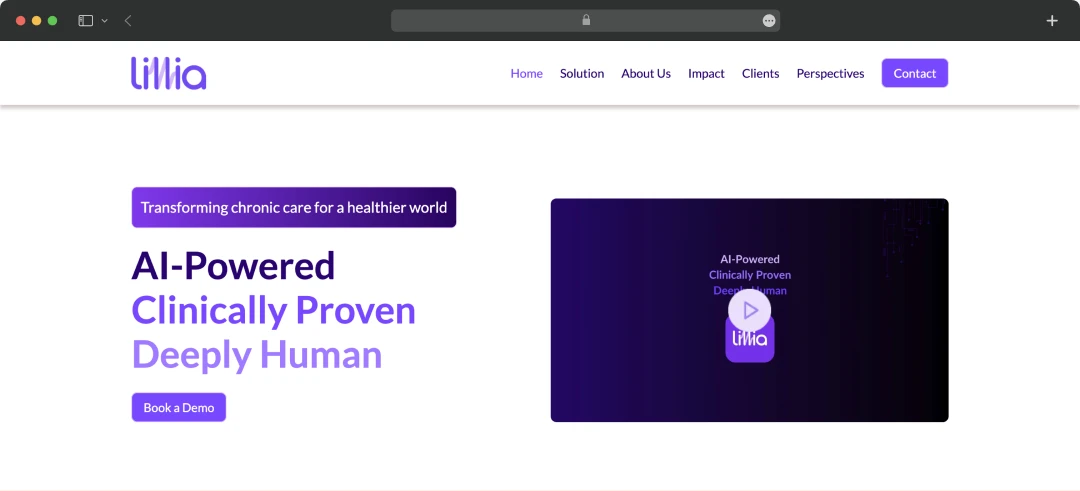
Lilliacare.ai is specifically designed to empower people living with diabetes and other chronic conditions through AI-powered adaptive care. It utilizes AI to provide users with personalized, real-time support in managing chronic diseases by creating a digital twin for each individual. This digital twin then models your unique metabolism, lifestyle, and habits to deliver adaptive, individualized care.
It works by continuously monitoring health data. LilliaCare’s AI detects early warning signs and predicts potential risks, enabling timely interventions. Additionally, it incorporates support from healthcare professionals, including doctors, nutritionists, and psychologists, ensuring a balanced blend of technology and empathy.
According to Lilliacare.ai CEO Sujit Chakrabarty, “Diabetes and related chronic conditions are the world’s biggest healthcare challenge affecting more than 500 million people…Lillia exists to lower the chronic disease burden for the world by providing continuous adaptive care that drives a real and lasting lifestyle change.”
2. Tandem Diabetes Care
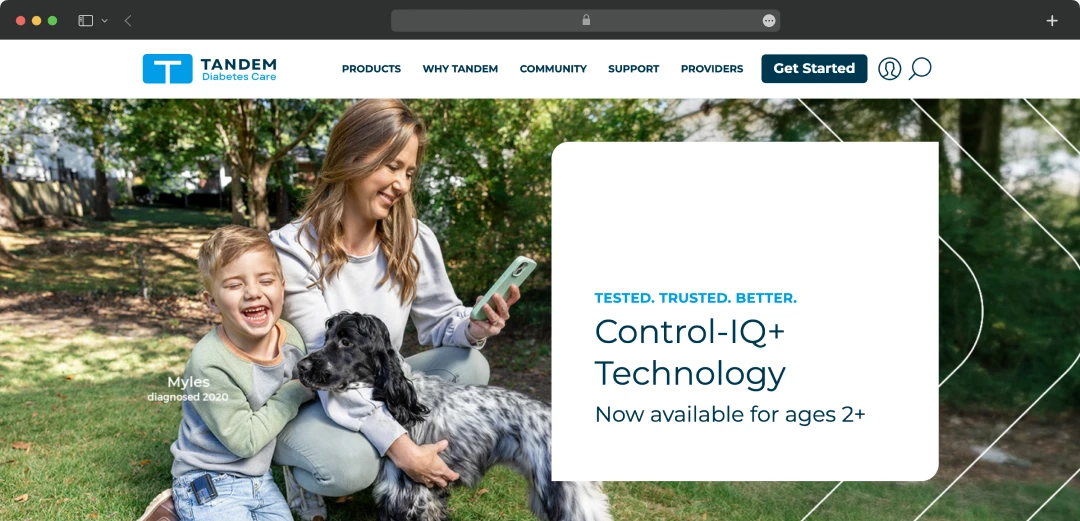
Tandem uses sophisticated AI algorithms to manage insulin delivery. These algorithms analyze continuous glucose monitor (CGM) readings, predict future glucose levels (often 30-60 minutes ahead), and then automatically adjust basal insulin delivery or deliver correction boluses to maintain target blood sugar ranges.
They learn from the user's patterns and adapt. It also significantly reduces the daily burden of diabetes management for individuals with Type 1 and even some Type 2 diabetes. It minimizes the risk of dangerous hypoglycemia (low blood sugar) and hyperglycemia (high blood sugar) by automating critical decisions, leading to improved glycemic control, increased "time in range," and a better quality of life.
3. Noom

Noom is an AI-powered tool that focuses on weight loss and behaviour change, which is crucial for managing and preventing many chronic diseases, such as Type 2 diabetes and heart disease. It employs a psychology-based approach, utilizing machine learning to understand individual triggers and provide tailored strategies. It also analyzes user behavior, food logging, and progress to deliver personalized educational content, daily challenges, and insights.
Read more: Best AI-based Healthcare Apps
Key Strategies of Incorporating AI in Disease Management
Implementing AI in chronic disease management demands a strategic approach that strikes a balance between technological innovation and patient-centric care. Here are key strategies to effectively integrate AI in disease management:
1. Effective Data Collection and Usage
If you plan to implement an AI-powered tool to monitor chronic diseases, it will require a regular influx of large datasets. Integration will need data from smart wearable devices, Electronic Healthcare Resources, remote monitoring tools, and other sources. This integration ensures that AI algorithms have the necessary information to provide accurate insights and support clinical decision-making.
2. Ensure Ethical AI Use and Data Privacy
You should always prioritize patient privacy while implementing AI in chronic disease management. This involves adhering to data protection regulations, such as HIPAA and GDPR, implementing robust encryption, and establishing strict access controls. Moreover, developing transparent AI models that your clinicians and patients can understand will always uphold trust and acceptance.
3. Focus on Patient Engagement and Self-Management
Your AI-powered chronic disease management system should always prioritize being patient-centric and user-friendly in its design and functionality. This helps to support patient engagement and self-health management. Additionally, you should also offer real-time feedback, reminders, and educational resources to encourage patients to take an active role in managing their health.
4. Regular Monitoring and Evaluation
Routine monitoring and evaluation are necessary for any AI-enabled patient healthcare management system. This will help you regularly evaluate the performance of the AI tool, ensuring it remains effective and relevant.
Challenges & Ethical Considerations for AI in Chronic Disease Management
While AI offers immense potential, there are several challenges to its widespread adoption:
1. Data Privacy and Security
Safeguarding sensitive patient data remains a priority. Healthcare organizations must comply with data protection regulations like HIPAA and GDPR.
2. Algorithmic Bias
AI systems can perpetuate biases if not trained on a diversified set of data.
3. Regulatory Hurdles
The rapidly evolving nature of AI technology presents challenges for regulators, creating uncertainty around the approval and oversight of AI systems in healthcare.
4. Trust and Adoption
Building trust among both healthcare providers and patients is critical.

Future Outlook of AI in Chronic Disease Management
The growing integration of Artificial Intelligence is revolutionizing the future of chronic disease management. This game-changing revolution promises early detection, more personalized care, real-time monitoring, improved patient engagement, and more.
AI’s predictive power in chronic disease management will help you in enabling early identification of the condition. An AI tool tested by the NHS predicted type 2 diabetes up to 10 years in advance with almost 70% accuracy. This demonstrates a completely new wave of change.
Moving forward, you will witness that personalized treatment tailored to specific healthcare needs will become increasingly precise. For instance, AI tests can identify which prostate cancer patients will benefit most from particular medications and suggest lifestyle choices that can help improve their condition. This will significantly reduce mortality risks.
In the future, AI-enabled patient education will continue to make patients feel aware, engaged, and supported through healthcare educational content. It will help patients understand medical jargon more easily and feel supported.
Most importantly, together, these innovations signal a powerful shift toward smarter, more equitable, and proactive chronic disease management.
Helpful read: AI in Healthcare - Exploring the AI Technologies, Use Cases, and Tools in Healthcare!
Conclusion
With the latest AI trends in chronic disease management, it’s a fact that we are on the brink of a healthcare revolution. Traditional care models present numerous challenges, including delayed interventions, one-size-fits-all treatment plans, and limited patient engagement. But these challenges are being addressed head-on by innovative AI solutions.
AI in chronic disease management isn’t just a tool; it’s your partner in managing healthcare. AI empowers both patients and medical professionals by offering personalized, real-time insights that enhance decision-making and improve health outcomes. These extend from early disease detection to continuous monitoring and tailored treatment plans.
Frequently Asked Questions
What is the role of AI in chronic disease management?
You can build your AI-powered chronic disease management software to help you in regularly monitoring, predicting health risks, and personalising treatments for chronic conditions. It also helps you in improving outcomes through prompt and real-time data.
How is AI used in disease prevention?
AI tools for disease prevention can do wonders. It analyzes health patterns through real-time health monitoring and tracking. It also works by identifying risks early, enabling preventive actions and lifestyle recommendations. Additionally, it facilitates early detection by analyzing large patient health datasets and identifying any unusual trends.
What is the role of AI in disease diagnosis?
Incorporating artificial intelligence in medical diagnosis or disease diagnosis makes the process much faster. Additionally, it enables more accurate diagnoses by analyzing medical data, images, and patient histories with high precision. It utilizes machine learning technology to detect conditions and health risks with greater precision in scans and lab results, thereby improving diagnostic speed and accuracy.
Can AI help cure disease?
No, we’re not currently in a very advanced stage where AI can help in curing diseases. However, AI can aid in early detection as well as adaptive care optimization, thereby improving recovery chances.
How has AI impacted the health industry?
Artificial intelligence has transformed and advanced the healthcare industry. It has enhanced diagnostics, treatment, patient engagement, and operational efficiency, transforming how care is delivered across the healthcare system.

Uncover executable insights, extensive research, and expert opinions in one place.
Related Content