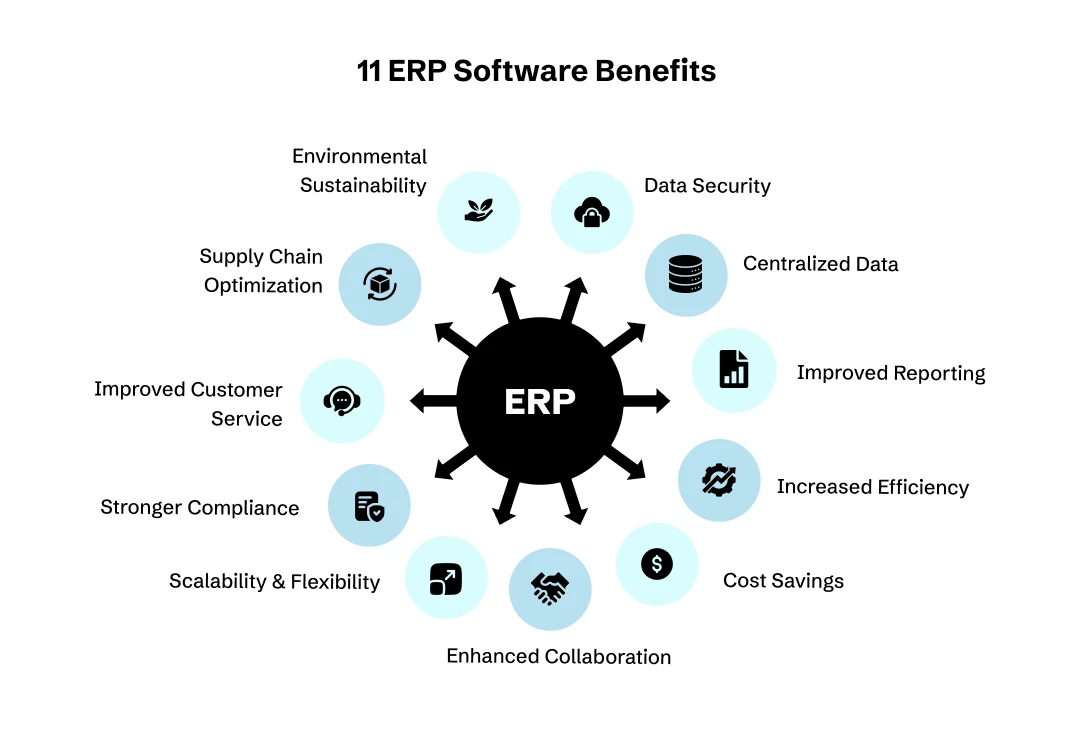
- 1. Centralized & Authoritative Data Source
- 2. Improved Reporting & Real-Time Analytics
- 3. Increased Efficiency
- 4. Cost Savings
- 5. Enhanced Collaboration & Communication
- 6. Scalability & Flexibility
- 7. Stronger Compliance & Risk Management
- 8. Improved Customer Service
- 9. Supply Chain Optimization
- 10. Data Security
- 11. Environmental Sustainability and ESG Compliance
 Share It On:
 Essential ERP software benefits every business leader should know to optimize workflows and drive sustainable growth.
Growth doesn’t collapse because of weak sales or slow marketing. It collapses when your business runs on scattered spreadsheets and disconnected systems. That’s why understanding ERP software benefits is no longer optional — it’s the foundation for scaling without breaking.
Enterprise Resource Planning isn’t just “software that connects finance, HR, and supply chain.” That description undersells it. At its best, ERP is a decision-making engine: it eliminates the guesswork, aligns every department to a single truth, and surfaces insights before your competitors even see the problem. The result? Less firefighting. More foresight. Less clutter. More clarity.
And the momentum is undeniable — with the ERP market projected to cross $123.41 billion by 2030 (Grand View Research), adoption isn’t about keeping pace; it’s about survival. Companies that harness ERP are scaling smarter, predicting faster, and operating leaner.
Those without it? They’re already writing tomorrow’s case studies in inefficiency.
In this guide, we’ll cut past the buzzwords, map the real advantages (and the pitfalls no one talks about), and help you decide whether ERP is simply another tool — or the strategic backbone your business has been missing.
What Is ERP Software?
Companies often struggle because their sales, inventory, and accounting teams are all working from separate spreadsheets that don’t sync up. Overall, it truly becomes messy and inefficient. That’s where Enterprise Resource Planning (ERP) software comes into play. It is designed to fix that exact problem.
Now, if you implement an ERP in your workflow, it works by pulling all your core business functions. These can be from finance, manufacturing, HR, supply chain, and more, into a single, shared system. Therefore, ERP software for businesses creates a single source of truth.
But how does it work?
Here’s an example: ERP in supply chain management uses one central database. So, when your website receives an order, the system automatically tells the warehouse to ship the product and alerts accounting to send an invoice. There’s no manual re-entry; it works in modules, so you can start with just the tools you need, like finance or inventory, and add more as your company grows.
Core Advantages of ERP Software
The wide demand for ERP implementation software has surged its market to a CAGR of 11.7% from 2026 to 2030. Now, let’s look at some key benefits of ERP software, which are leading to this demand and popularity.
1. Centralized & Authoritative Data Source
One of the most prominent ERP software benefits is that it beats data inconsistency that can affect business decisions. For example, sales quotes are available based on outdated inventory reports. ERP establishes a unified database architecture.
Here, all departments access and update the same core records. For instance, customer information entered by sales becomes visible to service, shipping, and accounting teams instantly.
This approach further eliminates the issue of data duplicacy, as there’s just one version to maintain. Hence, decision-makers access accurate, current information regardless of which department originally captured it.
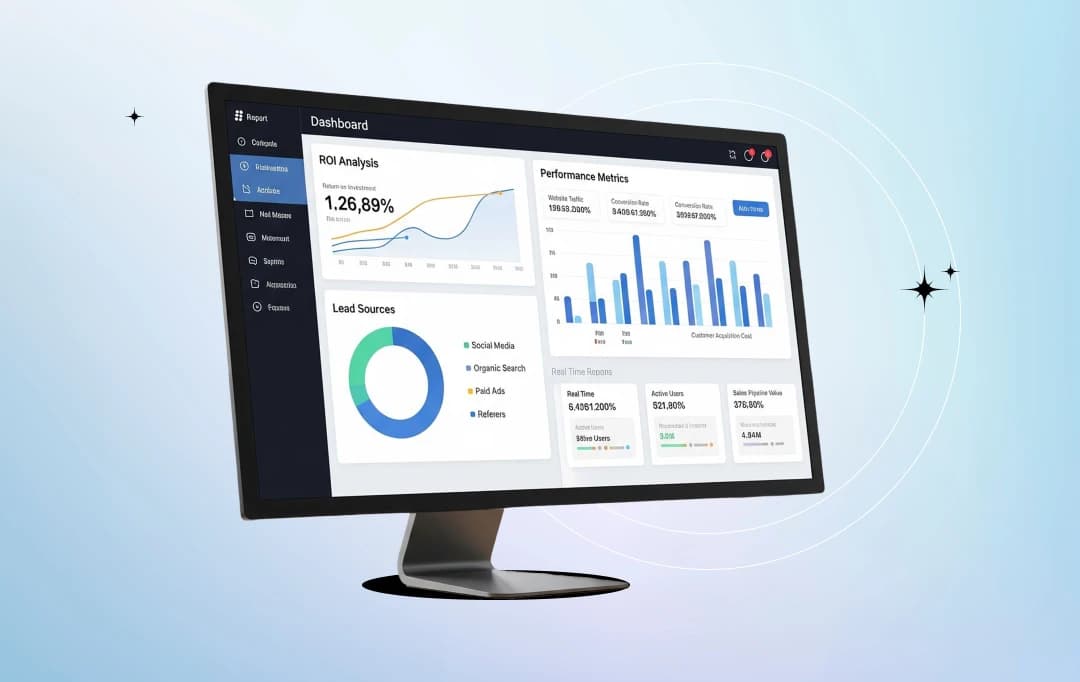
2. Improved Reporting & Real-Time Analytics
Monthly reports arrive too late for course correction, and by the time executives review last month's performance, another month has passed, and even the market conditions have changed. ERP platforms provide immediate visibility through configurable dashboards. These allow managers to extract specific insights without IT assistance.
3. Increased Efficiency
Automation within ERP eliminates these manual steps of creating invoices against purchase orders and updating dashboards. ERPs can simply reflect approved requisitions that automatically get converted to purchase orders.
This efficiency extends beyond simple automation, where workflow engines route approvals based on predefined rules and save a lot of human time and energy.
4. Cost Savings
ERP implementation reduces expenses systematically as single-vendor relationships replace multiple software contracts. Moreover, integration expenses disappear when all modules share the same platform.
Also, once ERP is widely accepted within the organisation, accurate demand forecasting through ERP manages stocks well and prevents wastage. Ultimately, these efficiencies reduce both administrative overhead and operational waste, contributing directly to well-managed capital.
5. Enhanced Collaboration & Communication
Organizational silos can restrict information flow. For instance, if customer service can't see production delays that affect delivery promises. Finance discovers cost overruns after projects are complete. These informational gaps create conflicts and erode customer confidence.
ERP enables cross-functional transparency, which enables all stakeholders to view the same project status, customer records, and operational metrics. This shared visibility reduces meetings, emails, and status requests, and decisions happen faster because relevant data is immediately accessible to everyone involved.
6. Scalability & Flexibility
Business requirements evolve constantly. Modern ERP architectures accommodate as organizations implement core financial and inventory modules initially. Additional capabilities, such as manufacturing, CRM, and project management, can be deployed as needed. Even new fields, forms, and workflows can be implemented without vendor assistance. This adaptability protects the initial investment while supporting future requirements.
7. Stronger Compliance & Risk Management
Regulatory violations carry severe penalties. For instance, GDPR mandates that data privacy protection is essential, and businesses that are found non-compliant are heavily penalised for the same. Therefore, ERP systems incorporate regulatory requirements into standard processes.
These built-in compliance controls prevent policy violations before they occur. Further, exception reports highlight unusual patterns for investigation as compliance becomes systematic rather than dependent on individual diligence.
8. Improved Customer Service
Customer retention depends on service quality. They expect immediate order status updates, accurate shipping information, and more. Therefore, ERP consolidates customer interactions into comprehensive profiles.
This also helps customer representatives to view order history, payment status, service tickets, and communication logs simultaneously. Plus, automated alerts notify customers of shipment delays, backorders, or delivery confirmations without manual intervention.
Further, response times decrease through automated ticket routing, and CSS scores rise as service becomes more consistent and informed. Overall, the entire customer experience improves from initial inquiry through post-sale support.
9. Supply Chain Optimization
Supply networks span continents as raw materials flow from multiple suppliers through various transportation modes to production facilities. ERP provides end-to-end supply chain visibility across quality, delivery, and pricing metrics.
This advanced planning capabilities anticipate disruptions, and demand sensing algorithms identify trend changes early. Hence, with ERPs, the entire network operates more efficiently with fewer surprises.
10. Data Security
Information breaches devastate organizations and hamper customer trust. Additionally, ransomware attacks halt operations entirely. Therefore, protecting against these threats requires comprehensive security measures.
Therefore, ERP centralizes security administration. Encryption protects sensitive data during transmission and storage. Backup procedures ensure recovery capabilities after incidents.
Security monitoring identifies potential threats proactively, and unusual data access patterns flag possible breaches. Hence, instead of securing multiple entry points across disparate systems, organizations defend one integrated platform with enterprise-grade protection.
11. Environmental Sustainability and ESG Compliance
Organizations that use ERP for sustainability report 46% higher profitability than peers who don't prioritize environmental goals, according to IBM research. That’s because modern ERP systems embed carbon tracking, waste monitoring, and resource consumption metrics directly into operational dashboards, treating environmental performance with the same rigor as financial KPIs.
These platforms automate ESG compliance reporting, track supplier carbon footprints, optimize logistics to reduce emissions, and minimize waste through precise demand forecasting.
Companies using ERP-driven sustainability achieve 60% (IBM research) better environmental outcomes while simultaneously boosting innovation. This transforms regulatory compliance from a burden into a competitive advantage, proving that integrated ERP systems make environmental responsibility profitable.
Disadvantages of ERP
There are innumerable benefits of an ERP software, but it's also important to walk into it with your eyes wide open. These are major, company-wide projects, and they come with some challenges too. Here are some limitations of ERP.
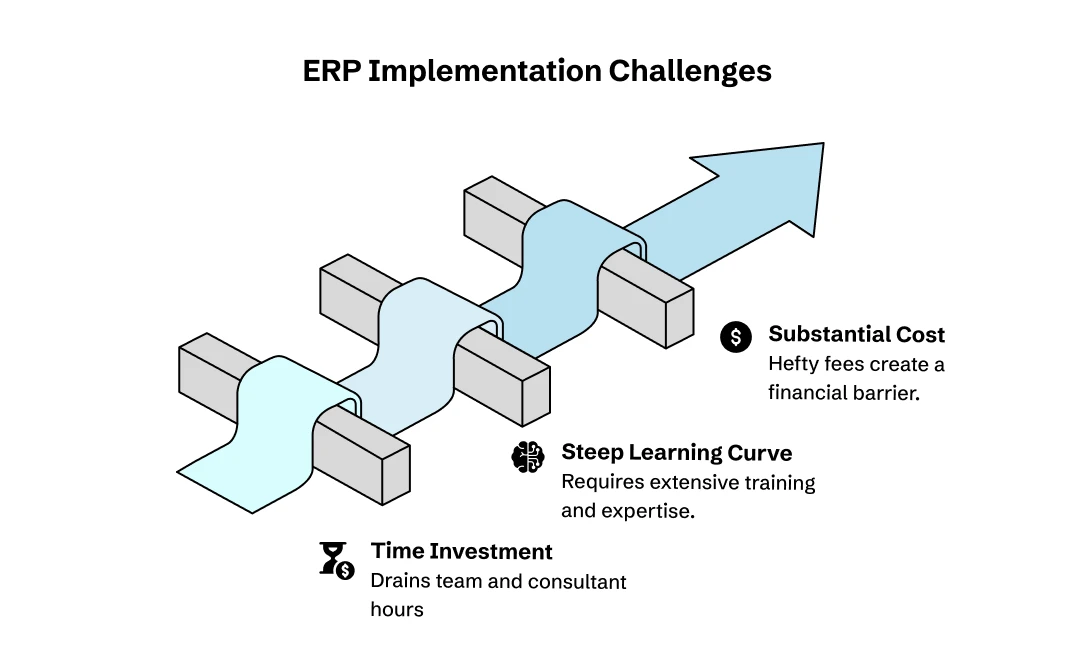
1. Massive Time Investment
ERP projects are a massive investment. The real time goes into hiring consultants and customization. Plus, a huge amount of your own team's working hours is spent getting trained to use an ERP system, because the majority of them are used to legacy systems.
2. ERP Systems aren't Self-Explanatory
An ERP isn’t simple, as you're replacing a dozen different tools or legacy systems and processes with one unified system. It has a steep learning curve, which requires proper training to use effectively. If not implemented and trained correctly, it will eventually become useless if nobody knows how to use the software correctly. Most Enterprise App Development Companies provide training to use the designed software as well.
3. Substantial Cost Investment
The cost of building ERP systems usually varies depending on your business size, customizations, and more. Honestly, it usually demands upfront investment. But the initial software prices are different, as eventually, short-term costs balloon with hefty fees. These can be fees charged by implementation consultants, complex data migration, and extensive team training, creating a major financial barrier and resource drain.
How to Choose the Right ERP System?
Choosing an ERP is a major business decision that will impact every part of your company for years to come. It's about investing in the top software development companies that help you build a central platform for your future growth. A structured, thoughtful approach is the only way to get it right.
1. Assessing business needs and goals
The first step is getting brutally honest about your own business. You have to map out what's actually broken.
You need to answer a few questions before you make a final choice: Where are the real bottlenecks slowing you down? What are the frustrating, time-wasting workarounds your team is stuck using every single day?
You need a crystal-clear picture of your problems before you can even begin to look for a solution.
2. Pick Your Platform: Cloud vs. On-Premises
You have to decide where your ERP system will live. This choice has big implications for cost, accessibility, and IT management.
- Cloud (SaaS): You pay a subscription fee, and the software is accessible from anywhere, as the vendor handles all the maintenance and updates. This is the most popular and flexible model today.
- On-Premises: You buy the software and run it on your own servers. This means a higher upfront cost and requires an IT team to manage it, but it gives you total control over your system and data.
- Hybrid: A mix of both, often used when a business wants the flexibility of the cloud for some functions but needs to keep other data on-site for security or compliance reasons.
3. Plan for People, Not Just Technology
When choosing an ERP system, it's easy to get lost in technical specifications and vendor feature lists. However, a successful implementation hinges not on the software's capabilities, but on your team's willingness to use it. The best software in the world is useless if your employees refuse to adopt it.
Therefore, you must approach this as a people project, not a technology one. This means prioritizing usability and change management during the selection process. Involve a cross-functional team in demos and testing to ensure the chosen system is intuitive and fits their workflows.

Summing Up
An ERP system is a foundational tool for building a lean and more connected business. The ERP software benefits are clear: you get a single unified data source, smarter analytics, and a more efficient operation from end to end.
However, these results don't happen by accident. Real success hinges on thoughtful planning to navigate the time, costs, and the human side of the change. Your next step isn't to shop for vendors, but to honestly assess your own processes and define what growth truly means for your business.
Frequently Asked Questions
What makes ERP unique over other systems?
Most business software just serves one goal or purpose. Like, your accounting tool does accounting; your sales tool does sales. An ERP is the only thing that connects all the tools and software being used into one single platform.
What is the main purpose of an ERP?
To put an end to the operational chaos. Its real job is to make sure everyone, from the warehouse floor to the finance team, is looking at the same, correct numbers. It’s about stopping the arguments over whose spreadsheet is the right one.
What conditions does an ERP treat?
It’s for when you feel like you’re drowning in spreadsheets. It fixes that gut feeling of not knowing what’s really in your warehouse. Or when your sales and finance teams are constantly fighting over bad data. It easily serves operational blindness.
Is a cloud-based ERP better than on-premises?
Honestly, for almost everyone now, the cloud-based ERPs can be the right choice. Unlike on-premise ERPs, cloud-based ERPs run on much more affordable servers, and you are on the hook for managing every single security patch and update. It’s just less problematic and much affordable to start.
Is ERP software only for large enterprises?
Today, modern ERPs are built to be affordable and scalable, specifically for small and mid-sized businesses, giving them the same advantages that were once only for large corporations.
What are the main pros and cons of ERP solutions?
ERP solutions offer centralized data, improved efficiency, and scalability, making them valuable for streamlining business operations. However, they can also come with high implementation costs, complex deployment, and user adoption challenges.

Uncover executable insights, extensive research, and expert opinions in one place.
Related Content