Date: September 05, 2025
Listen to This Article
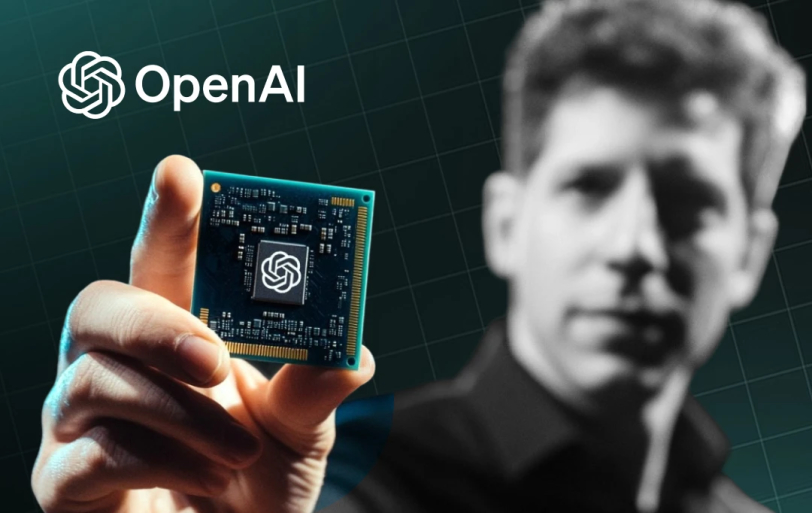
OpenAI’s first AI chip, launching in 2026, will be developed with Broadcom and TSMC to reduce Nvidia dependency!
In a move that has the potential to reshape the AI infrastructure landscape, OpenAI is set to launch its very first AI chip in 2026. This marks a significant step towards reducing its dependence on third-party hardware and enhancing its internal computing capabilities.
The company is collaborating with Broadcom, a leader in semiconductor technology, and Taiwan Semiconductor Manufacturing Co. (TSMC) to bring the project to fruition.
Unlike the chips produced by tech giants like Nvidia, which are widely available to external customers, OpenAI’s upcoming AI chip will be dedicated to internal use. The company plans to leverage this custom-designed hardware to meet the skyrocketing demands of its AI systems.
The chip will play a crucial role in optimizing operations, from running large-scale models like GPT to supporting emerging AI technologies that require immense computational power.
OpenAI’s ambitious foray into chip development is not a solo effort. The project sees a close partnership with Broadcom, the U.S.-based semiconductor powerhouse, and TSMC, the world’s largest independent foundry.
With the design phase nearing completion, the manufacturing of the chips will take place at TSMC’s state-of-the-art fabrication plants. This collaboration combines OpenAI’s AI expertise with Broadcom’s semiconductor proficiency and TSMC’s unrivaled manufacturing capabilities.
The development of OpenAI’s custom AI chips also holds significant promise for Broadcom. The semiconductor giant is positioning itself to become a key player in the burgeoning AI market, with the company forecasting substantial growth in AI-related revenues.
Broadcom CEO Hock Tan said on Thursday that the revenue growth in the fiscal year 2026 can ‘improve significantly’ after securing $10 billion in AI infrastructure orders from new customers.
OpenAI’s new initiative signals a shift toward diversification. The company aims to reduce its reliance on Nvidia’s hardware by incorporating AMD chips and developing its own AI silicon. As OpenAI prepares to enter the hardware game, the move to produce its own AI chips comes at a crucial time.
With AI applications expanding across industries, from healthcare to finance and beyond, the demand for specialized hardware will only continue to rise.
By collaborating with Broadcom and TSMC, OpenAI is positioning itself to stay at the forefront of this technological revolution, ensuring that its AI models are powered by the most advanced and efficient chips available.
In 2026, when OpenAI’s chips hit the market, it will not only be a milestone for the company but also a signal to the industry that the future of AI is increasingly in the hands of those who can build and control their own infrastructure.
By Riya
Riya turns everyday tech into effortless choices! With a knack for breaking down the trends and tips, she brings clarity and confidence to your downloading decisions. Her experience with ShopClues, Great Learning, and IndustryBuying adds depth to her product reviews, making them both trustworthy and refreshingly practical. From social media hacks and lifestyle upgrades to productivity boosts, digital marketing insights, AI trends, and more—Riya’s here to help you stay a step ahead. Always real, always relatable!
OpenAI Is Building an Audio-First AI Model And It Wants to Put It in Your Pocket
New real-time audio model targeted for Q1 2026 alongside consumer device ambitions.
Nvidia in Advanced Talks to Acquire Israel's AI21 Labs for Up to $3 Billion
Deal would mark chipmaker's fourth major Israeli acquisition and signal shifting dynamics in enterprise AI.
Nvidia Finalizes $5 Billion Stake in Intel after FTC approval
The deal marks a significant lifeline for Intel and signals a new era of collaboration between two of America's most powerful chipmakers.
Manus Changed How AI Agents Work. Now It's Coming to 3 Billion Meta Users
The social media giant's purchase of the Singapore-based firm marks its third-largest acquisition ever, as the race for AI dominance intensifies.