Date: August 01, 2025
OpenAI’s ChatGPT feature, which made private conversations searchable, was pulled after over 4,500 conversations were accidentally exposed!
OpenAI has quietly but swiftly discontinued a recently introduced feature that allowed users to make their ChatGPT conversations searchable on platforms like Google, after widespread concerns about user privacy and accidental data exposure.
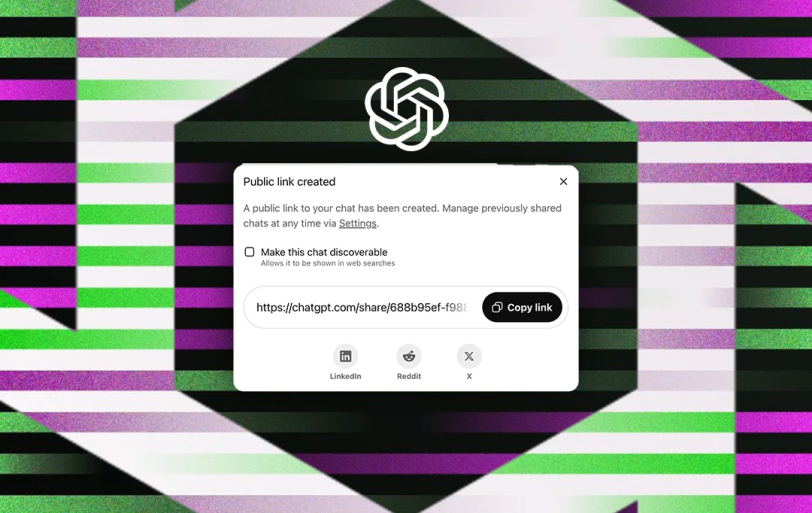
The feature, which debuted earlier this year, was designed to be an optional tool for users to share helpful or interesting AI-generated chats with the world. Users could choose to "Share & Index" a specific conversation, making it visible on search engines. But what began as a well-intentioned experiment quickly raised serious red flags.
Despite being opt-in, the feature proved easy to misuse—many users inadvertently enabled indexing without realizing the full implications. With just a single checkbox, private conversations were made publicly accessible.
As a result, over 4,500 ChatGPT chats were indexed on Google, with some containing identifiable personal information, including names, locations, and even sensitive emotional disclosures.
OpenAI’s Chief Information Security Officer, Dane Stuckey, took to X (formerly Twitter) on Thursday to announce the immediate rollback.
“We've removed the experimental sharing and indexing feature due to concerns around accidental sharing of sensitive content. User privacy and security remain our top priorities,” he stated.
Even though OpenAI tried to make content anonymous, it just wasn't enough. People could easily share things with sensitive or embarrassing details, often not even realizing it would be out there for anyone to find online. What made it worse was that even after users deleted their conversations, Google's search results still held onto cached versions. This meant those chats could pop up in searches until Google's index was manually refreshed.
By Friday morning, OpenAI had completely shut down the sharing feature and started working with search engines to remove the already exposed content. No systems were hacked, but this whole situation really highlights the struggles tech companies have trying to innovate while also keeping users safe.
OpenAI later stated they're still big on being transparent and earning user trust. They also mentioned they're looking into their internal processes to avoid similar screw-ups down the road.
For now, the “Share & Index” option is gone—and so is the controversy! But the episode serves as a potent reminder, even the most powerful AI systems are only as safe as the human choices that shape them.
By Riya
Riya turns everyday tech into effortless choices! With a knack for breaking down the trends and tips, she brings clarity and confidence to your downloading decisions. Her experience with ShopClues, Great Learning, and IndustryBuying adds depth to her product reviews, making them both trustworthy and refreshingly practical. From social media hacks and lifestyle upgrades to productivity boosts, digital marketing insights, AI trends, and more—Riya’s here to help you stay a step ahead. Always real, always relatable!
OpenAI Is Building an Audio-First AI Model And It Wants to Put It in Your Pocket
New real-time audio model targeted for Q1 2026 alongside consumer device ambitions.
Nvidia in Advanced Talks to Acquire Israel's AI21 Labs for Up to $3 Billion
Deal would mark chipmaker's fourth major Israeli acquisition and signal shifting dynamics in enterprise AI.
Nvidia Finalizes $5 Billion Stake in Intel after FTC approval
The deal marks a significant lifeline for Intel and signals a new era of collaboration between two of America's most powerful chipmakers.
Manus Changed How AI Agents Work. Now It's Coming to 3 Billion Meta Users
The social media giant's purchase of the Singapore-based firm marks its third-largest acquisition ever, as the race for AI dominance intensifies.