Date: September 18, 2025
Listen to This Article
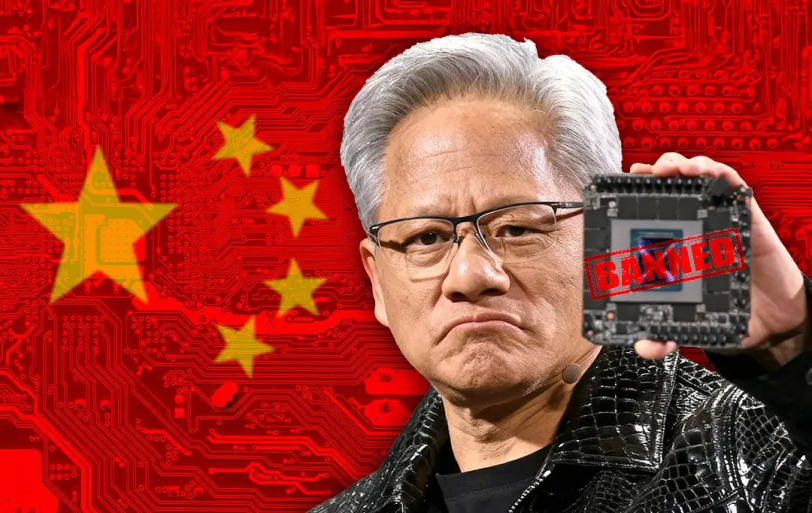
As China moves to ban Nvidia’s AI chips, CEO Jensen Huang voices his disappointment. The ban can have financial and strategic impacts on Nvidia’s operations!
Nvidia CEO Jensen Huang expressed deep frustration on Wednesday following reports that China’s regulators have ordered major tech companies to stop purchasing the U.S. chipmaker’s AI hardware and cancel existing orders. This move threatens Nvidia’s presence in one of its most crucial markets.
China’s Cyberspace Administration (CAC) directed firms, including Alibaba and ByteDance, NVIDIA’s top AI chips client, to halt testing and buying Nvidia’s RTX Pro 6000D, a chip model designed for the Chinese market.
Huang, speaking in London where he is attending events associated with the U.K.–U.S. political and tech leadership, said he is “disappointed with what I see,” adding that both China and the United States have “larger agendas to work out.”
He emphasised Nvidia’s willingness to be “supportive of the Chinese government and Chinese companies as they wish.”
The developments follow earlier U.S. export restrictions on Nvidia’s most advanced AI chips. The new CAC directive significantly tightens China’s regulations. The RTX Pro 6000D ban is reportedly broader and more sweeping than previous restrictions directed at the H20 chip, an earlier Chinese-tailored model.
China has also accused Nvidia of antitrust violations tied to its 2020 acquisition of Mellanox Technologies, adding regulatory pressure from multiple angles.
The financial ripple effects were quick: Nvidia stock slid about 2–3% on the news. Analysts say this move, if confirmed, could harm Nvidia’s sales, market share, and supply-chain strategy in China, which remains a vital market for AI hardware.
Yet, despite the setbacks, Huang maintained that Nvidia will comply with regulatory regimes wherever it operates. “We can only be in service of a market if a country wants us to be,” he said.
Nvidia’s response to this growing geopolitical tension will define its future in the world’s second-largest economy. Huang’s next moves could be pivotal in securing the company’s position in the global market—whether it be through navigating international regulations or adapting to new industry realities.
By Riya
Riya turns everyday tech into effortless choices! With a knack for breaking down the trends and tips, she brings clarity and confidence to your downloading decisions. Her experience with ShopClues, Great Learning, and IndustryBuying adds depth to her product reviews, making them both trustworthy and refreshingly practical. From social media hacks and lifestyle upgrades to productivity boosts, digital marketing insights, AI trends, and more—Riya’s here to help you stay a step ahead. Always real, always relatable!
Pinterest Follows Amazon in Layoffs Trend, Shares Fall by 9%
AI-driven restructuring fuels Pinterest layoffs, mirroring Amazon’s strategy, as investors react sharply and question short-term growth and advertising momentum.
Clawdbot Rebrands to "Moltbot" After Anthropic Trademark Pressure: The Viral AI Agent That’s Selling Mac Minis
Clawdbot is now Moltbot. The open-source AI agent was renamed after Anthropic cited trademark concerns regarding its similarity to their Claude models.
Amazon Bungles 'Project Dawn' Layoff Launch With Premature Internal Email Leak
"Project Dawn" leaks trigger widespread panic as an accidental email leaves thousands of Amazon employees bracing for a corporate cull.
OpenAI Launches Prism, an AI-Native Workspace to Shake Up Scientific Research
Prism transforms the scientific workflow by automating LaTeX, citing literature, and turning raw research into publication-ready papers with GPT-5.2 precision.