Date: December 11, 2025
Listen to This Article
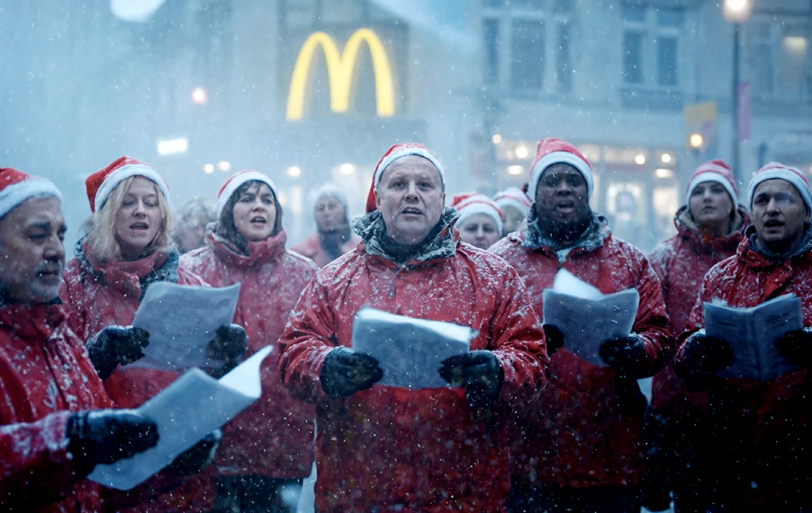
McDonald's Netherlands tried to use generative AI for holiday cheer, but the result was terrifying. After fans called the spot "soulless" and "creepy," the fast-food giant quickly pulled the plug on the controversial campaign.
Everyone loves a good holiday commercial. Usually, they are full of warm feelings, family reunions, and good food. But McDonald's Netherlands decided to take a different route this year. They gambled on Artificial Intelligence to create their festive spot. It did not go well. In fact, it went so badly that the McDonald's Netherlands team had to scrub the AI Christmas ad from the internet entirely.
If you missed it, count yourself lucky. The Christmas Ad was only a few seconds long, but that was enough to creep everyone out. It featured a generic anime-style girl and some McDonald's food items. But because it was made by Artificial Intelligence, things looked wrong. The characters morphed strangely. Hands didn't look like hands. A giant French fry burst out of a snow globe in a way that looked more like a horror movie than a holiday greeting.
The backlash was instant. Social media users tore the McDonald’s Ad apart. People on X called it "diabolical" and "disgusting." The sentiment was clear: customers want human creativity, not a machine-generated Christmas Ad.
According to Fox News Digital, users were baffled that a multi-billion-dollar company wouldn't hire real artists. One user cited by Fox News Digital simply asked, "Why is everything moving like that?" It highlights a growing fatigue consumers have with Artificial Intelligence in creative spaces.
This isn't just about bad graphics. It is about the feeling. A Christmas commercial is supposed to have a soul. Artificial Intelligence struggles with that. The AI Christmas ad felt cold and calculated. McDonald's likely wanted to save money or jump on a tech trend. Instead, they alienated their fanbase. Fox News Digital noted that this isn't the first time a brand has failed here. Toys 'R' Us and Coca-Cola also faced hate for using Artificial Intelligence in their marketing recently.
After the noise got too loud, McDonald's Netherlands removed the video. They admitted to using generative AI. They claimed they just wanted to experiment with something new for Christmas. But the experiment failed. The McDonald's brand image took a hit because people felt the company was being cheap during the holidays.
The AI Christmas ad controversy proves that technology can't replace everything. You can generate an image, but you can't generate the holiday spirit. Fox News Digital highlighted that the "uncanny valley" effect, where things look almost human but not quite, is a major turn-off for viewers. That is exactly where this McDonald’s Ad landed.
Marketing teams need to learn from this. McDonald's is a massive leader in the space. If McDonald's Netherlands can't make Artificial Intelligence look good, maybe it’s not ready for prime time yet. The Christmas Ad season is competitive. Brands fight for attention. This AI Christmas ad got attention, but for all the wrong reasons.
So, what is the lesson here? Real artists matter. Artificial Intelligence is a tool, not a replacement for human emotion. When McDonald's tries to cut corners on a Christmas campaign, customers notice. Hopefully, next year, McDonald's Netherlands and other branches will go back to basics. We want real stories, not glitchy, morphing nightmares.
By Riya
Riya turns everyday tech into effortless choices! With a knack for breaking down the trends and tips, she brings clarity and confidence to your downloading decisions. Her experience with ShopClues, Great Learning, and IndustryBuying adds depth to her product reviews, making them both trustworthy and refreshingly practical. From social media hacks and lifestyle upgrades to productivity boosts, digital marketing insights, AI trends, and more—Riya’s here to help you stay a step ahead. Always real, always relatable!
OpenAI Is Building an Audio-First AI Model And It Wants to Put It in Your Pocket
New real-time audio model targeted for Q1 2026 alongside consumer device ambitions.
Nvidia in Advanced Talks to Acquire Israel's AI21 Labs for Up to $3 Billion
Deal would mark chipmaker's fourth major Israeli acquisition and signal shifting dynamics in enterprise AI.
Nvidia Finalizes $5 Billion Stake in Intel after FTC approval
The deal marks a significant lifeline for Intel and signals a new era of collaboration between two of America's most powerful chipmakers.
Manus Changed How AI Agents Work. Now It's Coming to 3 Billion Meta Users
The social media giant's purchase of the Singapore-based firm marks its third-largest acquisition ever, as the race for AI dominance intensifies.