Share It On:
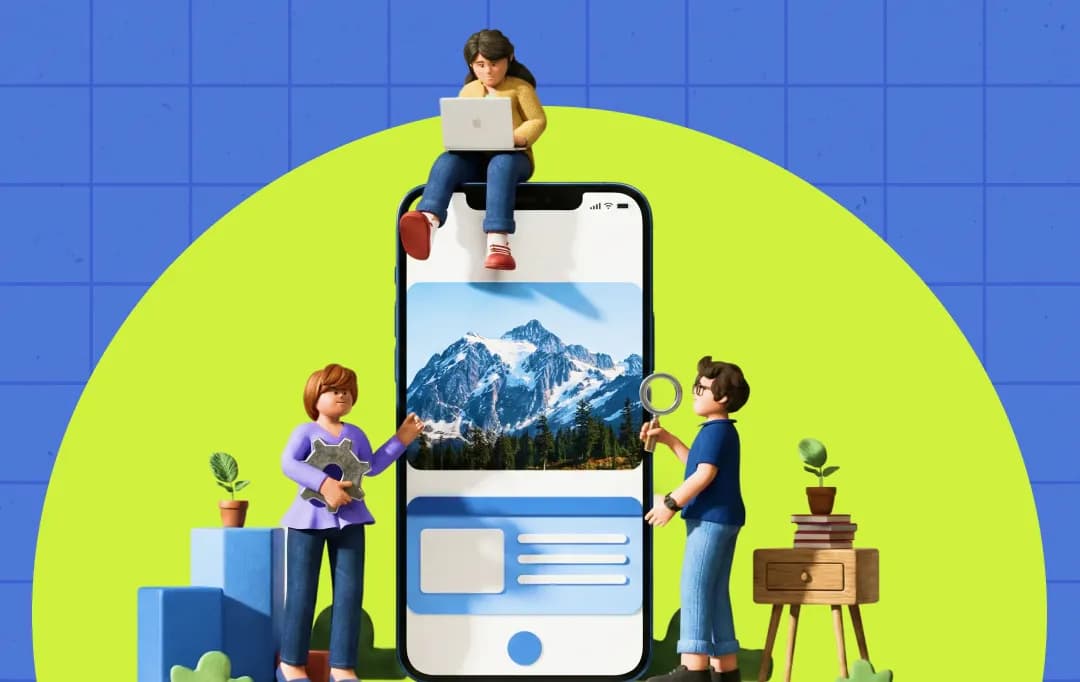 Navigate the complex world of types of app development to choose the perfect tech stack for your business growth.
To stay ahead of the curve, you need more than just a presence on a smartphone; you need a strategy that fits your specific niche like a glove. If you're looking to hire mobile application developers, you’ve got to know exactly what you’re asking for.
Here is a deeper dive into the types of apps for every business case to ensure your project doesn’t just launch, but actually thrives.
Different Categories of Mobile Apps Used for Different Business Types
Choosing the right category is about understanding your user’s "intent." Different industries require vastly different mobile app development types to keep users coming back.
1. E-commerce & Retail: The Digital Storefront
This is the heavy hitter. If you're in retail, your app is your 24/7 salesperson. It needs high-res imagery, seamless checkout flows, and push notifications that don't feel like spam. These types of app development focus on inventory sync and secure payment gateways.
Key Features:
- One-click checkouts
- AI-driven product recommendations
- Real-time order tracking
- Social media shop integrations.
2. FinTech & Finance: The Secure Vault
Security is the name of the game here. Whether it's a neobank, a crypto wallet, or an insurance portal, these apps require heavy-duty encryption and biometric authentication. Accuracy isn't just a "nice to have"—it's the whole point.
Key Features:
- Biometric authentication (FaceID/Fingerprint)
- End-to-end encryption
- AI fraud detection
- Multi-currency support.
3. EdTech & Learning: The Knowledge Hub
From language apps to corporate training portals, educational apps focus on engagement. You’re looking at video streaming, gamification elements (like badges), and progress tracking. It’s all about making the "grind" of learning feel like a win.
Key Features:
- Gamification (badges/leaderboards)
- Offline learning mode
- Interactive video streaming
- Progress analytics
4. Travel & Hospitality: The Personal Concierge
Travel apps are all about real-time data. We're talking GPS integration, live flight updates, and booking engines. If your app can't handle a last-minute hotel cancellation without crashing, your users will bounce faster than a rubber ball.
Key Features:
- GPS-based navigation
- Real-time flight/hotel alerts
- Digital keys for room entry
- Offline map access.
5. Lifestyle & Social Media: The Community Builder
This is where custom app development types get creative. These apps thrive on user-generated content, infinite scrolls, and social sharing. They need to be "sticky"—designed to grab attention and keep it through community interaction and smooth media playback.
Key Features:
- Infinite scroll feeds
- AR filters
- Instant messaging
- User-generated content (UGC) management tools
6. Healthcare & Wellness: The Virtual Clinic
Telehealth is huge right now. Such applications are usually sensitive HIPAA-compliant information, scheduling of appointments, and connecting with wearable devices (such as counting steps or heart rates). It is about trust that is created by a clean, clinical and accessible UI.
Key Features:
- Secure video consultations
- EHR (Electronic Health Record) integration
- Pill reminders
- Wearable device syncing (Apple Health/Google Fit)
Different Types of Mobile Apps: The Technical Lowdown
Now, let’s talk about the "skeleton" of your app. The different types of mobile app architectures determine how your app performs under pressure.
1. Native App Development: The Gold Standard
Building native means using the specific language of the OS (Swift for iOS, Kotlin for Android). It’s the go-to for high-performance needs. If you want the slickest animations and zero lag, this is your play.
| Pros | Cons |
|---|---|
| Top-tier performance & smooth animations | Most expensive to build |
| Full access to hardware (Lidar, FaceID, etc.) | Requires two separate codebases (iOS & Android) |
| Works seamlessly offline | Longer time to market |
2. Hybrid Mobile Apps: The Versatile All-Rounder
The hybrid/cross-platform app development aims at sharing the business logic, but sometimes with the option of native UI components. With frameworks such as React Native or Flutter, you can develop one and then deploy everywhere. It is the most widespread to use with startups since it reduces the time of development. Also, keeping up with React Native updates will keep your application in the present day without having to rewrite it completely.
| Pros | Cons |
|---|---|
| One codebase for all platforms (cheaper!) | Slightly larger app size |
| Faster development & deployment cycles | Can struggle with heavy 3D graphics |
| Easier to maintain in the long run | Dependent on third-party plugins for some features |
3. Progressive Web Apps (PWAs): The Browser Ninja
A PWA is essentially a website that acts like an app. It’s discoverable by Google (great for SEO) and doesn't require a download from the App Store. For businesses on a budget, this is a low-key genius move.
| Pros | Cons |
|---|---|
| No App Store approval or fees needed | Limited access to push notifications on iOS |
| Indexed by Google (Amazing for SEO) | Restricted access to hardware (e.g., Bluetooth) |
| Tiny storage footprint on the user's phone | Performance depends on the browser's speed |
4. Web Apps: The Responsive Workhorse
Strictly speaking, these are websites optimized for mobile browsers. They don't have the "offline" capabilities of a PWA, but for simple internal tools or information hubs, they get the job done without the complexity of web app development for stores.
| Pros | Cons |
|---|---|
| Lowest development cost | Requires a constant internet connection |
| Instant updates (no user action needed) | No presence on the home screen or App Store |
| Works on any device with a browser | Zero access to phone features (Camera/GPS) |
5. Low-Code/No-Code Solutions: The MVP Shortcut
If you just need to test a concept, low-code platforms allow you to drag and drop your way to a functional app. It’s not a long-term solution for scaling, but it's a great "vibe check" for your business idea.
| Pros | Cons |
|---|---|
| Incredibly fast to build (Days, not months) | Very hard to scale once you grow |
| Extremely low initial investment | Limited customization and branding |
| Perfect for testing market demand | "Platform lock-in" (You don't own the raw code) |
Native vs Hybrid vs Web Apps: A Comparison
Choosing between web vs native vs hybrid is a balancing act of performance, cost, and time. Here’s a quick breakdown to help you spot the difference.
| Feature | Native Apps | Hybrid Apps (Cross-Platform) | PWAs / Web Apps |
|---|---|---|---|
| Performance | Top-tier; lightning fast. | High (with modern frameworks). | Moderate; browser-dependent. |
| Development Cost | High (Two codebases). | Mid (One codebase). | Low to Mid. |
| Time to Market | Slow. | Fast. | Very Fast. |
| Device Access | Full (Camera, FaceID, etc.). | High (via plugins). | Limited. |
| App Store Presence | Required. | Required. | Not required (skip the fees!). |
Tips for Choosing the Right Mobile App for Your Business
Don't let a smooth-talking salesperson sway you. Use these criteria to nail down your types of mobile app development strategy.
1. Prioritize Your "Time to Market"
If you need to launch yesterday to beat a competitor, go for Hybrid mobile apps or PWA. Native builds take time because you're essentially building two separate products. If you're chasing a trend, speed is your best friend.
2. Analyze Feature Complexity
Does your app need to work offline? Does it need to use the phone’s high-end camera sensors? If the answer is "yes" to heavy hardware usage, native vs hybrid vs web apps isn't even a debate—Native wins every time.
3. Factor in Long-Term Maintenance
People forget that apps aren't "one and done." You’ll need to push updates for new iOS/Android versions. A single codebase (Hybrid) is significantly cheaper to maintain over three years than two native codebases.
4. Focus on Discoverability
If you want people to find your app through a Google search, PWAs are elite. If you want the prestige of being featured in the App Store, you need to go Native or Hybrid. Think about where your customers hang out.
5. Be Realistic About Your Budget
The App Development Cost is the biggest hurdle. Be honest with your developer about what you can afford. It’s better to have a polished PWA than a buggy, half-finished Native app because you ran out of cash.
6. Security & Data Privacy
If you're handling medical records or millions in transactions, don't cut corners. Native apps generally offer the most robust security layers because they tap directly into the OS's built-in protection features.
Conclusion
In 2026, the real question is how much friction you’re willing to put between you and your customer. A website is a rented storefront. Meaning that you're at the mercy of algorithms and SEO. An app? That's your own thing. Once a user hits that "install" button, you’ve moved from chasing traffic to owning an audience. Choosing between different types of app development is more than a technical fork in the road; it's a statement about your brand's longevity.
Frequently Asked Questions
Is there a big difference between native vs hybrid vs web apps?
The gap is closing! Hybrid performance is so good now that most users can't tell the difference. However, for high-end gaming or massive data processing, Native still holds the crown. Choose based on your specific business goals.
Out of all the types of app development, which one is best?
There’s no "best," only "best for you." Cross-platform app development (Hybrid) is the king of 2026 for most businesses. However, if your app is basically a fancy website, go PWA. If it's a high-performance game, go Native.
What is the development cost of each type of app development?
- Web/PWA: $10k–$30k.
- Hybrid: $40k–$90k.
- Native: $100k+. The App Development Cost basically doubles if you go native because you’re paying for two separate codebases. Choose based on your budget and desired UX performance.
How do these types of apps for every business case differ in maintenance?
Native apps are the most high-maintenance, requiring separate updates for iOS and Android. Hybrid apps are much easier since you update one codebase. PWAs are the easiest; you just update your web server and everyone sees the changes instantly.

Uncover executable insights, extensive research, and expert opinions in one place.
Related Content