Napkin AI
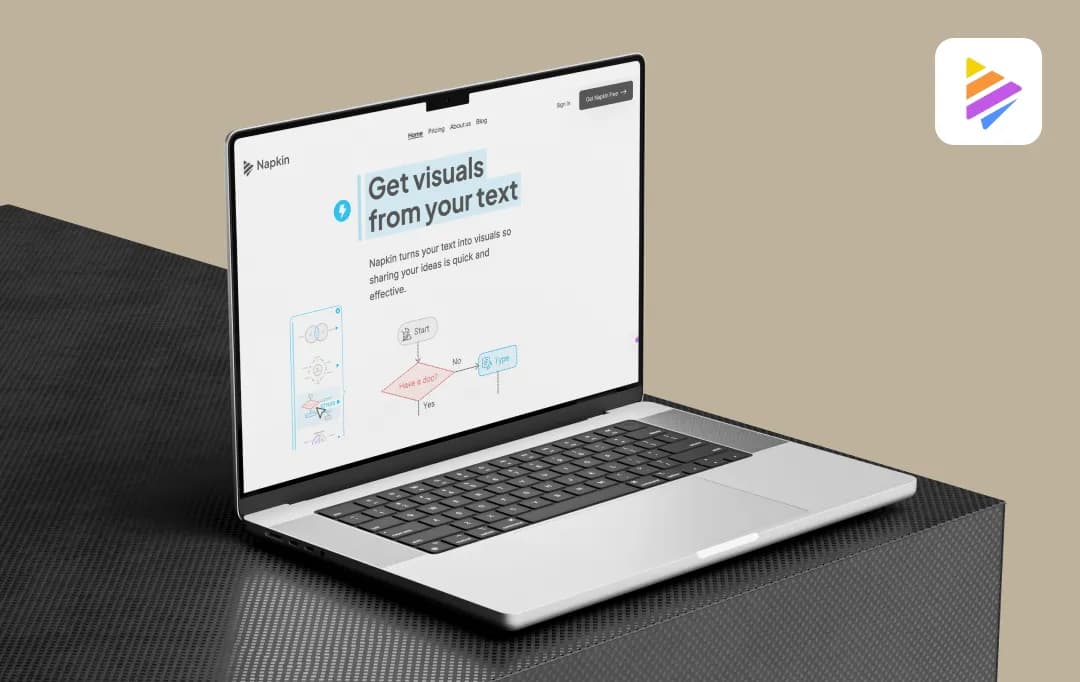
Transform text into professional visuals instantly with Napkin AI—our hands-on review reveals features, pricing, pros, cons, and real-world performance insights.
Napkin AI Review: A Hidden Gem or a Bust?
Most of us aren't graphic designers. We're marketers, educators, consultants, content creators, or students who just need to communicate ideas visually without spending hours learning Figma or wrestling with PowerPoint's limited design capabilities. We've got concepts in our heads (or notes documents) that desperately need visual representation, but the gap between "I know what I want to say" and "I've created something that looks professional" feels impossibly wide.
That's exactly the gap Napkin AI aims to bridge, and after putting it through its paces. We’ve been testing everything from basic text conversion to multilingual content, collaboration features, and export quality. And now, I want to share what I actually discovered. Not the polished pitch, but the real functionality, the limitations, and whether this tool genuinely delivers on its promise.
So let me walk you through what I found during my deep dive into Napkin AI, breaking down the features that actually matter and showing you exactly how this AI-powered design tool works in practice.
Pros and Cons of Napkin AI
Pros
- Turns plain text into infographics, flowcharts, and diagrams without design skills, saving significant time.
- Unlike AI image generators, Napkin doesn't require prompts. It works directly from plain text with just a simple click.
- Every visual you create can be edited to match your preferences (change icons, adjust colors, tweak fonts, etc.)
- Robust export options supporting PPT, PDF, PNG, and SVG, making it easy to use graphics anywhere.
- Upload your colors and fonts to generate multiple style options, with over 700 Google Fonts available.
Cons
- Limited editing on mobile; best on desktop for full control.
- If your content lacks clear structure, like headings or bullet lists, Napkin struggles to generate meaningful visuals.
- The style library is rich but not infinite; over time, some users feel the visuals reuse similar templates, limiting creativity.
Napkin AI Features: What It Offers
1. The AI Architecture That Makes It Different
Here's where things get technically interesting. Napkin uses an orchestrator large language model driven mainly by OpenAI's GPT-4o mini to respond to user prompts, which acts as an agent delegating jobs to a series of other sub-agents that have specific responsibilities.
Unlike diffusion AI models used by most other image providers, Napkin doesn't rely on those because they don't allow users to easily edit unique elements of illustrations, like individual slices of a pie chart. This is HUGE. I tested this by creating a pie chart and then wanting to change just one segment—it actually worked smoothly, which would be impossible with traditional AI image generators.
2. Smart Content Recognition
Using advanced natural language processing, Napkin AI understands your text and automatically selects the best visual structure—no manual formatting required. During my testing, I threw different types of content at it:
- Process descriptions automatically became flowcharts
- Comparisons turned into Venn diagrams
- Hierarchical information became mind maps
The AI analyzes text to identify relationships and concepts, generating flowcharts, mind maps, and diagrams instantly. What impressed me most was when I pasted a blog paragraph about project phases, it immediately recognized the sequential nature and offered timeline and process flow options.
3. The Blank Canvas Philosophy
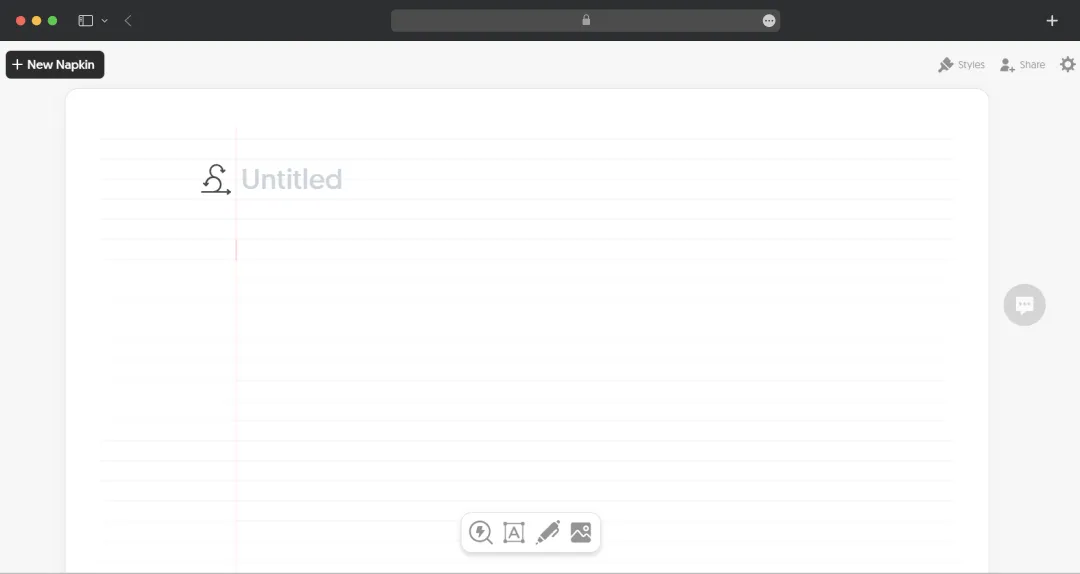
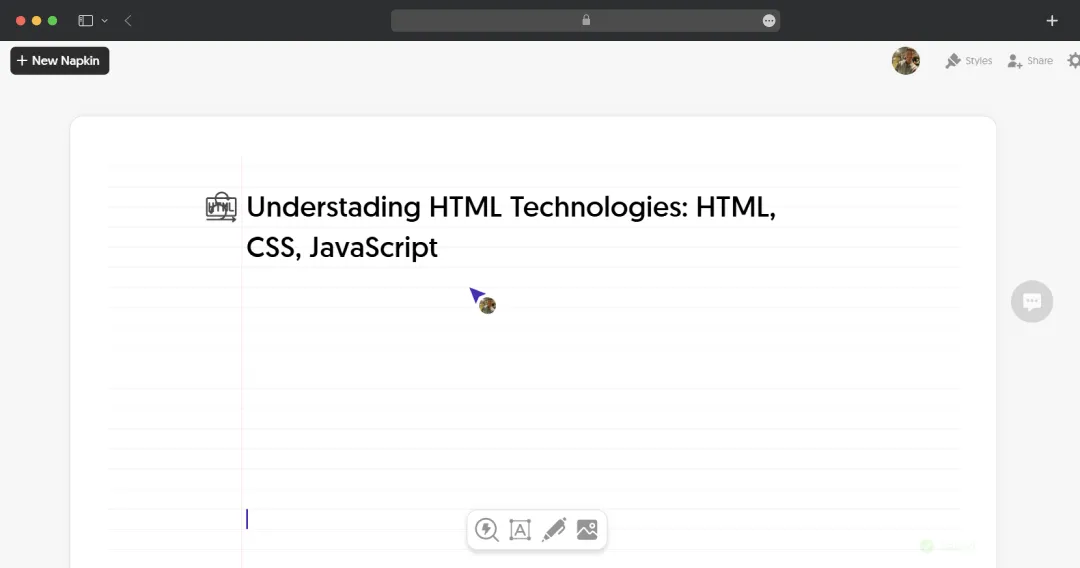
Napkin's workspace feels like a blend of a note-taking canvas and a design tool where you freely move and edit visuals on the page, and toggle presentation aspect ratios between 16:9 slides versus long documents. This is fundamentally different from traditional design tools. You're not confined to rigid templates or overwhelming toolbars.

Instead of starting with "what do I want this to look like?", you start with "what am I trying to say?" The design follows naturally from your content, which honestly feels revolutionary when you're used to tools like PowerPoint or Canva.
4. AI-Powered Content Generation - Not Just Visuals
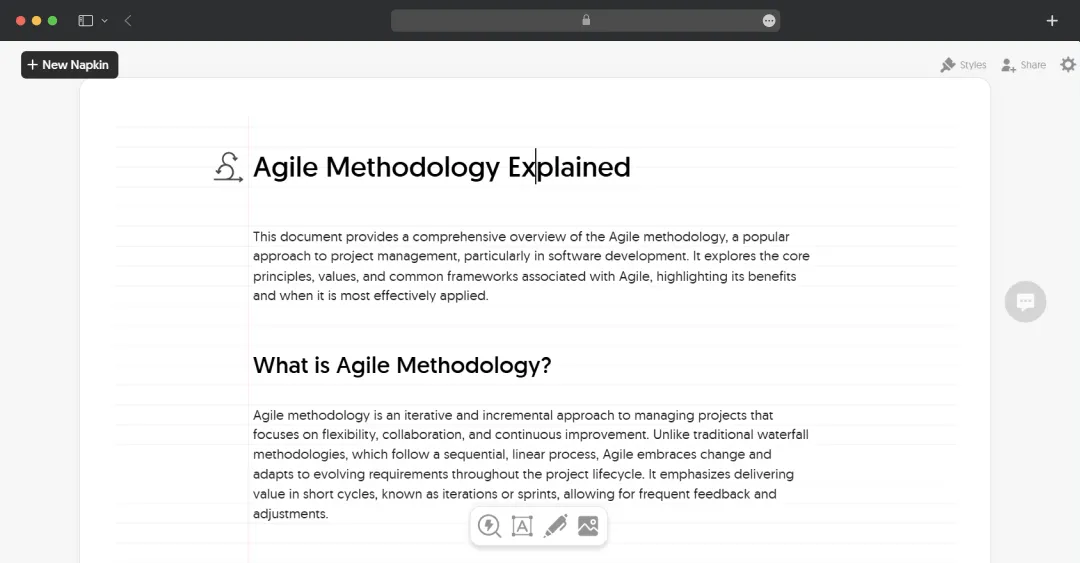
Here's something I didn't expect: you can generate content for a topic using AI and then create visuals based on that content. So if you're starting from scratch, you can ask Napkin's AI to help you outline a concept, and then immediately visualize it. I tested this with "explain agile methodology" and, within moments, had a full text breakdown that I could then convert into multiple diagram formats.

The AI analyzes your input, breaks it down into components, and offers suggestions to enhance it. It's like having a brainstorming partner who also happens to be a designer.
5. Deep Customization Without Complexity
Every visual Napkin created is fully editable. You can click on any element (icons, shapes, or connectors) to swap them out or restyle them. Napkin provides a rich library of icons and decorators (smart shapes), plus flexible color palettes and font choices.

What makes this powerful is that visuals scale automatically with content changes. I added three more steps to a process flow, and the entire diagram reorganized itself intelligently without breaking the design. That kind of dynamic adaptation saves so much time.
You can also specify exact visual types, including flowcharts, mind maps, tables, and timelines, control orientation (portrait, landscape, square), and set detail levels from summary to detailed views. So while it's automated, you're definitely not sacrificing control.
6. Real Collaboration Features
The Team space feature lets you invite your whole crew into one shared workspace where everyone can jump in and work on the same file together, with color-coded comments so there's no confusion about who said what. You can instantly share visuals via link with teammates to streamline discussions and decision-making.

During my team test, we had three people simultaneously editing different sections of a strategy document. The real-time updates were seamless—no version control nightmares or "can you send me the latest file?" messages.
7. Export Versatility - Works With Your Existing Workflow
You can easily export visuals in formats like PNG, PDF, or SVG, making them perfect for presentations, documents, or social media. But here's where it gets really practical: the ability to drop these directly into your existing tools without friction.

The quality held up beautifully whether I was exporting for a high-res PDF report or a quick social media post. The SVG export is particularly clutch if you need to scale graphics without losing quality.
8. Multilingual Magic
While the interface is in English, the AI is capable of creating images from text in over 60 different languages, including Spanish, Japanese, French, and dozens of others. I tested this with German and Hindi content, and the visuals maintained proper text rendering and layout—no weird character issues or broken formatting.
Napkin AI Pricing Plans
| Feature | Free Plan | Plus Plan | Pro Plan |
|---|---|---|---|
| Monthly Price | $0 | $12/month | $30/month |
| Yearly Price | $0 | $9/month (Save 25%) | $22/month (Save 25%) |
| AI Credits | 500 per week | 10,000 per month | 30,000 per month |
| Visual Editing | Unlimited | Unlimited | Unlimited |
| File Import | Unlimited (PPT, DOC, PDF, HTML, MD) | Unlimited (PPT, DOC, PDF, HTML, MD) | Unlimited (PPT, DOC, PDF, HTML, MD) |
| PNG & PDF Export | Unlimited | Unlimited | Unlimited |
| PPT & SVG Export | Not included | Unlimited | Unlimited |
| Custom Styles | Not included | 3 custom styles | Unlimited custom styles |
| Font Upload | Not included | Not included | Upload your fonts |
| Icons | Standard icons | Bold icons | Bold icons + Exclusive designs |
| Designs | Built-in Styles and Fonts | Built-in Styles and Fonts | Exclusive designs |
| Napkin Branding | Visible on visuals | Removed | Removed |
| Team Management & Billing | Not included | Included | Included |
| Credit Top-Ups | Not available | Not available | Optional credit top-ups |
| Best For | Individual users testing the platform | Small teams & regular content creators | Large teams & heavy users with branding needs |
For us, Product Reviews mean diving headfirst into the functionality of each digital product, whether it’s an app, software, or website. Our process centers around hands-on testing of each tool we pick. From scrutinizing features to testing vulnerabilities of security standards, the goal remains to help you find products that don’t just work but truly elevate your experience. In a nutshell, if we’re recommending a product, it’s because we believe it’ll genuinely make your digital life easier.
- Products Reviewed - 4,000+
- No. Of Experts - 20+
- Categories - 65+
Customer Reviews
How was your experience with the product?
MobileAppDaily Ratings
FEATURES
Excellent text-to-visual conversion, real-time collaboration, and 60+ language support. Loses one star for lacking numerical data visualization.
PRICING
Generous free beta access with 500 weekly credits. Paid tiers are reasonable. The credit system might limit heavy users during peak workflow.
PERFORMANCE
Generates visuals in 5 seconds consistently. Slight delays with complex documents, but the processing speed overall impressed us significantly.
USER INTERFACE
Intuitive blank canvas approach, minimal learning curve, and clutter-free workspace. Best UI simplicity we've seen in AI design tools.
How to Use Napkin AI Tool: Step-by-Step Instructions For Generating Images
Creating stunning visuals with Napkin AI is surprisingly straightforward, even if you've never used a design tool before. Here's exactly how to go from text to professional-looking graphics in minutes:
Step 1: Create Your Account (Desktop Only)
Account creation is only available on desktop computers (not on mobile devices). Head to Napkin AI website - https://app.napkin.ai and you'll have two sign-up options:
Quick Sign-Up: Use your Google account for instant access
Traditional Sign-Up: Register with your email and create a password
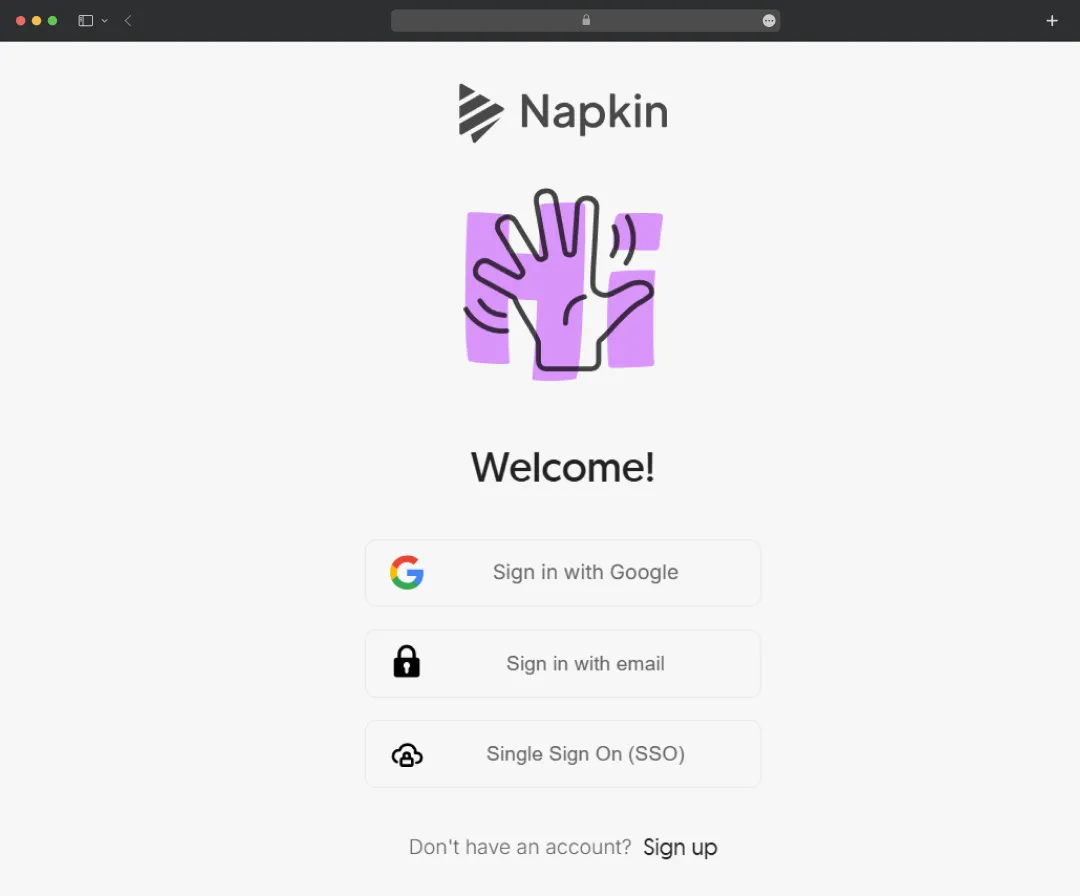
Once logged in, you can follow the onboarding tutorial to learn how to generate visuals with Napkin AI. Don't skip this—it takes about 2 minutes and shows you the basics.
Step 2: Start a New Document
After creating your account, you'll be presented with two options: "Paste My Text" or "Generate Text Using AI". Here's when to use each:
Option A: Text Paste
- Paste your Text if you already have content written—blog posts, presentation notes, meeting summaries, lesson plans, or any text you want to visualize
- Simply copy your existing content and paste it into the blank canvas
Option B: Generate Text Using AI
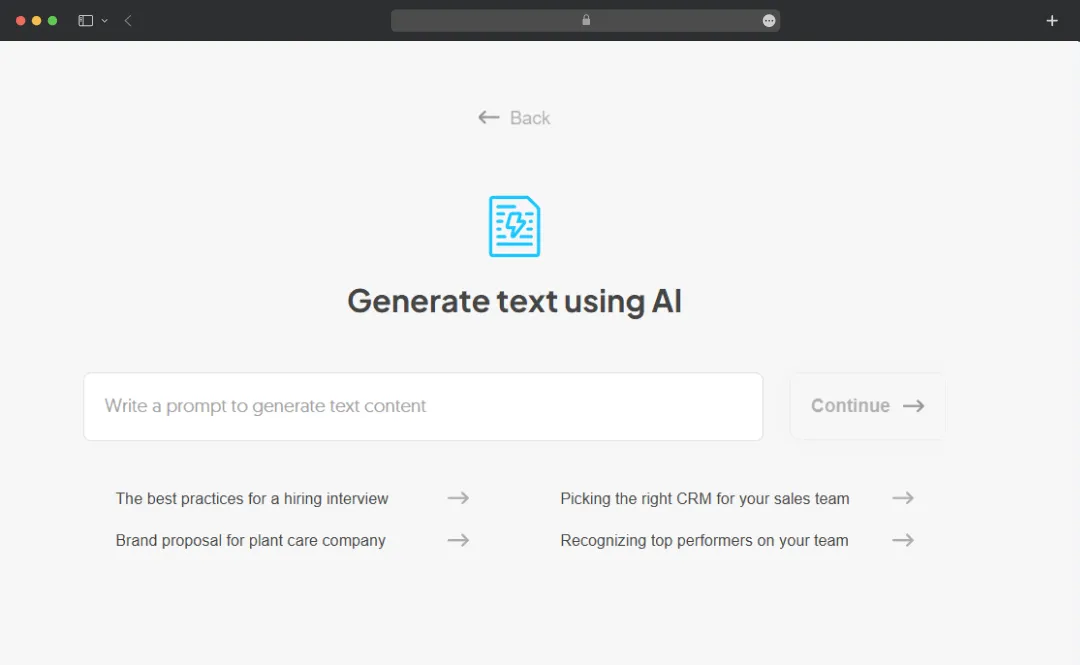
- You can generate content for a topic using AI and then create visuals based on that content
- Enter a topic or concept, and Napkin's AI will create text content for you
- Perfect when you're starting from scratch or brainstorming ideas
Step 3: Generate Your Visual
Now the real thing happens. Hover over the block of pasted/generated text, and click the blue Generate Visual button that appears on the left side.
Tip: You can also generate a visual from a specific section of your document by selecting the text and clicking the blue Generate Visual button.
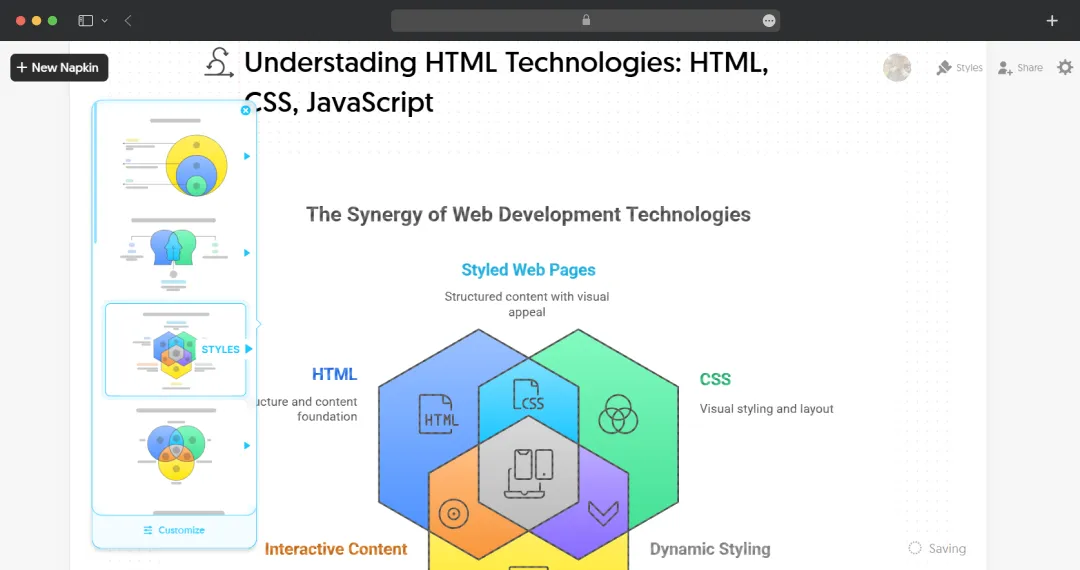
What Happens Next: After a few seconds, a list of visuals generated from your text will appear on the screen. Scroll through the options to pick your favorite, then choose a style for your selected visual.
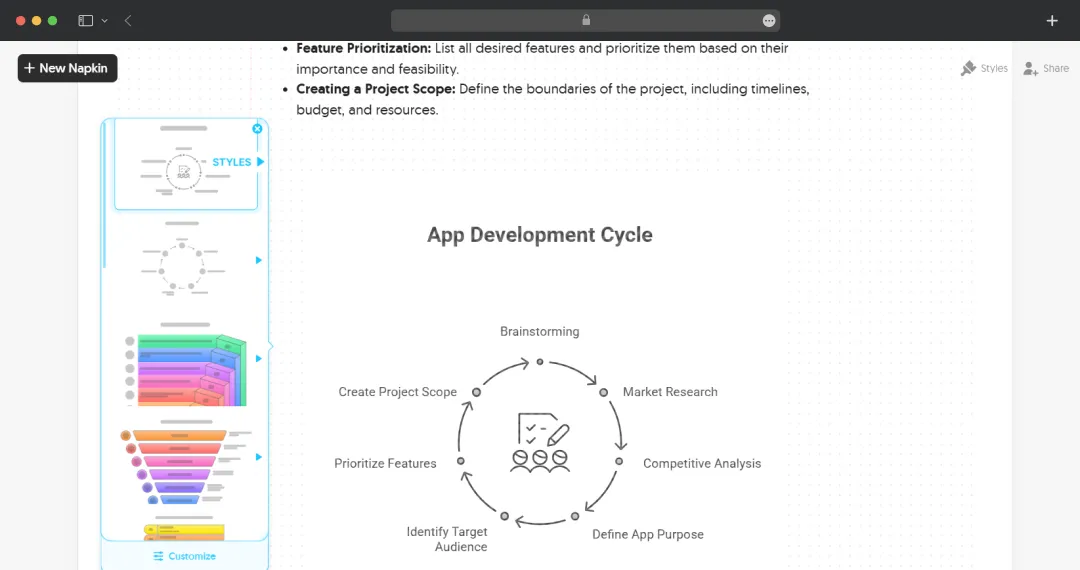
You'll typically see multiple options:
- Different layout approaches for the same content
- Various visual formats (diagrams, flowcharts, mind maps, timelines)
- Different style variations for each format
Step 4: Select and Customize Your Visual
Browse through the AI-generated visuals and pick the one that best fits your content and style. Once you've found your favorite:
- Selecting the Visual: To confirm your choice, click on the visual you want to use. It will be added to your document.
- Customization Options: After selecting a format, you can personalize it by adjusting colors, adding icons, or tweaking the layout to suit your preferences. The created graphics are completely modifiable. You can change the styles and content.
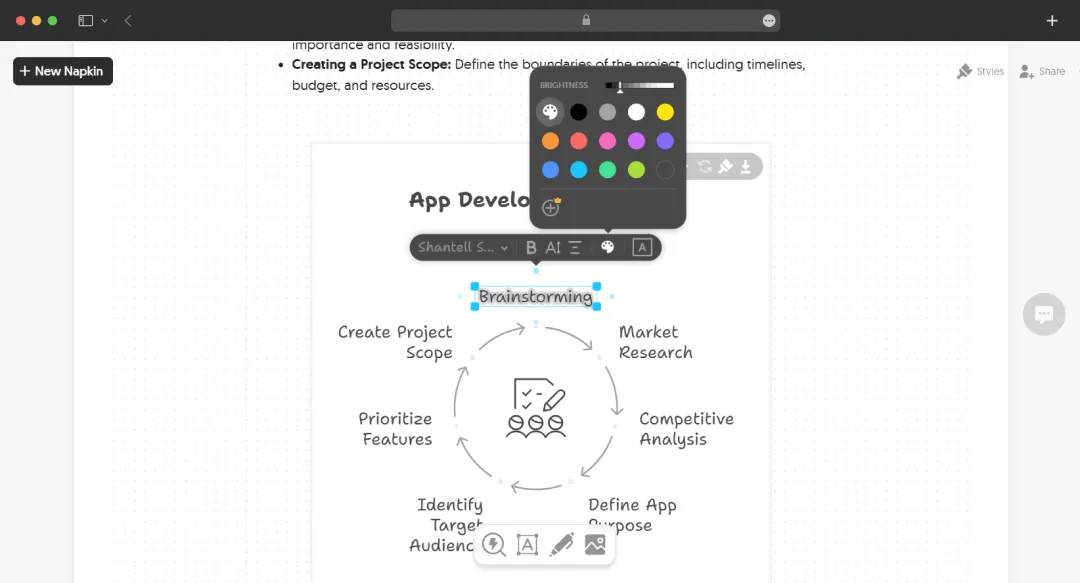
Here's what you can customize:
- Decorators: Searchable icons that you can add or swap from an extensive database
- Connectors: Elements that connect different aspects of your graphic, demonstrating links and flows
- Colors: Adjust color schemes to match your brand or preference
- Fonts: Change text styles to suit your needs
- Layout: Rearrange elements by dragging and dropping
- Content: Edit text directly within the visual
Step 5: Export Your Creative
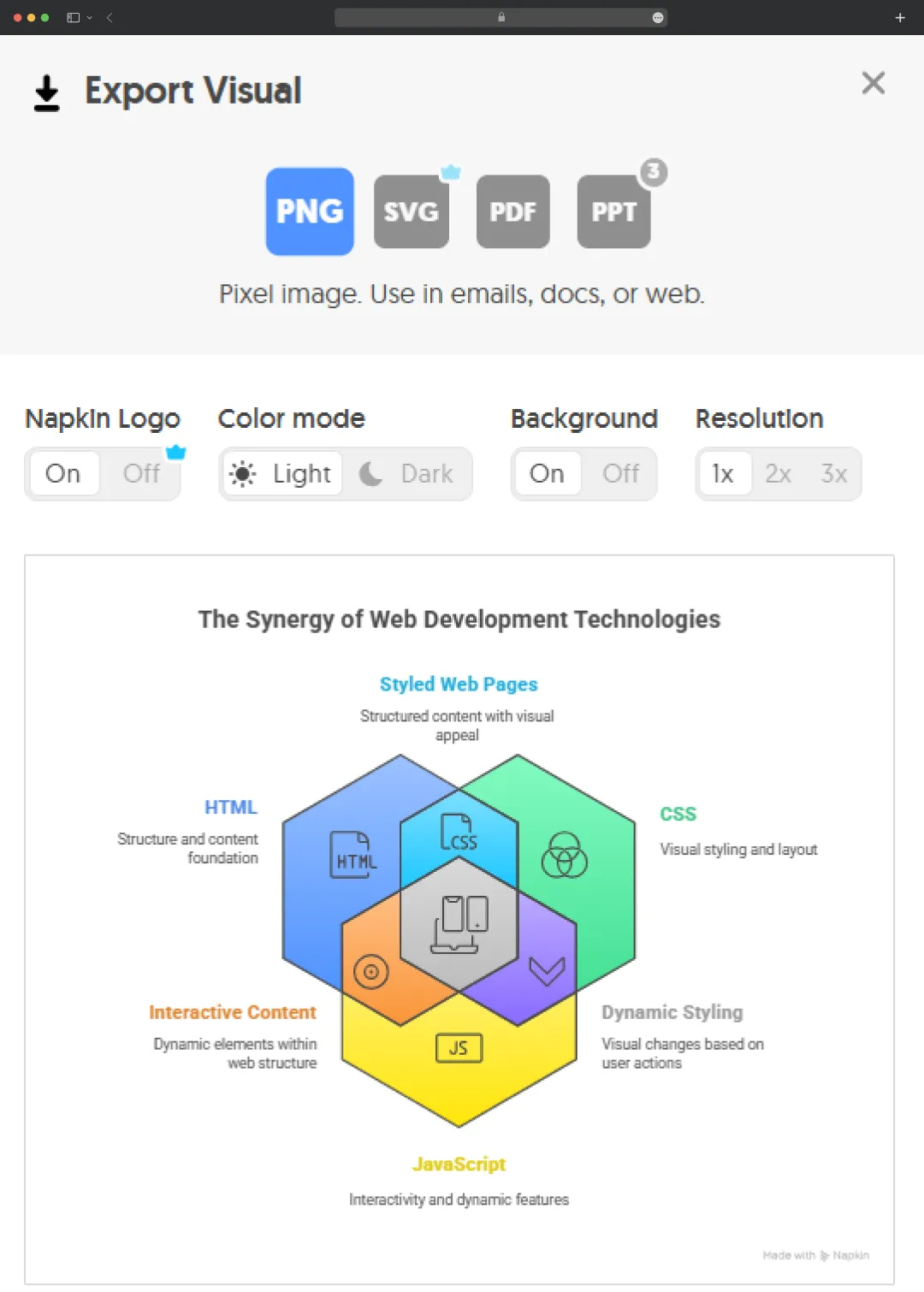
Once you're satisfied with your visual, it's time to get it out of Napkin AI and into your presentation, document, or social media post. You can export it in PNG, SVG, PPT, or PDF format if needed.
How to Export: Right-click on the visual to see the download options, or use the export function, which opens a preview modal where you can choose to export the visual as a PNG, SVG, PPT, or PDF. You'll also have a few additional options, such as color settings.
Export Format Guide:
- PNG: Best for inserting into documents, websites, or presentations with a transparent or solid background
- SVG: Perfect when you need scalable graphics that won't lose quality when resized
- PPT: Direct export to PowerPoint for seamless integration into presentations
- PDF: Ideal for reports, sharing via email, or printing
Once you're pleased, save your visuals in formats such as .png, .pdf, or .svg.
What We at MobileAppDaily Think About Napkin AI
After thoroughly testing Napkin AI and putting it through real-world scenarios, our team at MobileAppDaily has some strong opinions about where this tool truly shines. Right off the bat, its USP becomes evident. Napkin AI is one of the only AI-powered visual tools that treats text as the starting point, design as the output, and editing as a natural continuation—not a compromise.
Moreover, Napkin’s learning Curve is Practically Non-Existent. In our testing across team members with varying design experience, everyone was creating professional-looking visuals within 5 minutes. There's no tutorial rabbit hole, no overwhelming toolbar, and no "where do I even start?" paralysis.
Unlike AI image generators that give you a final image you can't modify, Napkin's approach allows users to easily edit unique elements of illustrations, like individual slices of a pie chart. During our tests, this made all the difference.
Napkin AI
Frequently Asked Questions
-
Is Napkin AI free to use, and what are the credit limitations?
Yes, Napkin AI offers a free plan that gives you access to core features with limits on AI credits used for visual generation and some customization options. AI credits measure app usage, with approximately 1 credit charged per word selected for generation. The free plan provides 500 credits per week, which should be sufficient for moderate use. For heavier usage and advanced customization features, paid plan tiers are available with higher credit allocations.
-
Can I use Napkin AI visuals commercially without copyright issues?
-
Is Napkin AI available on mobile devices?
-
How can I guide Napkin AI to generate a specific type of visual?
Latest Products
Delve into our comprehensive yet easy-to-consume guides, which provide insights that help scale business faster and prevent unseen pitfalls.
Related Products
Cut through the clutter and explore related digital products that deliver on performance.