Date: February 04, 2025
A historic win for the legendary Beatles as their final song, revived using AI-powered audio restoration, takes home Best Rock Performance. Paul McCartney clarifies: No AI-generated vocals, just cutting-edge technology.
Kendrick Lamar’s legendary win was not the only highlight at the Grammys this year. The Beatles clenched yet another Grammy, and the reason was AI. Their AI-enhanced track Now and Then won the Grammy for Best Rock Performance on Sunday night. This is the first time a song utilizing AI in its production has won the award.
But before anyone imagines an AI-generated John Lennon belting out new lyrics, let’s set the record straight - this was not the work of some "LennonGPT" bot. Instead, Paul McCartney and Ringo Starr used cutting-edge machine learning technology to clean up and restore a decades-old demo Lennon recorded in the late 1970s.
Back in 1990s, McCartney, Starr, and the late George Harrison fought to save the song ‘Now and Then’ from Lennon’s early, rough-around-the-edges piano demonstration. But technology during that period could not peel out muddled vocals over background sound.
Fast forward to 2022; while working on The Beatles: Get Back documentary, filmmaker Peter Jackson’s team introduced McCartney and Starr to advanced noise reduction AI that could separate instruments and vocals with remarkable clarity. Using this technology, the surviving Beatles were able to complete the track, finally releasing it in 2023 as what McCartney called “the last Beatles song.”
The song triumphed over Green Day, Pearl Jam, The Black Keys, Idles, and St. Vincent in the Best Rock Performance category. This historic moment highlights the intersection of AI and music technology, much like innovations in best music making software, where AI tools are revolutionizing the way artists produce and refine sound.
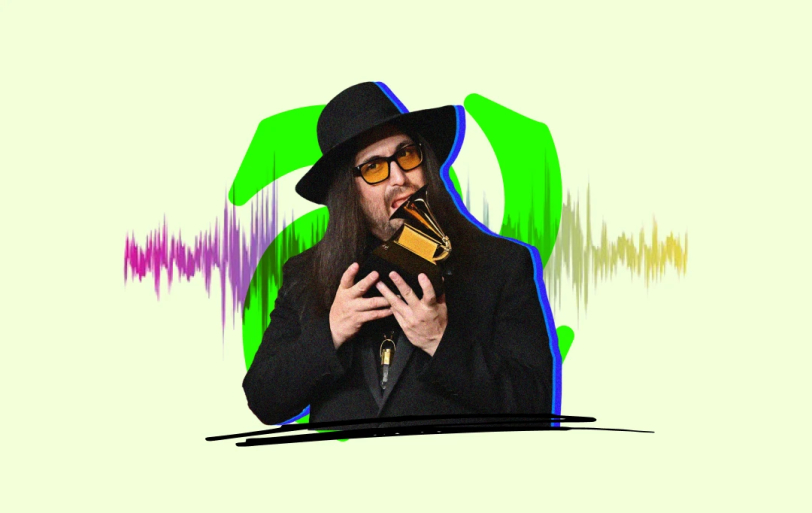
Accepting the award on behalf of The Beatles was Sean Lennon, John Lennon’s son, who expressed gratitude for the honor.
However, the track sparked debate over AI’s role in music. Some critics feared the song was an example of AI-generated music impersonating an artist—something McCartney vehemently denied.
“To be clear, nothing has been artificially or synthetically created. It’s all real, and we all play on it,” McCartney stated in 2023, addressing concerns about AI’s involvement. “We cleaned up some existing recordings - a process which has gone on for years.”
The win also shines a light on how artificial intelligence is transforming creative industries, as seen in the rise of AI film festivals, where AI is pushing boundaries in filmmaking just as it has in music.
By Arpit Dubey
Arpit is a dreamer, wanderer, and tech nerd who loves to jot down tech musings and updates. With a knack for crafting compelling narratives, Arpit has a sharp specialization in everything: from Predictive Analytics to Game Development, along with artificial intelligence (AI), Cloud Computing, IoT, and let’s not forget SaaS, healthcare, and more. Arpit crafts content that’s as strategic as it is compelling. With a Logician's mind, he is always chasing sunrises and tech advancements while secretly preparing for the robot uprising.
OpenAI Is Building an Audio-First AI Model And It Wants to Put It in Your Pocket
New real-time audio model targeted for Q1 2026 alongside consumer device ambitions.
Nvidia in Advanced Talks to Acquire Israel's AI21 Labs for Up to $3 Billion
Deal would mark chipmaker's fourth major Israeli acquisition and signal shifting dynamics in enterprise AI.
Nvidia Finalizes $5 Billion Stake in Intel after FTC approval
The deal marks a significant lifeline for Intel and signals a new era of collaboration between two of America's most powerful chipmakers.
Manus Changed How AI Agents Work. Now It's Coming to 3 Billion Meta Users
The social media giant's purchase of the Singapore-based firm marks its third-largest acquisition ever, as the race for AI dominance intensifies.