#News

Musk Pursues $134 Billion in Damages as OpenAI–Microsoft Valuation Soars

Musk Pursues $134 Billion in Damages as OpenAI–Microsoft Valuation Soars

Date: January 19, 2026

Listen to This Article

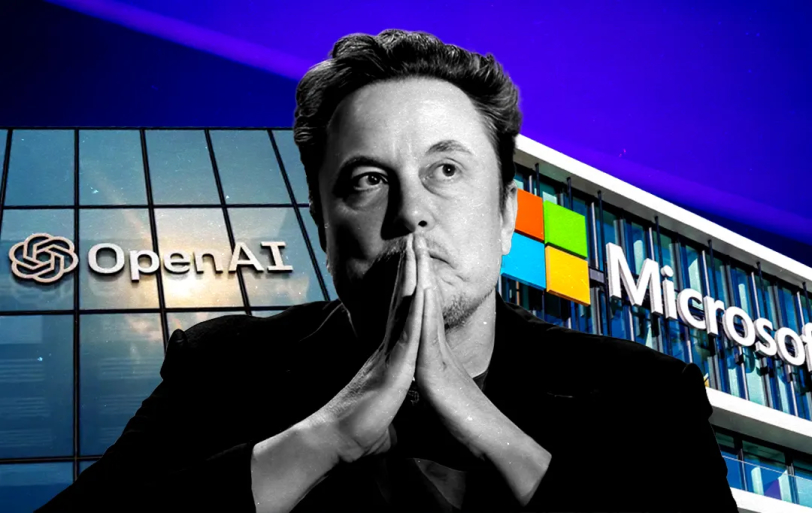
Elon Musk has filed a high-stakes lawsuit against OpenAI and its major partner Microsoft.

Musk is seeking up to $134 billion in damages and claims that the companies received “wrongful gains” from his early involvement in OpenAI when he helped co-found it in 2015. The case, framed as a claim of financial and contractual wrongdoing, is now set for a jury trial in April 2026.

According to the court filings, Musk insists that OpenAI’s transformation from a nonprofit to a commercial enterprise have yielded massive financial benefits that should be shared with him. He also claims that OpenAI gained between $65.5 billion and $109.4 billion from Musk’s early seed funding, reputation and support, while Microsoft’s gains are estimated at $13.3 billion to $25.1 billion. 

Foundation and Claims

OpenAI was established in 2015 as a nonprofit dedicated to developing artificial general intelligence (AGI) in the public interest. Musk was one of its founding figures, providing approximately $38 million in seed funding. He also helped recruit talent and strategic relationships for the growing startup.

Musk’s legal team has framed the damages request by likening his contributions to those of early startup investors. In court filings they wrote:

“Just as an early investor in a startup company may realize gains many orders of magnitude greater than the investor’s initial investment, the wrongful gains that OpenAI and Microsoft have earned — and which Mr. Musk is now entitled to disgorge — are much larger than Mr. Musk’s initial contributions.” 

The complaint argues that OpenAI’s dramatic rise in value is a result of Elon Musk’s early involvement in the startup. The company is now reportedly valued at nearly $500 billion after a 2025 restructuring and a partnership with Microsoft. Musk claims this surge was enabled in no small part by his early role. He left OpenAI’s board in 2018, a departure the company attributed at the time to potential conflicts with his other ventures.

OpenAI’s Response

OpenAI has publicly dismissed Musk’s claims. In a blog post titled “The truth Elon left out”, the organization accused Musk of “grossly misrepresenting the written record to further his harassment.” It said he misunderstood or misrepresented conversations and commitments from the company’s early history.

The post also highlighted internal discussions about structural changes to raise capital. These included Musk’s own participation in exploring for-profit models. OpenAI noted that he later disputed such shifts when control was not in his hands.

A separate blog post by OpenAI also shared detailed company records alleging that in 2017 Musk was the one who had proposed and created a for-profit structure for OpenAI. However, negotiations later collapsed over demands for majority equity and control that conflicted with the group’s mission.

OpenAI’s official position, consistent with its public statements, portrays the lawsuit as part of what it calls a broader “harassment campaign.” The company says the effort is intended to slow OpenAI’s work and advantage Musk’s own AI company, xAI.

Microsoft’s Position

Microsoft, a co-defendant in the case and significant investor that owns 49% of OpenAI, has largely stayed silent on details of the dispute. They recently filed a rebuttal along with OpenAI to Musk’s. Damage claims. Legal filings from Microsoft’s counsel argued there is no evidence the company “aided and abetted” OpenAI in wrongdoing and sought to exclude portions of Musk’s financial analysis from the upcoming trial. 

As the April trial approaches, observers will watch closely for how both sides present evidence and expert testimony. Musk is also poised to seek punitive and additional legal remedies pending a favorable finding of liability. 

OpenAI and Microsoft continue to defend their governance choices and business strategies, saying their actions were transparent and mission-aligned. 

The outcome of the case could influence relationship between major players in the AI sector, along with how governance and mission commitments are interpreted in future nonprofit-to-for-profit transitions.

Manish

By Manish

Have newsworthy information in tech we can share with our community?

Post Project Image

Fill in the details, and our team will get back to you soon.

Contact Information
+ * =