Date: April 29, 2024
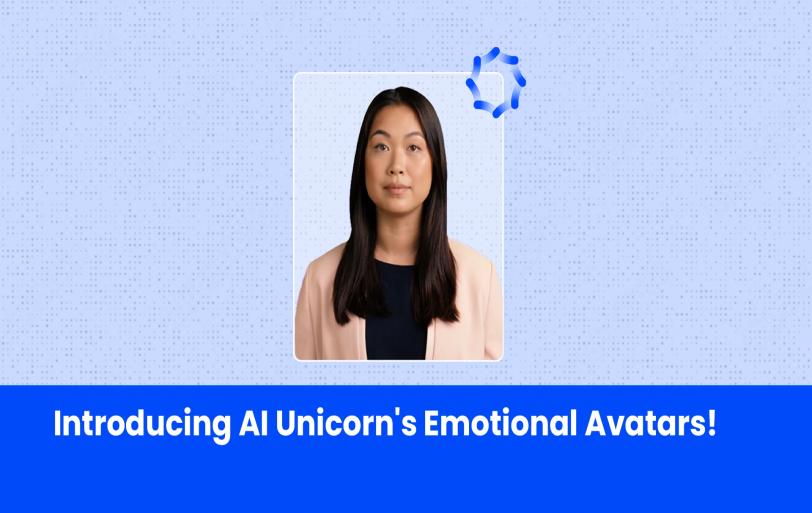
Synthesia, an AI startup, has launched one of the most emotionally expressive avatars on the market, marking a significant milestone in AI development.
Human expressions were the only limitation that separated humans from synthetic human avatars. That barrier has now been lifted to a handsome extent. Synthesia, an AI startup working on generating AI models, has reached a new milestone in emotionally expressive AI avatars. The company has promised to bring the most emotionally realistic AI avatars into the market.
The AI avatars are photorealistic and display impressively real human emotions. This innovation marks a significant milestone in AI development. The AI models are trained on real actors' footage and built for video creation. Users can enter a text prompt and get a hyper-realistic AI video response with the capacity to convey human feelings.
The company has developed a new technique known as Automatic Sentiment Prediction to determine the avatar’s tone of voice, body language, and facial expression. Based on the script provided, the AI avatars can automatically predict what the message is trying to convey and express it in their output.
“This is definitely the first iteration of avatars that can express emotions and understand the sentiment of the content,” said Victor Riparbe, Synthesia’s CEO and co-founder. According to Synthesia, the avatars have evolved from digital renders to digital avatars. The avatars also produce entirely unique outputs for the same script or prompt.
Combining photorealistic faces, emotional gestures, expressive voices, and synchronized movements brings a new level of realism to AI-generated outputs. The avatars generate entirely unique responses for sad scripts uploaded twice.
However, this innovation is still a little far from reality. Like actors, AI avatars tend to exaggerate their emotions, quite similar to D-list soap opera stars. Another constraint with these AI actors is that they can only give output limited to the head, face, and shoulders. Despite these limitations, these avatars have great potential to improve user experiences in various aspects, including customer care support, entry-level executive consultations, and much more
By Arpit Dubey
Arpit is a dreamer, wanderer, and tech nerd who loves to jot down tech musings and updates. With a knack for crafting compelling narratives, Arpit has a sharp specialization in everything: from Predictive Analytics to Game Development, along with artificial intelligence (AI), Cloud Computing, IoT, and let’s not forget SaaS, healthcare, and more. Arpit crafts content that’s as strategic as it is compelling. With a Logician's mind, he is always chasing sunrises and tech advancements while secretly preparing for the robot uprising.
OpenAI Is Building an Audio-First AI Model And It Wants to Put It in Your Pocket
New real-time audio model targeted for Q1 2026 alongside consumer device ambitions.
Nvidia in Advanced Talks to Acquire Israel's AI21 Labs for Up to $3 Billion
Deal would mark chipmaker's fourth major Israeli acquisition and signal shifting dynamics in enterprise AI.
Nvidia Finalizes $5 Billion Stake in Intel after FTC approval
The deal marks a significant lifeline for Intel and signals a new era of collaboration between two of America's most powerful chipmakers.
Manus Changed How AI Agents Work. Now It's Coming to 3 Billion Meta Users
The social media giant's purchase of the Singapore-based firm marks its third-largest acquisition ever, as the race for AI dominance intensifies.